Jaffna Fort and the Dutch–Portuguese Lines: A Silent Chronicle of Power, Conflict, and Cultural Memory | Jaffna Fort is not merely a structure of stone and mortar. It is a layered memory of the island’s most turbulent chapters—colonial conquests, shifting empires, siege and survival, cultural influence, and the continued resilience of the Northern peninsula. Standing at the edge of the Jaffna lagoon, its solemn, weather-beaten walls hold the echoes of nearly four centuries of ambition and resistance. To understand Jaffna Fort is to understand a critical piece of Sri Lanka’s colonial history, where the Portuguese and the Dutch fought not just for territory, but for dominance of the Indian Ocean and control over a culturally significant region.
What makes Jaffna Fort particularly compelling is the way its Dutch and Portuguese influences merge—sometimes seamlessly, sometimes in stark contrast—within the structure’s architecture, layout, and historical records. These “Dutch–Portuguese lines” are not simply military features; they are the very imprints of empire, layered deliberately onto the landscape.
This is the story of what those lines reveal.
The Beginning: The Portuguese Arrive in the North
When the Portuguese first stepped into Jaffna in the early 1600s, they saw more than a coastal kingdom. They saw a strategic foothold—a gateway into the Palk Strait, a vantage point over South Indian waterways, and a thriving Tamil cultural centre. Their first fortifications were rudimentary, constructed primarily for defence and administrative control. Yet these early earthworks formed the foundation for what would later become one of Sri Lanka’s most formidable strongholds.
The Portuguese presence in Jaffna was not peaceful. Their military campaigns, the overthrow of the Jaffna Kingdom, and the imposition of Catholic influence created friction that simmered beneath the region’s surface. These tensions would shape the later conflicts with the Dutch, who arrived with their own ambitions.
The Dutch Take Over: A New Chapter of Power
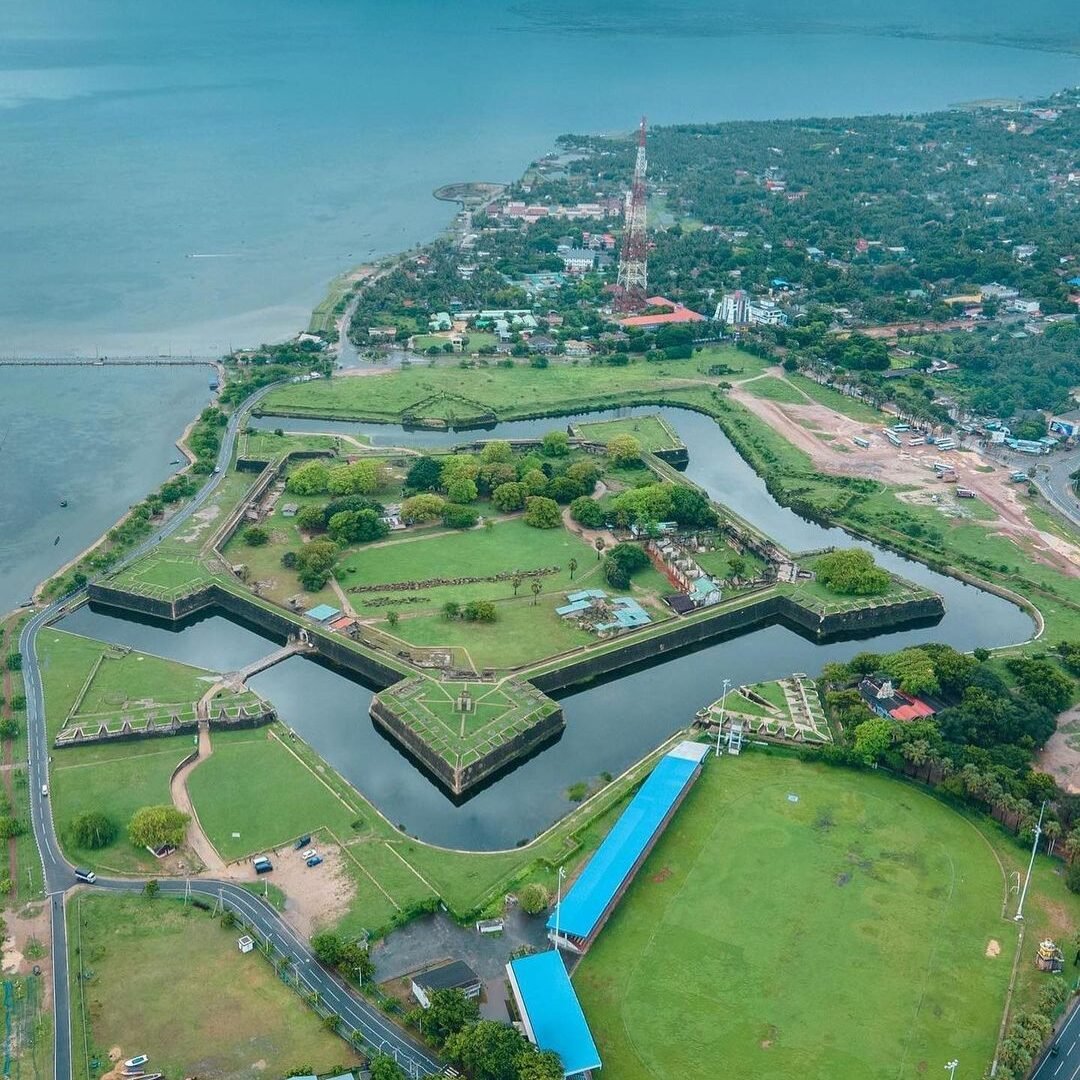
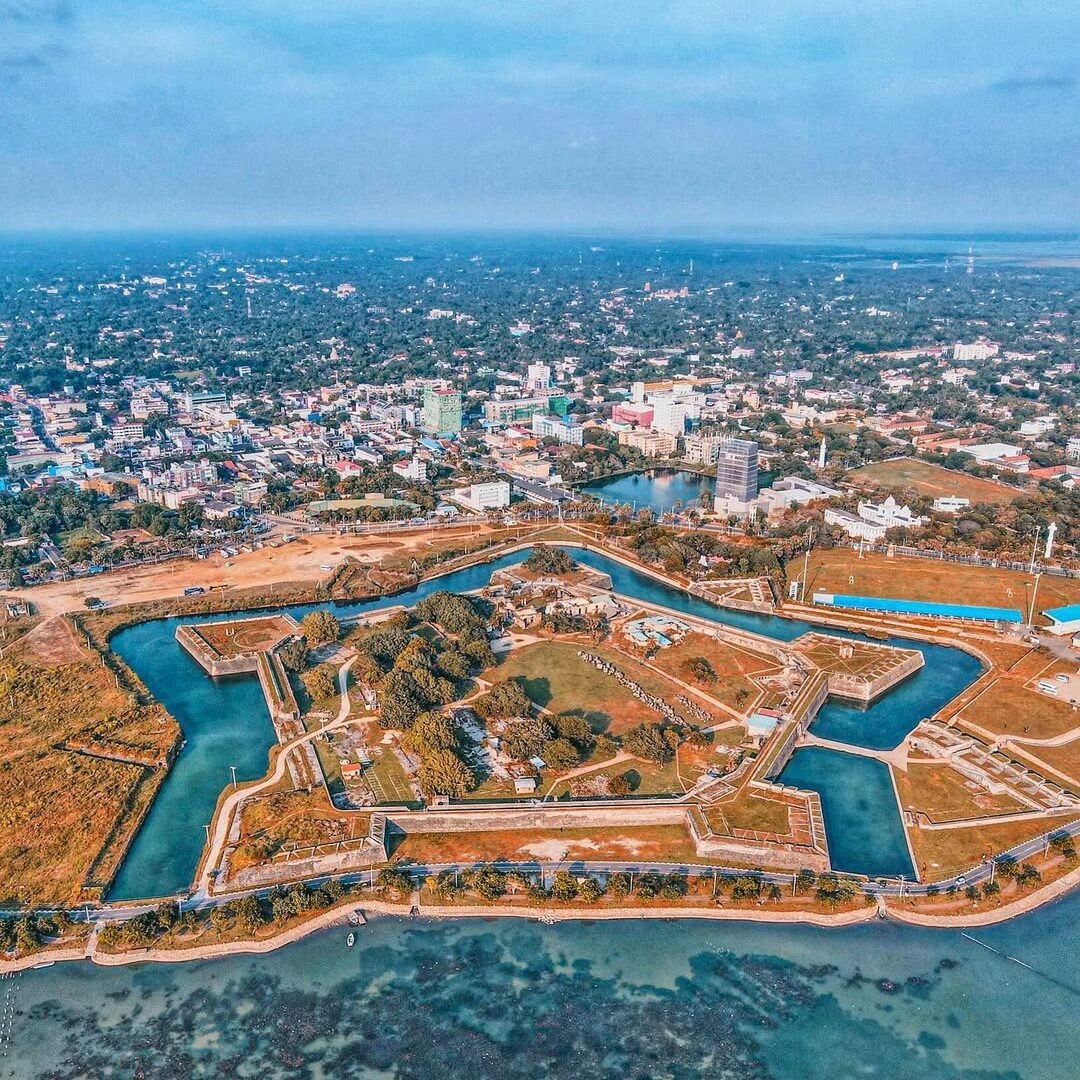
In 1658, the Dutch East India Company (VOC) captured Jaffna from the Portuguese after an intense and strategically planned siege. This victory marked a decisive shift in Northern Sri Lanka’s political landscape. The Dutch inherited the Portuguese fort, but what they built over it was far more advanced—angular bastions, star-shaped ramparts, widened moats, and an organised internal plan that reflected the precision of Dutch military engineering.
The Dutch–Portuguese lines became visible here: where Portuguese foundations met Dutch extensions; where Catholic architecture intersected with Dutch Protestant influence; where the older fortifications were carved, reshaped, or overlaid with the geometric discipline of VOC design.
Even today, when you walk through the inner and outer ramparts, you can tell which wall belonged to which empire. The Portuguese preferred more compact, inward-focused fortifications, while the Dutch expanded outward with star bastions designed to withstand cannon fire. These structural contrasts reveal how each colonial power imagined defence, order, and control.
Click on here “UNSEEN SRI LANKA: A JOURNEY THROUGH ITS DARK TOURISM TRAILS”
A Fort Shaped by Water, Trade, and Strategy
Jaffna Fort’s location shows sharp colonial foresight. The lagoon offered protection, natural drainage, and visibility. The peninsula’s position at the northern tip of Sri Lanka connected the fort to long-standing trade links with South India and beyond. The Dutch, understanding the economic potential of the region, fortified the fort not only militarily, but commercially. They incorporated warehouses, administrative buildings, living quarters, and churches within the fort’s compound.
This was no mere fortress; it was a micro-city designed to govern the surrounding region and control maritime movement. The Dutch lines—both literal and conceptual—extended from the fort into the lives of the peninsula’s inhabitants through taxation, trade regulations, and social influence.
The Cultural Intersection: Faith, Language, and Architecture
One of the most intriguing aspects of Jaffna Fort is the subtle yet undeniable cultural integration that took place during Dutch rule. The Portuguese had introduced Catholicism; the Dutch introduced Protestantism. The Portuguese used the fort as an instrument of conversion, while the Dutch transformed it into an administrative and commercial hub.
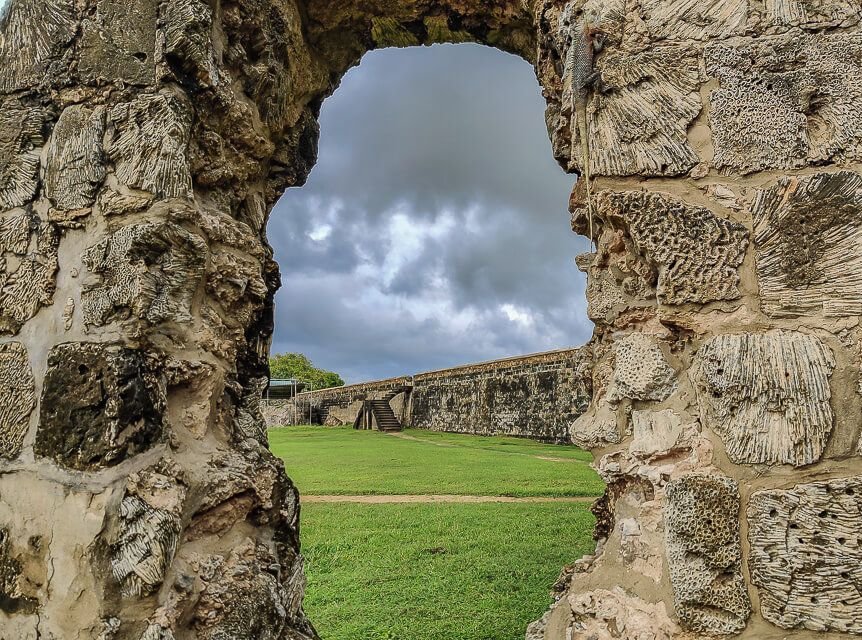
The remnants of the Dutch Reformed Church inside the fort—although damaged—still highlight the architectural transition. The arches, openings, and layout point to Dutch simplicity paired with European colonial style. Yet beneath that, Portuguese traces linger in the fort’s older stones, some repurposed for later constructions.
These layers make the fort an archive of two empires speaking through architecture.
The Lines of Conflict: Sieges, Rebellions, and Shifting Control
Throughout the late 17th and 18th centuries, Jaffna Fort was not just a passive structure. It was a living defence post that experienced multiple assaults and political power shifts. The Dutch themselves had to deal with local resistance, especially from communities unhappy with taxation and new administrative systems. Even after the British took over Sri Lanka from the Dutch in the late 18th century, the fort remained an important military point.
But the most recent scars—the ones most visible today—are from the late 20th century. The Sri Lankan Civil War brought intense fighting to the region. Portions of the fort were destroyed, occupied, or heavily damaged during periods of conflict. The Dutch–Portuguese lines were literally caught between modern warfare and historical preservation.
Restoration and Memory: Bringing the Fort Back to Life
In recent years, significant restoration has taken place. The goal has been to preserve the integrity of both colonial phases—the Portuguese core and the Dutch expansions—while making the fort safe for public visitation. This process has revealed how deep the colonial layers run, from original Portuguese stone blocks to later Dutch brickwork and British-era modifications.
For locals, the fort is not just a monument from a distant past; it is part of Jaffna’s identity, a place where people gather, walk, and reflect. For the country, it’s a reminder of the complexity of colonial history—how different powers built, erased, and built again on the same land.
Why These Lines Matter Today
The Dutch–Portuguese lines in Jaffna Fort are more than architectural distinctions. They are a reminder of how history is constructed—literally and metaphorically. They reveal how power moves across landscapes, how empires collide, and how communities adapt to shifting regimes.
They also remind us that heritage is not static. It evolves. It accumulates. It absorbs the impact of time, war, weather, and memory. In Jaffna Fort, these influences sit side by side, without erasing one another.
A Living Heritage Site
Today, as visitors walk along the ramparts during sunset, they see Sri Lankan families strolling, tourists photographing the lagoon, and children playing against a backdrop of colonial stonework. The fort, once a symbol of foreign domination, has become a shared cultural space—a reclaimed landmark where history is acknowledged, but also reinterpreted through modern life.
The Dutch–Portuguese lines still stand, not as divisions, but as reminders of endurance. They whisper the names of the rulers who came and went, and the resilience of a peninsula that survived them all.
In that sense, Jaffna Fort is more than a historical monument. It is a testament to the layers of Sri Lankan identity—complex, resilient, and deeply interwoven with the tides of time.
Click on here “SRI LANKA’S BEST ISLAND GETAWAYS: FROM KALPITIYA TO PASIKUDAH”