The Madhu Church Experience | Madhu is not merely a place. It is a feeling—quiet, ancient, deeply spiritual. For more than four centuries, the Shrine of Our Lady of Madhu has been one of Sri Lanka’s most sacred spaces, drawing pilgrims from every faith and every corner of the island. To visit Madhu is to encounter a rare blend of history, prayer, cultural memory, and the quiet resilience of a community that has protected this shrine through conflict, displacement, and change. The “Madhu Church experience” is therefore not a simple religious visit; it is a journey that connects spirituality with heritage, humanity, and the landscape of Sri Lanka’s North.
A Sanctuary Rooted in History
The Shrine of Our Lady of Madhu traces its origins to the 1600s, during a time when Catholic families from Mannar and Jaffna sought refuge from persecution. They travelled into the dense forest of Mannar’s interior carrying a statue of Our Lady, hoping for safety and a place to worship freely. Over generations, this simple sanctuary grew into the most significant Catholic pilgrimage site in the country. Today, Madhu is an iconic symbol of Sri Lanka’s religious continuity—standing quietly in the middle of a vast forest reserve, surrounded by silence that feels almost ancient.
Even for visitors who are not Catholic, the history of the shrine is compelling. It has been a place that offered protection during wars, shelter during displacement, and hope during times of personal hardship. The church’s survival, despite decades of conflict in the region, stands as a powerful reminder of the island’s collective endurance.
The Journey Into the Forest
One of the most striking aspects of Madhu is the journey itself. The road leading to the shrine cuts through long stretches of forest and open land. There is a sense of transition as you travel—leaving behind towns and noise, entering into a deep stillness. Many visitors describe this approach as the moment they begin to feel the pilgrimage in their heart.
Along the way, small shops and stalls appear, selling candles, rosaries, flowers, and holy oil. Families travel in vans, buses, lorries, or bicycles. Older pilgrims walk part of the route barefoot. The atmosphere is communal yet peaceful; people speak softly, share water, or rest under large trees. Even children sense the solemnity of the place.
By the time you reach the entrance to the shrine grounds, the shift in energy is unmistakable—calmer, slower, softened by the rhythm of prayer.
First Sight of the Church
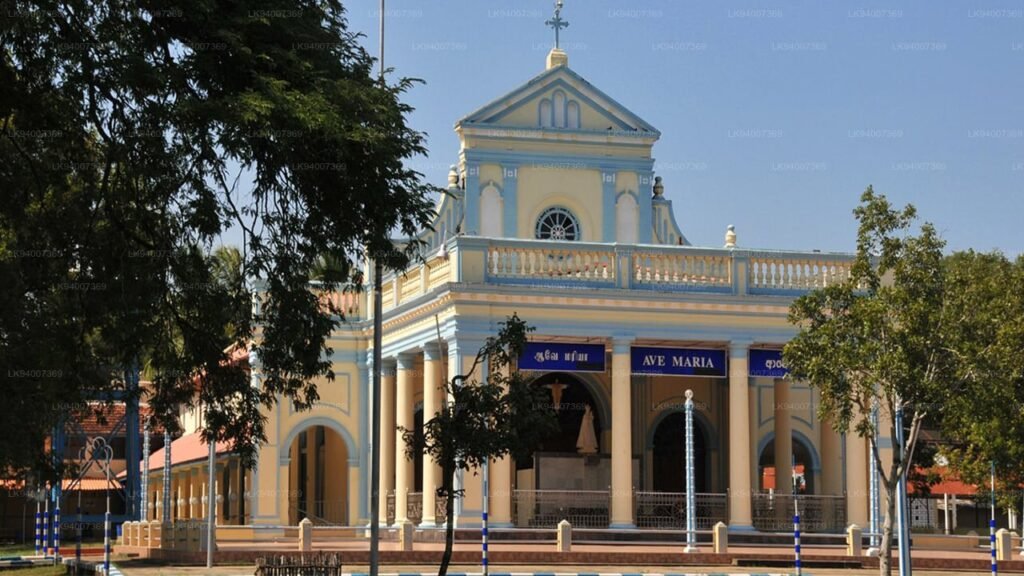
The white façade of the Madhu Church stands dignified against the green canopy of trees. Its simplicity is one of its greatest strengths. There is no heavy ornamentation or grandeur; instead, the structure carries a quiet grace that feels fitting for its rural surroundings.
A broad sandy courtyard—iconic to Madhu—opens out in front of the church. Pilgrims walk barefoot across the soft sand, some kneeling as they approach the steps. The scent of incense mixes with the smell of earth and fresh wind. Bells ring occasionally. Pigeons circle gently above the roof. This is one of the few places where silence is not empty—it is full, alive, heavy with devotion.
Moments Inside the Shrine
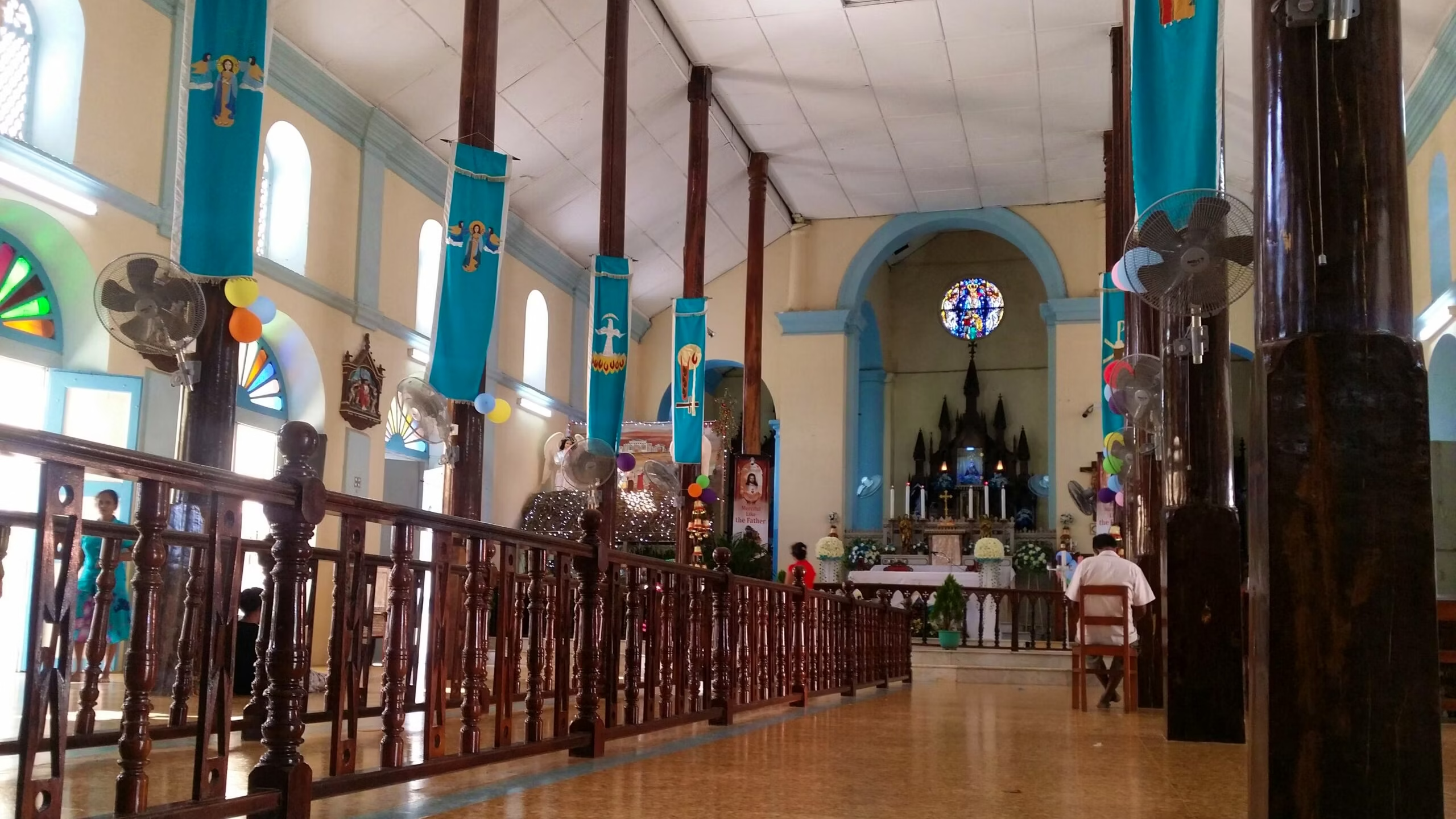
Inside the church, the statue of Our Lady of Madhu stands at the centre. She is small, simple, and deeply revered. Many visitors light candles or kneel for long moments in prayer. Others place flowers or write notes asking for healing, protection, or guidance. The atmosphere is intimate; even when the church is full, there is a remarkable sense of personal space.
The stained-glass windows cast soft colour across the pews. Candles flicker gently. The air feels cool despite the heat outside. Whether you are religious or not, the atmosphere creates a natural stillness that invites reflection.
A Space of Collective Healing
Madhu’s significance deepened during Sri Lanka’s civil conflict. Families displaced from the North and East sought refuge within the church grounds, believing that the sacred space offered safety from violence. Despite immense destruction in surrounding regions, the shrine remained a symbol of hope.
Today, Madhu continues to carry this emotional weight. Visitors come not only to pray but to heal—to find closure, to remember loved ones, or to release burdens they have been carrying. The shrine is one of the rare places in Sri Lanka where collective pain and collective faith meet gently.
Festivals and Pilgrimage Days
While Madhu is serene throughout the year, its two major feast days—15 August (Feast of the Assumption) and 2 July (Feast of Our Lady of Madhu)—transform the area into a vibrant, moving sea of humanity. Tens of thousands of pilgrims gather for Mass, processions, and blessings. The atmosphere becomes a powerful combination of devotion, community, and celebration.
Pilgrims walk kilometres with crosses, banners, or family statues. Some carry their infants to be blessed. Choirs sing hymns that echo across the forest. Vendors sell food and holy items. Mass is held outdoors, under the open sky, as people sit on mats spread across the sand. These gatherings are emotional, colourful, and profoundly rooted in Sri Lankan Catholic culture.
A Spiritual Pause in the North
Beyond the religious aspects, the Madhu Church experience is also a cultural and geographical journey. The surrounding forest reserve, the quiet roads, and the rural environment make the visit feel almost like stepping out of time. Many travellers describe Madhu as the perfect place to pause—to rest mentally, spiritually, and physically.
The church grounds are expansive, offering spaces to sit under trees, walk in silence, or simply observe. The gentle breeze, the distant hymns, and the rhythm of candle lighting create a natural meditation space without any effort. For those seeking a break from noise, stress, or routine, Madhu offers a unique stillness.
Community, Kindness, and Shared Humanity
One of the most memorable parts of visiting Madhu is the warmth of the people. Pilgrims share food, water, or mats with strangers. Volunteers help elderly visitors. Families walk together holding umbrellas against the sun. Children chase each other quietly across the sand. Even in large crowds, there is a deep sense of respect.
Madhu’s culture has always been inclusive—Buddhists, Hindus, Muslims, and Christians have all visited the shrine for blessings. This shared space of humanity is one of its most powerful qualities.
Leaving Madhu: The After-Feeling
Most visitors describe the return journey as slow, reflective, and strangely peaceful. Something about the experience lingers—the sense of quiet, the memory of candlelight, the feeling of having stepped into a space that belongs to all Sri Lankans.
The visit often creates introspection, even for those who aren’t religious. Madhu has a way of grounding you—reminding you of simplicity, resilience, and the human need for connection and stillness.
Why the Madhu Experience Stays With You
Because it is not just about a church.
It is about history, memory, culture, nature, community, and reflection—all meeting in one quiet pocket of the island. Madhu is a reminder that sacred spaces are not built only with stone; they are built with centuries of human hope.
The Madhu Church experience remains one of Sri Lanka’s most meaningful journeys, offering visitors a rare opportunity to step into a place where faith, time, and silence come together beautifully.
Click on here “WARLEIGH CHURCH AND OTHER HISTORIC HILL COUNTRY CHURCHES IN SRI LANKA”