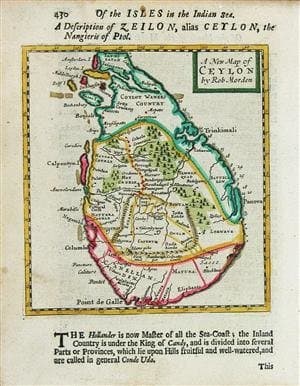
A 1716 Map of Sri Lanka, a Washington DC Thrift Store, and the Quiet Power of Women Who Recognise Value
There are moments when history does not announce itself loudly. It does not arrive in museums or auctions or glossy catalogues. Sometimes, it sits quietly between mismatched frames and forgotten books, priced modestly, waiting for the right eyes to notice.
This is a story about one such moment a 1716 map of Sri Lanka, discovered not in an archive, but in a thrift store in Washington DC. And more importantly, it is a story about the quiet, disciplined power of women who recognise value before the world validates it.
This is not nostalgia. This is about perception, cultural memory, and the kind of intelligence that does not need applause.
Recent article click on here “A Bakery That Raised a Generation And Quietly Shaped Working Women’s Colombo”
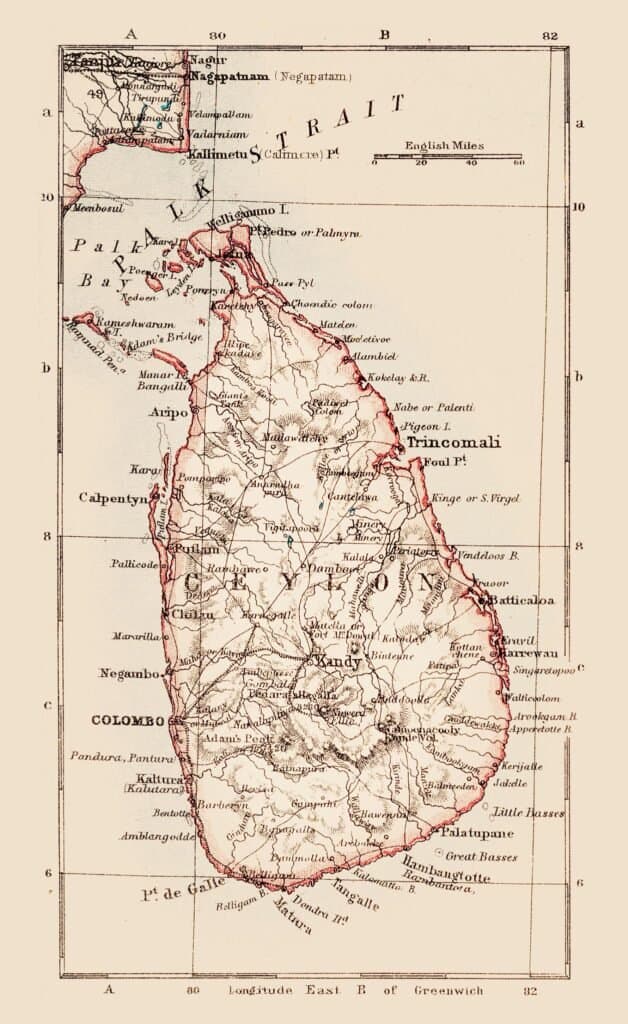
The Map That Shouldn’t Have Been There
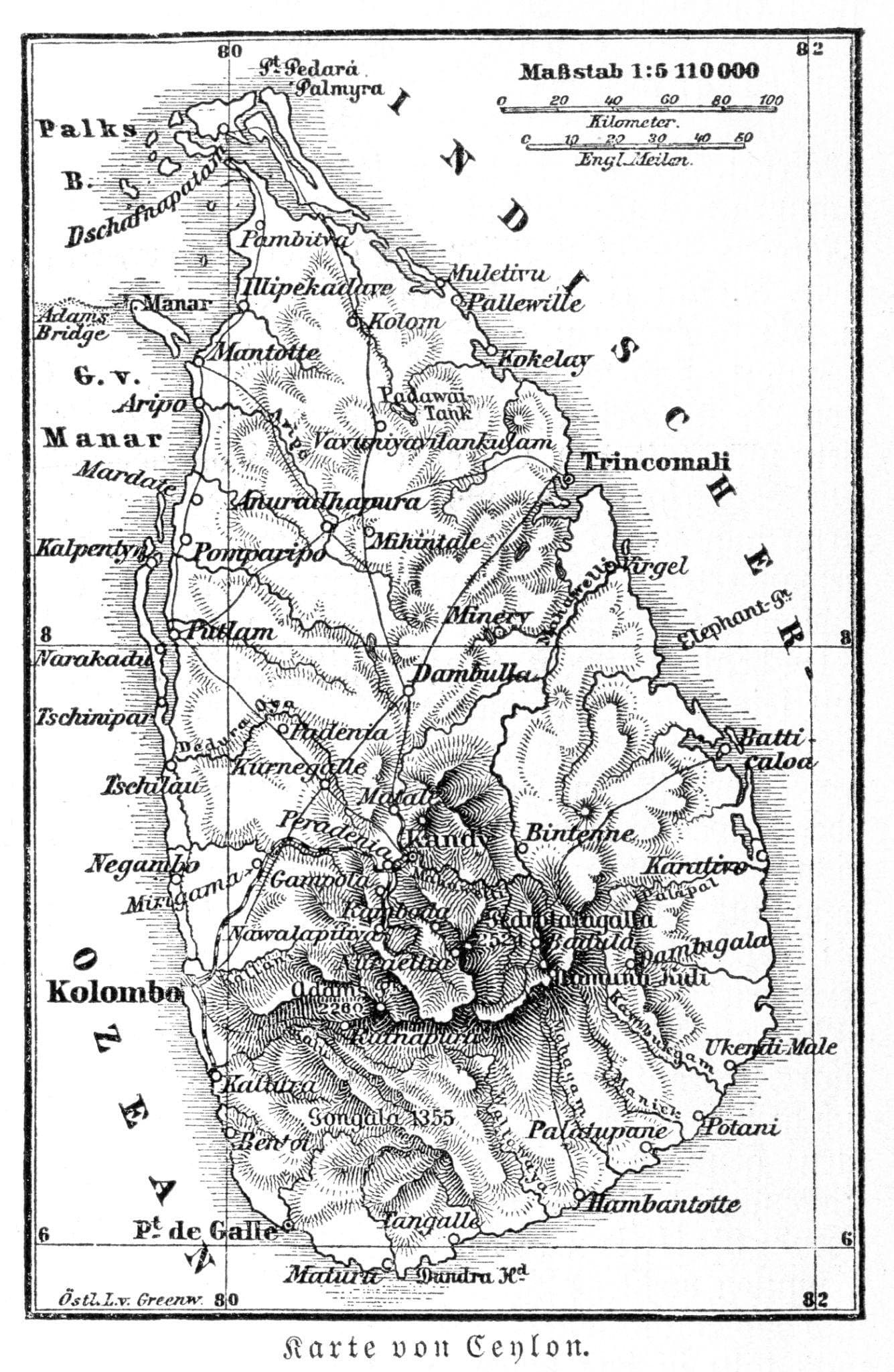
A 1716 map of Sri Lanka, then known to European cartographers as Ceylon, is not a casual object. These maps were typically commissioned by colonial powers, merchants, or navigators. They were instruments of trade, control, and knowledge. They documented coastlines, ports, cinnamon-growing regions, and maritime routes with remarkable care.
Such maps usually end up in:
- National archives
- Private collections
- University libraries
- Auction houses with six-figure estimates
Yet this one was leaning quietly against a shelf in a thrift store thousands of kilometres away from the island it depicted.
No dramatic spotlight. No certificate. No story attached.
Just paper, ink, age, and silence.
Why 1716 Matters in Sri Lankan Cartography
The year 1716 places this map in a very specific historical window.
This was during the Dutch colonial period, when Sri Lanka occupied a strategic position in the Indian Ocean trade network. European powers were obsessed with mapping the island accurately because Sri Lanka was not peripheral it was central.
A map from this era is not decorative. It is political.
These maps often:
- Overemphasised ports and coastal fortifications
- Included Dutch place names layered over indigenous ones
- Highlighted cinnamon regions with commercial intent
- Omitted interior areas that resisted colonial penetration
Every line is a decision. Every omission is deliberate.
To hold such a map is to hold a snapshot of how the world saw Sri Lanka when global power was shifting eastward and maritime empires were being built.
The Thrift Store Paradox
Thrift stores are places of contradiction.
They are filled with objects that have:
- Lost their original context
- Outlived their previous owners
- Been miscategorised as ordinary
What makes a thrift store powerful is not what is sold there, but what is overlooked.
Most people pass through quickly, scanning for trends, aesthetics, or resale potential. They look for what is already fashionable.
But recognising value requires a different posture:
- Slowness
- Knowledge
- Intuition
- A willingness to trust one’s internal judgement
The map was not hidden. It was simply unseen.
Women Who See Before Others Do
There is a particular kind of intelligence that many women cultivate often unconsciously because society has trained them to.
It is the ability to:
- Read between lines
- Sense importance without external validation
- Hold attention on what others dismiss
- Recognise worth before it is priced correctly
This is not sentimentality. It is pattern recognition refined by lived experience.
In history, women have often been excluded from formal authority, which meant their power developed elsewhere: in discernment, memory, continuity, and preservation.
To recognise the value of a 1716 map in a thrift store requires:
- Historical literacy
- Cultural awareness
- Confidence that does not rely on consensus
This is quiet power. And it is formidable.\
Value Is Not the Same as Price
Modern culture confuses value with price.
Price is what the market agrees on after recognition.
Value exists before recognition.
The thrift store map illustrates this perfectly:
- Its price reflected ignorance
- Its value reflected history
Those who wait for value to be confirmed by experts, labels, or trends arrive late. They buy at a premium and call it wisdom.
Those who recognise value early operate differently. They do not need permission.
Sri Lanka Through Foreign Eyes
Maps are never neutral.
A European map of Sri Lanka from 1716 tells us as much about Europe as it does about the island. It reveals:
- What the colonisers wanted
- What they feared
- What they did not yet understand
Indigenous knowledge systems were rarely credited. Local names were often distorted or erased. The interior of the island frequently appeared vague or incomplete not because it was unknown, but because it resisted easy control.
To reclaim such a map today is to reverse its original power dynamic. It becomes no longer a tool of extraction, but a record of survival.
The Gendered Nature of Preservation
Across cultures, women have been the quiet custodians of memory.
They preserved:
- Letters
- Recipes
- Family histories
- Objects others discarded
Museums often celebrate explorers, collectors, and donors. Rarely do they acknowledge the women who saved things long before they were deemed important.
The thrift store map fits this pattern. Its survival depended not on prestige, but on patience.
Recognising its value continues that lineage of preservation.
Why This Story Matters Now
In an age of:
- Fast content
- Algorithmic validation
- Influencer-approved worth
Stories like this matter because they resist the idea that value must be loud.
Sri Lanka’s history is often told through grand narratives: colonisation, independence, conflict, recovery. But there is another history one that lives in overlooked artefacts, private collections, and personal moments of recognition.
This map did not need to be discovered by an institution to matter. It mattered because someone saw it.
Recognition Is a Skill, Not an Accident
The most important lesson here is not about maps or thrift stores.
It is this: recognising value is a trained skill.
It requires:
- Education beyond credentials
- Curiosity without immediate reward
- Confidence without applause
Women who cultivate this skill often do so quietly, because they were never encouraged to announce their intelligence.
But history shows us that the world often moves forward because of people who notice what others ignore.
A Map, a Moment, and a Mindset
A 1716 map of Sri Lanka in a Washington DC thrift store is not a coincidence. It is a convergence:
- Of global history
- Of displacement
- Of perception
And of a mindset that understands something deeply unfashionable that worth does not need to shout.
The quiet power of women who recognise value lies precisely there in seeing clearly, acting decisively, and letting the object speak for itself.
Long before the rest of the world catches up.