Beyond the Tea Bungalow
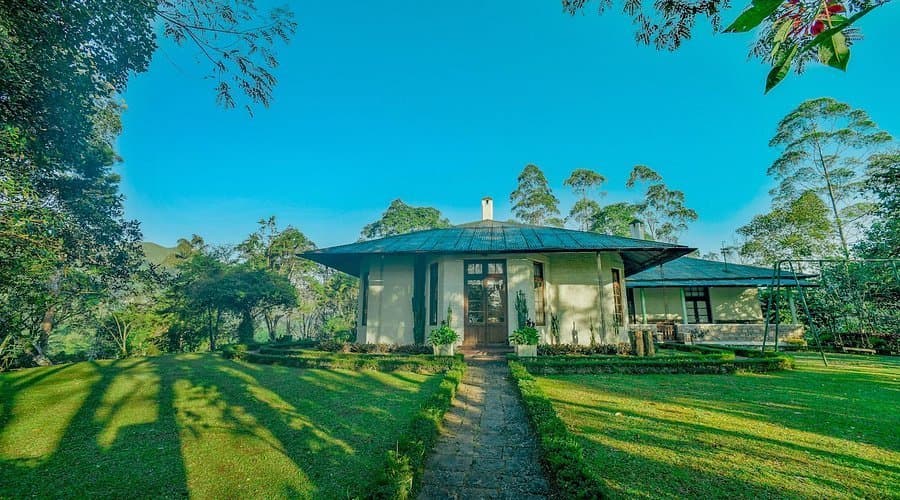
The image of a tea bungalow is deeply woven into Sri Lanka’s cultural memory. Perched on misty hills, surrounded by manicured tea bushes, these colonial-era homes often symbolise quiet luxury, cool-climate romance, and a slower way of life. For many, the tea bungalow represents escape — a retreat from heat, noise, and urgency.
But to stop there is to miss the fuller story.
Beyond the polished verandas, antique furniture, and postcard views lies a layered world shaped by labour, land, transition, and survival. The tea bungalow is not just an architectural relic or a tourist fantasy. It is a doorway into histories of power, resilience, and evolving identities that continue to shape Sri Lanka’s hill country today.
This is the story beyond the tea bungalow — the lives, landscapes, and legacies that exist around and underneath it.
The Tea Bungalow as a Symbol, Not the Whole Story
Tea bungalows were originally built as functional homes for British planters during the colonial period. Their placement was strategic — elevated ground for cooler air, clear views of estates, and distance from labour lines. Over time, these structures became symbols of authority, leisure, and control.
Today, many have been restored as boutique hotels or private residences, marketed through nostalgia and exclusivity. They promise serenity, tradition, and refinement. Yet this curated experience often isolates the bungalow from the estate ecosystem that made it possible.
The tea bungalow was never meant to exist alone. It was the centre of a vast, human-powered operation involving thousands of workers, complex social hierarchies, and an economy that shaped the country for generations.
Understanding the bungalow requires stepping off the veranda and into the surrounding terrain.
The Lives That Sustained the Estate
Beyond the bungalow lie the line rooms — modest housing settlements where generations of estate workers have lived. These communities, primarily descended from Indian Tamil labourers brought during the colonial era, remain central to Sri Lanka’s tea industry.
Life here is defined by routine and resilience. Early mornings, long hours in the fields, weathered hands, and carefully measured yields are part of daily reality. Despite contributing to one of the country’s most recognisable exports, estate workers have historically faced limited access to education, healthcare, and economic mobility.
In recent years, advocacy, policy shifts, and community initiatives have improved conditions, but disparities remain visible. The contrast between the bungalow’s comfort and the labourers’ living conditions is not accidental — it reflects an inherited structure that still influences the present.
To go beyond the tea bungalow is to acknowledge these lives not as background scenery, but as the backbone of the landscape.
A Landscape Shaped by Human Hands
The rolling hills of tea country appear natural and timeless, but they are meticulously engineered environments. Forests were cleared, hills reshaped, and ecosystems altered to accommodate tea cultivation. What looks organic is, in fact, the result of decades of human intervention.
Estate workers know this land intimately. They understand how mist moves through valleys, how rainfall affects leaf quality, and how seasons subtly alter the terrain. Their relationship with the land is practical, inherited, and deeply embodied.
Meanwhile, the bungalow often represents a detached vantage point — observing the land rather than working within it. Beyond the bungalow, the hills are not just beautiful; they are demanding, unpredictable, and alive with risk and reward.
This contrast reveals two ways of inhabiting the same space — one observational, the other immersive.
From Colonial Control to Local Ownership
The post-independence era brought significant changes to the tea industry. Nationalisation, restructuring, and eventual privatisation altered ownership models and management styles. Many estates transitioned from British hands to local companies and families.
With this shift came new dynamics. The tea bungalow, once a symbol of foreign control, began to change meaning. Some were abandoned, others repurposed. A few became shared spaces, administrative hubs, or heritage properties.
Local managers and estate superintendents redefined authority in ways shaped by language, culture, and proximity to workers. While hierarchies remained, relationships evolved. Power was no longer imported; it was negotiated internally.
Beyond the tea bungalow lies this transitional history — one of adaptation rather than rupture.
The Women of the Hills
Any story beyond the tea bungalow must centre the women who dominate the tea fields. Female tea pluckers form the backbone of estate labour, their skill determining the quality and consistency of the harvest.
Their work is precise and physically demanding. Each leaf is selected by hand, guided by experience rather than machinery. Yet their labour is often undervalued, normalised, and underpaid.
Beyond their work in the fields, these women manage households, raise children, preserve cultural practices, and sustain community networks. Their lives extend far beyond the rows of tea bushes, yet they remain largely invisible in romanticised narratives of tea country.
To look past the bungalow is to see strength where tourism often sees only scenery.
Education, Aspiration, and the Next Generation
Change is most visible among the younger generation in estate communities. Increased access to education, technology, and urban exposure has expanded aspirations beyond plantation labour.
Many young people now seek careers in teaching, healthcare, hospitality, IT, and entrepreneurship. Some leave the hills altogether, while others aim to transform life within them.
This shift creates tension. Estates depend on labour continuity, while individuals pursue mobility. Families navigate pride in heritage alongside the desire for progress.
The tea bungalow, once a fixed symbol of authority, now stands amid uncertainty — no longer the unquestioned centre of estate life, but one element within a changing social landscape.
Tourism, Preservation, and Ethical Questions
The rise of heritage tourism has given tea bungalows new relevance. Restored properties offer curated experiences of colonial elegance, often marketed to international visitors seeking authenticity and tranquillity.
While tourism generates revenue and preserves architecture, it also raises ethical questions. Whose history is being told? Who benefits economically? And which stories remain absent?
Some estates now incorporate community visits, local employment, and cultural exchange into their tourism models. Others remain enclosed, offering comfort without context.
Beyond the tea bungalow lies the challenge of responsible storytelling — balancing preservation with honesty, and luxury with accountability.
Memory, Nostalgia, and Selective History
Tea bungalows evoke nostalgia, but nostalgia is selective. It often highlights aesthetics while softening or omitting hardship. Polished wood floors and antique tea sets become stand-ins for an era that was, for many, marked by exploitation and exclusion.
Moving beyond the bungalow requires confronting uncomfortable truths without erasing beauty. It means recognising that heritage can be complex — worthy of preservation, but not uncritical admiration.
This more mature engagement with history allows space for multiple narratives to coexist: the architectural, the economic, the human.
Reimagining the Hill Country Narrative
Today, the hill country stands at a crossroads. Climate change threatens yields. Labour shortages challenge sustainability. Young people question inherited roles. Tourism reshapes priorities.
In this context, the tea bungalow can no longer remain a static symbol. It must either evolve or fade into irrelevance.
Some estates are reimagining these spaces as centres for dialogue, education, and cultural exchange. Others use them to support community projects or showcase inclusive histories.
Beyond the tea bungalow lies the opportunity to redefine what the hill country represents — not just as a retreat, but as a living, working region with agency and voice.
Seeing the Whole Landscape
To truly experience Sri Lanka’s tea country, one must look beyond the bungalow’s walls. Walk the paths workers take at dawn. Listen to the rhythms of estate life. Understand the economics that sustain the view.
The tea bungalow remains part of the story — but it is not the story.
Beyond it lies a complex human landscape shaped by labour, resilience, transition, and hope. Seeing that landscape in full does not diminish the beauty of the hills. It deepens it.
And in that deeper understanding, the hill country becomes more than a destination. It becomes a shared responsibility.
Click on here “Lives Behind the Bungalows”