Ceylon’s Forgotten Dutch Salt Pans: The Story Behind an Old Trade
Ceylon’s Forgotten Dutch Salt Pans: The Story Behind an Old Trade | Salt has shaped civilisations for thousands of years. Long before refrigeration, it was the world’s most reliable preservative, a strategic commodity, and a source of wealth. In Sri Lanka, salt has always been part of life along the coasts — but during the Dutch colonial period, it became an organised industry, tightly controlled and deeply linked to the island’s economic history.
This article explores the forgotten story of the Dutch salt pans in Ceylon: how they came to be, what they meant for trade and governance, and the legacy they have left across coastal landscapes that still shimmer under the tropical sun.
The Dutch Arrive: Why Salt Mattered to a Colonial Power
When the Dutch East India Company (VOC) captured coastal Ceylon from the Portuguese in the mid-1600s, they were not just looking for cinnamon. They were building a maritime empire, and salt was a crucial part of that engine.
Salt mattered for three reasons:
- Preservation – VOC fleets sailing between Europe and Asia needed preserved fish and meat. Salt was their lifeline for long voyages.
- Profit – Salt was an essential commodity in regional trade networks. Controlling production meant controlling revenue.
- Governance – By monopolising salt, the Dutch could exert economic pressure on local communities and kingdoms.
With this logic, the VOC surveyed coastal Ceylon for ideal locations to build large, shallow salt pans — places where seawater could be trapped, evaporated, and harvested.
Building the Salt Pans: Engineering in a Harsh Landscape
Most Dutch salt pans were built along Puttalam, Mannar, Jaffna, Trincomalee, and Hambantota, areas where heat, wind, and shallow lagoons created perfect natural conditions.
How the pans were made
The Dutch used a simple but highly efficient method:
- Seawater channels were dug to bring in water from the ocean or adjoining lagoons.
- Large shallow beds were levelled using clay and compacted soil.
- Wind and sunshine did the rest, slowly evaporating the water over days.
- Crystallised salt was raked, heaped, and collected.
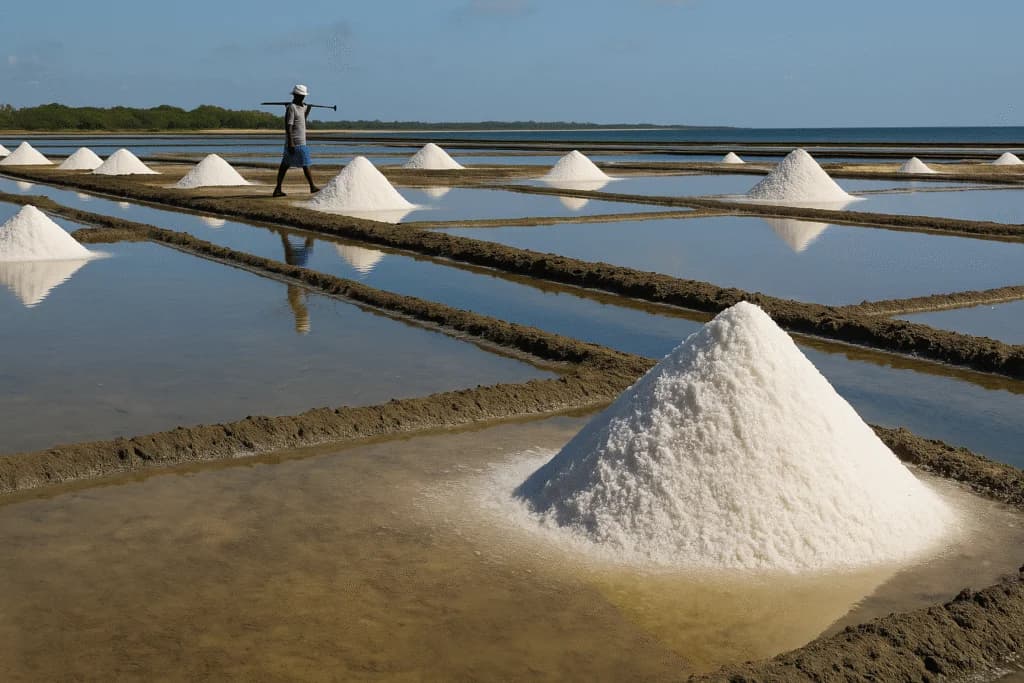
To reduce contamination, the engineers often lined the bottoms with layers of clay. The rows of pans resembled geometric patterns — long rectangles glistening white under the sun.
Labour and local communities
The VOC rarely worked these pans themselves. They used:
- Local fisher communities, who already understood sea cycles.
- Tamil and Sinhalese labourers, often working under compulsory service rules.
- Prisoners or debt-bound workers, especially during peak evaporation seasons.
For many coastal villages, salt became a parallel seasonal livelihood alongside fishing and palmyrah products.
Salt and Power: The Dutch Monopoly
The Dutch did not just produce salt — they controlled it ruthlessly.
Monopoly laws
The VOC banned private salt production except under strict licence. Violators faced:
- Confiscation of harvested salt
- Fines
- Forced labour penalties
By controlling supply, the Dutch could set prices, influence trade partners, and ensure steady revenue.
Taxation and local impact
Salt taxes became a significant income stream. Villagers often resented the restrictions because salt was essential for daily cooking and preserving fish. To ensure compliance, the Dutch stationed guards near pans and monitored trade routes.
In some areas, people resorted to secret salt-making — boiling seawater at night or digging hidden pits. Punishments were harsh, but the underground trade persisted.
Geopolitics of Salt: Why the Kingdom of Kandy Watched Closely
The inland Kingdom of Kandy understood the power of salt. Since Kandy had no coastline, it depended on coastal access for supplies.
The Dutch frequently used salt as a bargaining tool:
- Cutting supplies during political tensions
- Offering salt concessions to secure loyalty
- Leveraging shortage to force economic dependence
Salt was never the centre of diplomacy, but it was an instrument of subtle pressure between two powers negotiating uneasy coexistence.
Click on here “Horton Plains: Understanding the Plateau Ecosystem Before World’s End”
The Cultural Layer: Salt in Everyday Life
Beyond politics and commerce, salt was woven into coastal culture.
Traditional curing
Communities used Dutch salt to preserve:
- Dried fish
- Maldive fish (umbala)
- Meat for long journeys
- Pickles and chutneys
Salt pans also became seasonal gathering points — places where workers exchanged news, celebrated small festivals, and cooperated through tough labour seasons.
Beliefs and rituals
Salt was believed to:
- Ward off evil
- Purify spaces
- Bring prosperity into homes
Even today, Sri Lankan households use salt for cleansing rituals, a legacy that stretches back centuries.
The Decline of the Dutch Pans: British Rule and Modernisation
When the British took over coastal Ceylon in 1796, they inherited the entire salt monopoly. But British economic thinking was different.
Changes under British rule
The British:
- Expanded the salt industry
- Introduced new administrative systems
- Relaxed some labour restrictions
- Focused more on taxation than direct control
Although the Dutch pans were still used, the British modernised many sites and integrated salt revenue into their broader colonial budget.
Industrial changes
By the late 19th and early 20th centuries:
- Mechanical pumping
- Larger storage systems
- Better transport networks
gradually reshaped how salt was produced and distributed.
This shift reduced reliance on some Dutch-era pans, leaving many to fade into history.
What Remains Today: Landscapes of Memory
Drive through areas like Puttalam, Palaviya, Elephant Pass, Mantai, or Hambantota, and you’ll still see remnants of the old industry:
- Shallow rectangular beds with cracked clay
- Abandoned channels winding through mangroves
- Old sluice gates
- Mounds of white salt along modern ponds
- The distinctive smell of brine and hot sun
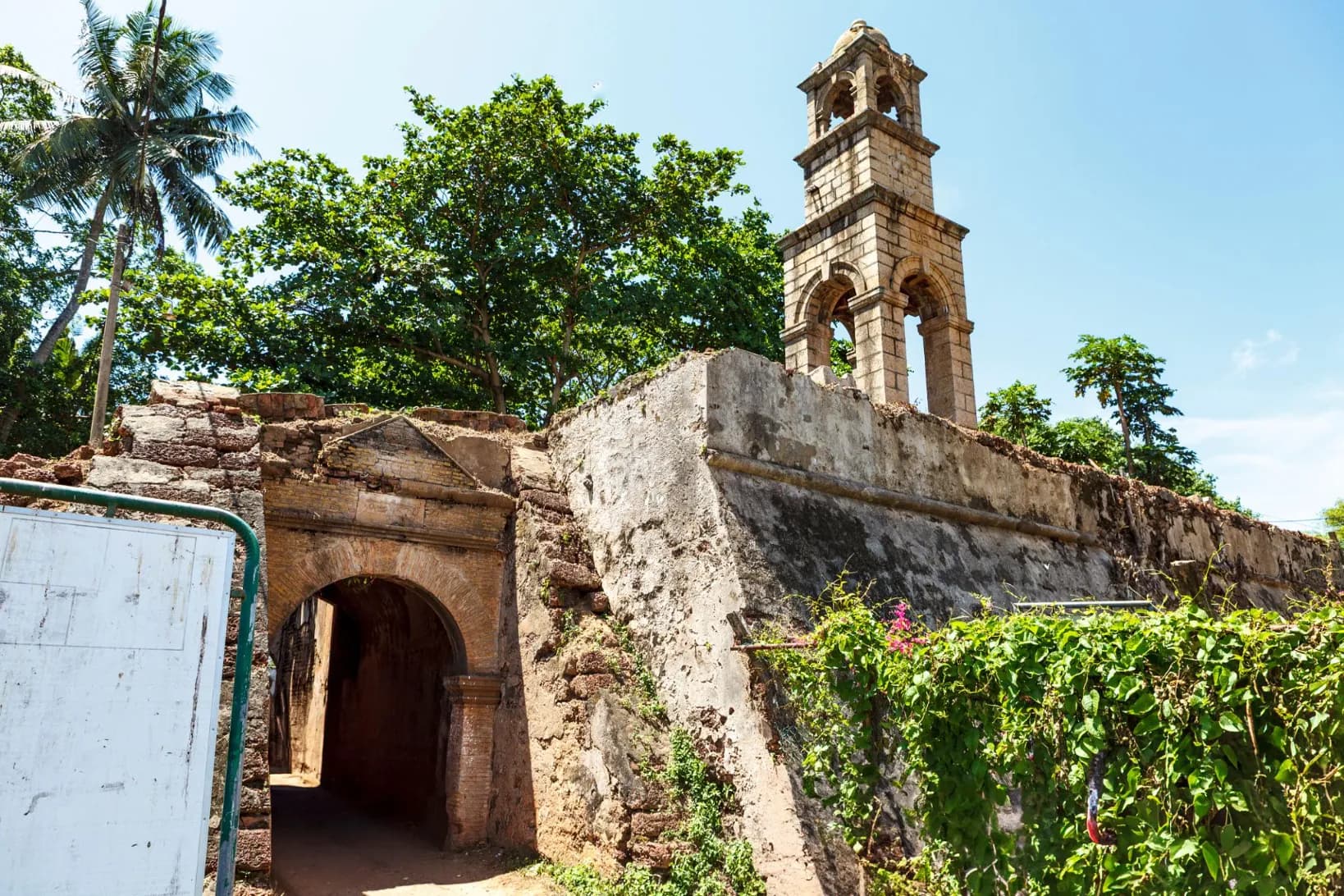
Most modern salt factories sit on top of or beside Dutch foundations. In some cases, Dutch stonework still forms part of the channels.
Heritage potential
Despite their significance, the story of Dutch salt pans is largely undocumented in mainstream tourism. These sites could become:
- Community-run heritage trails
- Outdoor museums
- Eco-cultural tourism destinations
- Research sites for colonial engineering
They are quiet, wide-open landscapes that still carry echoes of labour, empire, and coastal resilience.
Why the Dutch Salt Pans Matter Today
Salt pans are more than industrial relics. They highlight:
- The environmental knowledge of colonial engineers
- The importance of salt to global maritime trade
- The everyday lives of coastal communities
- The power dynamics between colonisers and local kingdoms
- The evolution of Sri Lanka’s coastal economy
They remind us that history is not only in fortresses and palaces. It also lives in shimmering white plains where seawater once evaporated silently under the tropical sun.
Conclusion: A Forgotten Chapter Worth Preserving
Ceylon’s Dutch salt pans are fading from public memory, overshadowed by more dramatic stories of cinnamon, forts, and maritime battles. But they were vital to the survival and expansion of a global empire — and they shaped the livelihoods of countless coastal families.
To look at a salt pan today is to see:
- The imprint of colonial engineering
- The resilience of Sri Lankan communities
- The enduring relationship between humans and the sea
This forgotten trade deserves a place in the island’s broader narrative — both as a historical resource and a reminder of how deeply the ocean has influenced Sri Lanka’s past and present.