December in the National Parks: Safe Routes, Animal Patterns, and What Changes After Heavy Rain
December is a transitional month for Sri Lanka’s national parks. Heavy rains from the North-East monsoon reshape landscapes, alter animal movement, and quietly redefine what “safari season” looks like. While many travellers assume rain means poor wildlife viewing, December offers a different, often more meaningful experience—if you understand what changes and how to move safely.
This guide explains how national parks behave in December, what to expect from wildlife, and how to plan responsibly after heavy rain.
Understanding December’s Rainfall Pattern
December rainfall is not uniform across Sri Lanka. The North-East monsoon mainly affects the eastern and northern regions, while the southern and south-eastern dry zone parks experience intermittent but intense downpours rather than constant rain.
These rains are usually short, heavy bursts followed by clear skies. The result is sudden flooding of low-lying areas, fast-growing grasslands, and temporary water bodies that dramatically influence animal behaviour.
For visitors, this means conditions can change daily—and sometimes hourly—inside the parks.
How Heavy Rain Reshapes National Parks
Rain does more than make roads muddy. It transforms the entire ecosystem.
Dry scrublands soften into lush feeding grounds. Ancient tank systems refill. Seasonal streams become flowing rivers again. Areas that were inaccessible for months suddenly come alive, while other zones temporarily close due to safety concerns.
Predators, herbivores, and birds all respond differently, creating shifting wildlife patterns that guides closely track during December.
Safe Routes Inside Parks After Rain
Safety in December depends heavily on route selection and timing.
Most parks restrict access to low-lying jeep tracks after heavy rain. These areas flood quickly and can trap vehicles in deep mud. Experienced trackers tend to favour elevated tracks, forest-edge routes, and rocky terrain that drains faster.
Morning safaris are generally safer than afternoon ones, as rain tends to fall later in the day. Early starts also reduce the risk of getting caught behind closed internal gates if sudden weather changes force route closures.
It is essential to travel with registered park guides and drivers who understand seasonal terrain behaviour—not just wildlife spotting.
Changes in Elephant Movement Patterns
December significantly alters elephant behaviour.
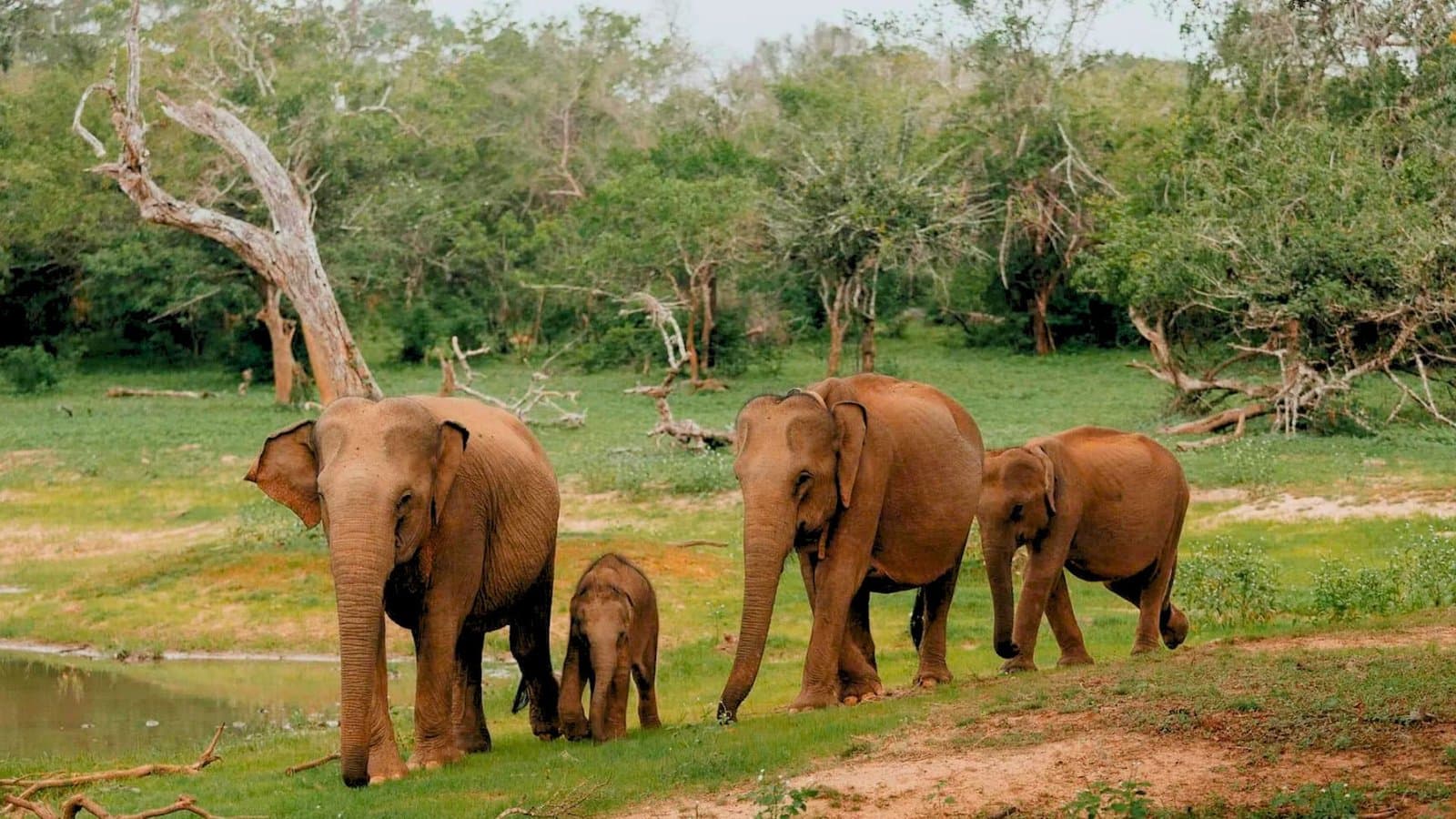
With water widely available, elephants no longer congregate around major tanks and reservoirs. Instead, they disperse across the park, feeding on fresh grass and young shoots that emerge after rain.
This dispersion can make large herds harder to find but increases the chance of seeing relaxed family groups moving through open grasslands or forest edges. Bulls, in particular, roam more widely during this period.
Because elephants are not stressed by water scarcity, aggression levels tend to be lower—though caution is always essential, especially near calves.
Leopard Behaviour During the Wet Season
Leopards become more elusive but not absent in December.
Dense vegetation provides increased cover, allowing leopards to hunt closer to prey without being seen. They often shift activity to early mornings and late evenings, avoiding periods when rain masks sound and scent.
In parks like Yala, Wilpattu, and Kumana, leopards are more frequently seen near rocky outcrops and higher ground where visibility remains clear despite rain.
While sightings may be fewer, they are often more natural—without crowds or prolonged vehicle clustering.
Birdlife Thrives After Rain
December is an exceptional month for birdlife.
Migratory species are fully settled, and wetlands brim with activity. Flooded grasslands attract waders, storks, herons, and pelicans, while forested areas echo with calls from resident species responding to breeding conditions.
Peacocks display more frequently, waterbirds expand their feeding zones, and raptors take advantage of increased small prey activity after rain.
For photographers and birdwatchers, overcast skies offer softer light and richer colours—ideal for detailed observation.
Impact on Safari Roads and Vehicle Access
Rain has a direct impact on safari logistics.
Jeep speeds slow considerably due to mud, standing water, and reduced visibility. Some internal routes may close temporarily without prior notice, depending on rainfall intensity.
This can mean fewer kilometres covered during a safari—but also fewer vehicles overall. Reduced traffic often leads to quieter encounters with wildlife, allowing animals to behave more naturally.
Travellers should prioritise quality over quantity, focusing on specific habitats rather than trying to “cover the entire park.”
Click on here “Tea-Infused Christmas: How Ceylon Tea Shapes Drinks, Cakes, and Festive Tables”
What Changes in Visitor Experience
December safaris are less about dramatic sightings and more about atmosphere, rhythm, and ecosystem observation.
You may spend time watching elephants feed rather than charge, birds forage instead of flee, or deer move calmly through regenerated grasslands.
The parks feel alive, washed clean, and deeply connected to seasonal cycles. For travellers seeking authenticity rather than spectacle, this can be a more rewarding experience.
Crowds are thinner, jeep congestion is reduced, and guides have more flexibility to interpret animal behaviour rather than rush between sightings.
Clothing and Preparation for Wet Conditions
Preparation is critical in December.
Lightweight, quick-drying clothing is preferable to heavy fabrics. Neutral colours help with wildlife observation, while waterproof layers protect against sudden showers.
Footwear should handle mud and shallow water. Camera equipment must be protected against moisture, even during short safaris.
It is also wise to carry drinking water and light snacks, as rain-related delays can extend safari duration unexpectedly.
Park-Specific Considerations in December
Not all parks behave the same way.
Dry zone parks such as Yala Block 1, Udawalawe, and Minneriya remain accessible with experienced drivers, though route planning is essential.
Wilpattu’s natural lakes refill, creating stunning scenery but also limiting access to certain tracks. Kumana transforms into a birdwatcher’s haven.
Hill-country parks and forest reserves may experience mist, cooler temperatures, and slippery terrain, requiring additional caution.
Always confirm current conditions locally rather than relying solely on seasonal assumptions.
Ethical Wildlife Viewing After Rain
Wet-season safaris demand greater ethical awareness.
Animals are more vulnerable to disturbance when navigating soft ground or caring for young. Responsible drivers maintain distance, avoid chasing sightings, and respect temporary route closures.
December is not a month for aggressive wildlife tourism. It is a time to observe, understand, and adapt to nature’s pace.
Choosing operators who prioritise conservation over crowd-pleasing sightings makes a tangible difference during this sensitive period.
Is December Worth Visiting National Parks?
Yes—if expectations are aligned with reality.
December is not about guaranteed leopard photos or massive elephant gatherings. It is about witnessing renewal, movement, and ecological balance after rain.
For travellers who value storytelling, learning, and immersive nature experiences, December offers something rare: national parks in transition, quietly preparing for the year ahead.
Understanding these changes allows you to travel safely, respectfully, and with deeper appreciation for Sri Lanka’s living landscapes.