Dutch Wolvendaal Church A Living Monument of Colonial History and Quiet Strength
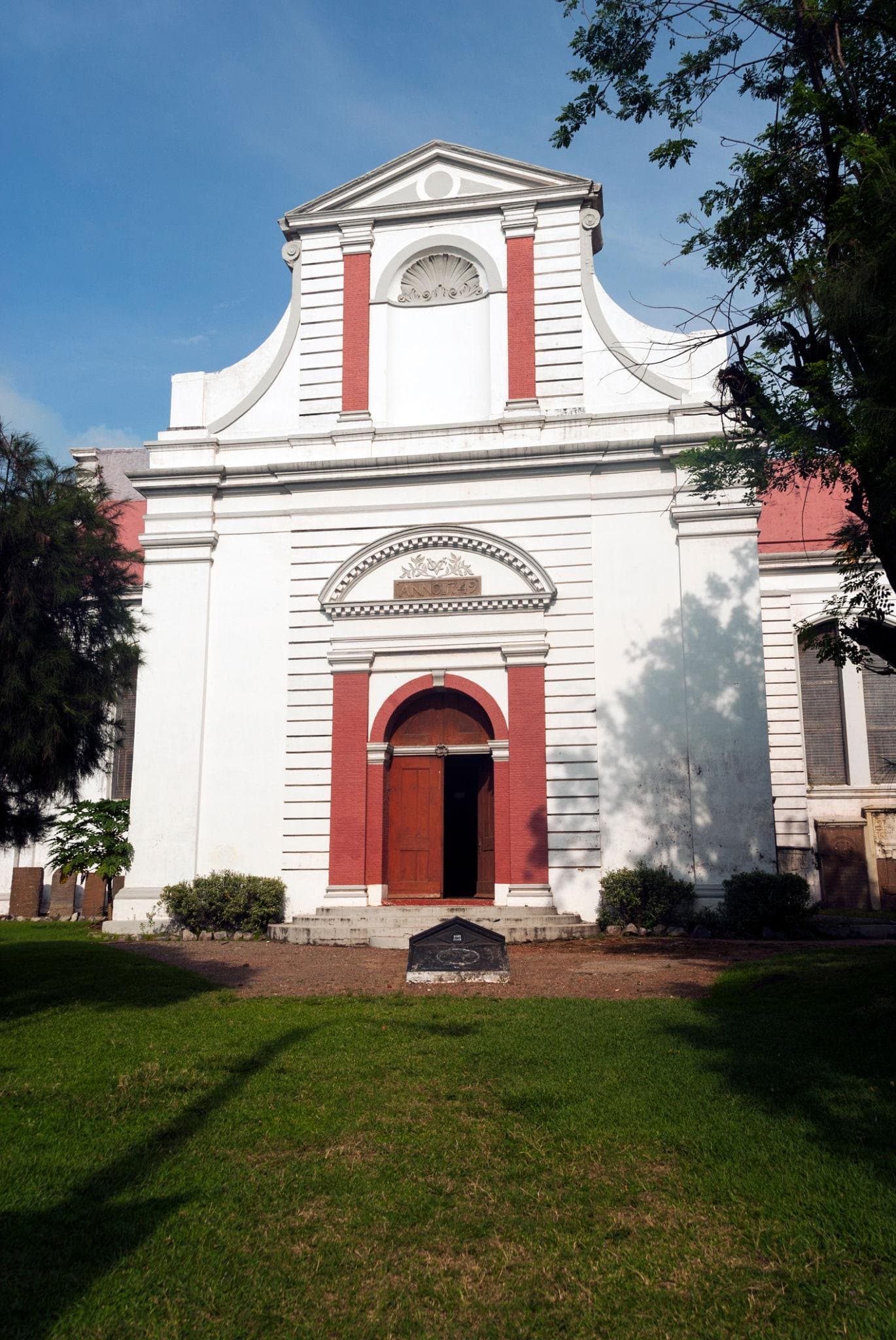
In the heart of old Colombo, rising above the bustle of Pettah and the hum of daily trade, stands one of Sri Lanka’s most enduring architectural treasures the Dutch Wolvendaal Church. More than a place of worship, it is a living monument of colonial history, religious transformation, and quiet resilience.
For over 275 years, this iconic landmark has witnessed empire, independence, cultural shifts, and the relentless modernisation of Colombo. Yet it remains, dignified and unshaken a silent custodian of stories carved in stone.
Read our recent article here “Danigala Circular Rock Sri Lanka’s ‘Alien Mountain’ and the Quiet Power of Women Who Climb Their Own Paths”
The Origins: A Dutch Legacy in Ceylon
The Wolvendaal Church was built in 1749 during the Dutch colonial period, when Ceylon was under the control of the Dutch East India Company (VOC). At the time, Colombo was a fortified colonial city, strategically vital for trade in cinnamon and other commodities.
The Dutch administration sought to establish Protestantism as the dominant faith, replacing Portuguese Catholic influence. Wolvendaal Church became the principal place of worship for the Dutch Reformed community in Colombo.
The name “Wolvendaal” translates roughly to “Vale of Wolves.” Historical accounts suggest that jackals once roamed the area and their howls gave the district its evocative name.
The church was constructed on a hill overlooking the city, symbolising both spiritual and administrative authority. Even today, its elevated position offers a commanding presence over its surroundings.
Architecture: Dutch Colonial Precision and Strength
From an architectural perspective, Wolvendaal Church is a remarkable example of 18th-century Dutch colonial design.
Structural Features
- Thick, lime-plastered brick walls
- Massive wooden beams supporting the roof
- High ceilings designed for tropical ventilation
- A symmetrical cruciform floor plan
The church’s structure reflects Dutch engineering pragmatism. It was built not merely for aesthetics, but for endurance. The tropical climate of Sri Lanka demanded careful material selection, and the builders relied on coral stone, limestone, and durable timber to withstand heat and humidity.
Inside, the space feels solemn yet expansive. The timber ceiling, supported by heavy beams, creates a sense of grounded strength. Natural light filters through tall windows, casting soft patterns across centuries-old gravestones embedded in the floor.
Tombstones Beneath Your Feet: A Cemetery Within
One of the most distinctive features of Wolvendaal Church is its stone floor composed of intricately carved Dutch tombstones.
These tomb slabs commemorate Dutch governors, military officers, merchants, and prominent colonial families. Many inscriptions remain legible, written in old Dutch script, offering historians invaluable insight into colonial life.
Walking across the nave is, in effect, walking across history.
The presence of these tombstones inside the church symbolises the intertwining of faith, power, and mortality during the colonial period. In Dutch tradition, burial within church premises was reserved for the elite a visible marker of status and influence.
Today, these gravestones serve as tangible artefacts of Sri Lanka’s layered past.
British Period and Post-Colonial Continuity
When the British took control of Ceylon in 1796, the church did not lose its significance. It continued to function under the Dutch Reformed Church, maintaining its religious role even as political authority shifted.
Unlike many colonial structures that fell into neglect, Wolvendaal Church retained an active congregation. Its continuity of use is part of what gives it its “living monument” status.
After Sri Lanka gained independence in 1948, the church remained an important heritage site and a functioning religious institution. It became part of the Church of Ceylon, linked to the Anglican Communion.
Today, it stands not as a relic of empire, but as a preserved chapter of Sri Lanka’s multicultural and multi-religious narrative.
A Symbol of Religious and Cultural Transition
Sri Lanka’s colonial history is layered: Portuguese, Dutch, British each left religious, architectural, and social imprints.
The Portuguese era (1505–1658) aggressively promoted Catholicism. The Dutch period (1658–1796) replaced it with Calvinist Protestantism. The British later introduced Anglican influences.
Wolvendaal Church represents that pivotal shift from Portuguese Catholic dominance to Dutch Protestant administration.
It reminds us that faith, politics, and commerce were inseparable forces in colonial Ceylon. Churches were not just places of prayer they were instruments of governance and cultural reshaping.
Yet over time, what began as an instrument of empire evolved into a shared heritage space for all Sri Lankans, regardless of faith.
Location: In the Heart of Old Colombo
Wolvendaal Church is situated in Kotahena, near the historic quarters of Colombo’s old town. The surrounding streets are vibrant with markets, residential communities, and colonial-era buildings.
Its location is strategic: close to the original Dutch fortifications and trade routes that defined Colombo’s early urban identity.
For visitors exploring Colombo’s colonial architecture alongside sites such as the Old Dutch Hospital, the Colombo Fort area, and St. Lucia’s Cathedral Wolvendaal offers a quieter, more contemplative experience.
It is less commercialised, less crowded but arguably more profound.
Conservation and Preservation Efforts
Over the centuries, Wolvendaal Church has undergone several restoration initiatives. Preservation of colonial-era buildings in tropical climates is complex, requiring:
- Structural reinforcement
- Protection against moisture damage
- Careful restoration of wooden beams
- Maintenance of historic tombstones
The Department of Archaeology in Sri Lanka recognises the church as a protected monument. Various conservation projects have helped stabilise and restore its original character while keeping it operational.
Preserving Wolvendaal is not merely about protecting bricks and mortar. It is about safeguarding a material narrative of Sri Lanka’s past.
Why Wolvendaal Still Matters Today
In a rapidly urbanising Colombo filled with glass towers and commercial complexes, Wolvendaal Church offers something increasingly rare: stillness.
It represents continuity in a city defined by change.
For historians, it is a primary source.
For architects, it is a case study in colonial tropical design.
For worshippers, it remains sacred space.
For visitors, it is a portal into 18th-century Ceylon.
Its strength is not loud. It does not dominate the skyline. It endures quietly.
And in that quiet endurance lies its power.
The Emotional Atmosphere: More Than Stone and Timber
Visitors often remark on the church’s atmosphere. There is a distinct sense of gravity not oppressive, but grounded.
Perhaps it is the weight of centuries beneath the floor.
Perhaps it is the filtered light and thick walls that mute the noise of the outside world.
Perhaps it is simply the awareness of time passing while the structure remains.
In a modern context where buildings are often designed for speed and profit, Wolvendaal stands as a reminder that architecture can embody memory.
It is not just a structure.
It is a witness.
A Living Monument of Quiet Strength
Calling Wolvendaal Church a “monument” does not fully capture its essence. Monuments are often static. This church breathes.
It continues to host services.
It continues to receive visitors.
It continues to exist in relationship with its community.
Its quiet strength lies in survival through colonial transition, political change, independence, civil unrest, and urban transformation.
Few structures in Colombo can claim such sustained relevance.
Visiting Wolvendaal Church: What to Expect
If you plan to visit:
- Dress modestly, as it remains a functioning place of worship.
- Take time to observe the inscriptions on the tombstones.
- Look upward at the timber ceiling a testament to 18th-century craftsmanship.
- Step outside and notice the elevated vantage point over old Colombo.
Photography is often permitted, but respectful conduct is essential.
The experience is not about spectacle.
It is about presence.
Final Reflection: The Endurance of History
The Dutch Wolvendaal Church is not merely a colonial relic. It is a lens through which we can examine Sri Lanka’s layered identity shaped by trade, faith, empire, and resilience.
It stands as evidence that history is not erased by time. It settles into walls, floors, and beams. It waits to be read.
In a country where modern development sometimes threatens heritage spaces, Wolvendaal reminds us that preservation is not nostalgia. It is responsibility.
More than two centuries later, it continues to embody quiet strength steady, grounded, and dignified.
And in that endurance, it remains one of Colombo’s most powerful historical landmarks.