Galle’s Military Past: How the Fort Shaped Trade, Power, and People
Galle Fort is often admired for its cobblestone lanes, colonial houses, cafés, and postcard-perfect sunsets. But beneath today’s charm lies a far more complex history — one defined by military strategy, maritime power, and centuries of human movement. For nearly 400 years, Galle Fort functioned not just as a coastal town but as a military command post, a global trading hub, and a living community shaped by conflict and commerce in equal measure.
This is the story of how Galle’s military past shaped trade, power, and the people who lived inside and outside its walls.
A Natural Harbour That Became a Strategic Goldmine
Long before any European ship reached the southern coast, Galle’s natural harbour was known to Arab, Chinese, and Indian traders. Its curve, protected by rocks and deep water, offered shelter during monsoons. For sailors navigating the Indian Ocean monsoon winds, this made Galle invaluable.
For early visitors, the harbour was a pit stop. For the Portuguese who arrived in 1505, it became a strategic foothold. And for the Dutch — who expanded it into a massive fortress — it grew into a military centre that protected one of the Indian Ocean’s busiest maritime routes.
Galle became a point where global ambitions collided with local realities.
The Portuguese: A Simple Outpost Becomes a Defensive Symbol
When the Portuguese anchored in Galle, their focus was control — not of the land, but of the sea. They were chasing cinnamon, elephants, and trade dominance.
They built a small fortalice (a basic fortification), guarded by a garrison that oversaw trade ships, taxed local merchants, and created routes that fed their growing coastal empire. Although the Portuguese kept the structure relatively simple, it set the stage for a far more ambitious transformation.
But their biggest legacy was political: they introduced a new kind of coastal militarisation. Power was no longer just about alliances with local kings; it depended on walls, cannons, and command posts facing the ocean.
The Dutch: Master Engineers Who Reinvented Galle
In 1640, the Dutch seized Galle from the Portuguese after a fierce battle. They quickly realised that Galle’s location was priceless — a natural shield for both trade and naval operations. What they built next reshaped the coastline, economy, and community for centuries.
Expanding the Fort into an Oceanic Stronghold
The Dutch demolished much of the earlier Portuguese structure and constructed a sprawling pentagon-shaped fort with:
- Bastions armed with heavy cannon
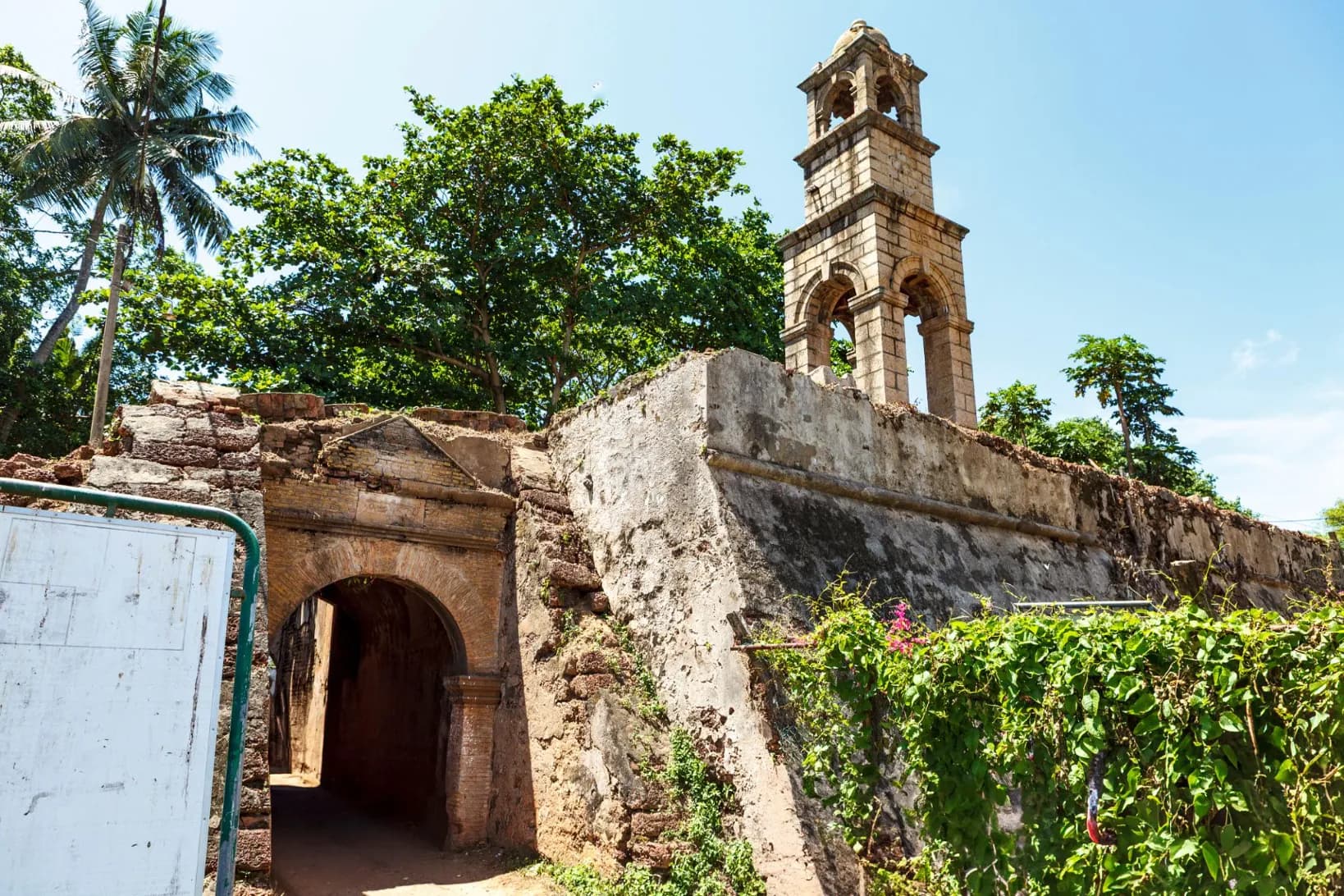
- Deep ramparts and massive granite walls
- A moat system and layered defences
- Controlled entry points like the iconic Old Gate
This wasn’t merely a coastal fortress — it was a military machine.
Protecting Cinnamon and Shipping Routes
Dutch power in Sri Lanka rested largely on cinnamon monopolies. Galle became both a military shield and a customs gateway. Every ship that entered the harbour passed under the gaze of Dutch cannons. Traders from Arabia, Persia, India, and Southeast Asia were taxed, monitored, and recorded.
The fort’s military strength was directly tied to economic success. The stronger the defences, the more confidently the Dutch controlled trade.
A Multi-Ethnic Community Inside the Walls
Galle Fort was never purely a European settlement. It was a melting pot shaped by military needs and commercial opportunity.
Who lived inside the Fort?
- Dutch commanders and soldiers
- Malay and Javanese troops brought by the VOC
- Sinhalese merchants and cinnamon peelers
- Muslim traders who continued pre-colonial trade
- Burghers — descendants of mixed marriages who became administrators, traders, and soldiers
Military presence created employment, and employment created a community. Schools, churches, warehouses, and barracks turned the fort into a living town — organised, disciplined, and always under watch.
Everyday Life Under Military Order
Daily life inside the fort revolved around:
- Military drills
- Gate curfews
- Controlled entry and exit
- Strict trade inspections
- Regimented urban planning
Even the grid-like streets and aligned houses reflected Dutch military precision. Galle wasn’t just protected by soldiers — it was shaped by their routines.
The British Era: From Battlefield to Bureaucracy
When the British took over in 1796, they inherited a fortress but operated differently from their predecessors. The age of massive sea battles had passed. Steamships, new naval technologies, and growing routes shifted major trade activity to Colombo.
Yet Galle Fort retained importance — not for battle, but for governance.
A New Administrative Hub
The British turned the fort into:
- A centre for regional administration
- A harbour for mail and communication ships
- A station where troops, officials, and supplies were transported across the empire
The military influence continued, but it was more bureaucratic than combative. Barracks became offices. Warehouses became postal centres. The fort transitioned from guarding trade to regulating it.
The Lighthouse: A Symbol of New Navigation Power
The British fortified the coastal edge with lighthouses, signalling the shift from defence to maritime guidance. Instead of cannons protecting ships, beacons guided them safely.
Trade and Military Power Were Always Intertwined
Across all three colonial periods, one theme remained unchanged: whoever controlled the walls controlled the wealth.
Galle’s military architecture did not exist to wage constant war. It existed to:
- Secure trade routes
- Protect warehoused goods
- Regulate imports and exports
- Strengthen political control
- Manage the movement of people
Galle Fort was part armour, part marketplace, and part home.
Click on here “Ceylon’s Forgotten Dutch Salt Pans: The Story Behind an Old Trade”
People Shaped the Fort as Much as the Fort Shaped Them
Military strategies defined the structure, but human stories defined the legacy.
The Traders
Local trading families adapted to every new ruler. Some collaborated, some resisted, but all found ways to work within the fort’s economic system. Generations prospered through cinnamon, jewellery, textiles, and coral-stone craftsmanship.
The Soldiers
The fort was always a military workplace. Soldiers from Europe, East Asia, and South Asia lived inside its walls, often settling permanently and shaping the mixed heritage of today’s Fort communities.
The Labourers and Craftsmen
The massive ramparts, bastions, and granite walls were built by local Sinhala and Tamil labourers. Their engineering skill, often unrecognised, is what kept the fort standing through centuries of storms, monsoons, and invasions.
The Families
Even under military rule, Galle Fort functioned as a town filled with:
- Children playing in narrow alleyways
- Women running home-based food and textile businesses
- Families attending church or mosque
- Markets bustling under watchful guards
It was both a fortress and a home — protected, regulated, and deeply human.
How the Fort’s Past Still Shapes Galle Today
Galle Fort’s military past is not a closed chapter. It remains visible and influential:
- Tourism thrives because the ramparts still stand.
- Architecture preserves the grids, bastions, and Dutch-era houses.
- Culture carries Malay, Burgher, and coastal Sinhala influences.
- Trade continues in smaller form through boutique shops and cafés.
- Community remains close-knit, echoing its historical identity.
Every stone, street, and archway is a reminder that commerce, conflict, and culture once intertwined here.
Conclusion: A Fortress Built for War, Remembered for Life
Galle Fort’s story is not just about colonial battles. It is about how military ambition shaped an entire coastal world — its trade, its power structures, and its people.
What remains today is a place where:
- European empires tested their strength
- Local communities adapted and survived
- Global trade routes converged
- Cultural identities evolved
- Architecture recorded every chapter
Galle Fort is a living museum not because of its walls, but because of the lives that flowed through them.
It stands today as a testament to how military strategy can unintentionally create something enduring — not just a fortress, but a world.