
Kalpitiya Lagoon Mornings: A Close Look at Fishermen, Dolphins, and Salt Winds
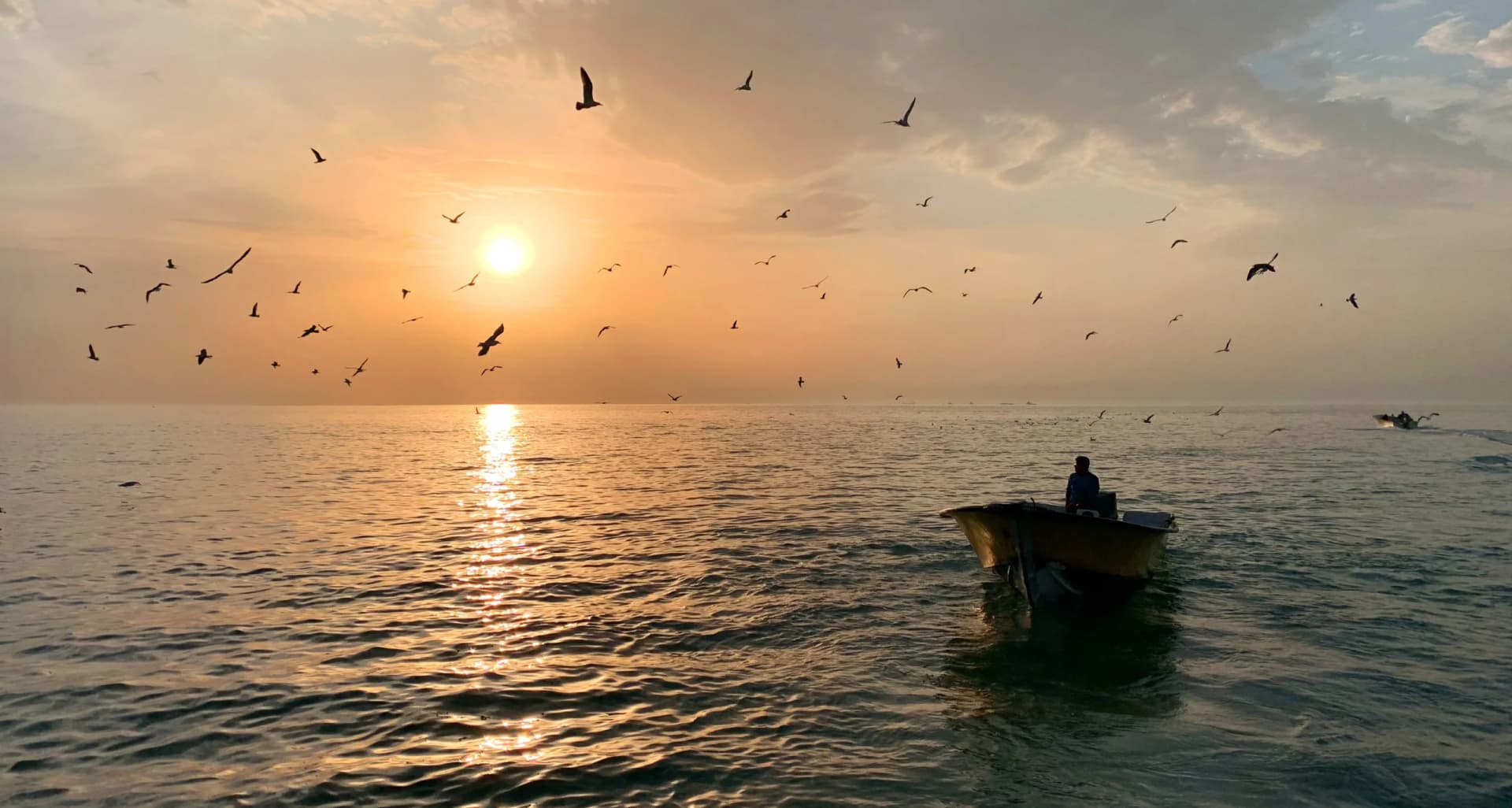
Kalpitiya is one of those rare Sri Lankan landscapes where the ocean, lagoon, wind, and wildlife create a rhythm of their own. At dawn, long before the hotels set out breakfast and the kitesurfers roll out their gear, the lagoon is already awake—filled with the murmur of fishermen, the shimmer of early light, and the distant splash of dolphins on their first hunt of the day.
Morning is the most honest way to experience Kalpitiya. It is the hour when the lagoon reveals its real identity: a working landscape shaped by tide and labour, but also a place of extraordinary natural life. Walk along its quiet shoreline, sit on a fishing canoe, or simply watch the water from a sandbank, and you will understand why this region feels unlike anywhere else in Sri Lanka.
This article explores the people, species, winds, and elemental forces that define Kalpitiya Lagoon mornings—and why they leave such a lasting impression.
The First Light Over the Lagoon
Before sunrise, Kalpitiya feels almost suspended in silence. The sky begins its slow transformation from charcoal grey to soft blue. Palm silhouettes stand still, and the vast sheet of water reflects the first hints of colour. The temperature is still cool, and the wind—so famous later in the day—remains a gentle whisper.
The lagoon at dawn has a specific texture: slightly misty, mildly metallic, with still water that hides its later turbulence. As the sun rises behind the coconut groves of Dutch Bay, streaks of pink and orange stretch across the water, signalling the beginning of the morning rush. This is when fishermen step out, nets are loaded, and the day’s first boats push forward.
For travellers, witnessing sunrise here is an experience that feels both peaceful and powerful. It’s a window into an ecosystem that begins its day not with noise but with movement.
Fishermen of the Peninsula: A Day That Begins in the Dark
Kalpitiya’s fishing communities have lived with the lagoon for generations. Their boats—slender canoes, motorised fibreglass vessels, and traditional oru—form one of the earliest sights on the water. By the time most people wake up, their day is already in full motion.
Loading the Boats
The beachside activity begins while the sky is still dim. Fishermen gather around their anchored canoes, checking the condition of nets, ropes, and fuel. The routine is unhurried but precise. Every hand knows its task; every move is tested by years of practice.
You hear the sound of nets being dragged over sand. You hear soft conversation, usually about the tide or wind. You hear the push of boats entering the shallow water. These early sounds form the pulse of the lagoon’s morning.
Reading the Water
Experienced fishermen read the lagoon the way others read a map. They know where mullet will gather, where cuttlefish hide, how the tides change fishing spots, and how wind direction alters the water’s behaviour.
The lagoon is not just a workplace; it is a language.
The Catch and the Return
By sunrise, some boats are already setting their nets. Others return with their early catch—tiny silver flashes of fish tossed into crates, ready for auction or transport. There is no grand display here, only a quiet, working rhythm that anchors the human side of Kalpitiya’s mornings.
Dolphins on the Horizon: The Lagoon’s Gentle Performers
Kalpitiya is one of Sri Lanka’s prime locations for dolphin-watching, particularly spinner dolphins. Early morning is when they are most active, most visible, and often closest to the boats.
The First Sightings
Look towards the ocean entrance from the lagoon and you may see faint arcs breaking the surface—quick, smooth, and rhythmic. These are the dolphins beginning their morning feed. Their bodies glisten sharply against the rising sun.
Spinner dolphins often travel in large pods. If the water is calm, you may hear the soft splash of their leaps or the sound of their tails hitting the water as they move in unison.
The Spin That Defines Them
Spinner dolphins are named for their acrobatic mid-air spins. A fully grown dolphin can leap several feet above the water, rotate rapidly, and land with a neat splash. It is not a performance for tourists—it is simply part of their natural movement. Watching these spins against a golden sunrise is one of Kalpitiya’s most memorable experiences.
Respecting the Species
While dolphin-watching tours are popular, responsible viewing is crucial. Morning sightings are a reminder that these waters belong first to the species that live here. Good guides maintain distance, reduce speed, and avoid splitting pods.
The beauty of Kalpitiya’s dolphins lies not in how close humans can get, but in how elegantly they move through their own world.
The Winds That Shape Kalpitiya
Kalpitiya’s identity is tied to the wind. Even in the calm moments of early morning, the atmosphere carries a subtle hint of what’s coming later in the day.
Salt Winds and the Peninsula’s Geography
Kalpitiya is a long, narrow stretch of land between lagoon and ocean. This geography funnels the winds, making them stronger than in most coastal areas. Locals have a word for the salty wind that arrives later in the day: the breeze that never stops.
Morning winds, however, are gentle and almost cool. They create ripples across the lagoon, bringing with them the faint smell of seaweed and salt-crusted nets.
Why Winds Matter Here
The winds are more than a natural feature—they define life in Kalpitiya.
- Fishermen plan their working hours around the wind.
- Kitesurfers choose Kalpitiya because it has one of Asia’s best wind profiles.
- The mangroves and sand dunes have evolved in response to constant airflow.
- Even local architecture bends to the wind’s behaviour.
Morning is the only time of day when the wind is soft enough to let you hear everything else.
Birdlife in the Quiet Hours
Kalpitiya Lagoon is a sanctuary for birdlife, and morning is when the birds are most active. Look across the water and you’ll see an astonishing range of species.
Waders Along the Sandbanks
Sandbanks emerge during low tide, attracting great egrets, grey herons, and painted storks. These birds stand still for long minutes, scanning the water for movement before striking swiftly.
Pelicans and Cormorants
Further into the lagoon, pelicans glide low over the water or float in groups. Cormorants dive deep, disappearing entirely before surfacing with fish in their beaks.
Migratory Visitors
During migration seasons, the lagoon transforms into a highway for birds travelling from Central Asia. Morning light makes it easy to spot them—thin silhouettes against soft skies.
For photographers, the combination of calm water and rich birdlife makes early hours the best time for shooting.
Life Along the Lagoon’s Edge
Kalpitiya’s morning is not just on the water—it’s along its edges too.
The Villages
Small fishing villages sit scattered along the peninsula. At dawn you will see:
- Women washing nets and preparing meals.
- Children walking to school along sand paths.
- Dogs following fishermen to the shore.
- Smoke rising from small kitchens as breakfast is prepared.
This is one of the most authentic scenes of rural Sri Lanka—peaceful, modest, and deeply connected to the environment.
Mangroves and Salt Marshes
Kalpitiya’s protective mangroves absorb the soft light of morning, turning deep green. Crabs scuttle among their roots, and the water around them becomes alive with tiny movements.
These mangroves are crucial. They shield the coastline, protect fish nurseries, and maintain the lagoon’s balance. Without them, the region’s ecosystem would collapse.
The Sand Dunes of Kalpitiya
Morning light turns the peninsula’s sand dunes into rolling, golden forms. Few travellers walk here at dawn, but those who do feel the silence of the desert-like landscape. The dunes soften the impact of strong winds and create a natural barrier between ocean and lagoon.
The Human-Wildlife Relationship
Kalpitiya’s mornings highlight something that sets it apart: the coexistence of working communities and rich wildlife.
Shared Spaces
Fishermen and dolphins use the same waters. Birds hunt near human boats. Mangroves protect both fish nurseries and village homes. This overlap is part of Kalpitiya’s identity.
Challenges
But shared spaces also mean challenges:
- Overfishing threatens lagoon biodiversity.
- Coastal erosion affects villages.
- Tourism can disrupt dolphin movement if unmanaged.
- Lagoon pollution impacts both fish and birds.
Morning hours reveal these tensions quietly, without drama—just the simple truth of an ecosystem that needs balance.
Click on here “Night Sounds of Sinharaja: What Really Happens After Sunset in the Rainforest”
Why Kalpitiya Lagoon Mornings Feel Different
There are many beautiful places in Sri Lanka, but Kalpitiya stands out for several reasons.
1. It’s raw and real.
The lagoon is not staged for tourists. You see life as it unfolds—work, nature, silence, wind.
2. The landscape changes by the hour.
Dawn is calm, midday is fierce with wind, evenings glow with sunset fire.
3. Wildlife is part of everyday life.
Dolphins, birds, fish, mangroves—all exist not outside human life but beside it.
4. It feels untouched.
Even with tourism, Kalpitiya retains a rugged simplicity that is rare on the island.
5. Morning is the most honest moment.
It’s when the lagoon speaks softly before the day becomes fast and noisy.
A Travel Guide for Experiencing It Properly
If you want the most authentic Kalpitiya morning experience, skip the conventional itinerary and do the following.
Go to the Lagoon Before Sunrise
Walk the sandy paths before 6.00 a.m. The colours, air, and silence are unmatched.
Talk to a Fisherman
Many are happy to explain their nets, tides, or past experiences on the water.
Take a Canoe Ride
Choose a local fisherman rather than a tour operator. They know the water best.
Watch Dolphins from a Distance
Do not chase them. Let the pod come to you.
Visit a Mangrove Patch
Seeing the roots rise above mirror-like water at dawn is one of Kalpitiya’s quietest moments.
Carry a Camera or Journal
Morning here inspires reflection. The landscape makes you want to write something or capture something.
Conclusion: A Morning That Stays With You
Kalpitiya Lagoon mornings are not dramatic; they are poetic. They do not overwhelm; they unfold slowly. They rely on subtle movements—fishermen pushing their boats, dolphins spinning at sunrise, birds lifting off sandbanks, wind passing softly across the peninsula.
If you stand still for long enough, you will feel the lagoon breathing around you. And that is why mornings in Kalpitiya stay with travellers long after they leave—because they show the world as it truly is before noise, crowds, and wind take over.
Kalpitiya in the morning is not a destination. It is a moment. And it is worth waking up for.