When Prince Philip Visited Pedro Estate: The Royal Visit That Became Part of Ceylon Tea History in 1954
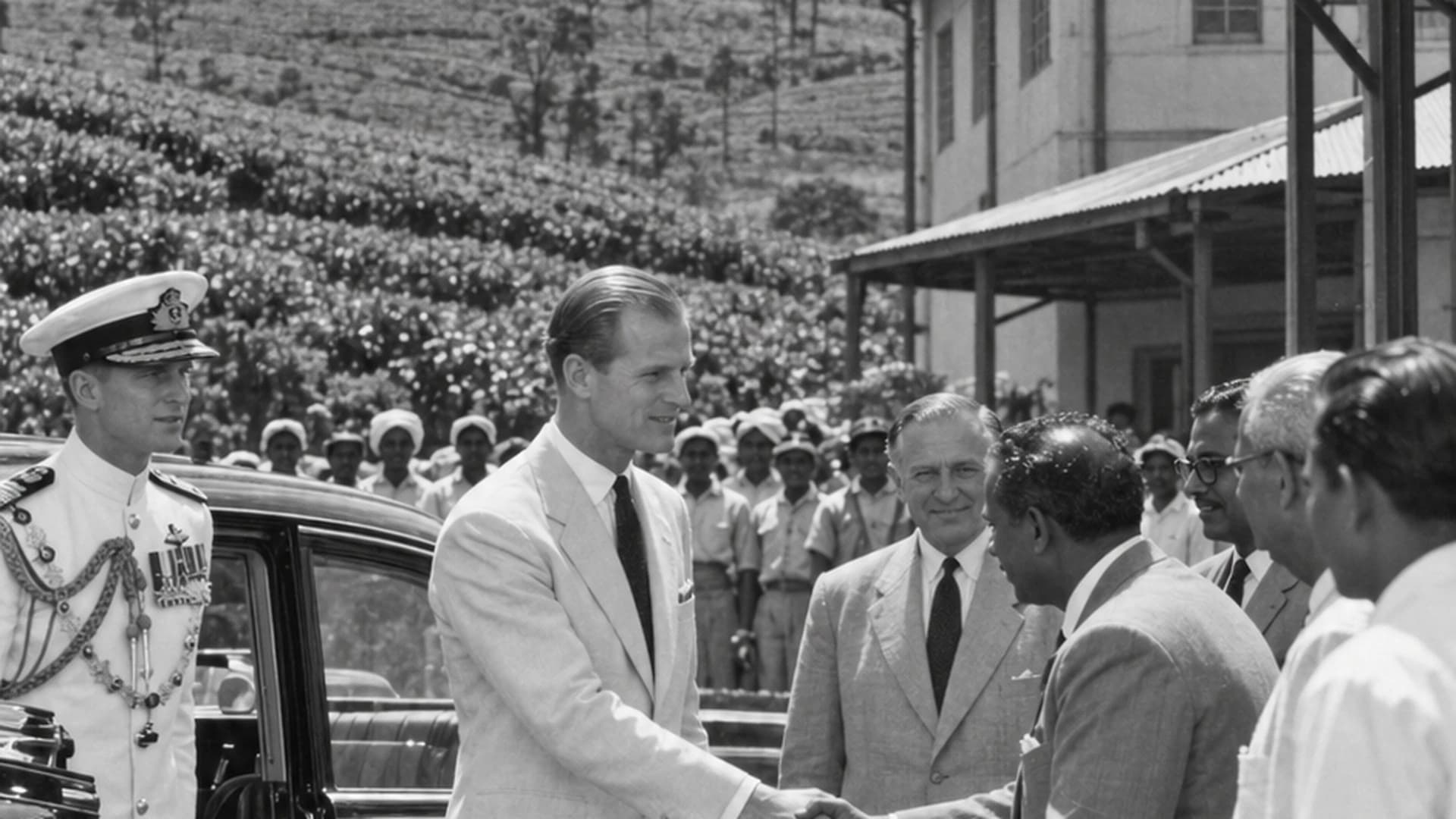
In April 1954, amid the mist-covered tea plantations of Nuwara Eliya, Prince Philip, the Duke of Edinburgh, made a visit that would become an enduring chapter in the history of Ceylon tea. At Pedro Estate, near the famous Lover’s Leap, a collection of photographs still recalls the day when British royalty came to one of the island’s celebrated tea-producing regions.
A Royal Memory Preserved in the Hills of Ceylon
There is something particularly fascinating about old photographs preserved in the tea estates of Sri Lanka. They capture moments when the island was still known as Ceylon, when plantation roads carried elegant motorcars, and when visits by distinguished guests became events remembered for generations. At Pedro Estate in Nuwara Eliya, one such memory survives in a framed collection of six black-and-white photographs.
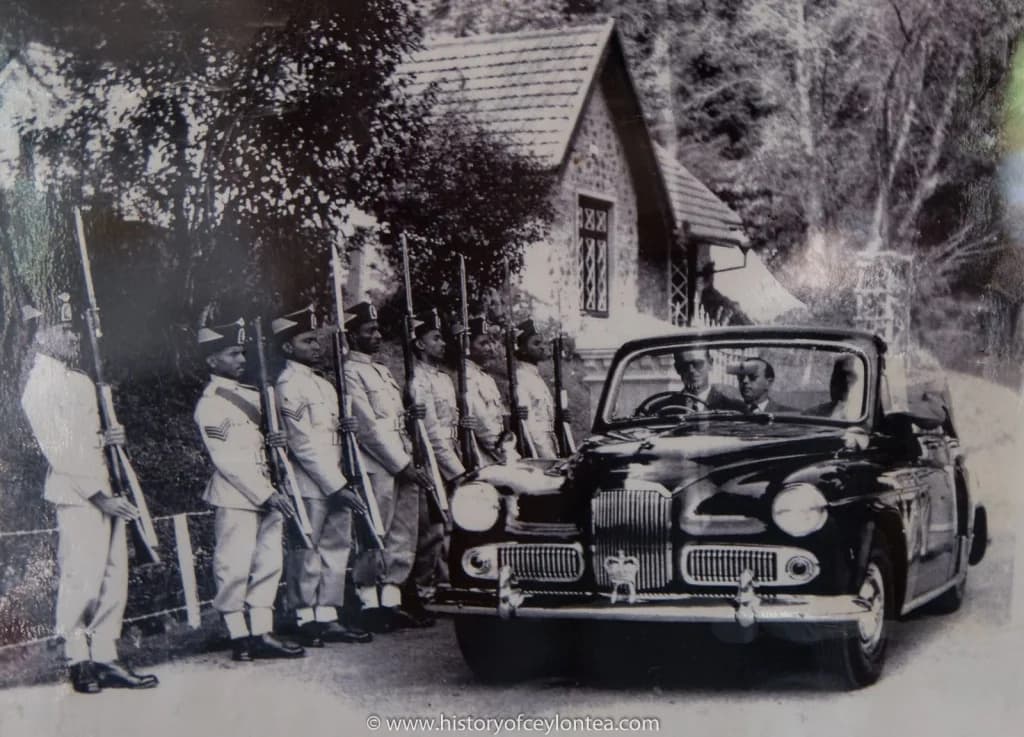
Above the photographs, a simple heading records the occasion: “Duke of Edinburgh’s Visit to Pedro Group in 1954.” The pictures show scenes from a royal visit, including motorcars arriving, gatherings outside estate buildings, groups of people assembled to welcome their visitors, and formally dressed men moving through the surroundings of a working tea plantation. To a casual observer, these might appear to be ordinary photographs from an earlier period, but they belong to a significant moment in Ceylon’s post-independence history.
In April 1954, Prince Philip visited Pedro Estate during the historic royal tour undertaken by Queen Elizabeth II and the Duke of Edinburgh. The visit was more than a ceremonial appearance. Prince Philip officially opened the estate’s new tea factory and participated in the planting of tea bushes, establishing a connection between Pedro Estate and the British royal family that would be recalled nearly seven decades later.
Ceylon Welcomes Queen Elizabeth II and Prince Philip in 1954
The year 1954 was an important one in the relationship between Ceylon and the British monarchy. Although Ceylon had gained independence from Britain in February 1948, it remained a Commonwealth realm, with Queen Elizabeth II as its head of state. The Queen had ascended the throne in 1952 following the death of her father, King George VI, and her coronation took place in June 1953. The following year, she and Prince Philip travelled to Ceylon as part of their Commonwealth tour.
It was the first visit to the island by a reigning British monarch. During their ten-day visit, the royal couple attended official engagements, visited important cultural and historical sites, and travelled to the hill country. Their itinerary included Anuradhapura, Polonnaruwa and Nuwara Eliya, reflecting the cultural, political and economic importance of different parts of the island.
For Ceylon, the visit was an occasion of considerable public interest. The country had been independent for only six years, and the presence of the Queen and Duke of Edinburgh was part of its continuing constitutional relationship with the Crown. Tea remained one of the country’s most important exports, closely associated with its international identity. Among the places selected for a royal engagement was Pedro Estate, a plantation whose history reflected the development of Ceylon’s tea industry.
Pedro Estate: A Plantation with a History Older Than the Royal Visit
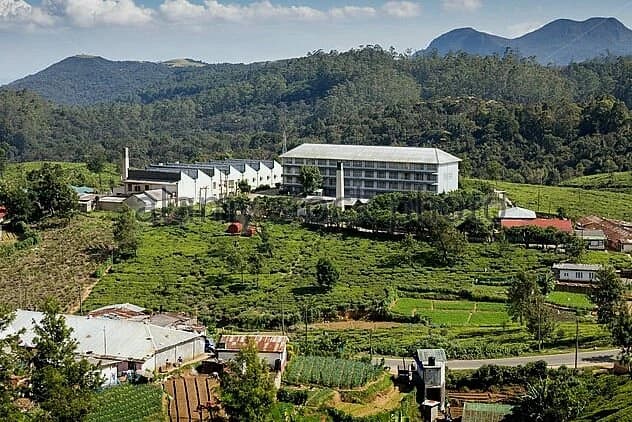
Situated a short distance from Nuwara Eliya town, Pedro Estate occupies part of the highland landscape associated with some of Sri Lanka’s most distinctive teas. The estate is connected with several historically important plantation divisions, including Pedro, Lover’s Leap, Mahagastotte, Moon Plains, Naseby and Scrubs. Its history stretches back to the nineteenth century, when tea cultivation was expanding across the central highlands of Ceylon.
An account of the estate’s development records the establishment of its early Fairyland tea factory in 1880, during a period when planters were transforming portions of the highlands into commercial tea plantations. The region’s elevation, cool temperatures and climatic conditions helped establish Nuwara Eliya as a distinctive tea-growing district. Unlike the stronger teas commonly associated with some lower elevations, Nuwara Eliya teas became valued for their delicate characteristics, brightness and refined flavour.
Pedro Estate eventually became associated with well-known garden marks, including Lover’s Leap and Mahagastotte. These names travelled far beyond the mountains of Ceylon, becoming familiar to tea merchants and consumers in overseas markets. The estate’s development also depended on generations of workers who planted, tended, plucked and manufactured tea. Their labour sustained an industry that became central to the island’s economy.
By the middle of the twentieth century, Pedro Estate was well established, but a major event had changed the course of its industrial history. Its earlier tea factory had been destroyed by fire, and a replacement factory was constructed. The completion of the new building created the opportunity for a particularly memorable opening ceremony in 1954, when the Duke of Edinburgh visited the estate.
The Day the Duke of Edinburgh Arrived at Pedro Estate
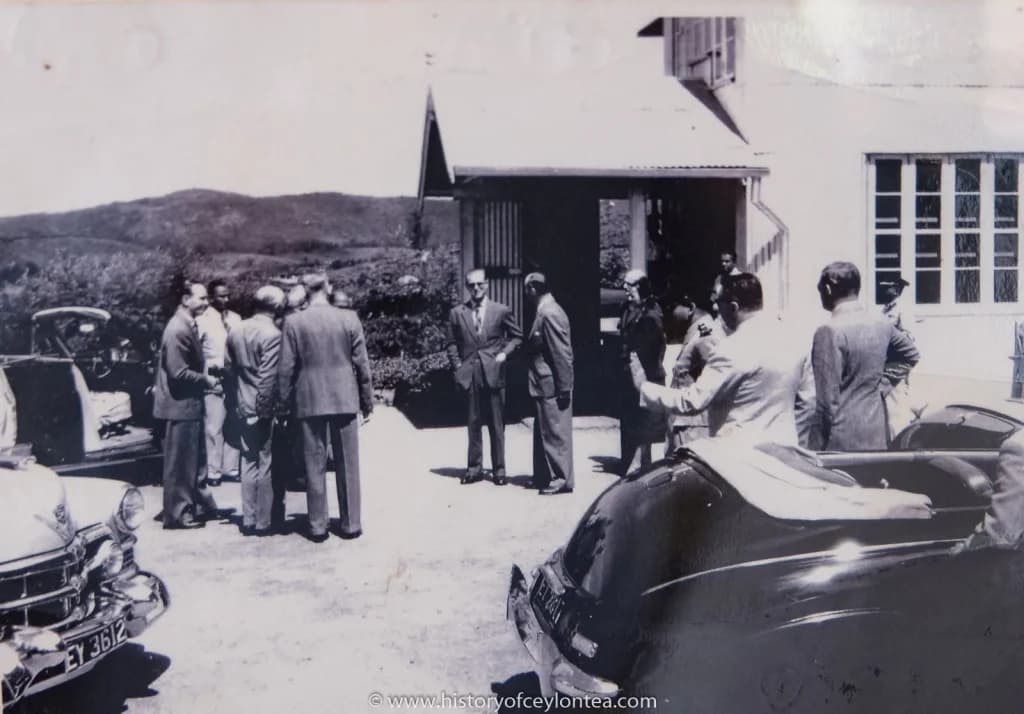
In April 1954, Prince Philip travelled to Pedro Estate as part of the royal engagements in the Nuwara Eliya region. The photographs preserved at the estate offer an intriguing visual record of the occasion. In one image, a motorcar appears near an assembled group of people, while another captures an open car surrounded by onlookers, recalling the ceremonial atmosphere of royal visits during the period.
Other photographs show gatherings near plantation buildings, while the remaining images record men in formal clothing and what appear to be scenes of an official reception. The collection conveys something that written historical accounts cannot always reproduce: the atmosphere surrounding an important visitor’s arrival in a rural plantation community. For those who witnessed the event, a visit by the Duke of Edinburgh would have been far removed from the ordinary routines of estate life.
The most historically significant event of the visit, however, was not simply the arrival of the royal party. It was Prince Philip’s formal opening of the new Pedro Tea Factory. Later published accounts confirm that the factory was officially opened by the Duke of Edinburgh in 1954, marking an important milestone in the estate’s development.
A factory that would process tea for generations was inaugurated by a member of the British royal family. The occasion gave Pedro Estate a distinctive place in the history of Ceylon’s plantation industry, while the photographs preserved a record of the people, vehicles and buildings associated with that day.
The Tea Bushes Prince Philip Planted in 1954
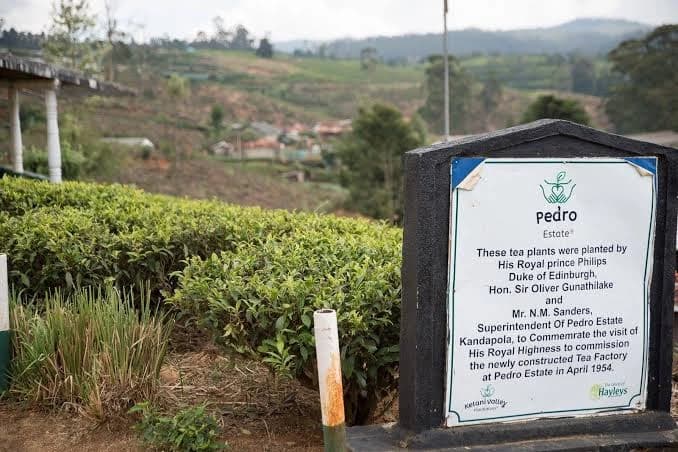
Perhaps the most remarkable part of Prince Philip’s visit was a simple act carried out on the plantation. During his time at Pedro Estate, the Duke helped plant tea bushes. At the time, it was a ceremonial gesture associated with the royal visit, but those plants would later acquire an unexpected historical significance.
Tea plants are perennial crops. Under suitable conditions and with appropriate cultivation, they can remain productive for many decades. The plot associated with the 1954 planting therefore became a living connection to the occasion. Long after the royal motorcars had departed and the photographs had been framed, the tea continued growing in the highland soil.
The significance of that planting was recognised again in 2012. During celebrations marking Queen Elizabeth II’s Diamond Jubilee, tea manufactured from the plot associated with Prince Philip’s planting was served at a banquet at Westminster Hall in London. A report published by the Daily FT in September 2013 specifically identified the tea as originating from a plot planted by the Duke at Pedro Estate in April 1954.
More than half a century after the original visit, the tea estate had once again become part of a royal occasion. This time, the connection did not depend on a visit to Nuwara Eliya. It travelled through the tea itself, linking a plantation ceremony in Ceylon with celebrations in Britain decades later.
From Nuwara Eliya to the Queen’s Platinum Jubilee
The royal connection continued into the twenty-first century. In 2022, as Britain marked the Platinum Jubilee of Queen Elizabeth II, tea originating from Pedro Estate was selected for a special commemorative initiative. According to Kelani Valley Plantations and Hayleys, the tea was harvested from bushes associated with Prince Philip’s planting in 1954.
The project brought together Sri Lankan tea producers and the British royal retail market, celebrating the relationship between Ceylon tea and the monarchy. The commemorative tea was associated with PMD Tea and the Windsor Farm Shop, while published reports described a limited production of special jubilee tea caddies.
What made the occasion particularly meaningful was the continuity of the story. In 1954, a young Prince Philip had planted tea in the highlands of Ceylon. In 2022, tea connected with that same planting formed part of celebrations marking seventy years of Queen Elizabeth II’s reign.
The intervening decades had brought enormous changes to both countries. Ceylon became the Republic of Sri Lanka in 1972, and the tea industry underwent changes in ownership, management, production and export markets. Yet a small part of Pedro Estate’s history had survived through the cultivation of tea itself. It was an unusual example of how the history of an agricultural landscape can endure long after the circumstances that produced it have disappeared.
Lover’s Leap and the Landscape Behind the Royal Photographs
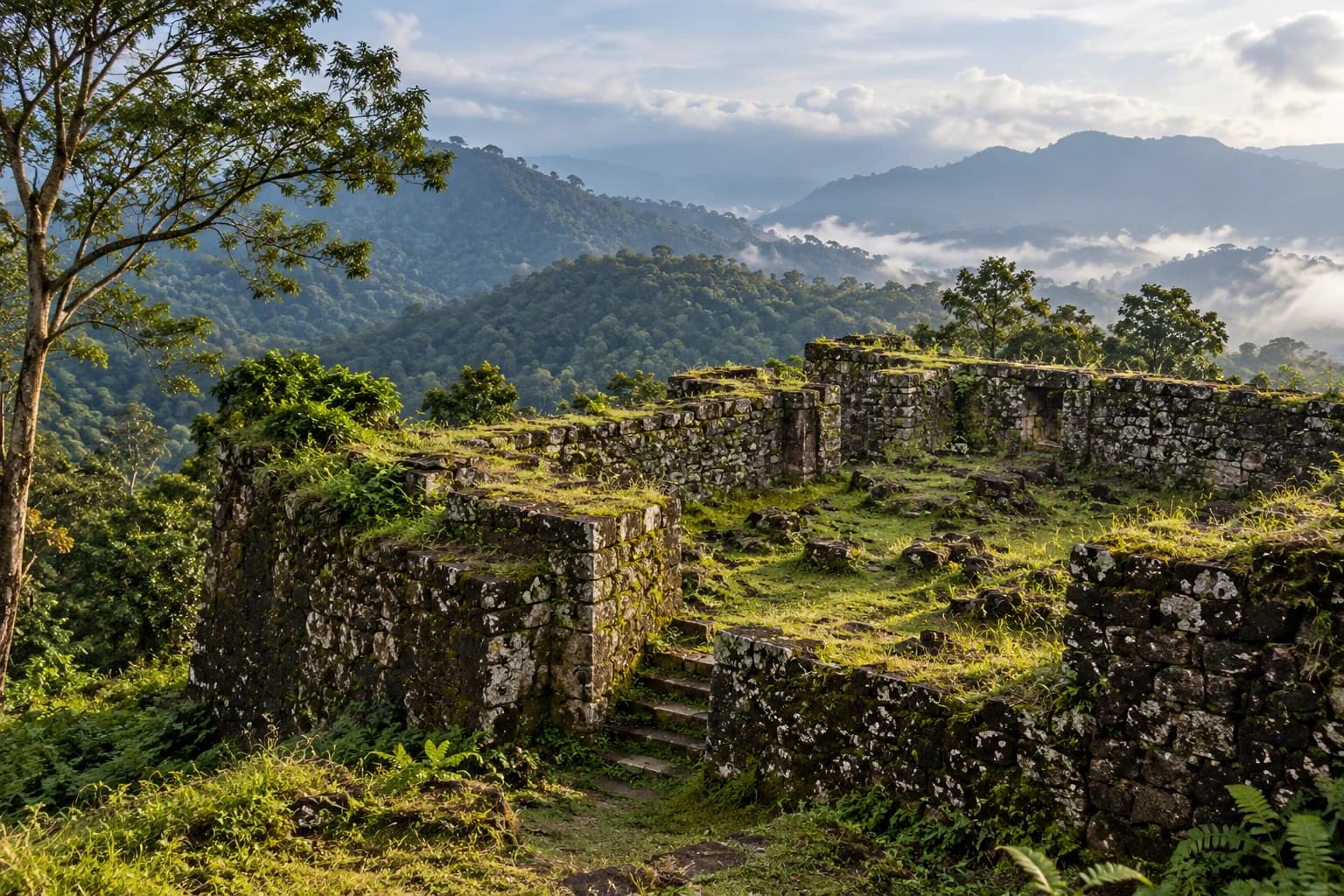
Pedro Estate is also closely associated with one of Nuwara Eliya’s best-known natural landmarks, Lover’s Leap. The waterfall and surrounding hills have long formed part of the local landscape and its stories. The name is linked to a traditional romantic legend involving lovers whose tragic fate is associated with the falls, although this belongs to local folklore rather than firmly documented history.
The surrounding landscape has a documented connection to the development of the tea industry. The Lover’s Leap division forms part of the wider Pedro plantation complex, and tea from the area has acquired an established reputation in the market. In March 2013, Pedro Estate attracted attention when tea sold under its Lover’s Leap mark achieved a record auction price of Rs. 1,200 per kilogramme for a particular FBOP grade.
The combination of mountain scenery, plantation history and internationally recognised tea has made the region an important part of Nuwara Eliya’s heritage. Visitors travelling through these hills today encounter a landscape shaped by generations of cultivation, with tea bushes stretching across the slopes, estate roads winding between fields and buildings, and a cool climate that continues to influence the character of the tea produced here.
It was in this same landscape that the royal visit of 1954 took place. Although the motorcars and formal gatherings belong to another era, the familiar tea-growing surroundings remain an important part of Pedro Estate’s identity.
What the Six Historic Photographs Tell Us
The photographic collage provides an engaging glimpse into life at Pedro Estate during the middle of the twentieth century. Although the individual photographs do not have detailed captions identifying every person and activity, the images collectively preserve several aspects of the occasion. They show motor vehicles associated with an important official visit, gatherings outside estate buildings, and moments when the visiting party appears to have been received by local representatives.
The photographs also preserve details that might otherwise be overlooked. There is the architecture of the plantation buildings, the clothing worn by those attending, the appearance of the motorcars and the organisation of a formal gathering in 1950s Ceylon. Such details are valuable to anyone interested in the island’s social history because they capture the appearance of an event that would otherwise survive mainly through written accounts.
Royal visits are often remembered through the activities of the principal guests, but photographs can also offer glimpses of the surrounding community. At Pedro Estate, the pictures hint at the wider world of workers, estate officials, drivers and residents who formed part of the occasion. Their presence reminds us that a royal visit required considerable organisation beyond the arrival of its principal guest.
It is important, however, not to attribute specific actions or identities to individual figures without supporting captions or archival documentation. The significance of the collection lies in the fact that it preserves visual evidence of an event independently recorded in the estate’s history. It connects a royal tour to a particular place, a working tea factory and the people who witnessed a memorable day in April 1954.
The History of Ceylon Tea Is More Than a History of Plantations
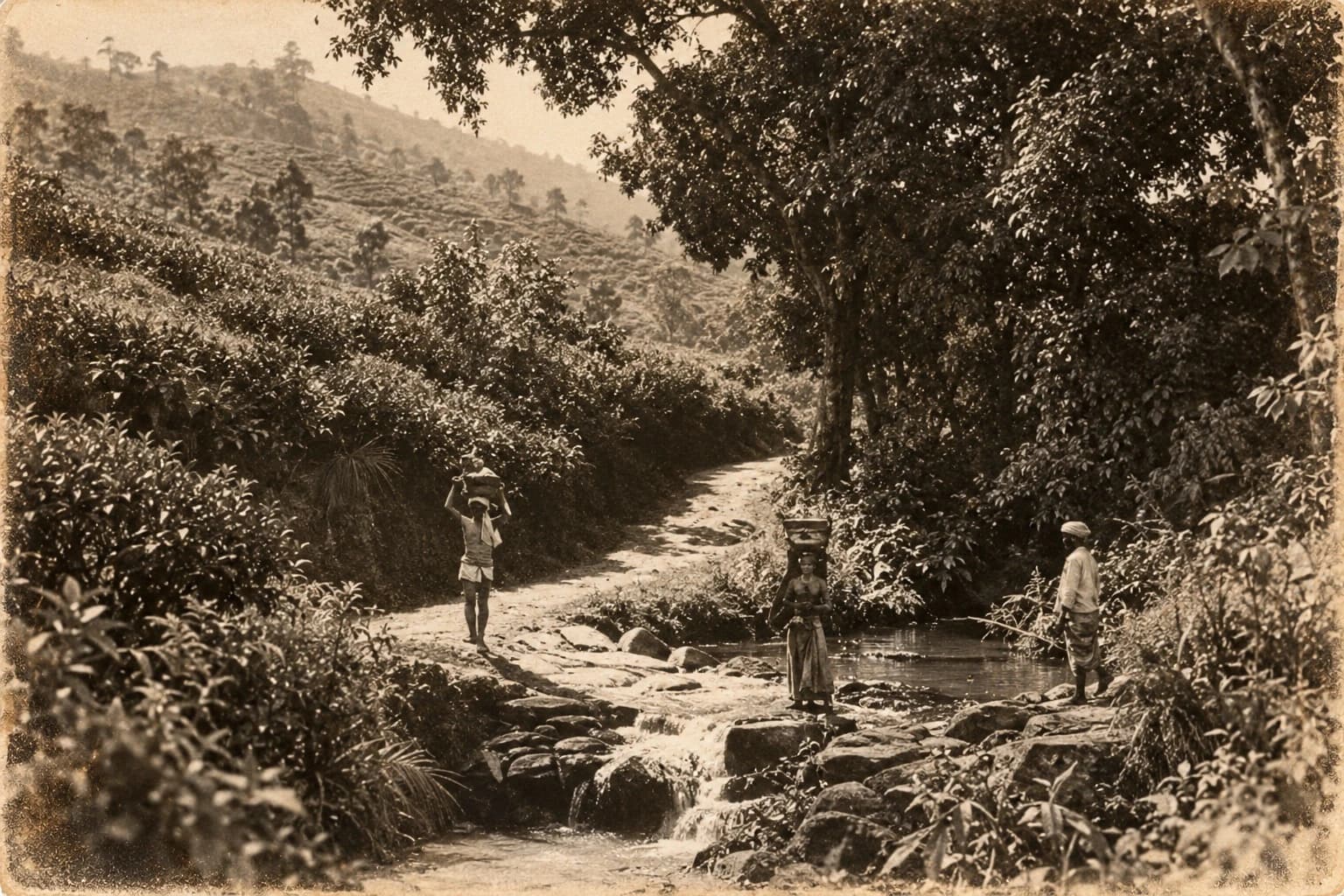
The story of Pedro Estate offers a reminder that Ceylon tea has always been connected to much larger histories. Tea cultivation transformed the economic and physical landscape of the island during the British colonial period. Plantations replaced portions of older landscapes, railways and roads expanded to support commercial production, and the industry developed extensive connections with international markets.
The growth of tea was also inseparable from the experiences of plantation workers, especially the descendants of Tamil labourers brought from southern India under colonial labour systems. Their contribution remains fundamental to the history and continued operation of Sri Lanka’s tea industry. Every factory opening and celebrated garden mark belongs to a working landscape sustained by generations of people whose labour was essential to its success.
Royal visits, factory openings and commemorative photographs form one visible layer of this history. Beneath them lies the long history of labour, cultivation, enterprise and changing social conditions that sustained the plantations. Pedro Estate’s significance is therefore broader than the visit of a single royal guest.
Its story encompasses the transformation of the Nuwara Eliya highlands, the evolution of tea manufacturing, the lives of plantation communities and the international reputation of Ceylon tea. The visit of 1954 is one chapter within that much larger history.
A Royal Visit Remembered More Than Seventy Years Later
Today, the black-and-white photographs associated with Prince Philip’s visit offer a window into a world that has largely disappeared. The old motorcars, formal receptions and plantation gatherings belong to another era, but the tea estates of Nuwara Eliya remain. Pedro Estate continues to be associated with some of Sri Lanka’s distinctive high-grown teas, and its royal history has not been entirely forgotten.
In 1954, the Duke of Edinburgh officially opened the estate’s tea factory and helped plant tea bushes. In 2012, tea from the plot associated with that planting formed part of the Queen’s Diamond Jubilee celebrations. In 2022, the same historical connection was commemorated during her Platinum Jubilee. Few collections of photographs preserved at a plantation can be connected to such a long sequence of events.
For anyone interested in Old Ceylon, the Pedro Estate collection is more than an interesting piece of royal memorabilia. It records a particular day in April 1954 while also connecting that day to the wider history of the plantation, its factory and the people whose work made Ceylon tea internationally known.
Among the mist-covered tea hills near Lover’s Leap, a royal visit became part of a story stretching from independent Ceylon in the 1950s to the modern international reputation of Sri Lankan tea. More than seventy years later, those six photographs still preserve the memory of the occasion.
Historical References
- Daily FT (2013), Pedro Estate Establishes Record Tea Price — records the Duke of Edinburgh’s official opening of the factory in 1954.
- Daily FT (2013), Princess of Thailand Visits Hayleys Pedro Estate — documents Prince Philip’s April 1954 planting and the Diamond Jubilee connection.
- Hayleys PLC (2022), Pedro Estate Tea Graces the Queen’s Platinum Jubilee — the estate operator’s account of the Platinum Jubilee tea.
- Daily Mirror (2022), Pedro Estate Tea Graces Queen’s Platinum Jubilee — corroborates the commemorative tea initiative.
Visit us: https://trippingsrilanka.com/stories