The Bird Highways of Mannar: Why This Flat Land Becomes a Sky Supermarket
Mannar is one of Sri Lanka’s strangest landscapes. Wide, flat, wind-swept, and dry, it looks almost empty at first glance. But when you pause long enough, you realise the land is not empty at all. It is alive — pulsing with wings, calls, rhythms, and ancient routes that birds have followed for thousands of years. Every year, Mannar transforms into one of Asia’s most important sky highways, a natural supermarket in the clouds where millions of migratory birds fuel, rest, and survive.
This is the story of why Mannar becomes the meeting point of continents, seasons, species, and journeys that stretch from the Arctic Circle to the Indian Ocean.
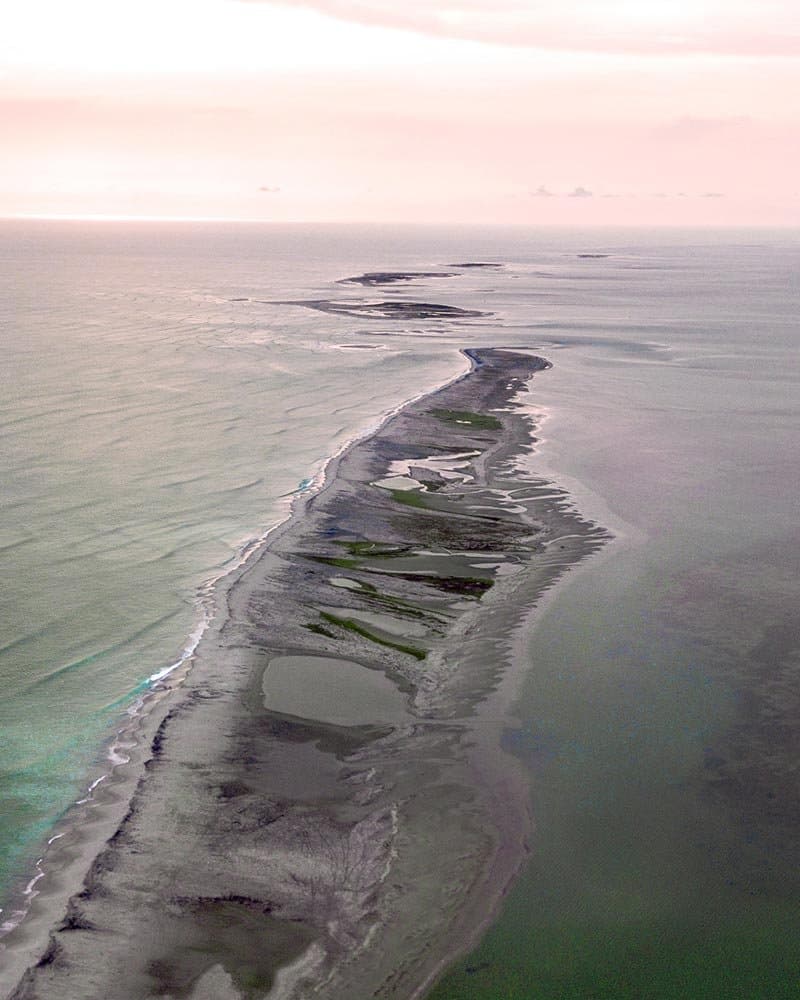
A Borderland Between Worlds
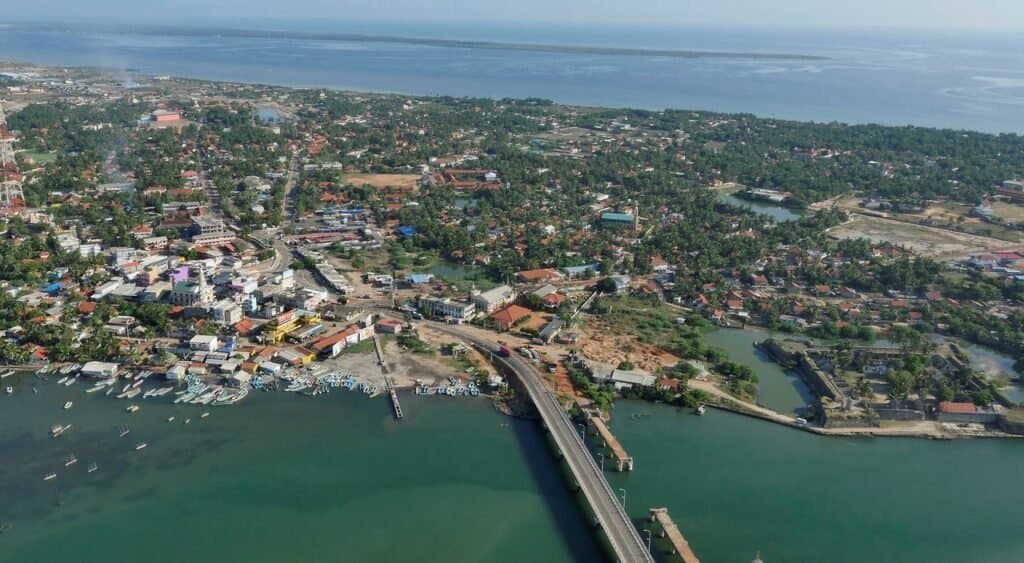
Mannar is geographically unique. It sits at the edge of the island, facing India across the shallow waters of the Palk Strait. Unlike other parts of Sri Lanka, Mannar’s landscape is made of tidal flats, salt marshes, mudflats, mangroves, sand dunes, and lagoons. These create a massive buffet of food — tiny fish, crustaceans, plankton, worms, algae, and insects — exactly what migratory birds need during long flights.
But its real advantage is location.
Mannar lies along the Central Asian Flyway, one of the world’s major migratory routes stretching from Siberia, Russia, Mongolia, China, and Central Asia all the way down to India and Sri Lanka. Birds travelling thousands of kilometres rely on stopover points that give them safety, warmth, and abundant food. Mannar is one of the most reliable stations on this global network.
Why Do Birds Come Here?
The Science of the Sky Supermarket**
During migration, birds burn enormous amounts of energy. A small sandpiper weighing just 30 grams can fly more than 4,000 kilometres without stopping. After such a journey, they need to eat constantly to rebuild energy reserves.
Mannar delivers three essentials:
1. Food in Extraordinary Quantities
The shallow flats expose huge surfaces at low tide. These mudflats are packed with nutrient-rich organisms. For birds, this is the equivalent of walking into a supermarket with endless aisles.
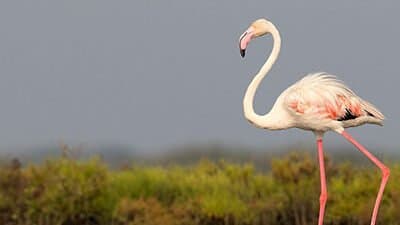
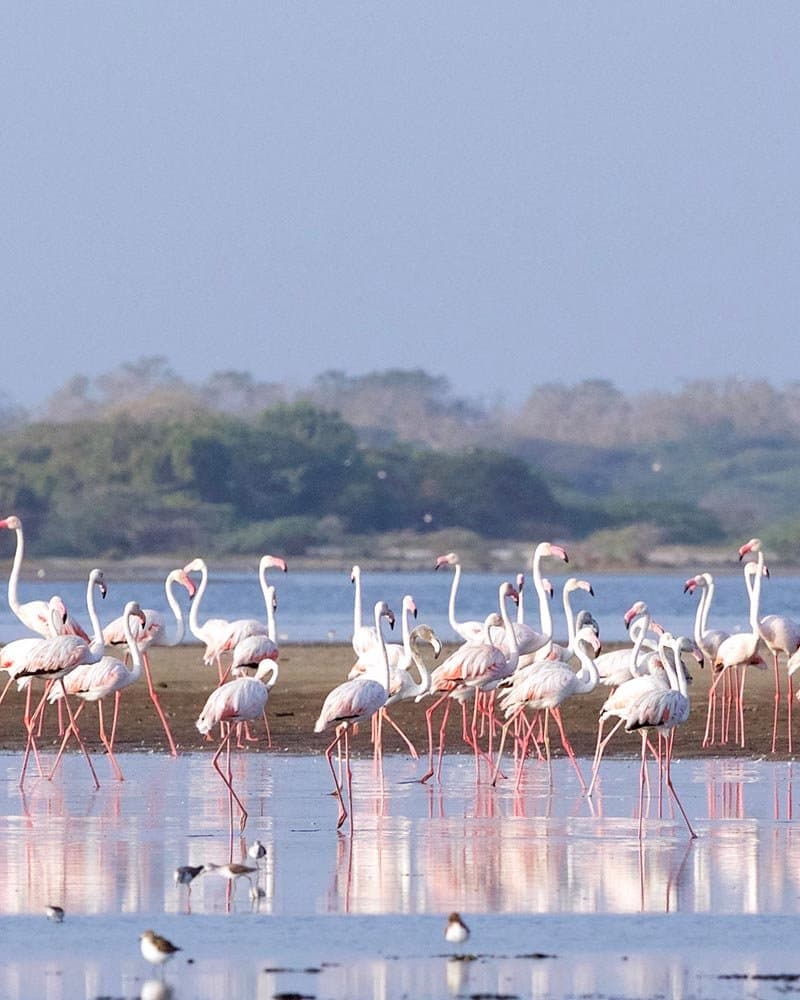
Species like the lesser sand plover, curlew sandpiper, and bar-tailed godwit move across the mud, probing the surface for food. Large birds like flamingos feed on crustaceans that give them their iconic pink hue.
2. Space
Mannar is open and unobstructed. Birds can land in massive flocks without worrying about predators hiding in dense forests. The visibility helps them feel safe.
3. Climate Advantage
The dry, warm climate is ideal for birds escaping harsh winters. For many species, Mannar becomes the final southern refuge before they turn back north.
The Spectacle: Who Arrives and When
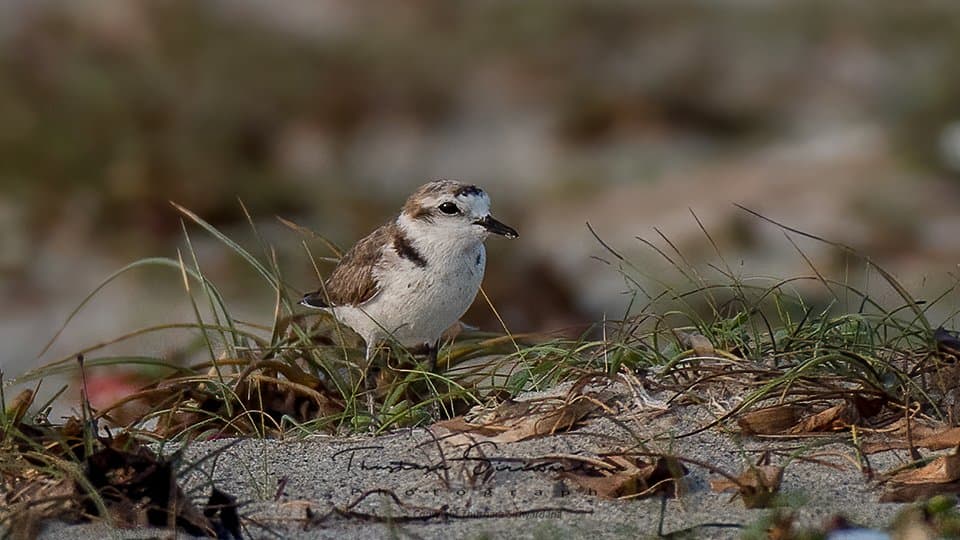
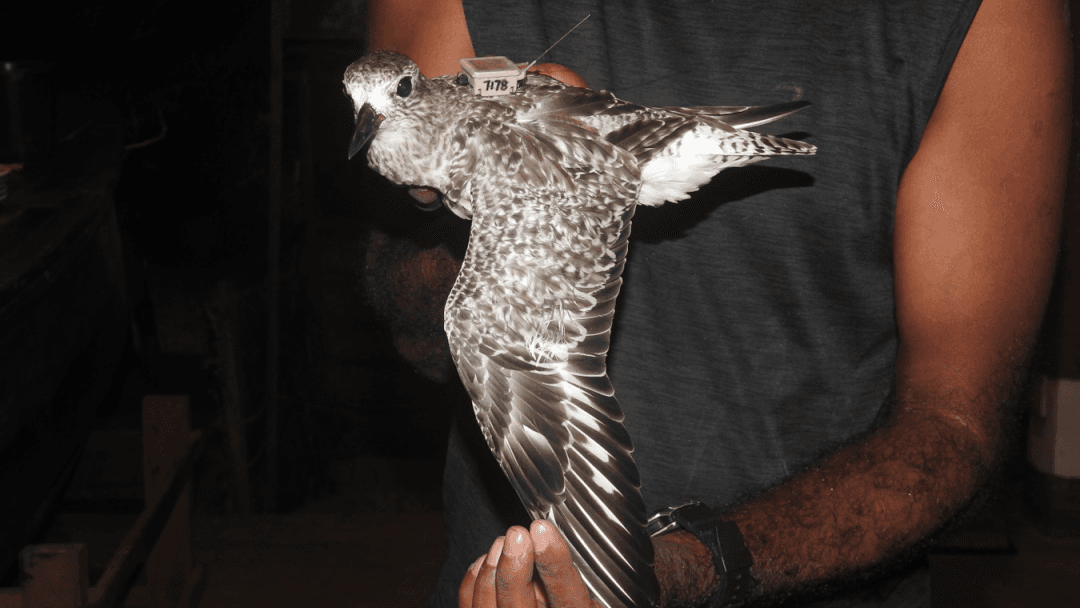
Every year, Mannar hosts more than 150 species of migratory birds. Some stay for months; others stop for only a few days before continuing.
October–November: First Arrivals
As the northern hemisphere cools, the first migrants appear — mostly shorebirds such as:
- Common redshank
- Wood sandpiper
- Little stint
- Black-tailed godwit
These are early travellers escaping the first signs of winter.
December–February: Peak Season
This is when Mannar truly becomes a sky supermarket.
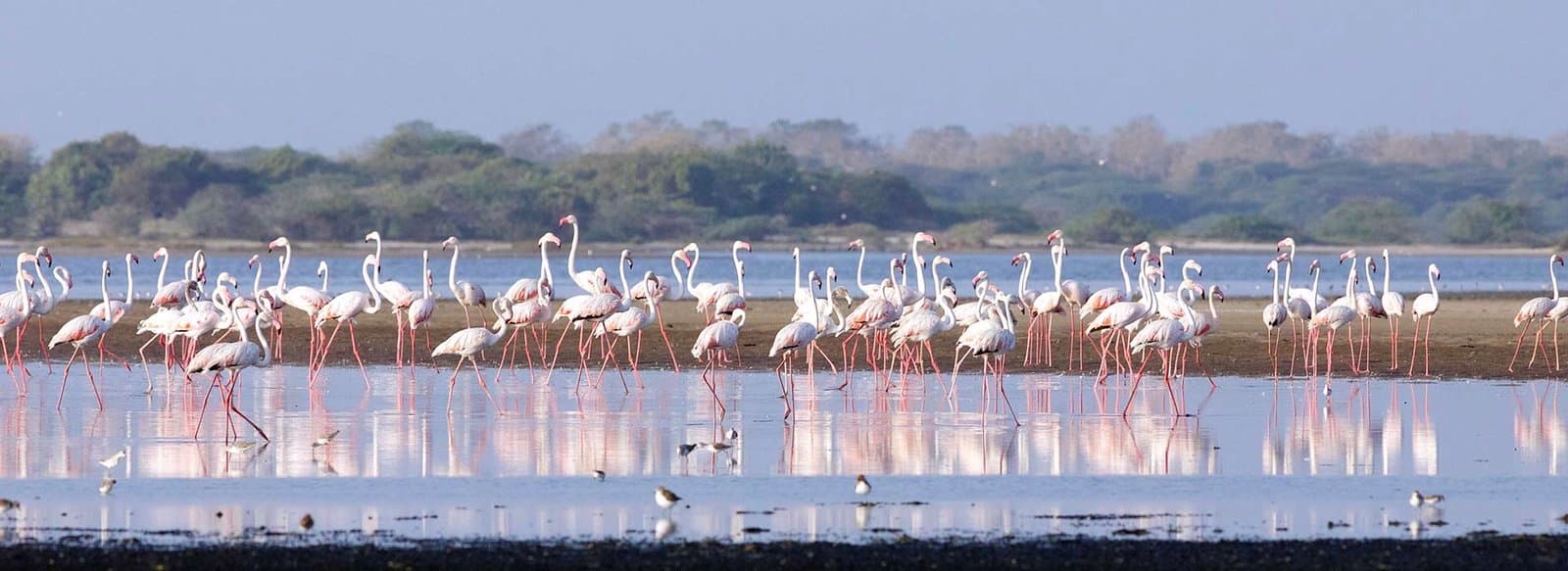
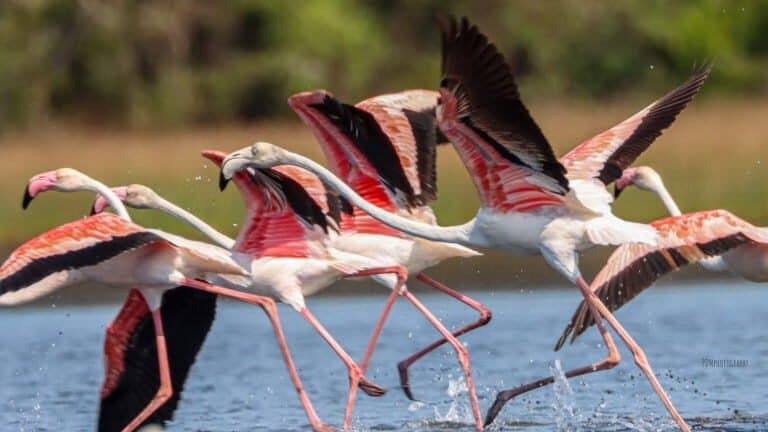
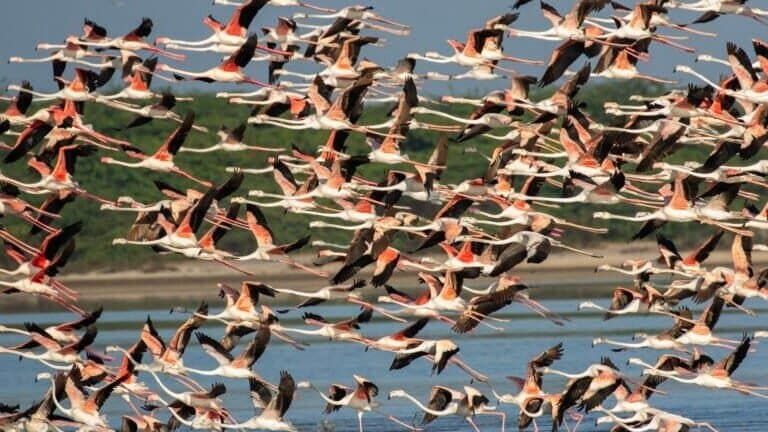
- Greater flamingos arrive in spectacular pink flocks.
- Gulls, terns, and storks gather by the thousands.
- Rare sightings include peregrine falcons, steppe eagles, and owls.
The whole region becomes a living mosaic of colour and movement.
March–April: Preparing for the Return Journey
Birds begin to feed aggressively again, building fat reserves before heading back across India, the Himalayas, and into Central Asia or Siberia. The mudflats are busiest during these weeks, filled with both winter residents and birds passing through on the way north.
Flamingos: The Icons of Mannar
If there is one species that has shaped Mannar’s reputation, it is the greater flamingo. Their arrival is unpredictable but deeply celebrated. When they come in the thousands, Mannar becomes one of Sri Lanka’s most striking wildlife scenes.
Flamingos prefer the brackish lagoons and large open water bodies, where they feed by filtering algae and crustaceans through their specialised beaks. The minerals in Mannar’s shallow water, combined with its micro-organisms, are exactly what flamingos need to maintain their colour and energy.
Sometimes, flamingos stay for the entire season. Other times, they treat Mannar as a pit stop on a longer journey towards the Jaffna Lagoon or Andhra Pradesh in India. Their behaviour changes each year, depending on water levels and food cycles.
Human History and Bird History Intertwined
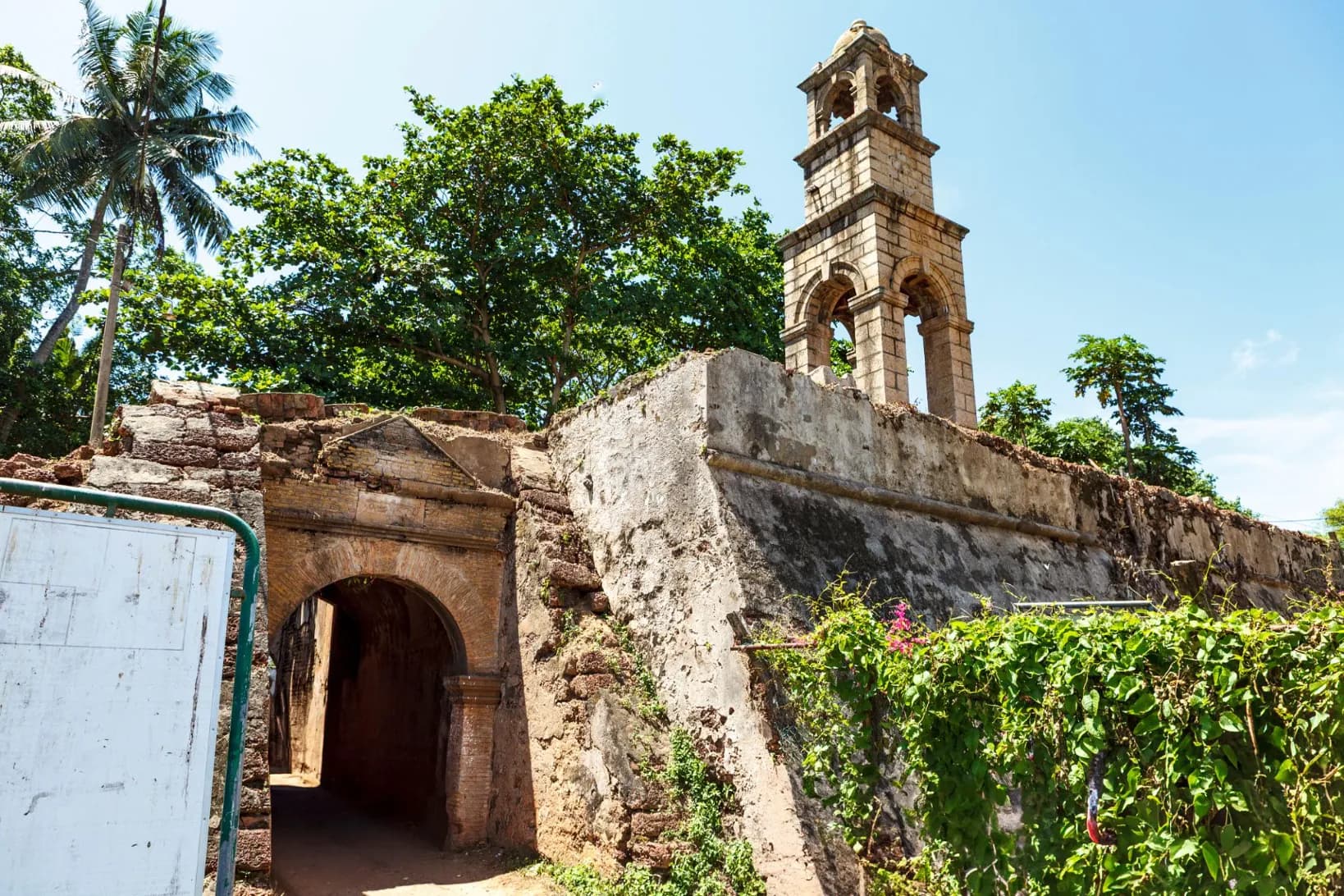
Mannar is not just a bird hotspot; it is a region with deep cultural and trade history. For centuries, pearl divers, Arab merchants, Portuguese forts, and Tamil fishing communities have lived in sync with the natural environment. The same lagoons that once produced pearls now support seasonal bird migration.
Even the Adams Bridge / Rama’s Bridge chain of sandbanks plays a role. These shallow waters act as natural barriers, creating calm feeding zones ideal for waders and seabirds.
Click on here “Toddy Culture of the Coastal Belt: A Deep Dive into an Old Drinking Tradition”
How Climate Change Threatens the Bird Highways
As weather patterns shift, migratory routes are changing globally. Mannar faces several threats:
1. Altered Rainfall and Lagoon Levels
Too much rain floods the mudflats. Too little causes them to dry completely. Migratory birds depend on precise ecological timing.
2. Human Development and Disturbance
Unregulated tourism, new roads, and habitat destruction reduce safe landing areas.
3. Global Climate Shifts
Some birds now arrive earlier or later than before. Others skip Mannar entirely if northern climates stay warm longer.
Scientists studying Mannar have stressed that without careful protection, Sri Lanka may lose its status as a critical stopover point on the Central Asian Flyway.
Why Mannar Matters for Sri Lankan Tourism
Mannar is slowly becoming a hub for eco-tourism and birdwatching. What used to be a quiet coastal region is now attracting:
- Wildlife photographers
- Ornithologists
- Conservationists
- International travellers seeking non-commercial nature experiences
For Sri Lanka, the value of Mannar goes beyond tourism revenue. Being a bird highway strengthens the island’s reputation as part of a global ecological system.
If protected properly, Mannar could become:
- One of Asia’s top birdwatching destinations
- A leading research site for migration and climate studies
- A sustainable eco-tourism model for rural livelihoods
Visiting Mannar: What to Know
The best time to visit is December to February, when bird numbers peak. Early mornings and late afternoons are ideal for sightings.
Key locations include:
- Vankalai Sanctuary
- Mannar Causeway
- Talaimannar area
- Adam’s Bridge viewpoint
- The salterns and lagoons around Giants Tank and Pesalai
Respecting the environment is essential. Visitors should avoid loud noise, drones near flocks, or walking into active feeding areas.
A Landscape That Teaches Us to Look Up
Mannar is a reminder that the world is far more connected than we imagine. Birds from Russia, Mongolia, and Central Asia arrive on a coastline in Sri Lanka because the ancient rhythms of the earth draw them here. The land is flat, silent, and wind-blown — yet above it, the sky becomes a highway of life.
To watch thousands of birds land on the same mudflat is to realise that Mannar is not just a destination. It is a crossroads of hemispheres, species, and histories.
It is where the world passes overhead.