The Sacred City Under the Empire Kandy and the Temple of the Tooth
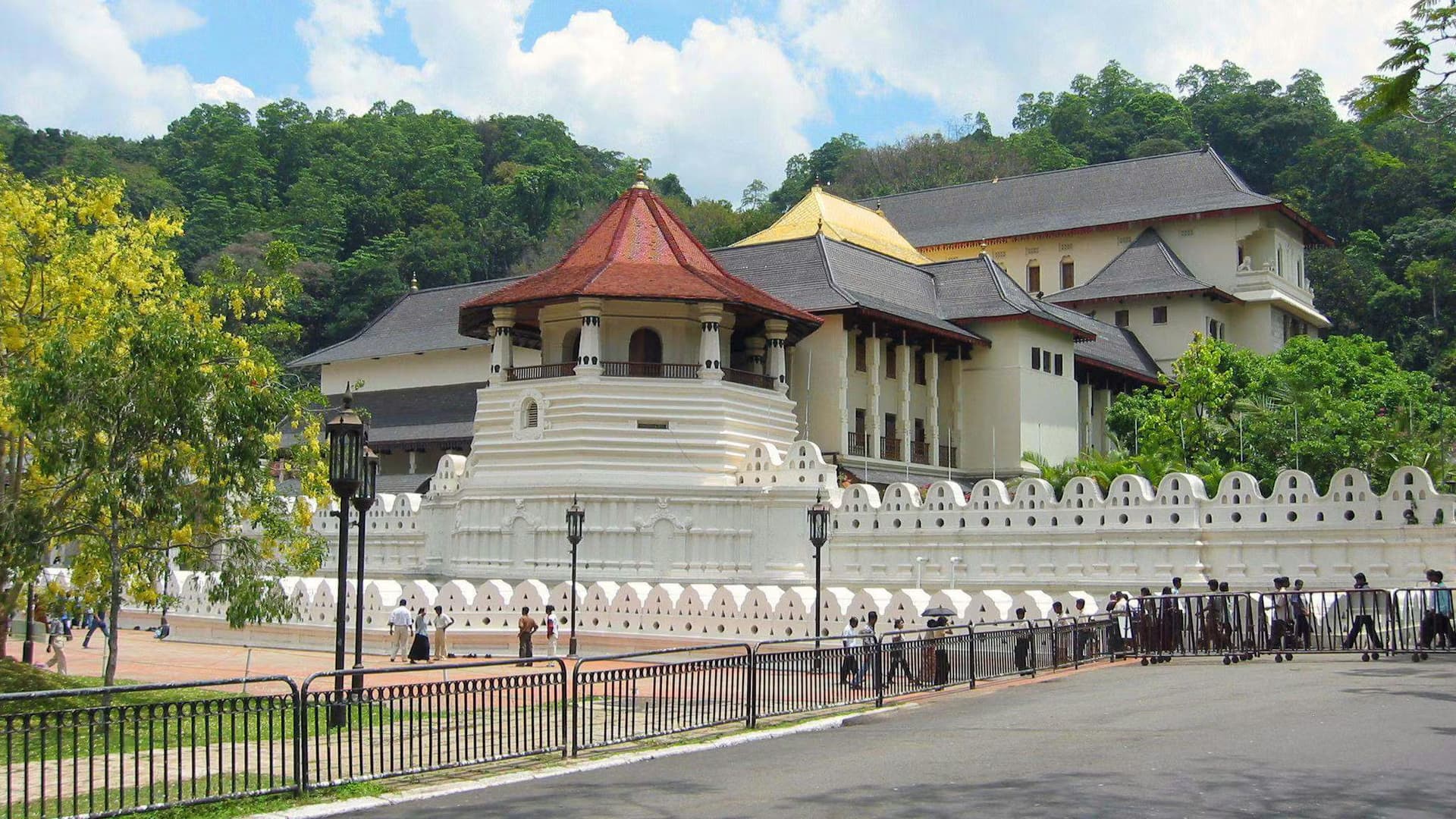
Kandy fell to the British in March 1815, but it was never just another conquered town on an imperial map. It was the last capital of the Sinhala kings, the keeper of the most revered Buddhist relic in the island, and a city whose meaning ran far deeper than administration, taxation, and military occupation. The British could take the Kandyan Kingdom through the Kandyan Convention, signed in Kandy itself, yet they quickly realised that ruling the hill capital was not the same as mastering it. The Temple of the Tooth remained the moral and symbolic heart of the country, because in Sri Lankan political culture the custody of the Sacred Tooth Relic had long been linked to the right to govern.
The fall of the Kandyan Kingdom in 1815
The British takeover of Kandy in 1815 marked the formal end of the Kandyan Kingdom and gave Britain control over the whole island. But the transfer of power was layered and delicate. The Kandyan Convention deposed King Sri Vikrama Rajasinha and vested sovereignty in the British Crown, yet it was shaped through local elites and signed in the city that carried the kingdom’s sacred authority. That mattered. Kandy was not Colombo. It was not simply a provincial centre waiting to be absorbed into a colonial bureaucracy. It was a royal, ritual, and spiritual capital whose legitimacy had been built around Buddhism and kingship for centuries.
That is why the British had to proceed with caution from the start. They may have won the kingdom politically, but they understood that any careless intrusion into the Temple of the Tooth could trigger resistance far beyond Kandy town. In effect, they inherited a state structure while confronting a sacred order they could not easily replace. For a colonial regime obsessed with control, Kandy was a lesson in limits.
Click on here “Tea, Trains & Tiffin: Life on the Upcountry Hill Stations”
Why the Temple of the Tooth mattered so much
The Temple of the Sacred Tooth Relic was never just a religious monument. It sat within the royal palace complex and symbolised the old idea that whoever protected the relic possessed the rightful mandate to rule. That fusion of religion, sovereignty, and ceremony made the temple uniquely powerful. Even under British rule, the relic remained central to public imagination, Buddhist devotion, and Kandyan identity. The shrine’s significance was not erased by conquest; if anything, it became even more politically sensitive once the monarchy disappeared.
This is what made Kandy such a spiritually charged colonial city. A fort can be occupied. A treasury can be audited. A royal palace can be repurposed. But a sacred relic that embodies kingship is another matter entirely. The British could regulate the surroundings, appoint officials, and reshape institutions, yet they could not behave as though the Dalada Maligawa was merely another government building. In modern terms, it was the island’s ultimate cultural power centre.
How the British handled sacred authority
British administrators learned quickly that direct interference in sacred institutions was risky. The practical approach was management without desecration: keep order, cultivate local intermediaries, and avoid insulting the devotional life of the population. This did not mean colonial rule was respectful in any modern egalitarian sense. It meant the British were strategic. They recognised that governance in Kandy required sensitivity to Buddhist ritual, monastic networks, and the symbolic prestige of the temple.
Even the built environment reflected this uneasy coexistence. The Temple of the Tooth remained within the old palace complex, while parts of the former royal zone were adapted to new colonial uses during the British period. What had once been the seat of kingship now stood within an imperial order, yet the sacred core was never stripped of its devotional function. That balance tells you everything about the colonial psychology of Kandy: authority was asserted, but always with an awareness that spiritual legitimacy lay elsewhere.
Life in colonial Kandy: sacred city, hill station, administrative town
By the late nineteenth and early twentieth centuries, Kandy had become a layered city. It was still a pilgrimage centre and ceremonial capital in memory, but it was also a colonial town with hotels, railway links, promenades, and a growing appeal to visitors. Printed guidebooks for travellers appeared by the early 1900s, including A Guide to Kandy in 1903, showing that the city was already being packaged for residents and tourists alike. Railway literature from the early twentieth century likewise promoted inland travel and connected Kandy more firmly to the colonial travel circuit.
This is where Kandy becomes especially fascinating for heritage travel and cultural tourism today. Under empire, it was both reverent and curated. Pilgrims came for worship. Colonial visitors came for scenery, ritual spectacle, and the romance of the hill capital. Places like Queen’s Hotel, with roots in the British transformation of the city after 1815 and its later evolution into a major hotel from the nineteenth century onward, embodied that crossover between imperial residence, urban reinvention, and visitor culture.
The Esala Perahera: faith, pageantry, and colonial spectatorship
No tradition better captures Kandy’s continuity than the Esala Perahera. It remained one of the island’s great annual religious festivals, centred on homage to the Sacred Tooth Relic and embedded in ritual life long before modern tourism language existed. Under colonial rule, however, it also became something else: a spectacle observed by outsiders, described in travel literature, and increasingly consumed as a visual experience by imperial visitors.
That duality is the heart of Kandy’s colonial story. To devotees, the Perahera was sacred continuity. To many empire travellers, it was dazzling pageantry. Elephants, drummers, torchlight, dancers, and relic symbolism moved through the streets not as an invented show for foreigners, but as an old living tradition that colonial observers could watch yet never fully own. The British took the kingdom, yes, but the procession carried a deeper chronology than empire.
Kandy as a destination, 1900–1930
Between 1900 and 1930, Kandy increasingly stood at the crossroads of pilgrimage, nostalgia, and tourism. Guidebooks, railway routes, and colonial hospitality infrastructure made the city more accessible to travellers seeking scenic Ceylon, Buddhist heritage, and royal ruins wrapped in cool-climate elegance. Yet what drew people was not only landscape. It was atmosphere. Kandy offered something the colonial port cities could not: a sense that the pre-colonial past still breathed in the present.
That is why Kandy still feels different even now. It is not simply old. It is ceremonially alive. The British administered it, mapped it, and folded it into the machinery of empire, but they never dissolved its sacred centre. The Temple of the Tooth endured. The rituals endured. The idea of Kandy as a spiritual capital endured. And that is the real story of the sacred city under empire: colonial rule arrived, but sovereignty in its deepest cultural sense was never entirely surrendered.