Built to Last Eternity The Story of Jetavanaramaya, One of the World’s Largest Ancient Structures
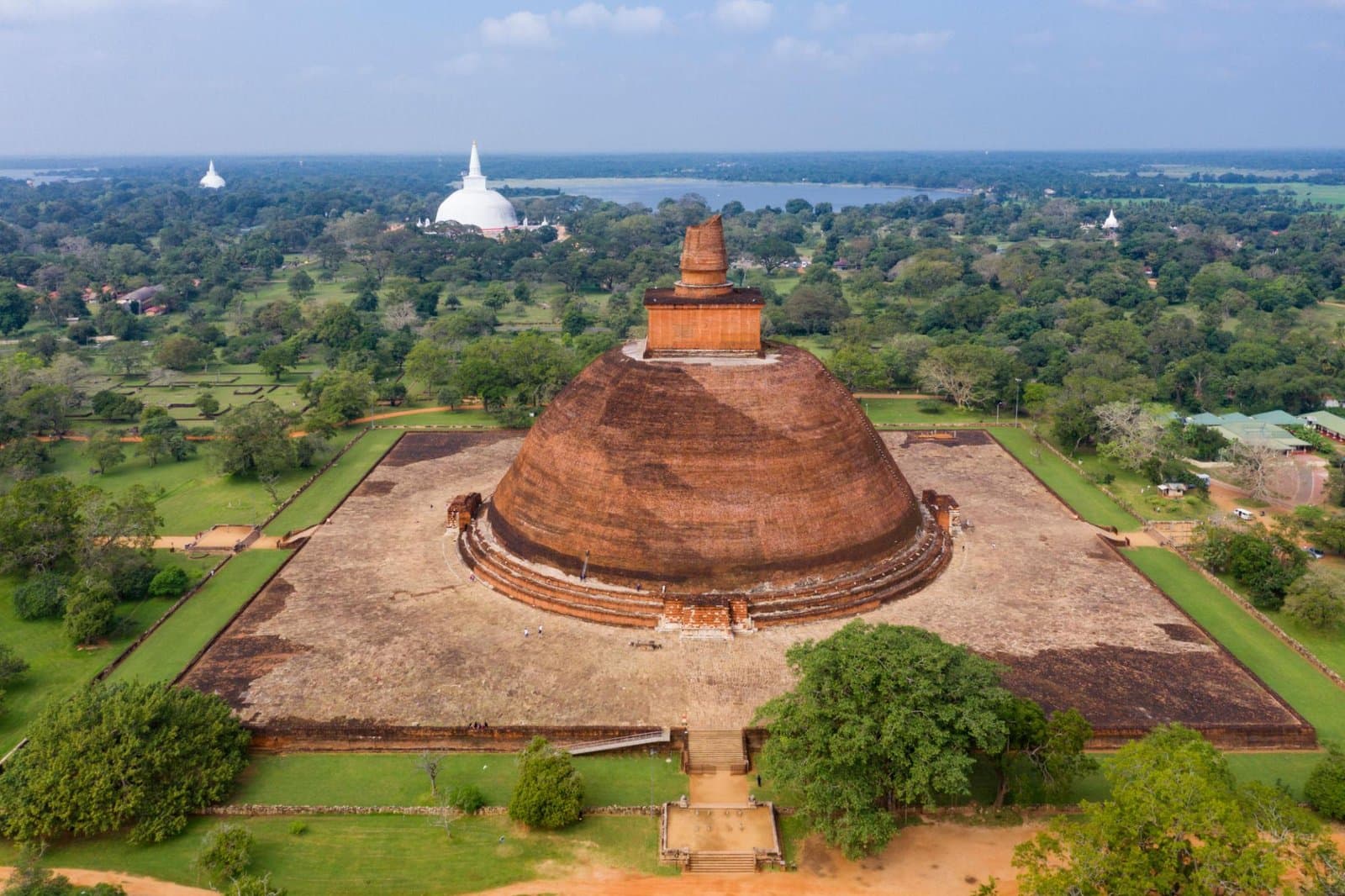
Sri Lanka is home to many ancient wonders, but few inspire awe on the scale of Jetavanaramaya. Rising from the sacred city of Anuradhapura, this colossal stupa is not merely a religious monument it is a statement of engineering brilliance, political power, and spiritual ambition. Built nearly 1,700 years ago, Jetavanaramaya remains one of the largest masonry structures ever created by humankind.
For travellers exploring Sri Lanka’s cultural triangle, Jetavanaramaya is not just a site to visit it is a place to experience history at its most ambitious.
Recent article click on here “A 1716 Map of Sri Lanka, a Washington DC Thrift Store, and the Quiet Power of Women Who Recognise Value”
A Monument Born from Power, Faith, and Vision
Jetavanaramaya was constructed during the reign of King Mahasena (273–301 AD), one of the most controversial and transformative rulers in ancient Sri Lankan history. His reign marked a dramatic shift in religious patronage, power structures, and architectural ambition.
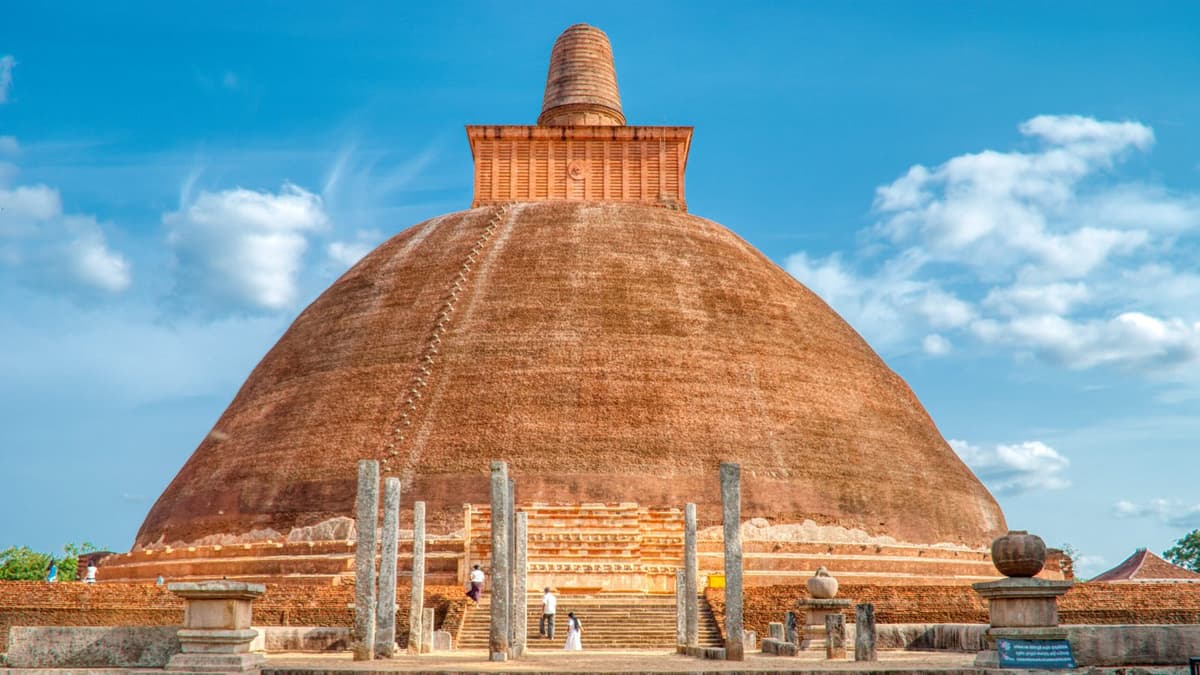
At the time of its completion, Jetavanaramaya stood over 120 metres (400 feet) tall, making it one of the tallest structures in the ancient world surpassed only by a few monuments such as the Egyptian pyramids. Even today, despite centuries of erosion and restoration, it dominates the Anuradhapura skyline.
This was not a modest religious offering. It was a deliberate act of permanence.
Why Jetavanaramaya Was Revolutionary
Jetavanaramaya was revolutionary for several reasons:
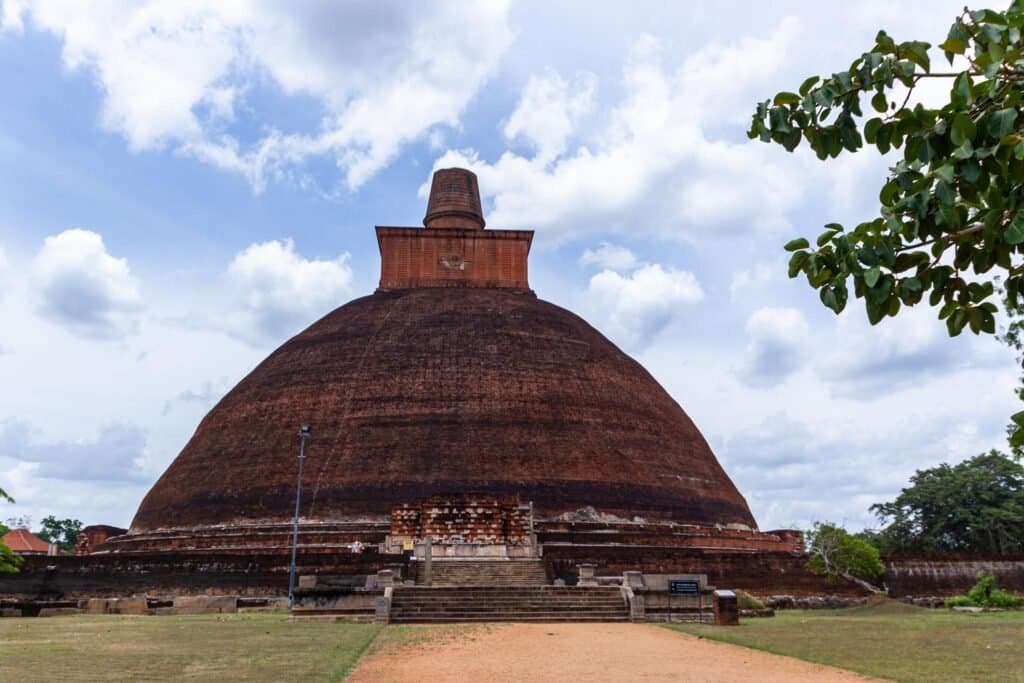
- It was built using over 93 million baked bricks, an astonishing number even by modern standards.
- The bricks were specially engineered for compressive strength, allowing the structure to withstand immense vertical load.
- The stupa’s hemispherical design distributed weight evenly, a principle still used in modern dome construction.
What makes this even more remarkable is that all of this was achieved without modern machinery, steel reinforcement, or concrete.
From a civil engineering perspective, Jetavanaramaya represents one of the earliest large scale examples of advanced structural optimisation.
The Sacred Role of Jetavanaramaya in Buddhism
Beyond its physical scale, Jetavanaramaya holds immense religious significance. It was built to enshrine sacred Buddhist relics, believed to include a portion of the Buddha’s sash.
The stupa became the centrepiece of the Jetavana Monastery, which once housed over 3,000 Buddhist monks. This monastery was not merely a place of worship it functioned as a hub of learning, debate, and religious scholarship.
For pilgrims, Jetavanaramaya symbolised:
- Enlightenment
- Protection
- The enduring presence of the Buddha’s teachings
Even today, devotees walk barefoot around its vast base, offering flowers and prayers in quiet reverence.
A Feat of Ancient Engineering That Defied Time
What truly sets Jetavanaramaya apart is its longevity.
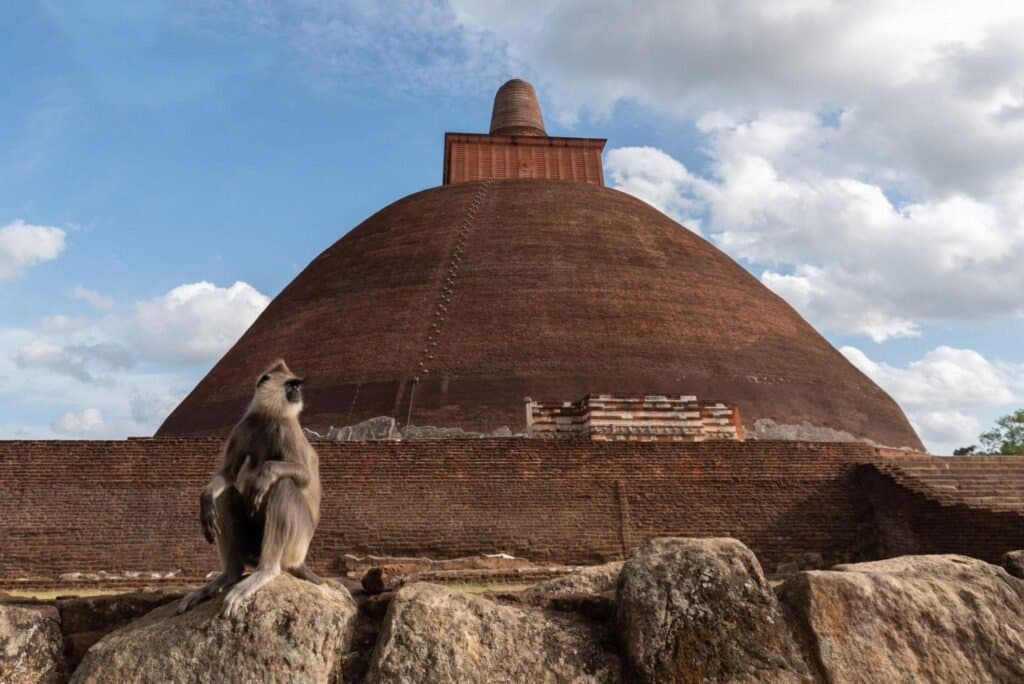
Sri Lanka’s climate is unforgiving intense monsoon rains, extreme humidity, and temperature fluctuations take a heavy toll on structures. Yet Jetavanaramaya has survived earthquakes, invasions, neglect, and centuries of natural decay.
The secret lies in:
- High density bricks bonded with a lime based mortar mixed with sand and organic materials
- A carefully prepared foundation designed to resist soil movement
- A drainage system that prevented water accumulation within the structure
Modern engineers studying the site have repeatedly acknowledged that Jetavanaramaya’s construction techniques were far ahead of their time.
Jetavanaramaya and the Politics of Ancient Sri Lanka
Jetavanaramaya was not built in isolation from politics.
Its construction symbolised a shift away from older monastic establishments and represented royal authority over religious institutions. By founding the Jetavana monastery complex, King Mahasena asserted control over Buddhist practice while reshaping Anuradhapura’s religious landscape.
In this way, Jetavanaramaya functioned as:
- A religious monument
- A political statement
- A symbol of state power
Understanding this context adds depth to a visit it was never just about faith, but about influence.
Exploring Jetavanaramaya Today: What Visitors Can Expect
Today, Jetavanaramaya is part of the Anuradhapura UNESCO World Heritage Site, drawing travellers, historians, and pilgrims from around the world.
When you visit, expect:
- Vast open spaces ideal for slow exploration
- A sense of scale that photographs struggle to capture
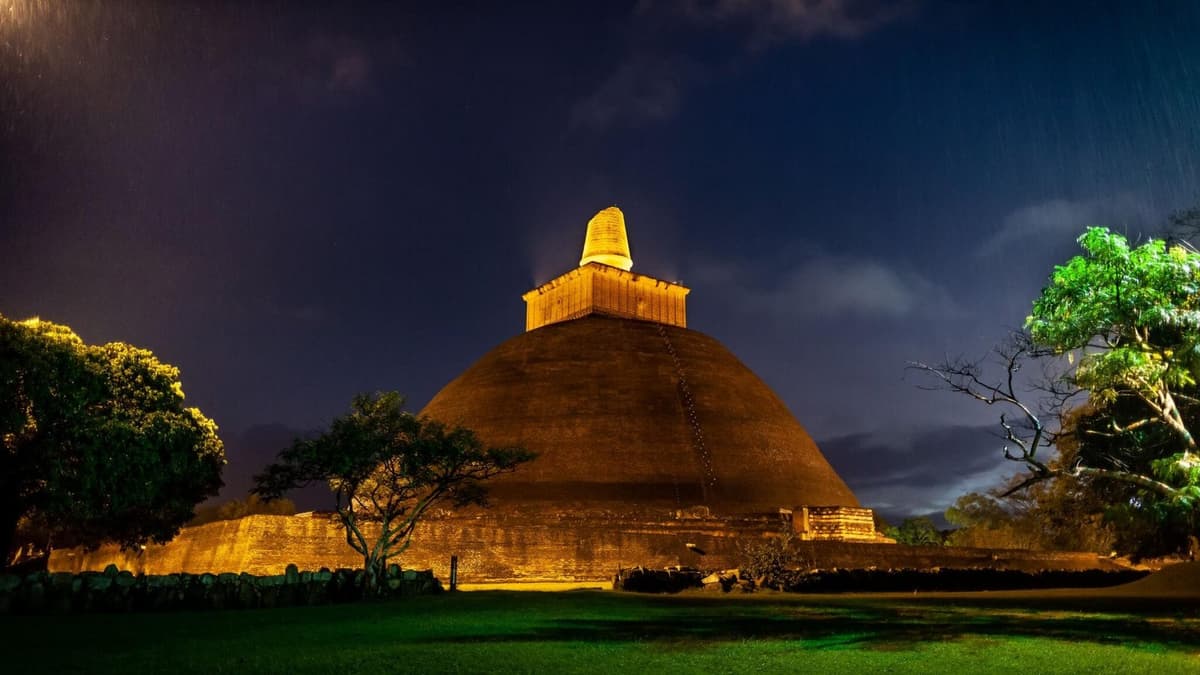
- A peaceful atmosphere, especially in the early morning or at sunset
Unlike crowded urban attractions, Jetavanaramaya offers space to pause, reflect, and absorb its enormity.
Tip for travellers: Visit during golden hour. The warm light against the ancient brickwork creates one of the most striking scenes in Sri Lanka.
Why Jetavanaramaya Matters in Global History
Jetavanaramaya is often overlooked in global discussions of ancient megastructures, yet it deserves recognition alongside:
- The pyramids of Egypt
- Angkor Wat in Cambodia
- Borobudur in Indonesia
It stands as proof that South Asia was a centre of advanced engineering and monumental architecture, long before modern construction methods existed.
For Sri Lanka, it is a reminder that the island’s heritage extends far beyond beaches and wildlife it includes some of the world’s greatest architectural achievements.
Why Jetavanaramaya Is a Must Search Destination
Jetavanaramaya consistently ranks among:
- Largest stupas in the world
- Ancient brick structures still standing
- Top historical sites in Sri Lanka
Popular search terms associated with the site include:
Jetavanaramaya history, Jetavanaramaya Anuradhapura, largest stupa in Sri Lanka, ancient engineering Sri Lanka, Buddhist stupas in Anuradhapura, Sri Lanka cultural triangle, UNESCO sites Sri Lanka.
For culturally curious travellers, it is an essential stop.
Add Jetavanaramaya to Your Sri Lanka Travel Itinerary
If you are planning a journey through Sri Lanka’s Cultural Triangle, Jetavanaramaya deserves a dedicated visit not a quick stop.
Take time to walk its perimeter. Learn its story. Feel the weight of history beneath your feet.
Plan your Anuradhapura journey with TrippingSriLanka.com
Discover in depth guides, heritage trails, and travel tips that go beyond the surface so you don’t just see Sri Lanka, you understand it.