The Untouched Beaches of Kudumbigala: Where Monks and Nature Coexist
Sri Lanka’s deep South-East is no stranger to rugged magic, but Kudumbigala has re-emerged as one of the most talked-about locations in 2025. The reason? A rare blend of untouched beaches, monk hermitages hidden inside boulders, and a landscape where civilisation simply steps back and allows nature to lead.
As more travellers rediscover remote Sri Lanka, Kudumbigala’s beaches have become a symbol of what sustainable, respectful, low-interference travel could look like. They remain almost completely natural—no commercial stalls, no plastic, no sound pollution, no curated “tourist experience.” Instead, what awaits is silence, spirituality, raw coastline, and stories layered between forest and stone.
Origins of Kudumbigala: A 2,000-Year Refuge for Monks
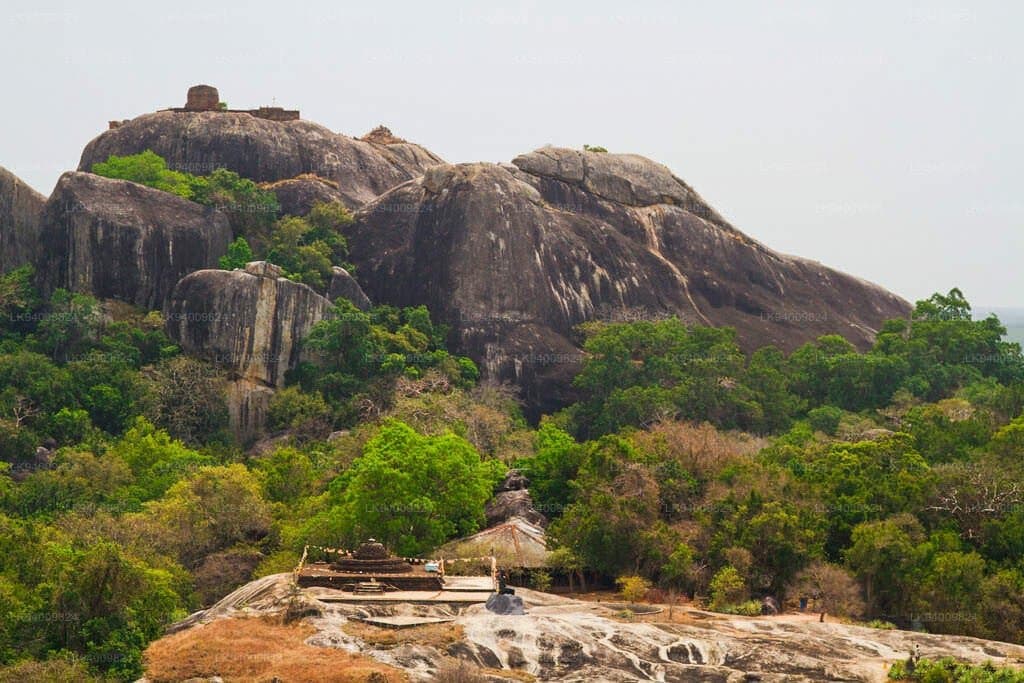
Long before it became a trending travel topic, Kudumbigala was a sanctuary. Built during the reign of King Dutugemunu, this monastery complex was created for monks who sought absolute isolation for meditation.
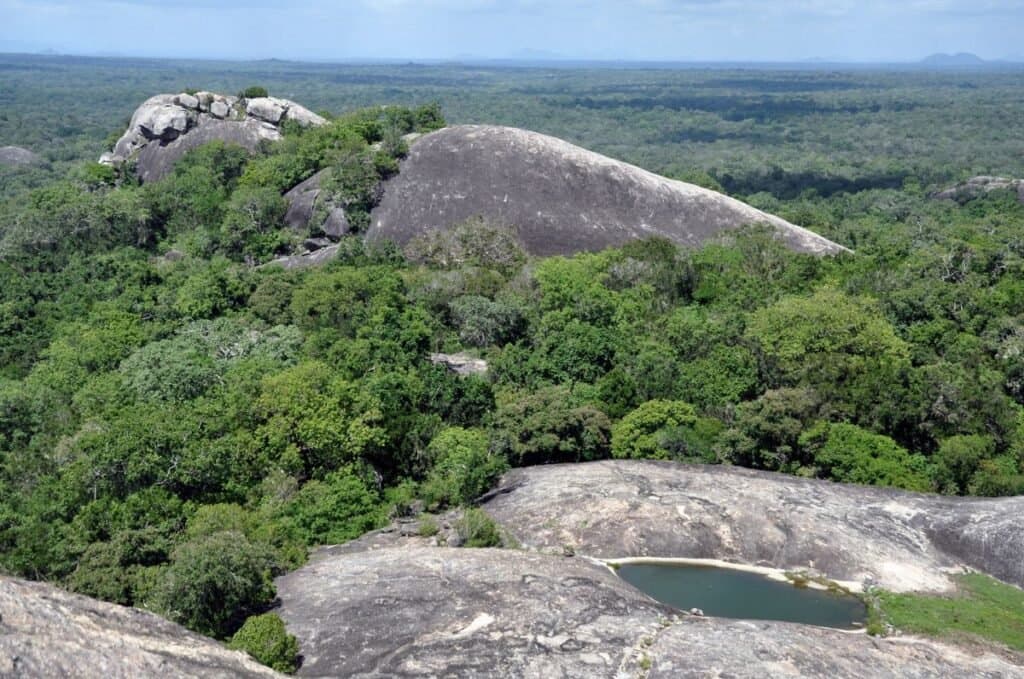
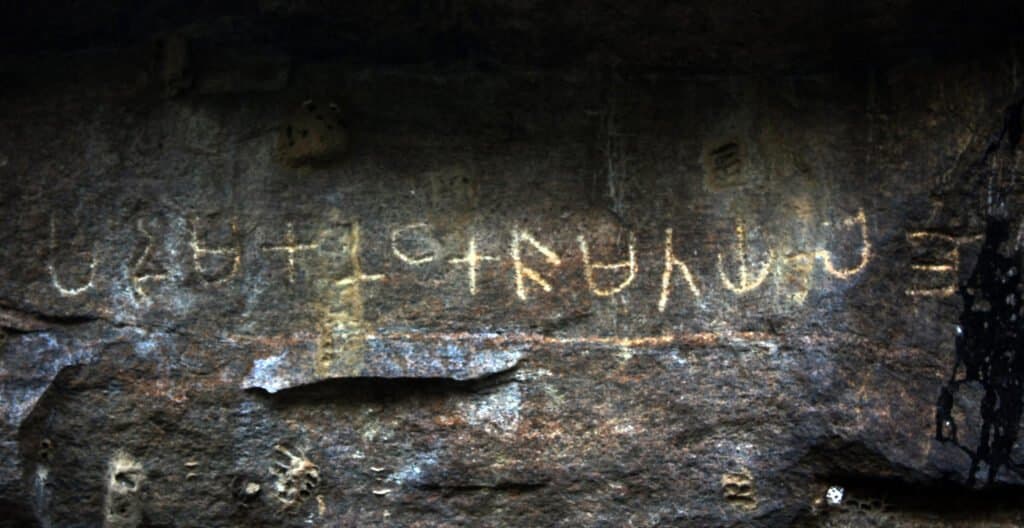
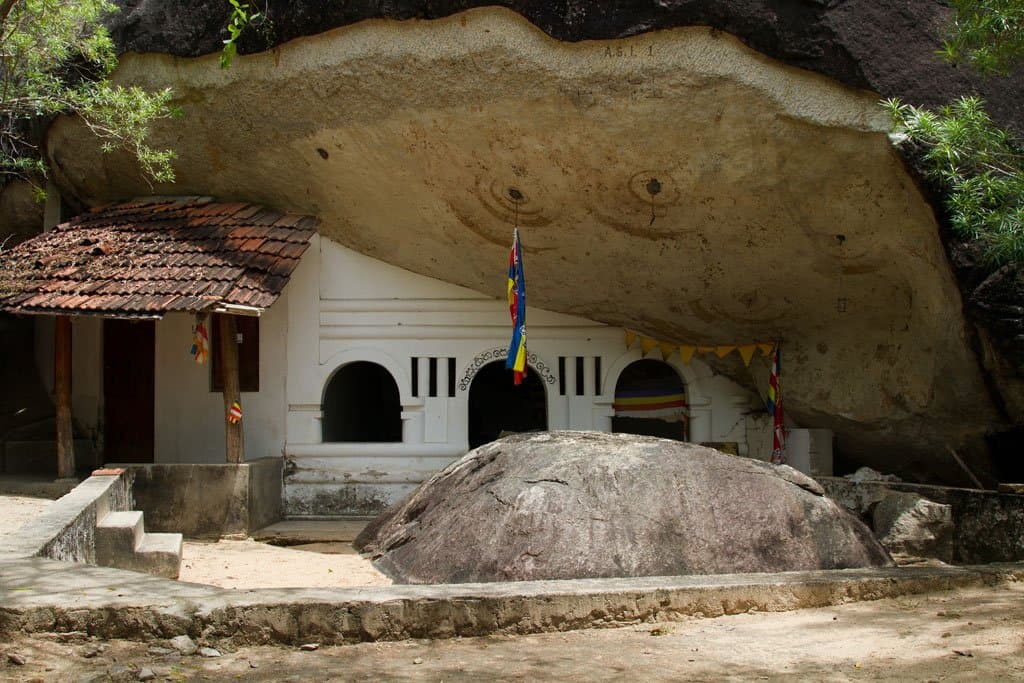
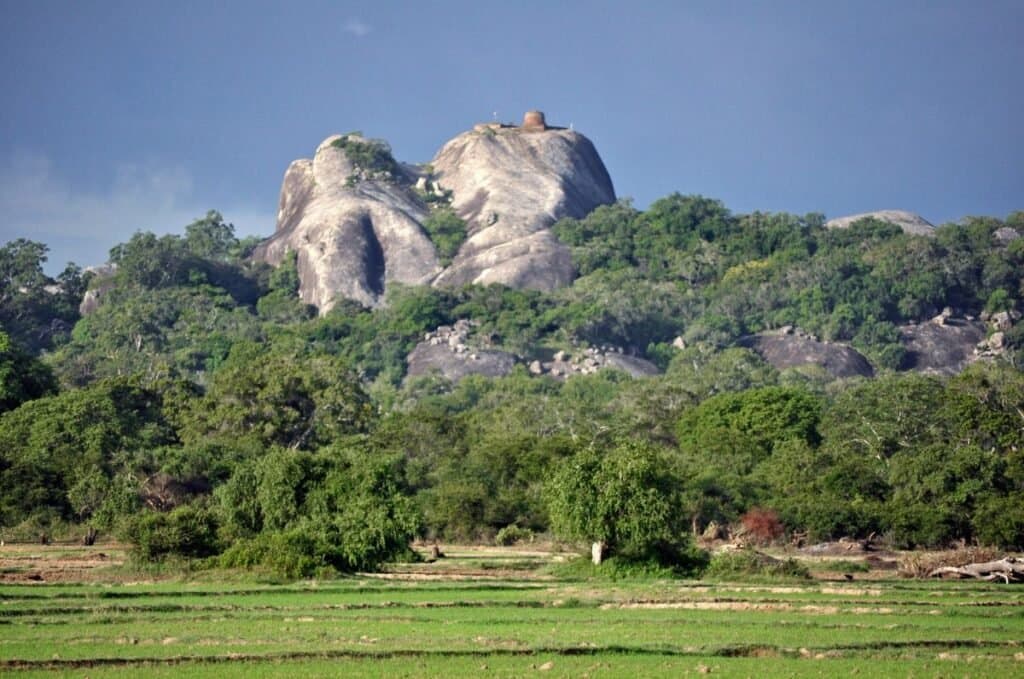
Surrounded by deep forest, rock outcrops, and desolate beaches, the area offered the perfect environment. To this day, many caves still carry Brahmi inscriptions describing how they were donated to meditating monks.
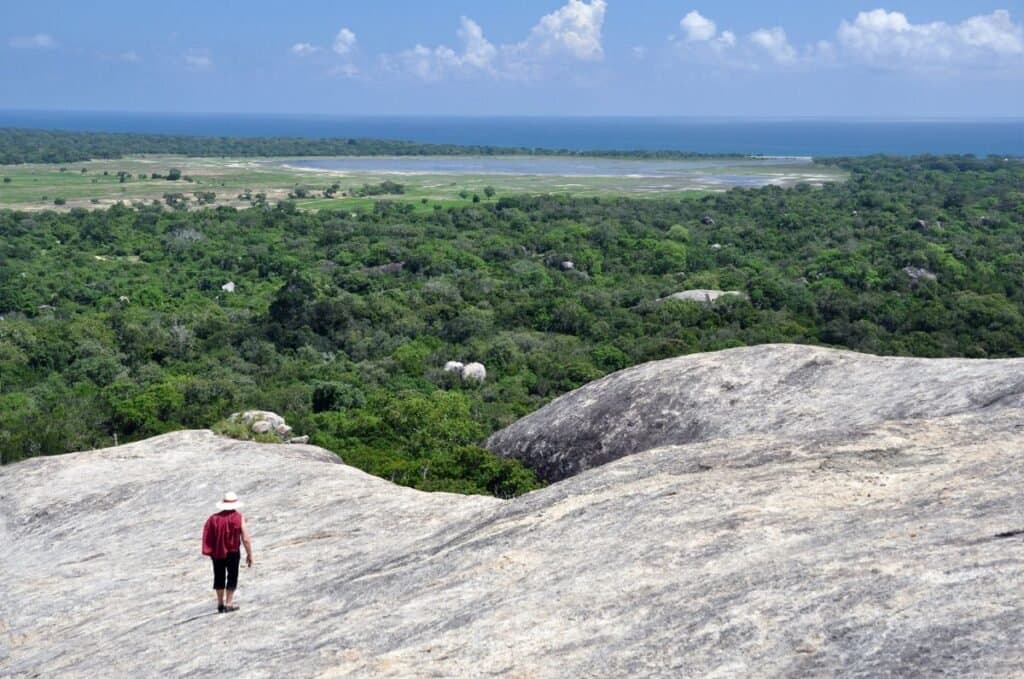
The most iconic point of the complex is the Cylindrical Dagoba, one of the only structures of its kind in Sri Lanka. Standing atop the main rock, it serves as a viewpoint stretching far beyond the tree line—towards Kumana, Okanda, and the faint outline of the ocean.
The geography alone hints at why Kudumbigala monks developed a relationship with nature unlike anywhere else in the island.
A Landscape Where Wilderness Reigns
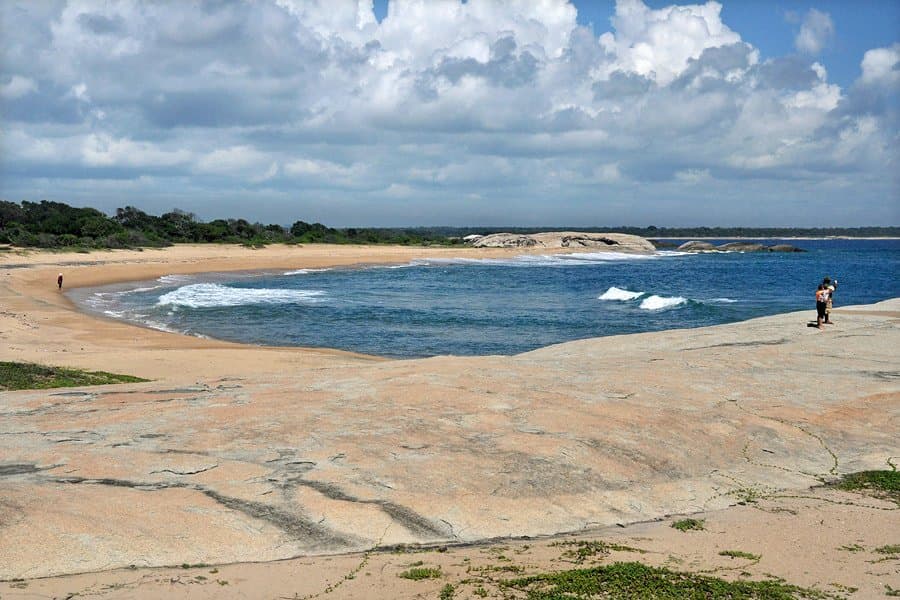
The beaches surrounding Kudumbigala—stretching towards Okanda and the borders of Kumana—are among the most untouched in the entire island. You won’t find resorts or restaurants. You won’t find curated beach bars or artificial viewpoints. Everything here belongs to the elements.
1. The Beaches Themselves
Wide, wind-sculpted sand stretches endlessly. The waters are strong, often unsuitable for swimming, but breathtaking to watch. Sea eagles circle overhead. The horizon is uninterrupted.
For many visitors, the absence of structures becomes the attraction itself.
2. Wildlife Sharing the Shoreline
Because Kudumbigala sits within a wildlife zone, the beaches act as corridors for elephants, deer, and even leopards. Footprints in the sand aren’t always human.
The result is a beach experience that feels more like a national park than a recreational coastline.
3. A Silence That Isn’t Empty
The soundscape of Kudumbigala is one of its strongest signatures:
– wind sweeping through low vegetation
– waves crashing in a continuous rhythm
– occasional calls of birds migrating across the coastline
It’s the kind of silence that amplifies everything else.
Between Rock and Ocean: How Monks Live Alongside Nature
This is where Kudumbigala becomes more than a scenic location. What makes it unique—and why Sri Lankans are talking about it today—is the coexistence between monks and an environment left untouched.
Simple Hermitages, Minimal Human Footprint
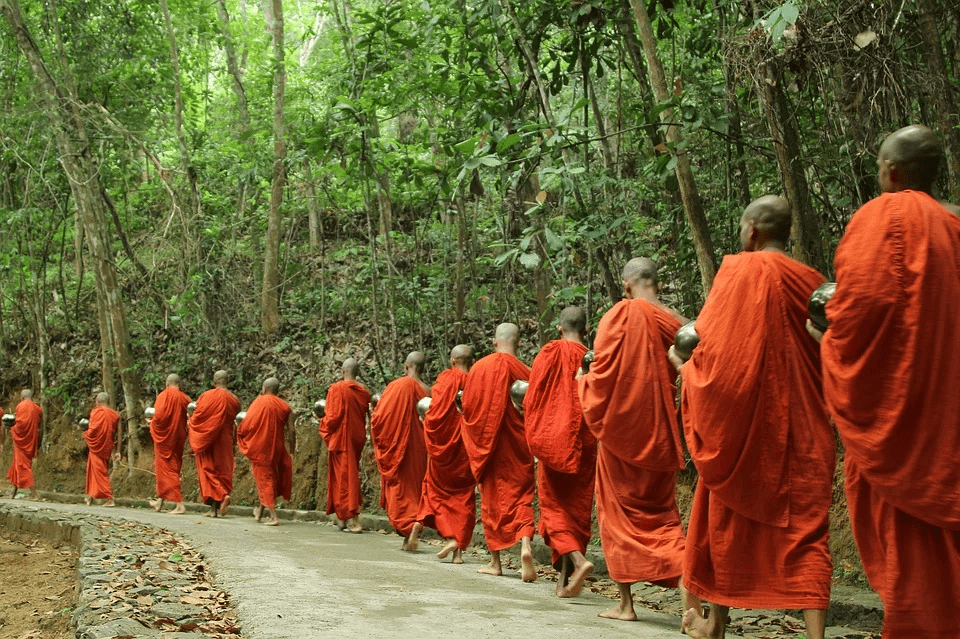
The monks occupy cave shrines built into massive boulders. Their lifestyle is extremely minimal—no electricity, no noise, no permanent structures beyond what existed centuries ago.
They live entirely aligned to natural rhythms:
– rising with the light,
– cooking simple meals,
– walking to villages for alms,
– meditating through the heat and into dusk.
It’s a rare example of an ancient monastic lifestyle still alive today.
Click on here “Secrets of Wilpattu’s Villu Lakes: Nature’s Own Water Maze”
Nature as Teacher, Not Backdrop
For the monks, the environment is not simply a setting. The harsh winds, dry forest, long walks, and unpredictable weather become part of the spiritual discipline that Kudumbigala is known for.
Visitors who walk through these caves often describe a deep sense of grounding—an awareness that this place has supported meditation and silence for centuries.
The Growing Trend: Why Kudumbigala Is Going Viral in 2025
The resurgence of interest didn’t happen by accident. Several factors pushed Kudumbigala into the spotlight this year.
1. A Call for “Unfiltered Travel”
As global tourism shifts away from curated, commercial destinations, travellers now seek places that feel raw and real. Kudumbigala, with its untouched beaches and ancient monastery, fits that desire perfectly.
2. Rising Awareness of Ecological Preservation
Many Sri Lankans, especially youth, have been advocating strongly for protecting natural and historical sites. Kudumbigala became a symbol of what must be preserved—because once commercialised, it cannot be undone.
3. Social Media Discoveries
A handful of viral drone videos and photos showed the sweeping beachline near Okanda and the monastery perched on its rock. The combination of aerial visuals + mystery + isolation ignited fresh curiosity.
4. A Break From Overcrowded Tourist Spots
As places like Ella, Mirissa, and Unawatuna grow more developed, Kudumbigala offers the opposite experience:
no crowds, no schedules, no constructed viewpoints.
How to Reach Kudumbigala (And What to Expect)
Travelling to Kudumbigala requires intention. There are no easy shortcuts.
Route
Most travellers reach it via:
– Arugam Bay → Panama → Okanda → Kudumbigala
The last segment is rugged and often requires a vehicle capable of handling off-road conditions.
Expectations
– No phone signal in parts
– No shops, cafés, or washroom facilities
– No lights or guided trails
– High heat during the day
– Pure, unmanicured wilderness
For many travellers, this difficulty is what makes the visit rewarding.
Respecting the Space: Guidelines for Visitors
Because of the renewed attention, preserving the integrity of Kudumbigala is crucial. The entire monastery operates on a foundation of simplicity and silence.
Dos
– Dress respectfully when entering the monastic area
– Speak softly
– Carry your waste with you
– Follow the guidance of resident monks
– Stay on designated trails
Don’ts
– No drones inside the monastery zone
– No loud music or portable speakers
– No recreational alcohol in the area
– No touching or climbing sacred structures
– No disturbing wildlife
Kudumbigala’s uniqueness depends on minimal interference. Visitors have a direct responsibility in keeping it that way.
Why Kudumbigala’s Beaches Matter for Sri Lanka’s Future
Why Kudumbigala’s Beaches Matter for Sri Lanka’s Future
Beyond its beauty and heritage, Kudumbigala represents a broader conversation happening across the country:
How do we balance tourism, culture, and ecology without destroying what makes Sri Lanka special?
1. It’s a Living Monastic Heritage Site
Unlike archaeological ruins, Kudumbigala is still active. Its spiritual value cannot be separated from its physical environment.
2. It Demonstrates a Model for Non-Invasive Travel
Nature is not used; it is shared. This could become a template for future eco-travel across Sri Lanka.
3. It Preserves a Rare Coastal Forest Ecosystem
The beach-bordering forest around Kudumbigala remains one of the least-disturbed ecosystems in the island.
4. It Encourages Conscious Tourism
Travellers who visit Kudumbigala tend to engage more deeply with conservation, heritage, and respectful travel practices.
Conclusion: A Place Where Time Moves Differently
Kudumbigala’s beaches are not destinations for typical recreation. They aren’t here to entertain you. They are here to ground you.
Standing on this coastline, with wind cutting across the dunes and the forest behind you holding thousands of years of silence, you realise that not everything needs to be touched, developed, or altered.
Some places must simply be allowed to exist.
And Kudumbigala, where monks and nature still coexist with the gentleness of centuries, is one of them