Unseen Trails of Haputale: Exploring Lesser-Known Viewpoints Beyond Lipton’s Seat
Unseen Trails of Haputale: Exploring Lesser-Known Viewpoints Beyond Lipton’s Seat | Haputale is already one of the most atmospheric corners of Sri Lanka’s hill country—mist-filled mornings, dramatic ridgelines, and endless carpets of tea stretching towards the horizon. Most travellers stop at Lipton’s Seat and call it a day. But Haputale holds a deeper, quieter magic beyond the crowds: hidden lookouts, forest paths, wind-kissed peaks, and untouched viewpoints where the landscape feels almost ancient.
This guide explores those lesser-known spots—ideal for travellers who want solitude, raw scenery, and a genuine connection with the wilderness of the Uva highlands.
The Beauty of Haputale’s Hidden Trails
Haputale sits on a narrow mountain ridge bordered by steep valleys on both sides. While Lipton’s Seat offers the classic panoramic view, the real charm lies in the unmarked tracks and viewpoints scattered around the ridge. These trails take you through tea estates, eucalyptus forests, abandoned colonial routes, and small hamlets untouched by mass tourism.
The weather changes quickly—one moment, bright sunlight; the next, swirling mist pouring over the valleys. That shifting atmosphere is exactly what makes Haputale ideal for travellers seeking quieter, moodier hill-country experiences
1. Pilkington Point – A Dawn Above the Clouds
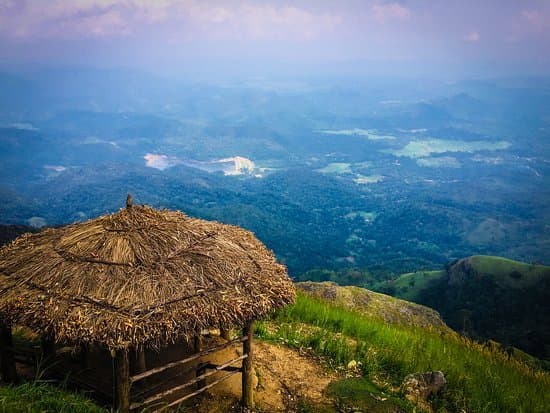
Often mistaken as a “smaller Lipton’s Seat,” Pilkington Point is actually one of Haputale’s most spectacular viewpoints—yet still peaceful and rarely crowded.
Perched on the southern edge of Pitaratmalie Estate, the point offers a sweeping view over Koslanda, Wellawaya, and the fertile plains stretching towards Hambantota. At sunrise, the clouds settle in the valleys like a soft ocean, with distant peaks rising like islands.
The trail is gentle and scenic, weaving through manicured tea bushes and tall shade trees. Because it is less commercialised, you can wander freely, stop for photos, or sit quietly until the estate wakes up.
Why visit: Silent dawn views, easy access, perfect for travellers who prefer calmness to crowds.
2. Adisham Rock Viewpoint – A Hidden Cliff Behind a Monastery
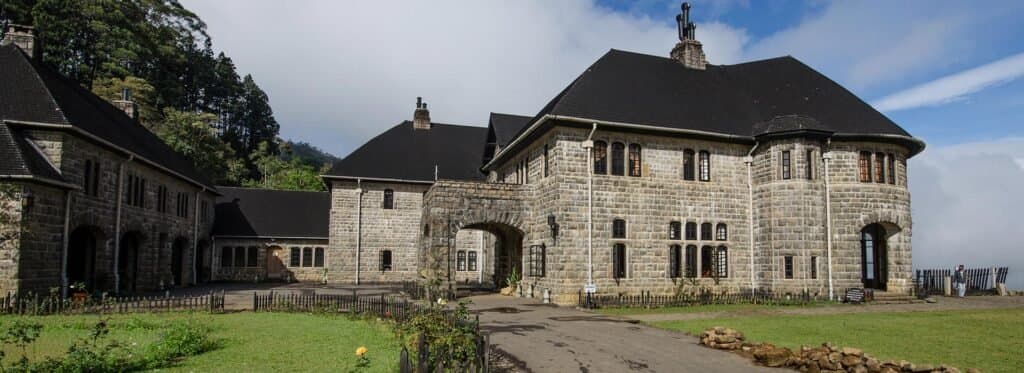
Most travellers visit Adisham Bungalow, but few realise there’s a rugged viewpoint hidden deeper inside the forest behind it. This rocky outcrop stands on the edge of a dramatic drop, offering an almost cinematic view of the Southern plains and the emerald-green forest canopy below.
The trail begins near the monastery’s garden and moves into a shaded pine and eucalyptus belt. As the trees thin out, the cliff suddenly appears—raw, open, and breathtaking. You’ll feel the wind rush up from the valley as birds circle below.
On clear days, you can see as far as Handapangala Lake. On misty days, the clouds roll over the cliff in waves, making the entire viewpoint feel enchanted.
Why visit: Minimal crowds, incredible drama in both sunny and misty weather, perfect for photography.
3. Kalupahana Forest Ridge – For Adventurers Seeking Seclusion
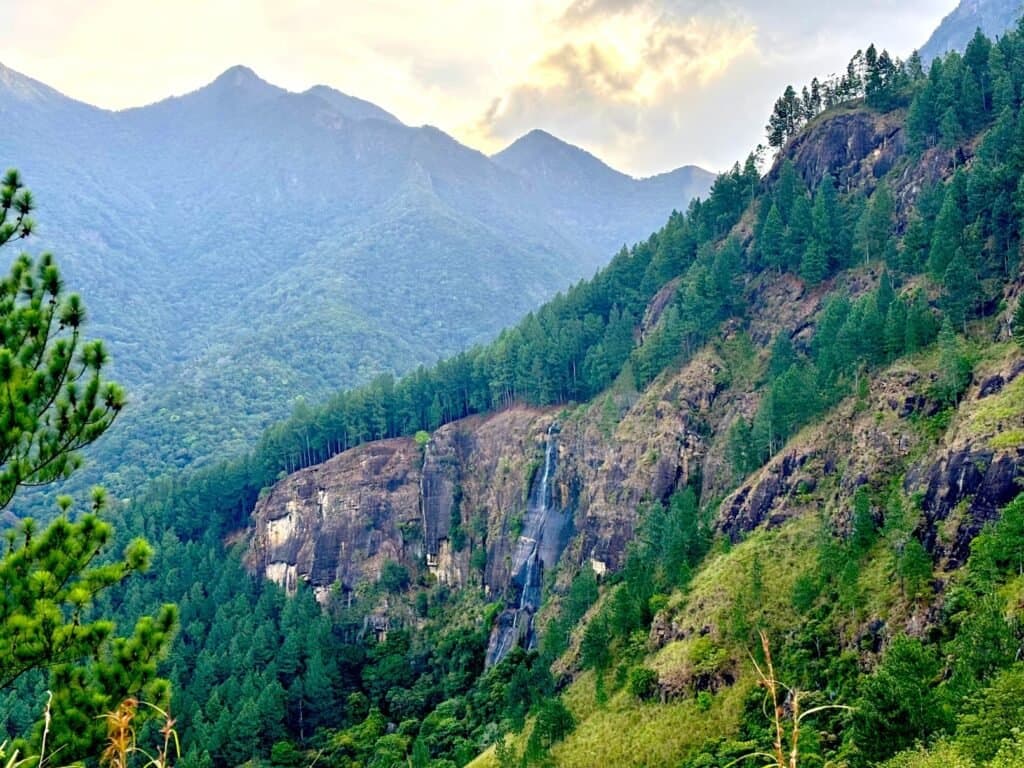
Just below Haputale lies Kalupahana, a gateway to some of the least explored hill-country ridgelines. Unlike the well-marked routes near the town, the Kalupahana Ridge offers raw trekking: narrow footpaths, steep climbs, and deep forest cover.
This area connects to the greater Horton Plains ecosystem and houses hidden peaks that few have heard of. The trek rewards you with sweeping views over Bambarakanda Falls, the surrounding forests, and distant peaks like Wangedigala.
Expect birdsong, dense canopy cover, and the occasional glimpse of wildlife. This is a trail for hikers who want a challenge and isolation rather than a casual walk.
Why visit: Secluded forest trekking, panoramic ridge walks, access to untouched wilderness.
4. St. Catherine’s Seat – A Quiet Sister to Lipton’s Seat
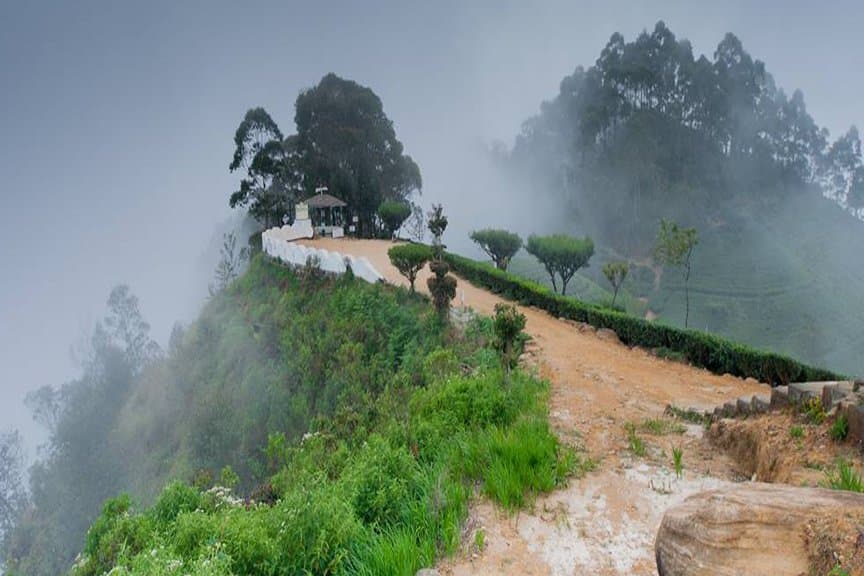
St. Catherine’s Seat is often overshadowed by Lipton’s Seat, despite offering equally remarkable views. Located opposite Poonagala Plateau, it gives a completely different perspective of the rolling Uva landscape.
The route passes through lush tea estates, pepper plantations, and stretches of forest. At the top, the cliffs fall sharply into the valley, unveiling a panorama that includes Diyatalawa, Bandarawela, and the far-off Moneragala plains.
Because of its position, the light in the late afternoon is golden and soft—making it ideal for sunset photography.
Why visit: Underrated beauty, golden-hour magic, peaceful tea-estate paths.
5. Waltrim Plateau – A Wind-Swept Secret Above the Clouds
Located on the Haputale–Beragala side, Waltrim Estate hides a vast, flat plateau with some of the hill country’s most dramatic wind conditions. Here, the mist moves fast, racing across the open fields like a living creature. At times, the valley below appears and disappears within seconds.
The plateau is surrounded by cliffs, giving you a 360-degree sense of openness and altitude. The lack of commercial structures makes it feel almost untouched—just wind, grass, and sky.
Many photographers visit for long-exposure shots of rolling mist, but the area remains largely unknown to most travellers.
Why visit: Hyper-dramatic mist movement, raw landscapes, ideal for nature lovers and photographers.
6. Poonagala Top via the Back Trail – A Scenic Alternative Route
Rather than taking the usual road, seasoned trekkers use the back trail through the tea estates to reach Poonagala Rock. This route begins from the lower Haputale ridge and moves through a mix of pine forest and open estate slopes.
As you climb, you get glimpses of Diyaluma Falls in the distance. Near the top, the trail opens into a viewpoint overlooking massive cliffs that drop sharply into the Wellawaya plains.
The wind can be intense, making the viewpoint feel both peaceful and exhilarating.
Why visit: A refreshing alternative route, dramatic cliffscapes, and sweeping valley views.
7. Tangamale Strict Nature Reserve – A Mist-Laced Forest Escape
Tangamale is one of Haputale’s most underrated natural treasures. This protected reserve lies between Haputale town and Adisham and is easily accessed by foot.
The forest is magical—thick moss, ferns, lichen-covered trees, and soft, damp trails. Early morning light breaks through the mist in beams, creating an almost ethereal dreamscape.
The reserve is home to endemic birds, including Sri Lanka blue magpies and various bulbuls, making it ideal for quiet nature walking.
There are several small viewpoints within the forest where the trees part to reveal ridges and valleys.
Why visit: Peaceful forest walking, endemic wildlife, mist-filled landscapes perfect for introspective travellers.
Perfect Time to Explore Haputale’s Hidden Spots
The ideal season is from January to April for clear skies and bright panoramas. However, the misty season from June to August offers incredible atmosphere—silhouettes, shadowy forests, and dramatic fog over the cliffs.
Early morning (6.00–8.30 a.m.) and late afternoon (3.30–5.30 p.m.) are the best windows for scenery and photography.
Practical Tips for Exploring These Trails
- Wear sturdy shoes as paths can be damp and slippery.
- Start early to avoid sudden fog.
- Carry water and a light snack—many routes have no shops.
- Respect estate rules when crossing tea plantations.
- Hire a local guide for off-the-grid trails like Kalupahana and Poonagala back routes.
- Avoid getting too close to cliff edges—mist can reduce visibility instantly.
Why These Hidden Viewpoints Matter
Haputale’s quieter viewpoints allow travellers to experience the hill country as it once was—quiet, contemplative, and deeply connected to nature. These trails remind you that travel doesn’t always need crowds or famous landmarks; sometimes the most memorable moments come from finding silence on a windswept plateau or watching sunrise from a forgotten ridge.
If you’re looking for raw scenery, solitude, and a deeper connection with Sri Lanka’s highlands, these unseen trails of Haputale offer exactly that—an invitation to step beyond Lipton’s Seat and discover the real soul of the Uva hills.
Click on here “HOW ELLA’S MICROCLIMATES SHAPE ITS TEA AND FOREST BIODIVERSITY”