West Coast Heritage by the Sea: Negombo Canals and Churches
West Coast Heritage by the Sea: Negombo Canals and Churches | Negombo’s heritage is woven from water, faith, trade, and community. Sitting along Sri Lanka’s western coastline, just north of Colombo, the town preserves an identity shaped by centuries of maritime encounters, colonial rule, inland waterways, and a deep-rooted Christian tradition. Today, Negombo is more than a tourist stop—it is a living cultural landscape where fishermen, devotees, traders, and travellers move through layers of history that still define the town’s rhythm.
This article explores that layered heritage, focusing on two pillars of Negombo’s identity: its canal network and its iconic churches.
A Coastal Town Built on Trade, Fishing, and Faith
Negombo’s strategic location made it a prized possession for the Portuguese, Dutch, and British. Its natural lagoon, fertile coconut belt, and position along the maritime spice route attracted colonial powers that saw economic advantage and military opportunity. But beyond trade, Negombo flourished as a settlement of fishing communities whose Catholic faith—introduced in the 16th century—became deeply entrenched.
The blend of indigenous traditions with Portuguese and later European influences gave Negombo a distinctive cultural identity. Even today, it is often called “Little Rome” due to its large Catholic population and the many churches that dominate its skyline.
The Canal System: Negombo’s Arteries of Movement
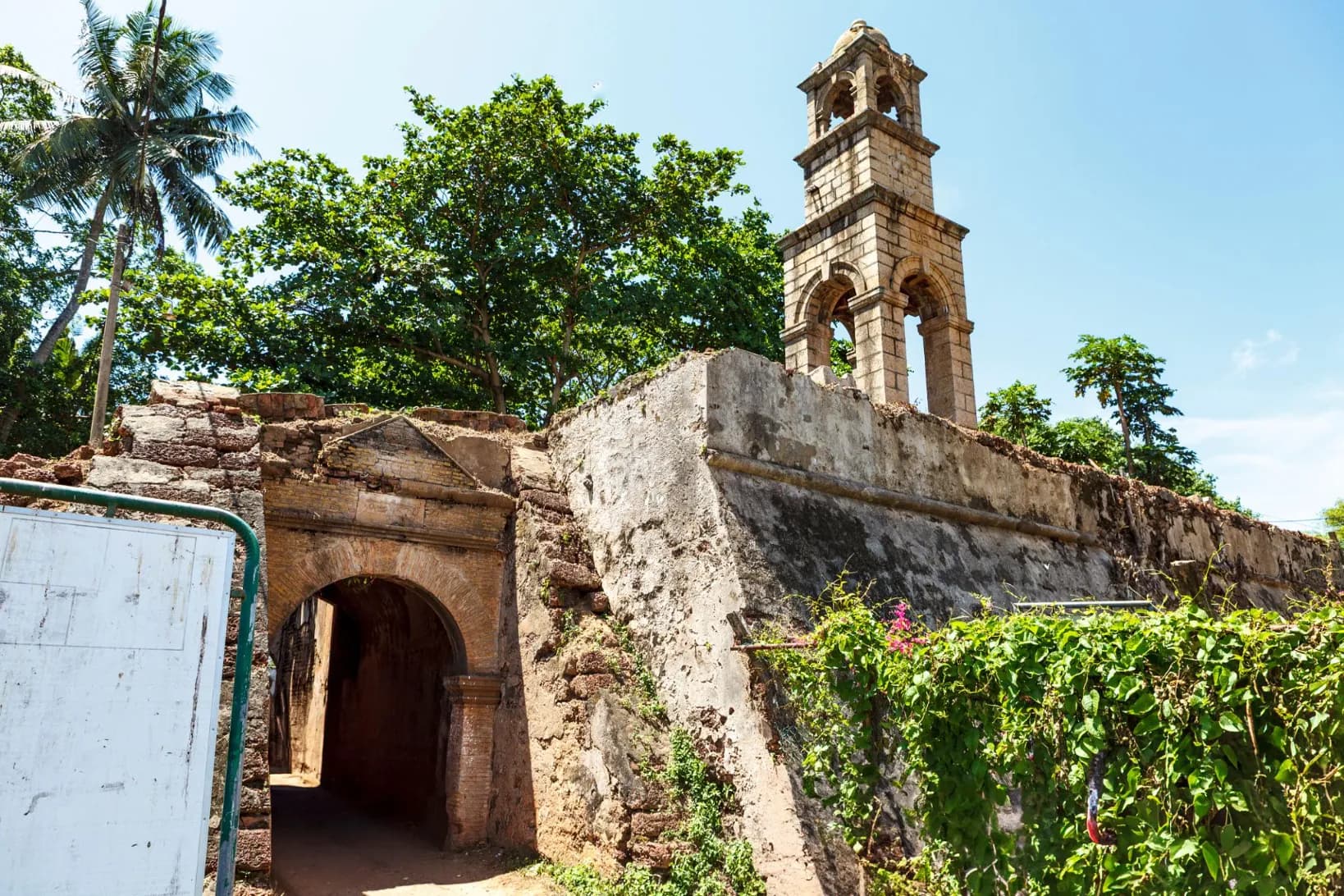
Long before modern roads cut across the Western Province, canals served as the region’s principal transport network. Negombo’s canal system is part of a wider waterway network constructed primarily by the Dutch in the 17th century. Designed for moving goods, troops, and cinnamon, these canals formed a valuable infrastructure that connected Colombo, Negombo, and inland settlements.
Dutch Canal (Hamilton Canal)
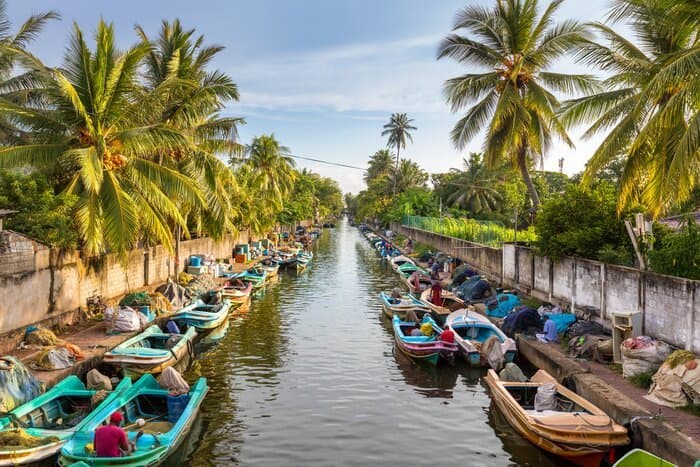
One of the most striking features is the Hamilton Canal, often mistakenly called the Dutch Canal. Built by the British in the early 19th century but aligned with older Dutch waterways, it runs parallel to the coast and links the lagoon to the Kelani River basin. Its long, straight design, shaded by coconut palms and low bridges, makes it visually distinctive.
Today, boat rides along the canal reveal both colonial engineering and scenes of everyday local life—fishermen repairing nets, cyclists crossing small bridges, and traditional homes lining the water’s edge.
Negombo Lagoon and Fishing Villages
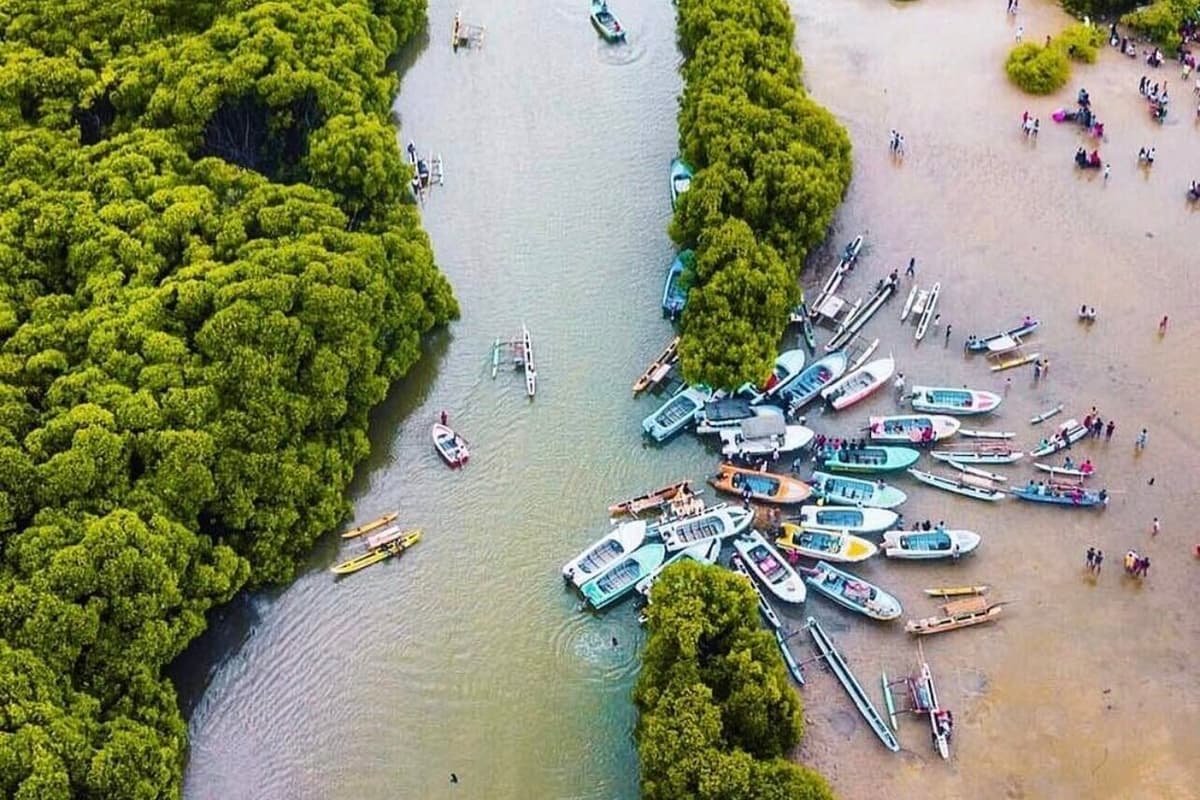
The lagoon, fed by the canal system, has always been the town’s economic heartbeat. For centuries, fishing families have depended on its brackish waters for prawns, crab, mullet, and lagoon fish. Traditional craft such as the oruwa—a narrow outrigger canoe—still operates here, adding to the landscape’s cultural significance.
The lagoon remains both a livelihood and a heritage space, reflecting the interconnectedness of water, community, and trade.
St. Mary’s Church: The Crown of “Little Rome”
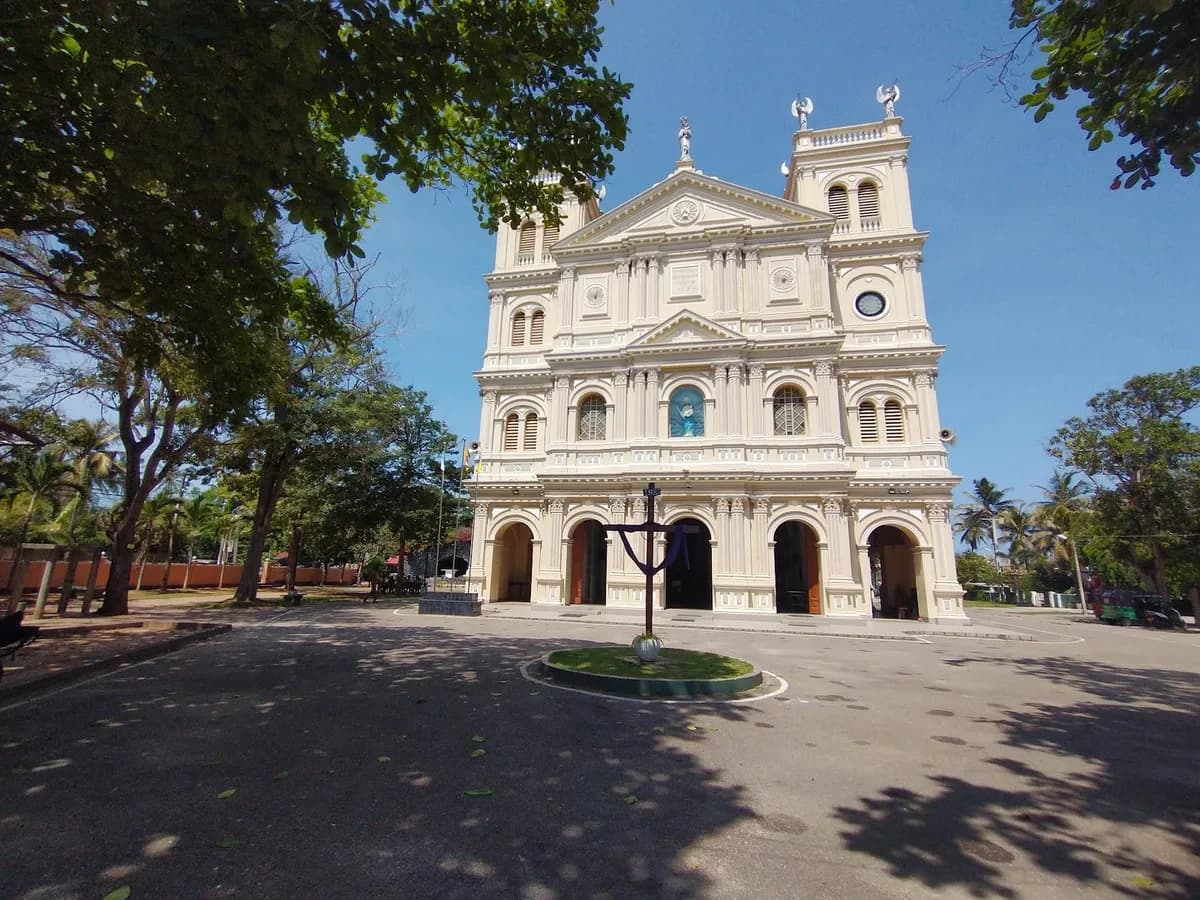
Negombo’s churches are more than places of worship; they are architectural testimonies to the town’s religious transformation under Portuguese rule. Among these, the St. Mary’s Church (completed in 1924) is the grandest and most renowned.
Architecture and Artwork
The church’s façade—painted in soft cream tones—shows neoclassical influences with tall columns and a balanced symmetrical design. Inside, the ceiling artwork stands out: a series of vibrant religious paintings by Italian and local artists depicting biblical scenes and saints.
The church’s large interior accommodates hundreds of worshippers, especially during feast days, and its bells mark the cadence of daily community life.
Click on here “COLONIAL CEYLON REST HOUSES: ECHOES YOU CAN STILL SLEEP IN”
Other Significant Churches in Negombo
St. Sebastian’s Church, Sea Street
A Gothic Revival-style church modelled loosely after the Reims Cathedral in France, St. Sebastian’s is one of the most iconic structures in Negombo. Its twin spires, lancet windows, and pointed arches reflect European ecclesiastical design adapted to the tropical climate.
The annual Feast of St. Sebastian is a highlight of the Catholic calendar, drawing devotees from across the region.
St. Stephen’s Church
Built during the British period, this Anglican church shows a different architectural lineage—more modest, with brick walls and simple stained glass. It stands as a reminder of the layered Christian traditions that grew in Negombo beyond Catholicism.
Katuwapitiya Church
A more recent but deeply important landmark, Katuwapitiya Church became globally recognised following the tragic Easter Sunday attacks in 2019. Today, it stands restored and serves as a symbol of resilience, faith, and community strength.
How Christianity Became Central to Negombo’s Identity
Christianity’s early spread in Negombo was primarily the result of Portuguese rule. Conversion was encouraged, sometimes facilitated through patronage systems. By the time the Dutch took control, a strong Catholic identity had already taken root. Although the Dutch attempted to impose the Reformed Church, their influence was less enduring; Catholicism persisted clandestinely and resurged openly under British rule.
This continuity explains why Negombo today remains one of the areas with the highest concentration of Catholics in Sri Lanka. Feasts, pageants, processions, and parish activities shape the town’s social life throughout the year.
Canals and Churches as Living Heritage
Negombo’s heritage is not confined to historical structures; it’s embedded in living traditions.
Canals as Daily Pathways
Boats still move through the waterways, transporting goods and supporting fishing families. Walkway vendors, waterbirds, and colourful fishing nets animate the canal banks. Restoration projects aim to revive these waterways for tourism while preserving local livelihoods.
Churches as Community Anchors
Feast days (peraheras, novenas, mass gatherings) remain central to community identity. Churches also serve as social hubs, supporting schools, charities, and community groups.
The Blend of Architecture, Culture, and Coastal Life
Negombo presents a unique interplay between European architectural forms and Sri Lankan coastal living traditions.
Colonial Architecture Meets Tropical Landscape
Church towers rise above palm groves. Dutch bridges cross calm canals. Colonial-era bungalows sit beside fishermen’s houses. This mix gives Negombo its characteristic look—part European heritage town, part coastal settlement.
Festivals by the Sea
Whether it’s a church feast, a fishing boat blessing, or a lagoon-side community event, celebrations often blend religious devotion with maritime culture.
Touring Negombo’s Heritage Today
Visitors can explore this heritage through curated routes:
- Canal Boat Tours: Glide through the old Dutch waterways, passing mangroves, villages, and colonial bridges.
- Church Trail: Visit major churches—St. Mary’s, St. Sebastian’s, Katuwapitiya—and learn their histories.
- Lagoon Tours: Observe fishing practices and birdlife while understanding how the lagoon shapes the town’s economy.
- Old Town Walks: Explore the remnants of colonial buildings, market streets, and traditional homes.
These routes highlight the coexistence of old and new—a living heritage that modern development cannot erase.
Preservation Challenges and Community Responsibility
Negombo’s fast-paced tourism sector brings both opportunity and pressure. Canal pollution, unplanned construction, and environmental stress on the lagoon threaten its heritage. Community-led initiatives, local church groups, and municipal projects are crucial for balancing development with preservation.
Keeping the canals clean, maintaining church structures, and protecting fishing livelihoods ensure that Negombo’s heritage remains authentic.
A Town Where the Past Still Moves with the Present
Negombo is shaped by water and worship—two forces that continue to define its landscape and identity. Its canals reflect a history of trade and engineering, while its churches embody a centuries-old cultural devotion. Together, they tell the story of a coastal town where heritage is not static but lived, celebrated, and continually renewed.
Negombo remains a reminder that history lives not only in monuments but in the waterways people travel, the rituals they honour, and the communities they build across generations.
Click on here “DISCOVER CEYLON: A JOURNEY THROUGH SRI LANKA’S COLONIAL HERITAGE”