Badulla sits at the tail end of Sri Lanka’s iconic Main Line, a railway stretch celebrated worldwide for its engineering brilliance, mist-covered hills, and unmistakable colonial heritage. Trains that wind into Badulla do more than transport passengers; they pass through one of the most technically challenging railway routes ever attempted by the British Empire in Asia.
From towering bridges resting on stone piers to dark tunnels drilled through unforgiving mountain rock, the Badulla stretch tells a story of ambition, bravery, and precision engineering. This article unpacks the heritage of the region’s railway network—focusing on the bridges, tunnels, engineers, and the remarkable legacy they left behind.
The Last Stretch of the Main Line: A Colonial Feat
The railway line to Badulla was completed in 1924, nearly half a century after the initial decision to push the tracks beyond Nanu Oya. This final extension became one of the most expensive and technically complex undertakings of Ceylon’s colonial administration.
The British had one primary purpose: transport plantation goods—mainly tea—from the hill country to Colombo Harbour. But the terrain between Haputale, Bandarawela, Demodara, and Badulla was harsher than anything engineers had faced previously. The line had to pass through steep slopes, narrow ravines, and unstable rock formations.
To overcome the mountains, engineers relied on tunnels, viaducts, and spiral loops that would later become architectural landmarks. Even today, this section remains one of the world’s most scenic and challenging railway routes.
The Nine Arches Bridge: The Jewel of Ella
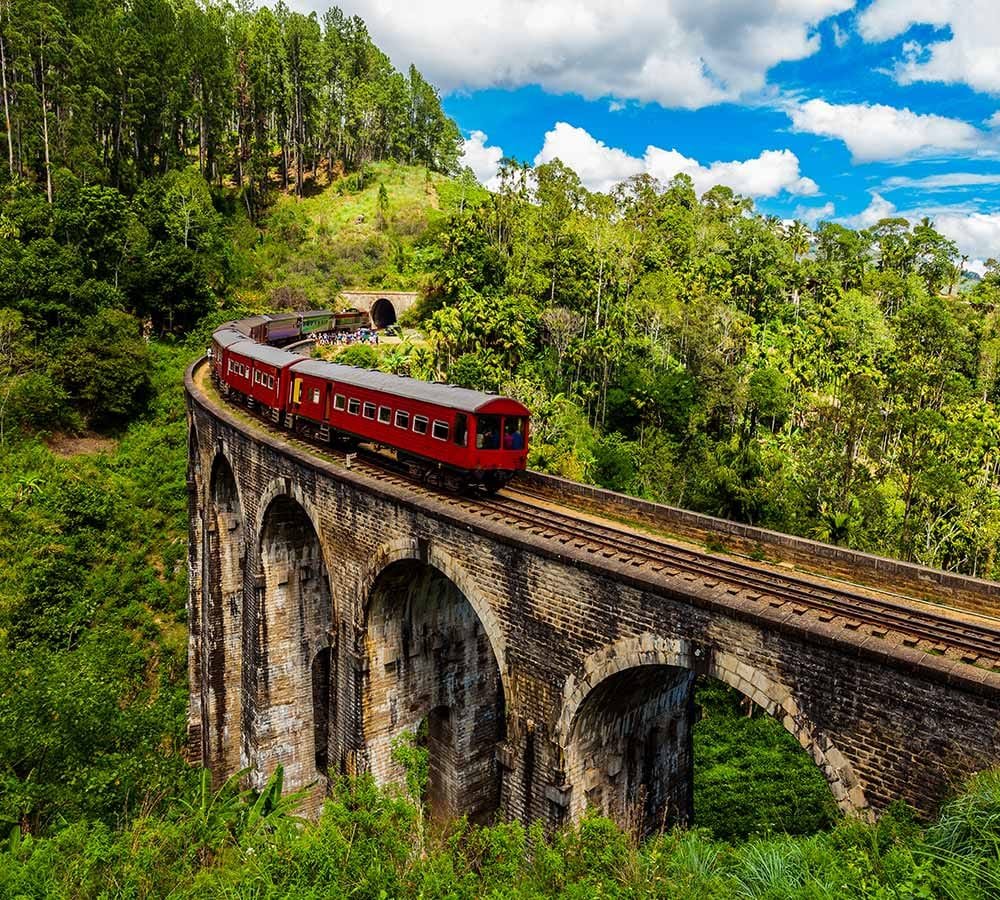
The Nine Arches Bridge, or Ahas Namaye Palama, stands as the crown jewel of the Main Line. Located between Demodara and Ella, the bridge was completed in 1921 and is entirely built of stone, brick, and cement—without a single piece of steel reinforcement.
Why It Matters
- The bridge showcases the mastery of colonial masonry.
- Its 91-metre length and 24-metre height made it one of the tallest viaducts of its time.
- Built using local labour and materials when steel imports were disrupted by World War I.
- The design blends perfectly with the surrounding forest, tea estates, and mist.
Local folklore credits a Ceylonese craftsman, P. K. Appuhami of Kehalella, for leading the construction when British engineers hesitated due to the lack of steel. Whether partly myth or fully true, the story adds cultural depth to the structure’s legacy.
Today, Nine Arches remains a global tourist attraction, a favourite of photographers, and a testament to both engineering skill and artistic restraint.
The Demodara Loop: A Masterclass in Railway Engineering
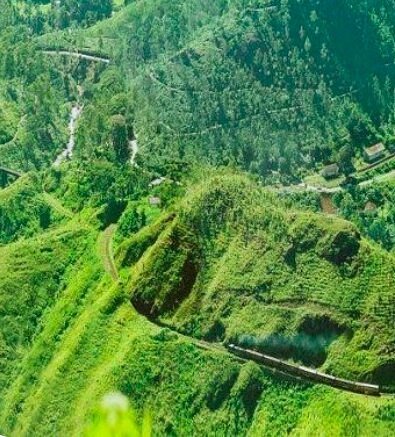
If the Nine Arches Bridge is a marvel of beauty, the Demodara Loop is a marvel of logic.
At Demodara, engineers encountered a steep elevation change that made a direct ascent impossible. The solution? A spiral track that loops around a mountain and passes directly under the station itself through a tunnel.
This “spiral loop” design—rare even by global standards—allowed the train to climb gradually without exceeding the permissible gradient.
Key Highlights
- The station sits exactly above the tunnel, creating a vertically stacked layout.
- The loop is roughly 900 metres long.
- Elevation gain is achieved without gears or additional locomotives.
Legend says engineer D. J. Wimalasurendra observed a turban-wrapped labourer unwinding his headgear in a circular motion and found inspiration for the loop’s design. Whether true or not, the engineering brilliance remains undeniable.
Tunnels of the Hill Country: Carved Through Unyielding Rock
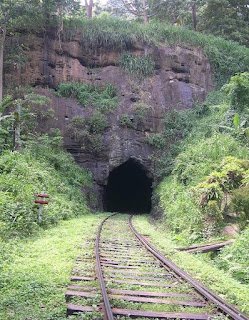
The Railway Extension to Badulla includes more than 40 tunnels, several carved through deep rock. Tunnel No. 92, located near Pattipola, is the highest in altitude and one of the longest on the line.
These tunnels were dug using primitive methods by modern standards: manual drilling, black-powder blasting, and pickaxe excavation. Workers operated under hazardous conditions—poor ventilation, falling rocks, monsoon flooding, and unstable mountain sides.
Each tunnel is a silent monument to the thousands of unnamed labourers who chiselled their way through the highlands. Their contribution forms one of the most under-recognised aspects of Sri Lanka’s railway heritage.
The Badulla Railway Station: The End of the Line
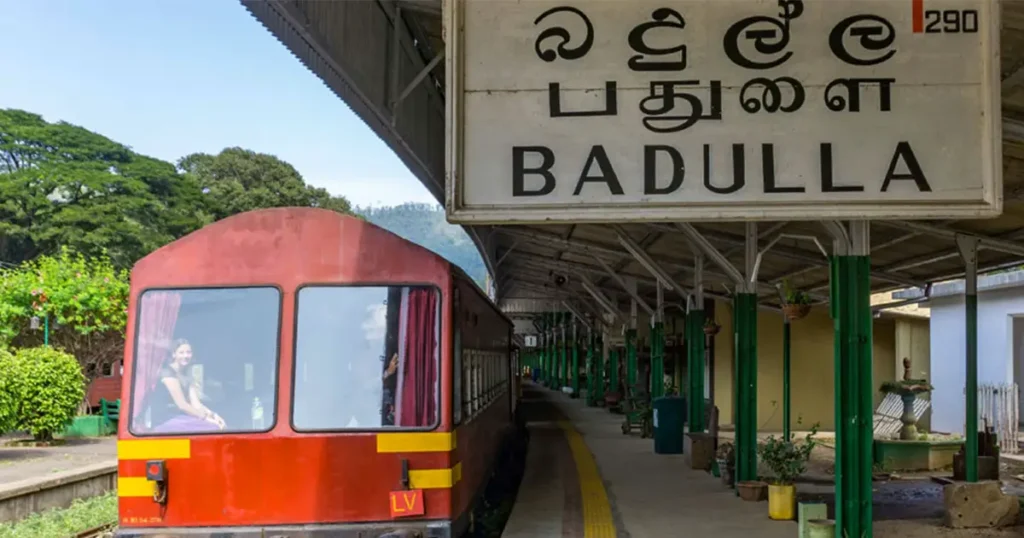
Completed in 1924, Badulla Railway Station marks the final stop of the Main Line. With its colonial arches, wooden truss roofs, and stone platforms, the station still retains its early-20th-century charm.
Why It Stands Out
- The station marks the engineering completion point of a decades-long effort.
- It carries original architectural elements including timber beams and cast-iron fixtures.
- Surrounded by tea estates and paddy fields, the location gives a last scenic flourish to the journey.
The station is also a cultural landmark. Many visitors—local and foreign—end their railway adventures here before exploring the surrounding waterfalls, mountains, and temples.
Colonial Engineers Behind the Masterpieces
The Badulla railway stretch is inseparable from the British engineers who designed it. Among them:
1. Sir Guilford Lindsey Smith
A chief engineer responsible for multiple railway expansions. His planning shaped the overall direction of the hill country line.
2. D. J. Wimalasurendra (Ceylonese Engineer)
Regarded as one of the first Sri Lankan engineers to be recognised at national level. Although more known for hydropower, his contributions to transport engineering and technical oversight remain historically significant.
3. R. W. Freeman
Involved in many of the tunnel and bridge alignments between Bandarawela and Badulla.
4. The Unnamed
Perhaps more important than the colonial heads were the thousands of Sri Lankan labourers—some from the Kandyan region, others from Tamil communities of the hill country—who physically laid the tracks, carried stone, and performed the most dangerous work.
Bridges Beyond Nine Arches
While the Nine Arches Bridge gets most of the attention, several other bridges in the Badulla region are equally significant:
The Halpe Bridge
A small but elegant colonial-era viaduct near Bandarawela, resting on stone piers.
The Bridge at Heel-Oya
Known for its curved alignment along the slope of a deep valley.
The Wooden Trestle Near Demodara (Now Replaced)
Originally built as a temporary structure, it shows how engineers navigated difficult geography before final construction.
These bridges formed a chain of solutions—each tailored to elevation, soil conditions, and available materials.
Impact on Local Communities
The railway transformed Badulla. It:
- Connected remote villages to markets.
- Enabled small-scale tea producers to transport crops quickly.
- Brought administrative officers and traders into the region.
- Encouraged settlement around stations such as Bandarawela, Ella, and Demodara.
Tourism, now a major economic activity in the district, grew organically on top of the railway’s arrival.
The Legacy Today: A Living Museum on Steel Rails
The stretch between Haputale and Badulla remains one of the world’s most picturesque rail journeys. Travellers come to experience:
- mist-filled tea estates,
- dramatic cliffs,
- rainforest canopies,
- colonial stations frozen in time.
Although nearly a century old, the railway still operates daily. The line continues to rely on many original bridges and tunnels—an indication of how durable and forward-thinking the engineering truly was.
For heritage enthusiasts, this stretch is not just a train ride. It is a moving museum of colonial ambition, Sri Lankan labour, and natural beauty.
Conclusion
Tracing the railway heritage of Badulla is to trace a story of ingenuity. Every curve, tunnel, viaduct, and station represents a challenge conquered by engineers who dared to push the limits of early-20th-century technology. More importantly, it honours the thousands of Sri Lankan workers who shaped this legacy with their hands, sweat, and skill.
The result is a railway line that remains one of the world’s most breathtaking, culturally meaningful, and technically impressive—an enduring symbol of the Central Highlands and the history written across its mountains.
Click on here “How Jaffna Reinvented Its Street Food: From Odiyal Kool to Modern Fusion Cuisine”