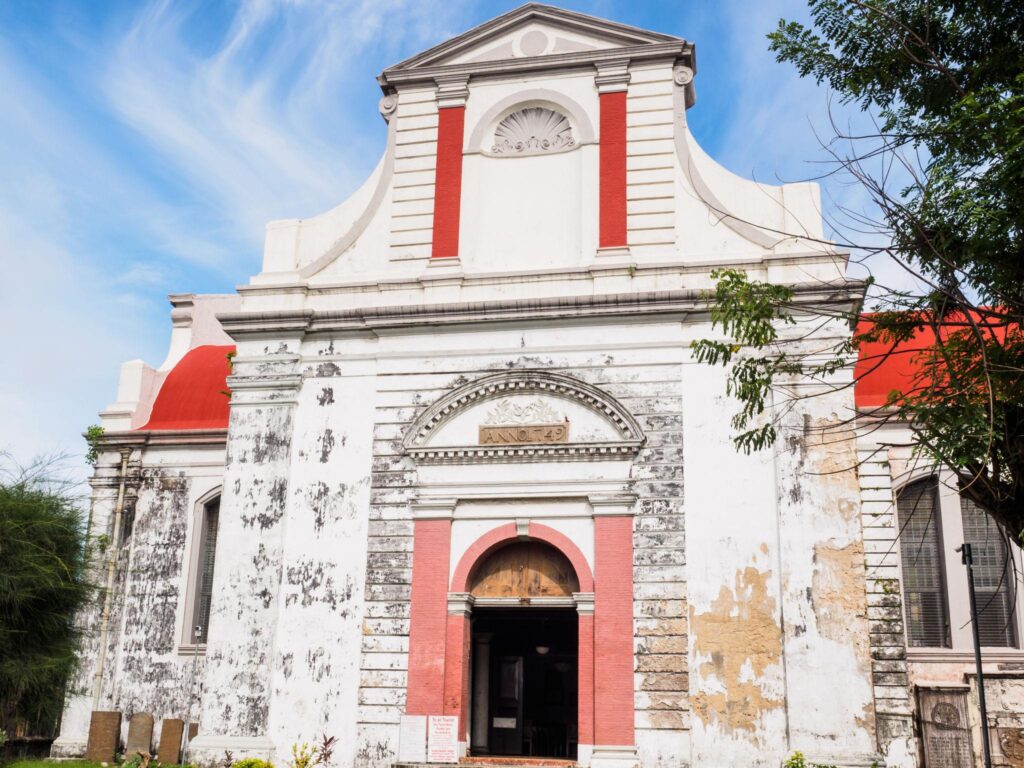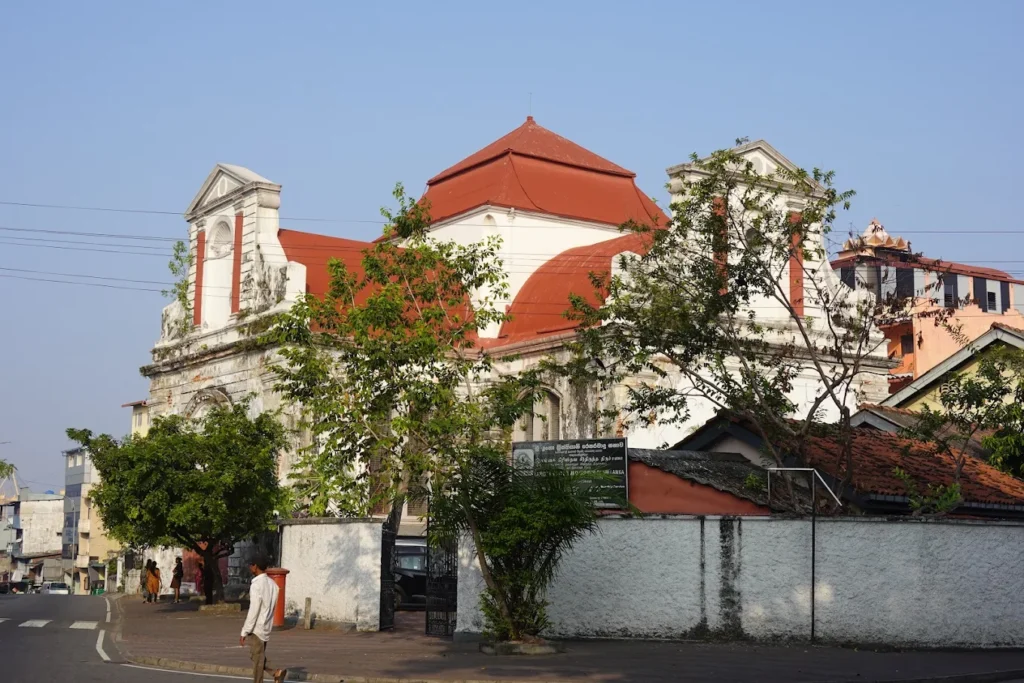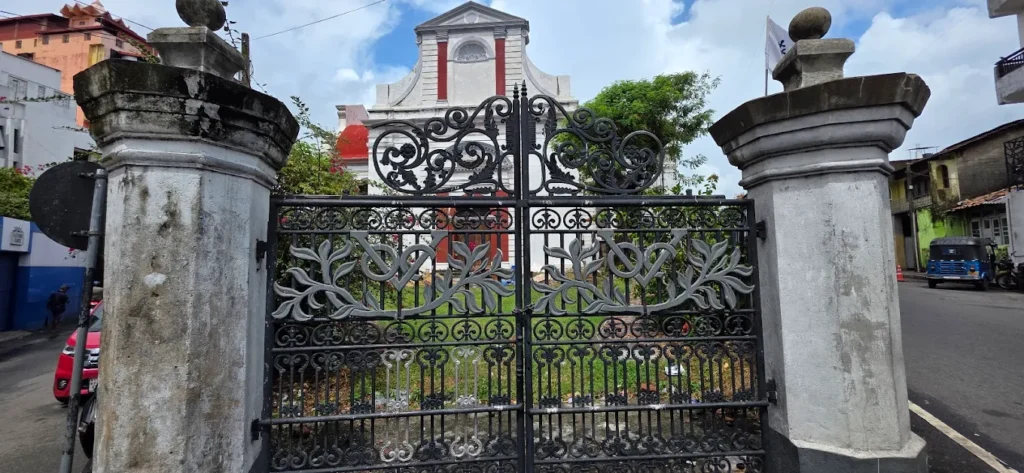
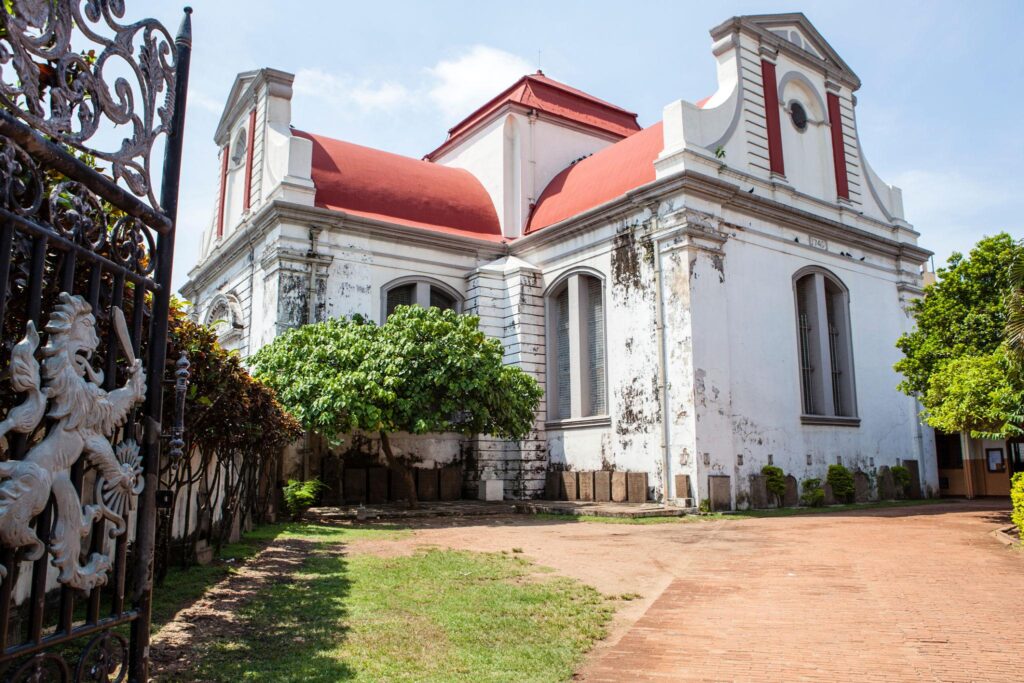
In the heart of Colombo, where traffic, trade, and everyday city life move at a restless pace, the Dutch Wolvendaal Church stands in a world of its own. Its white walls, red roof, arched doorways, and quiet courtyard tell a story that goes far beyond architecture. This is not simply an old church in Pettah. It is one of Sri Lanka’s most significant Dutch colonial landmarks, a place where faith, empire, memory, and time have all left their mark.
Built during the Dutch period and completed in 1757, Wolvendaal Church remains one of the oldest Protestant churches still in use in Sri Lanka. Its name, its location, and even its silence carry centuries of history. For visitors, it offers something rare in modern Colombo: a chance to pause, look closely, and feel the weight of the past without needing a museum label to explain everything.
A Church Born from Colombo’s Dutch Era
Wolvendaal Church belongs to the period when the Dutch East India Company, known as the VOC, controlled parts of coastal Ceylon. The Dutch had already established themselves in Colombo, and the need for a formal place of worship became increasingly important for the colonial community.
The foundations of the church were laid in 1749, and the building was completed eight years later. On 6 March 1757, it was dedicated for public worship. This date is still central to the church’s identity, as it marks the beginning of its long life as a functioning religious and historical site.
Unlike many colonial buildings that have disappeared, been heavily altered, or lost their original purpose, Wolvendaal Church has continued to serve as a place of worship. That continuity gives it a special emotional strength. It is not just preserved stone and plaster. It is a living monument.
Click on here “West Coast Heritage” by the Sea: Negombo Canals and Churches”
Why It Is Called Wolvendaal
The name “Wolvendaal” has one of the most memorable origin stories in Colombo’s colonial history. The area where the church was built was once outside the main city walls, surrounded by marshy land and open spaces. Dutch settlers reportedly mistook roaming jackals for wolves, and the place became known as “Wolf’s Dale” or “Wolf’s Valley” — Wolvendaal in Dutch.
Today, that image feels almost impossible to imagine. Pettah is now one of Colombo’s busiest commercial areas. Yet the name preserves a time when this part of the city was quieter, wilder, and more distant from the centre of colonial power.
Architecture with Strength and Simplicity
Wolvendaal Church is admired for its solid Dutch colonial architecture. It was designed in the Doric style and built in the form of a Greek cross, with arms of equal length. Its walls are said to be around five feet thick, giving the building a sense of permanence and protection.
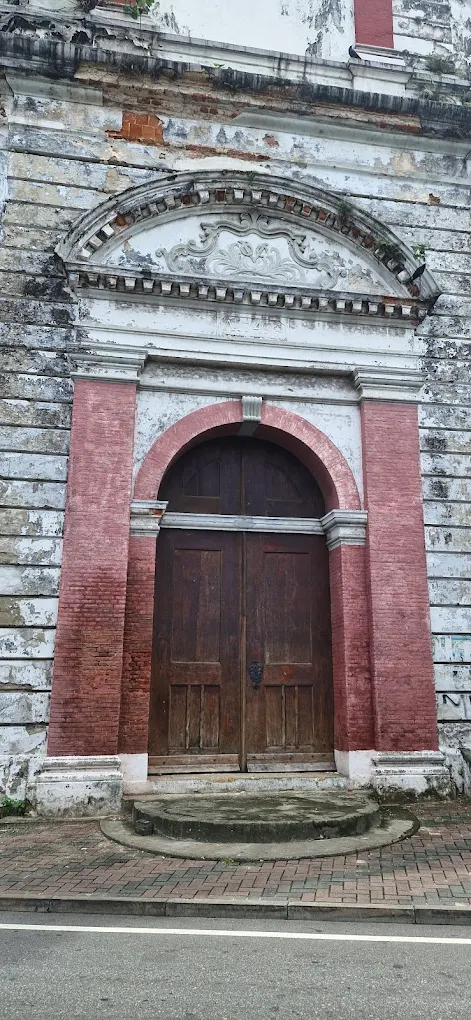
The church’s architecture is not overly decorative. Its beauty lies in proportion, strength, and restraint. The white exterior, red roof, high windows, and heavy doors create a visual language of discipline and dignity. It does not try to impress through excess. Instead, it commands respect through stillness.
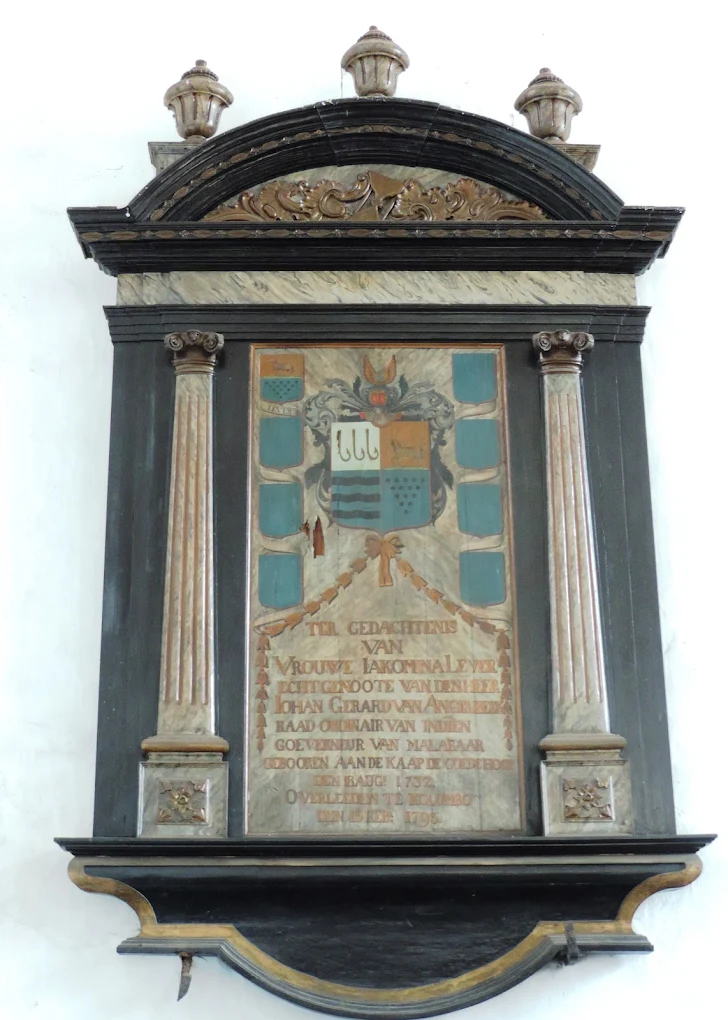
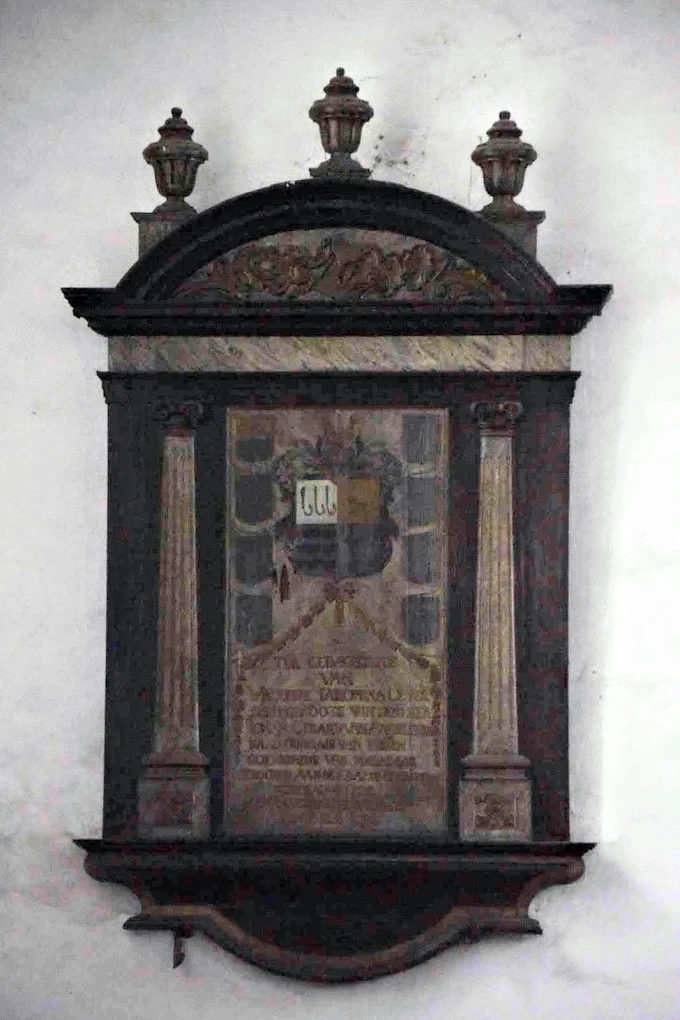
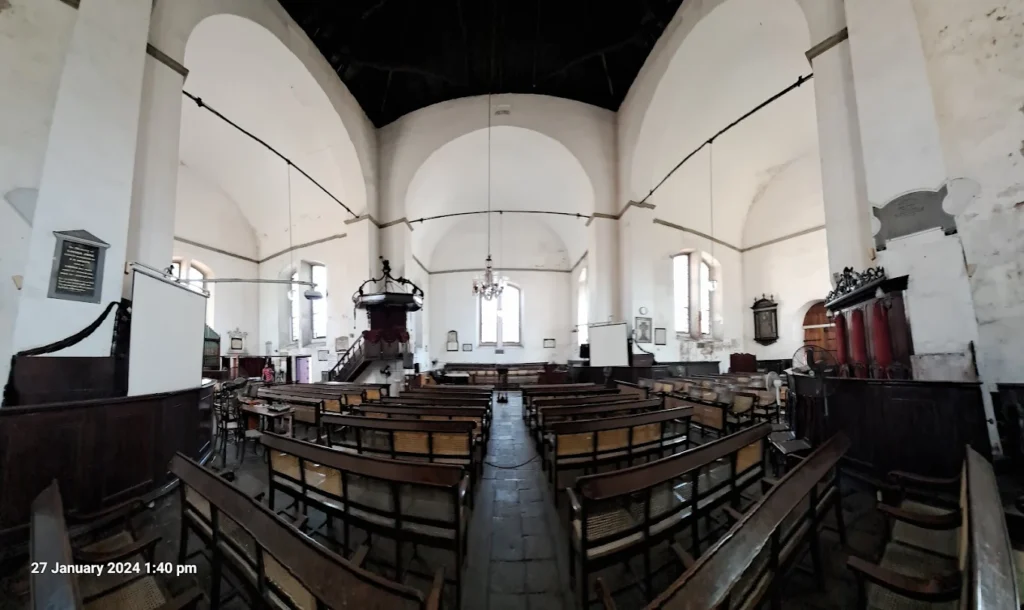
Inside, the atmosphere is even more powerful. The wooden pews, memorial tablets, tombstones, and old inscriptions connect visitors to generations who lived, worshipped, governed, traded, and died in colonial Ceylon. Every surface seems to hold a trace of memory.
A Place of Faith, Power, and Memory
During the Dutch period, Wolvendaal Church became one of the principal places of worship in Colombo. It was closely connected to the Dutch Reformed tradition and to the colonial administration of the time. The church was not only a religious space; it was also part of the social and political structure of colonial Colombo.
The preserved seating arrangements, including higher seats associated with the governor and officials, reflect the hierarchy of that era. These details remind us that colonial churches were often layered spaces: places of prayer, but also places where power and status were visible.
Yet over time, the meaning of Wolvendaal has changed. What was once a church serving a colonial community is now part of Sri Lanka’s wider heritage. It stands as a reminder of history, but also as a site that invites reflection on identity, faith, and continuity.
The Quiet Power of the Churchyard
One of the most moving parts of Wolvendaal Church is its surrounding churchyard. The tombstones and memorials here carry the names of people from another time. Some belonged to Dutch officials, clergy, families, and members of Colombo’s colonial society.
Walking through the churchyard feels different from reading a history book. Dates, names, and inscriptions become personal. They remind us that history is not only made of rulers and buildings, but also of ordinary lives, losses, families, and communities.
This quietness is part of the church’s appeal. In a city where many heritage sites are experienced quickly, Wolvendaal rewards slow attention.
A Rare Surviving Dutch Landmark in Colombo
Colombo has changed dramatically over the centuries. Forts have been removed, old streets have been renamed, and colonial buildings have been repurposed or replaced. In that context, Wolvendaal Church is especially valuable.
It is considered one of the most important Dutch colonial-era buildings in Sri Lanka. Its survival allows present-day visitors to understand a layer of Colombo’s history that is often overshadowed by British colonial architecture or modern urban development.
For travellers interested in heritage, architecture, photography, or urban history, Wolvendaal Church offers an experience that is authentic and understated. It does not feel overly commercialised. Its appeal lies in its honesty.
Why Wolvendaal Church Still Matters Today
Wolvendaal Church matters because it connects Colombo’s past to its present. It shows how faith communities, colonial systems, local landscapes, and architectural traditions shaped the city.
But beyond historical importance, it also offers emotional value. The church stands as a symbol of endurance. It has survived political change, urban expansion, weathering, and time itself. Its walls may show age, but that ageing is part of its beauty.
For Sri Lankans, it is a reminder that heritage is not limited to grand palaces, ancient kingdoms, or famous archaeological sites. Urban heritage matters too. Colombo’s old churches, streets, warehouses, and civic buildings all form part of the island’s layered story.
For visitors, Wolvendaal offers a quieter way to experience Colombo. It asks you not just to look, but to listen.
Visiting Wolvendaal Church
A visit to Wolvendaal Church can be included as part of a heritage walk through Pettah and Colombo Fort. It pairs well with other historic sites, old markets, colonial buildings, and places of worship in the area.
The best way to experience it is slowly. Notice the façade, the roofline, the entrance, the interior woodwork, the inscriptions, and the graveyard. Take time to understand the contrast between the church’s calm environment and the busy streets outside.
Photography lovers will find strong visual details: aged walls, red-and-white colonial colour tones, arched windows, carved details, and soft natural light. However, visitors should remain respectful, as the church is still a place of worship.
A Monument of Quiet Strength
Dutch Wolvendaal Church is not loud, polished, or theatrical. That is exactly why it is powerful. It carries its history with quiet dignity. It does not need to compete with Colombo’s modern skyline or busy commercial streets. It simply remains.
In a city constantly moving forward, Wolvendaal Church reminds us that some places are worth preserving not only because they are old, but because they help us understand who we were, how cities change, and why memory matters.
To stand before Wolvendaal Church is to stand before a living chapter of Colombo’s colonial history — calm, weathered, sacred, and strong.