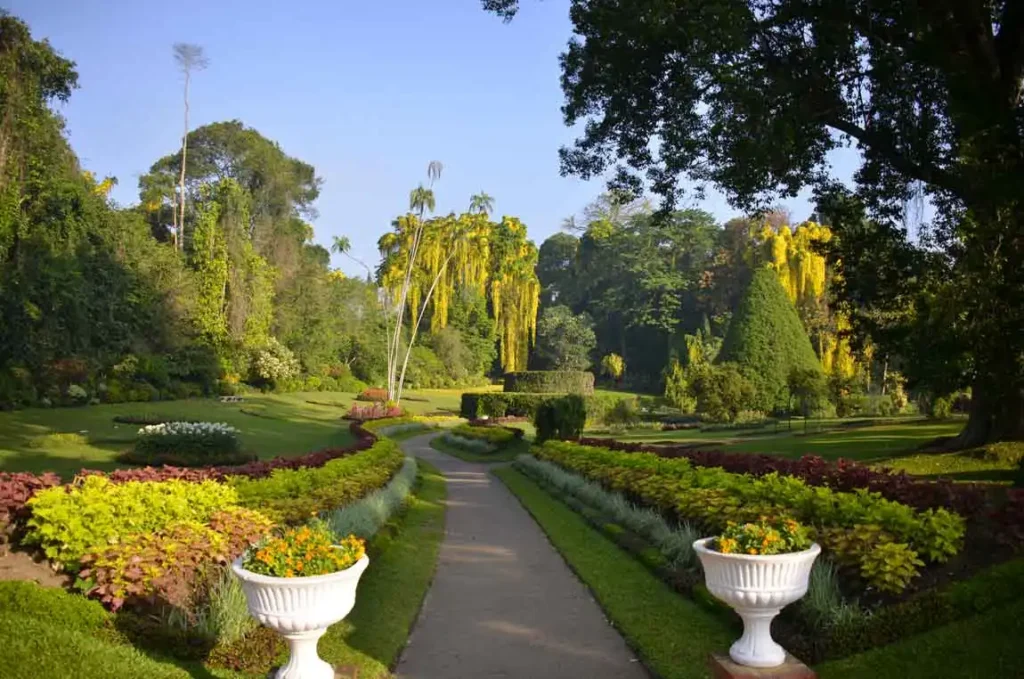
Peradeniya stands today as one of Asia’s most iconic botanical gardens, admired for its sweeping landscapes, towering avenue of palms, and meticulously preserved plant collections. Yet behind this aesthetic beauty lies a deeper story—one shaped by British colonial ambitions, scientific curiosity, global trade, and agricultural experimentation. From the early 19th century onward, Peradeniya Botanical Garden functioned not only as a research centre but also as a test field for crops that would eventually transform Sri Lanka’s economy and natural environment.
This is the lesser-told story of how British botanical experiments in Peradeniya reshaped the island’s flora—sometimes for better, sometimes with lasting ecological consequences.
The Origins: A Garden Built for Empire
Peradeniya Botanical Garden was formally established in 1821 under British rule, though its roots trace back to earlier Kandyan royal gardens. For the British, however, the purpose was explicitly strategic. Ceylon held enormous agricultural potential, and Peradeniya became the site where colonial botanists tested crops that could strengthen the empire’s economic footprint.
The early superintendent, Alexander Moon, began cataloguing native species and assessing their commercial value. His successors—including George Gardner and George Henry Kendrick Thwaites—expanded the garden into a world-class scientific institution. Their work was not merely academic; it directly informed the plantation industries that reshaped Sri Lanka.
Under British guidance, Peradeniya became a global hub where plants from Africa, Asia, and South America were exchanged, acclimatised, and evaluated. Some flourished spectacularly. Others quietly altered landscapes in ways the island still experiences today.
Coffee: The First Great Experiment
Before tea became synonymous with Ceylon, coffee was the colonial obsession. Botanists at Peradeniya introduced and trialled Coffea arabica extensively in the early 180s. Their research focused on soil conditions, rainfall patterns, altitude, and pest resistance.
These studies gave birth to the first coffee plantations in the Kandyan highlands. Within decades, Sri Lanka became one of the world’s largest coffee exporters. The prosperity was meteoric—until it ended with equal speed.
The arrival of the coffee leaf rust fungus (Hemileia vastatrix) in the 1860s devastated plantations. Peradeniya botanists attempted resistance breeding and alternative cultivation techniques, but the disease overwhelmed the island. The fallout paved the way for the next transformative experiment.
Tea: The Plant That Rewrote the Island’s Identity
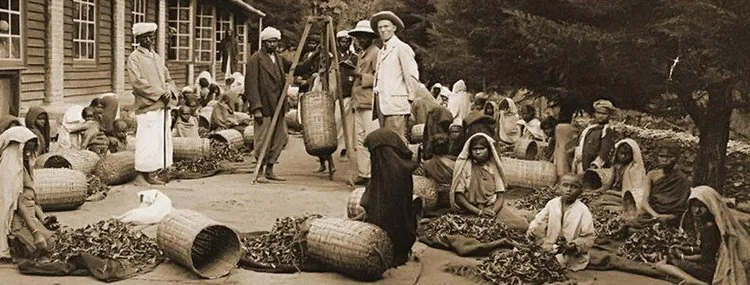
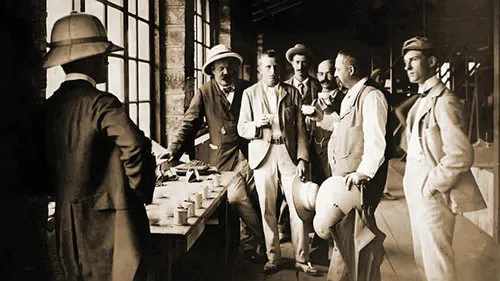
When coffee collapsed, the British turned to tea, a crop previously grown in test plots at Peradeniya. Botanists played a crucial role in studying the suitability of Camellia sinensis for Sri Lankan soils. Their trials confirmed that high-altitude areas with cool temperatures offered ideal conditions.
The first successful tea plantation—Loolecondera—became a model for an industry that now defines Sri Lanka’s global identity. Peradeniya scientists continued developing propagation methods, disease management practices, and agro-research well into the 20th century.
Sri Lankan tea as the world knows it today—flavour, yield, estate organisation—owes much to these botanical experiments.
The Rubber Revolution
Peradeniya also introduced another crop that profoundly influenced Sri Lanka’s economic landscape: rubber. In 1876, botanist Henry Wickham sent seeds of Hevea brasiliensis from the Amazon to Kew Gardens in England. Some were later shipped to Peradeniya, where they were propagated and distributed to estates.
Rubber thrived in Sri Lanka’s lowlands, becoming a major export crop. The botanical insights from Peradeniya—including tapping methods, disease management, and hybridisation—helped create a stable, profitable industry that persists to this day.
Cinchona and the Battle Against Malaria
Cinchona, the source of quinine, was introduced to Peradeniya to combat malaria—a disease that decimated local populations. Botanists experimented with different species and varieties to determine the best yield of quinine alkaloids.
Although cinchona never became a major export product in Sri Lanka, its cultivation marked Peradeniya’s role in public health research. The success of these trials contributed to the global understanding of quinine extraction and cultivation.
Ornamental Flora: Beautifying the Island and Beyond
British botanists were also fascinated by ornamentals. Peradeniya became a gateway for the introduction of exotic species such as:
- Giant bamboo
- Royal palms
- Bougainvillaea
- Amherstia nobilis
- African tulip tree
- Various orchids and bromeliads
Some species, like the African tulip (Spathodea campanulata), spread aggressively and are now considered invasive in certain regions. Others enriched public parks, private gardens, and landscapes across the island.
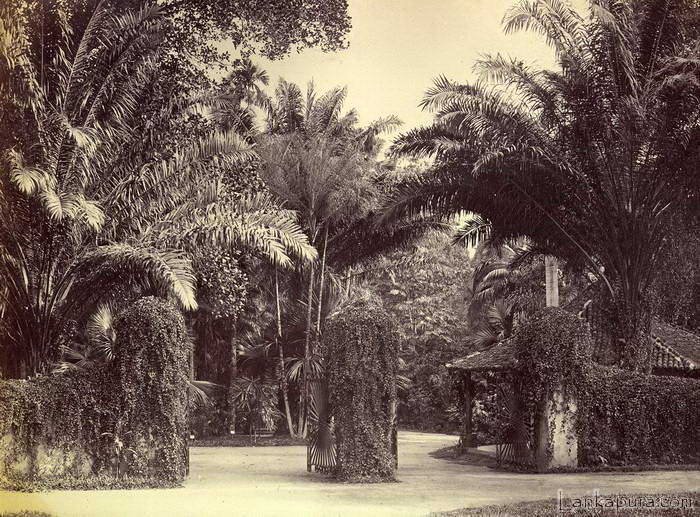
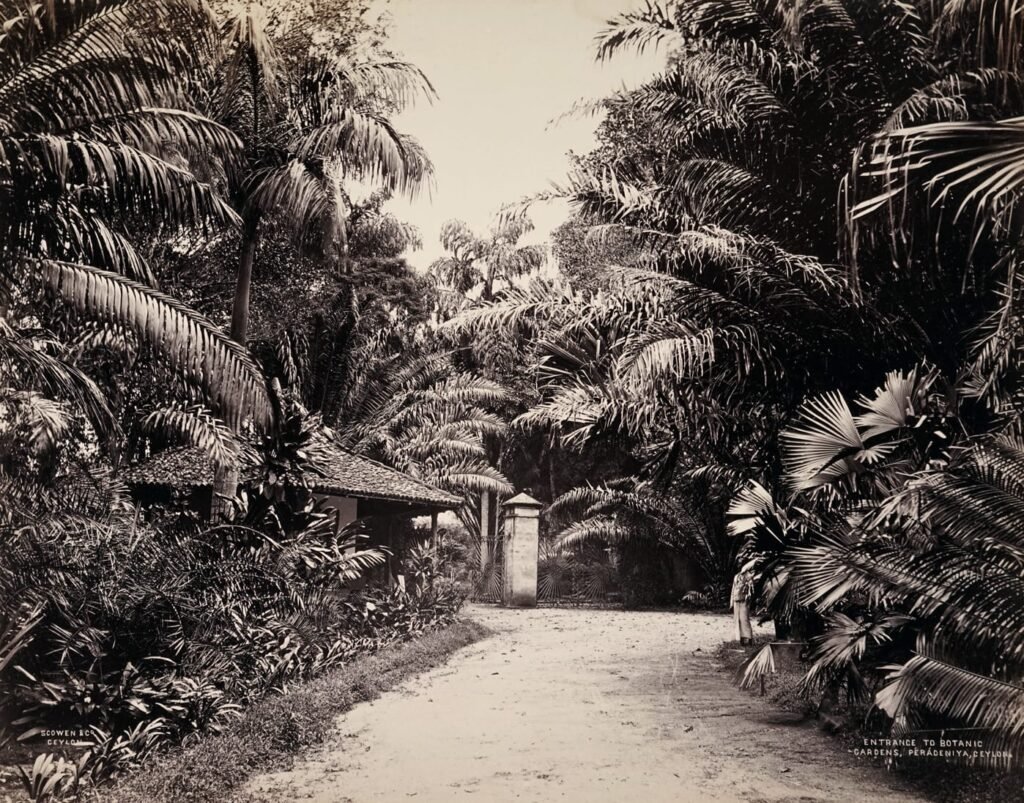
Peradeniya’s iconic avenues—particularly the double coconut palms and towering royal palms—were deliberate aesthetic experiments designed to create botanical showpieces that symbolised the sophistication of the empire.
Scientific Documentation: Flora of Ceylon
One of the most enduring legacies of British botanical research is the systematic cataloguing of Sri Lanka’s plant life. George H.K. Thwaites and later Henry Trimen undertook extensive documentation that formed the foundation of Flora of Ceylon.
This monumental work:
- Identified hundreds of native species
- Established botanical classifications
- Provided baselines for conservation research
Much of the modern study of Sri Lankan plants still builds on these early colonial records.
Ecological Impact: The Shadow of Colonial Botany
While Peradeniya’s contributions to agriculture and science are undeniable, not all outcomes were positive. Colonial botanical experimentation also introduced long-lasting ecological challenges.
Invasive species
Certain ornamental introductions—lantana, telegraph plant, African tulip, giant mimosa—spread aggressively, affecting native forest ecosystems.
Monoculture plantations
Large-scale tea, rubber, and coconut estates replaced biodiverse forests. This shift altered soil health, water retention, carbon cycles, and wildlife habitats.
Extraction mindset
Botanical science under the British was geared towards economic exploitation rather than ecological balance. This legacy shaped agricultural patterns that persisted well into the post-independence era.
Yet Peradeniya today also plays a key role in reversing some of these effects through modern conservation, research, and reforestation studies.
Peradeniya in the Modern Era: A Hub of Research and Conservation
After independence, the garden transitioned from colonial experimentation to national botanical leadership. Today it serves as:
- A research centre for native plant conservation
- A living museum of tropical biodiversity
- A seed bank for endangered species
- A hub for studies on climate-resilient agriculture
- A globally recognised tourist attraction
Its Herbarium is one of Asia’s most significant, housing more than 100,000 specimens. International researchers continue to collaborate with Sri Lankan botanists, making Peradeniya an essential part of the region’s scientific landscape.
How British Experiments Ultimately Shaped Sri Lankan Flora
A few themes emerge when looking at Peradeniya’s influence across two centuries.
1. Introduction of Transformative Crops
Tea and rubber reshaped the economy and landscape, making Sri Lanka a major agricultural exporter.
2. Exchange of Global Plant Knowledge
Species freely circulated between Sri Lanka, Kew Gardens, and other botanical institutions, creating a global scientific network.
3. Establishment of Scientific Methodology
Botanical classification, field trials, propagation techniques, and documentation laid the foundation for modern botanical science in the country.
4. Creation of a Botanical Legacy
Peradeniya remains a symbol of tropical botanical excellence—not only of its colonial past but of its continued future as a centre of research and conservation.
Conclusion: A Garden That Holds Sri Lanka’s Botanical Memory
Peradeniya Botanical Garden is more than a tourist landmark; it is a living archive of Sri Lanka’s environmental, agricultural, and colonial history. The British experiments conducted here introduced crops that built the economy, ornamentals that shaped landscapes, and methodologies that still influence science today.
Its beauty carries a complex legacy—one of prosperity, experimentation, environmental change, and cultural transformation. To walk through Peradeniya is to walk through layers of history, where every towering palm and shaded avenue whispers stories of an island reshaped by botany, empire, and evolution.
Click on here “The Unexplored Colonial Bungalows of Diyatalawa: Hidden History in the Mist”