The planter’s world of Nuwara Eliya, Hatton and Dimbula in the early 1900s
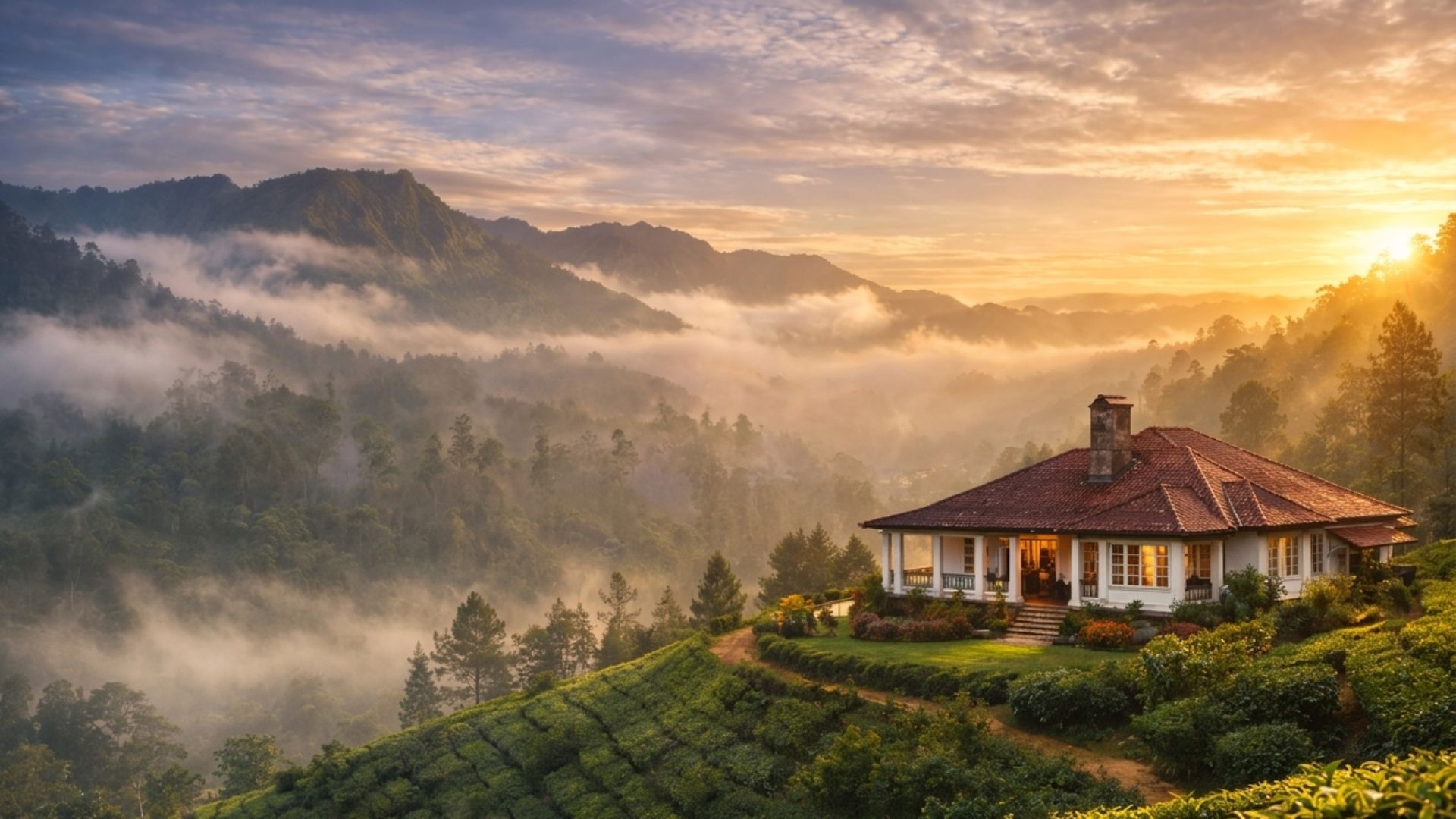
There is a particular quality of light in the Ceylon hill country at six o’clock in the morning cool, silver-white, the mist still clinging to the tea rows as the first flush of sun catches the top of the ridge. In the early years of the twentieth century, a British planter standing on the verandah of his bungalow at this hour might, if the air was still and the clouds arranged correctly, have convinced himself for a moment that he was somewhere in the Scottish Highlands. The roses in the garden were in bloom. The temperature was bracing. The smell was of damp earth and fresh-cut grass.
Then the estate bell rang, and the Tamil workers streamed onto the slopes, and the moment passed. He was in Ceylon. He was at six thousand feet above sea level. And there was work to do.
Click on here “The Grand Orient Hotel Is Ceylon’s First Palace of Hospitality”
Making Little England in the Tropics
The transformation of the Ceylon hill country from forest and highland grassland into one of the world’s great tea-growing landscapes was one of the most dramatic agricultural projects of the British Empire. After coffee blight destroyed the first plantation economy in the 1870s, tea took over with astonishing speed within two decades, the slopes of the central highlands from Nuwara Eliya to Badulla were terraced with the low, rounded bushes of Camellia sinensis, and the colony had found its new identity.
But tea cultivation brought more than an agricultural economy to the hills. It brought an entire social world, transplanted wholesale from Britain and adapted imperfectly, comically, sometimes poignantly to the tropics. Nuwara Eliya, at 6,128 feet the highest town in Ceylon, became the centerpiece of this colonial hill-station culture. The British planted roses, built stone churches, laid out a golf course, and constructed a racecourse that hosted the most important social event in the planting calendar: the Nuwara Eliya races, held each April when the whole of colonial Ceylon seemed to ascend to the hills.
The Hill Club and the Grand Hotel
The social architecture of the hill stations rested on two institutions: the planters’ club and the hill station hotel. In Nuwara Eliya, both were provided in fine style. The Hill Club, founded in 1876, was the planters’ parliament a place of leather armchairs, billiards tables, mounted hunting trophies, and a dining room that served roast beef and puddings to members who had spent the week walking ten miles a day through wet tea in rubber boots.
The Grand Hotel, originally the residence of a British Governor, provided accommodation for the seasonal migration of Colombo society that descended on Nuwara Eliya each April. For six weeks in the racing season, the town’s population swelled, the hotel filled with the wives and daughters of the commercial class, and the hill station became a theatre of colonial social aspiration garden parties, tennis tournaments, and evening dances that lasted until the cold mountain night drove everyone inside.
Tiffin and the Daily Rhythm
The planter’s day was structured around physical work and social ritual in equal measure. The working morning began at six, with a tour of the estate checking the quality of the plucking, inspecting the factory where the tea was withered, rolled, and dried, dealing with the hundred small crises that plantation life threw up daily. By midday, the heat had risen enough to make outdoor work uncomfortable even at altitude, and the planter returned to the bungalow for tiffin.
Tiffin the Anglo-Indian word for the midday meal was a ritual of great importance in the hill-country bungalow. A properly run estate bungalow had its own cook, invariably a Tamil or Sinhalese man trained in the curious discipline of colonial cuisine: curries served alongside roast meats, rice and bread offered simultaneously, local vegetables prepared in European style. The planter ate alone more often than not, or with a neighboring superintendent who had ridden over for the day’s business.
The Tamil Community and the Other Hill Country
It is impossible to write about the hill-station world without acknowledging the community whose labour made it possible. The Tamil workers who plucked the tea, processed it in the factory, and maintained the estate’s roads and drainage channels came largely from South India brought over in the nineteenth century to work a landscape that local Sinhalese communities, with their own agricultural traditions and social structures, were unwilling to enter as plantation labour.
These workers lived in the line rooms long, low buildings of spartan construction at the edge of the estate in conditions that bore no resemblance to the comfort of the planter’s bungalow just up the hill. Their world and the planter’s world overlapped every morning on the muster ground, and then separated completely. The tea that stocked the Grand Hotel’s breakfast tables and the Hill Club’s drawing rooms was grown and harvested by hands whose owners would never enter either building.
The Hill Stations Today
Nuwara Eliya today is a different kind of hill station noisier, more crowded, the colonial buildings either converted, crumbling, or lovingly restored by hoteliers who understand that the colonial aesthetic sells. The Hill Club still operates, its rules largely unchanged, its dining room still serving roast beef to visitors who want to feel, for an evening, what the planters felt every night. The Grand Hotel remains one of the most atmospheric places in Sri Lanka to spend a week.
The tea estates themselves have passed mostly to Sri Lankan ownership, the old British agency houses replaced by Sri Lankan conglomerates and, increasingly, by smaller producers selling directly to the specialty market. The workers’ line rooms have been upgraded in many cases though the question of the Tamil estate community’s land rights and citizenship, unresolved for decades after independence, remains one of the most complicated legacies of the colonial hill-country project.
But the light at six in the morning is exactly the same. The mist still clings to the tea rows. The estate bell still rings. And the hill country of Sri Lanka still produces some of the finest tea in the world a fact that would have satisfied a 1905 planter enormously, even if everything else about the world he built has changed beyond recognition.