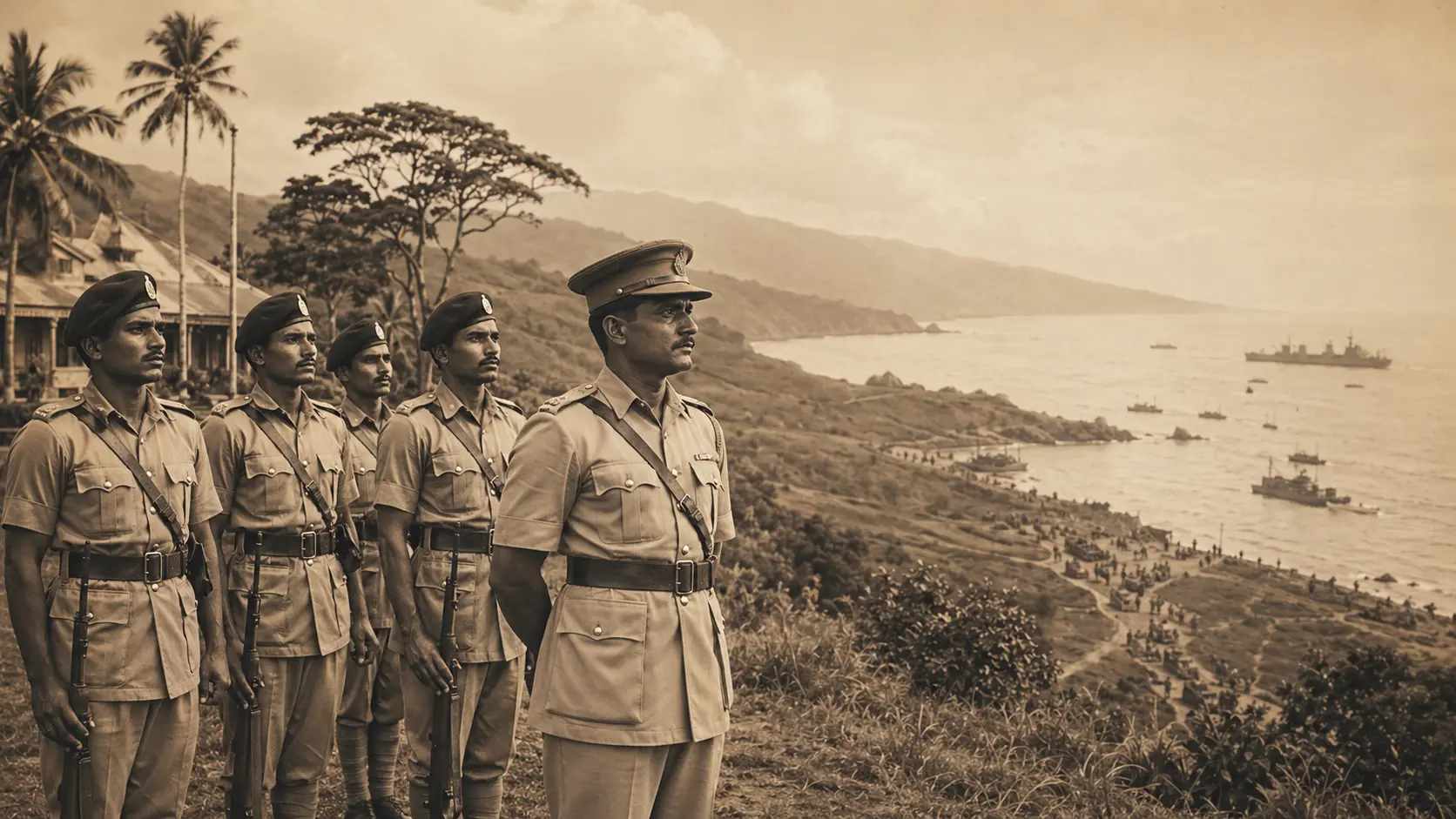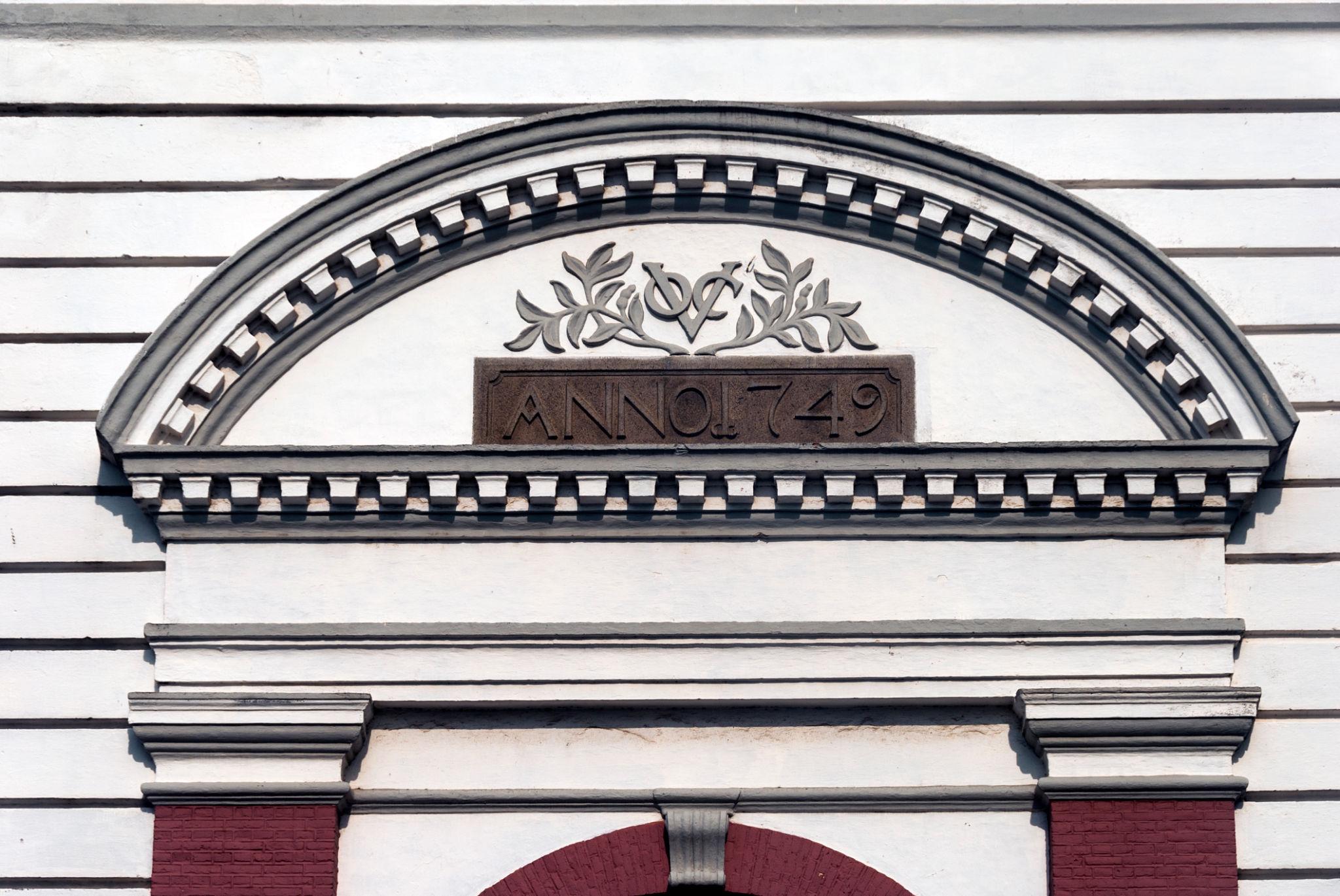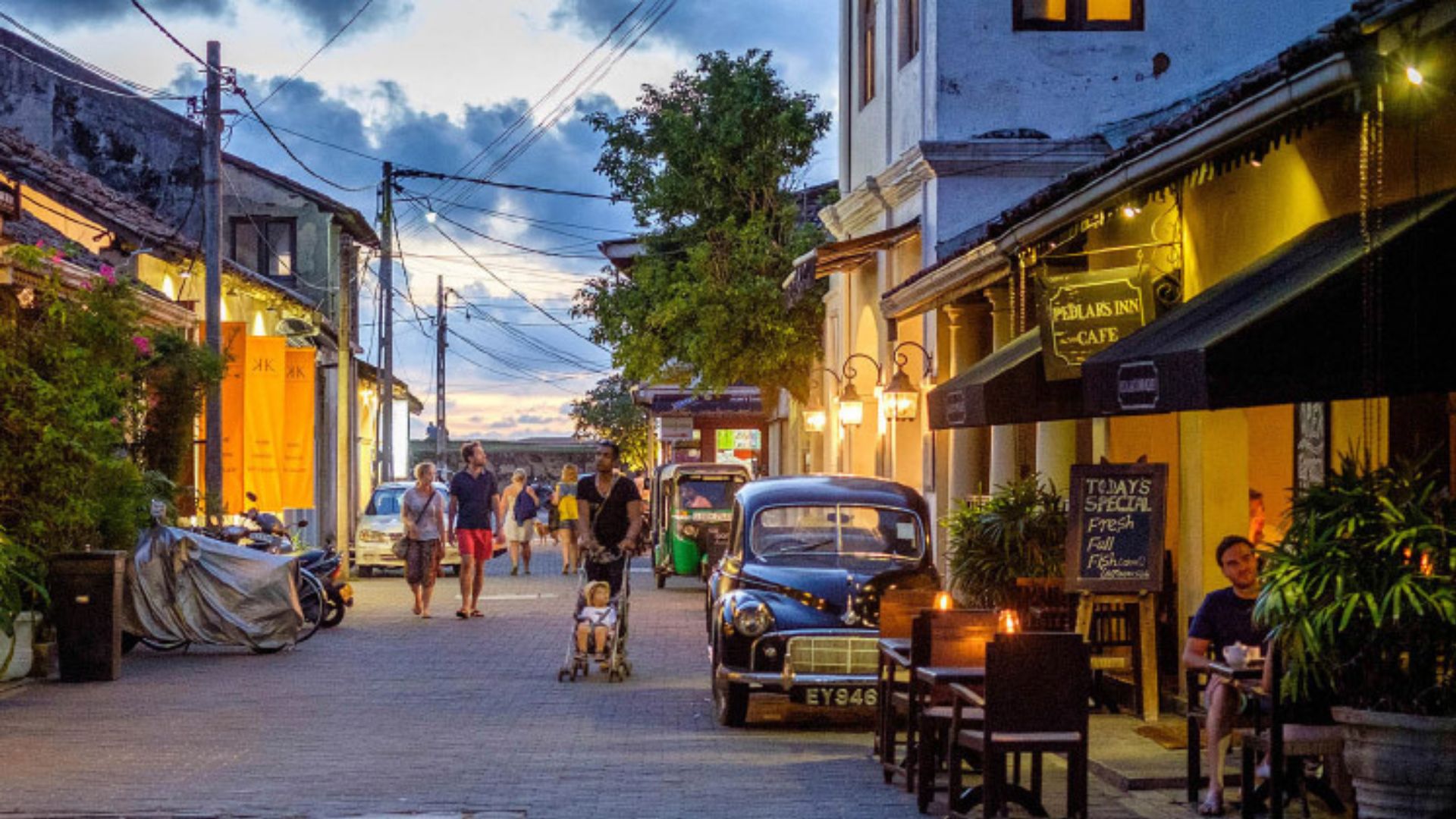
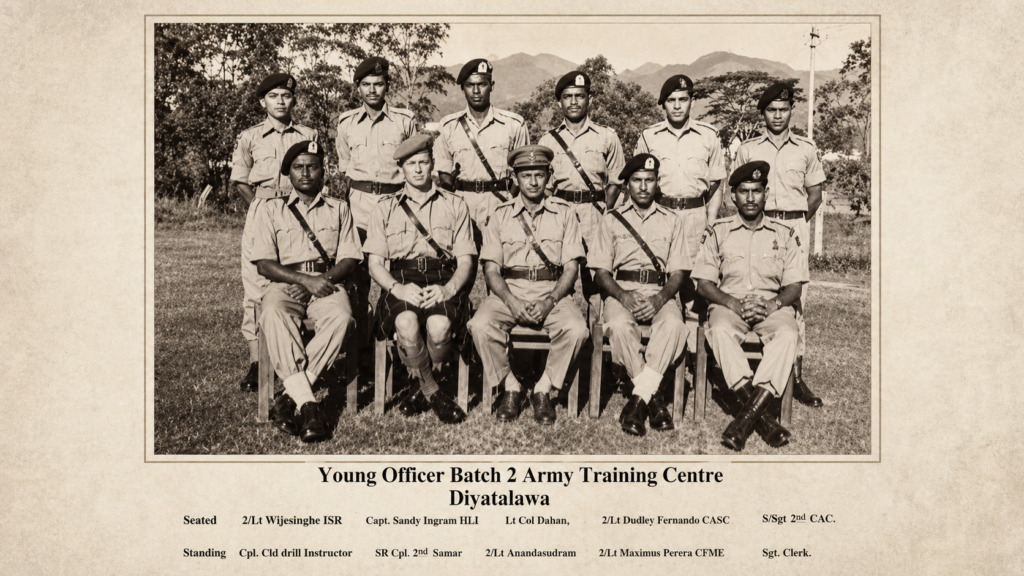
There is something quietly powerful about an old military photograph from Diyatalawa. The sepia tones, the stiff uniforms, the formal posture, the mountain backdrop — it carries the atmosphere of an older Ceylon, where military life, colonial history, hill-country discipline, and imperial service all crossed paths.
The image of the Young Officer Batch 2 at the Army Training Centre, Diyatalawa belongs to a later chapter of Sri Lankan military history. But the place itself — Diyatalawa — opens the door to a much older story. Long before modern Sri Lanka built its own post-independence military traditions, Ceylon had already been drawn into the wars of empire. One of the most overlooked links is Ceylon’s contribution to the Gallipoli Campaign, remembered every year through the ANZAC tradition.
The Old Ceylon Behind the Uniform
In colonial Ceylon, military service was not simply about battle. It was tied to plantation life, imperial administration, class, race, and the strategic importance of the island. Ceylon sat on vital sea routes in the Indian Ocean, making Colombo, Trincomalee, Kandy, and the hill-country garrisons important to the British imperial system.
Diyatalawa, with its cool climate and open terrain, became one of the island’s recognisable military centres. Its name evokes training grounds, barracks, parade squares, and young men being shaped into officers. The photograph above captures that atmosphere: disciplined, formal, and unmistakably Old Ceylon in mood.
But to understand Ceylon’s deeper ANZAC connection, we have to go back to 1914–1915, when the First World War pulled even distant colonies into its machinery.
Ceylon and the First World War
When war broke out in 1914, Ceylon was a British Crown colony. Its military contribution was not as widely remembered as that of Australia, New Zealand, India, or Britain, but it was real. The island’s most notable military contribution came through the Ceylon Planters’ Rifle Corps, a volunteer regiment largely made up of European tea and rubber planters based in the central highlands. The Corps had its headquarters in Kandy and formed part of the Ceylon Defence Force structure.
This alone gives the story its distinctly Ceylonese flavour. These were men from the plantation districts — people connected to estates, hill stations, and the colonial economy of tea and rubber. Their road to Gallipoli did not begin in Sydney or Wellington, but in the hill country of Ceylon.
The Ceylon Planters’ Rifle Corps and ANZAC
After the outbreak of war, the Ceylon Planters’ Rifle Corps sent a force of around 237 men under Major John Hall Brown to Egypt. They arrived in October 1914 and were initially involved in the defence of the Suez Canal, a critical imperial waterway. In December, they were attached to the newly formed Australian and New Zealand Army Corps — ANZAC.
This is where Ceylon’s story joins the ANZAC story.
The ANZAC legend is usually told through Australian and New Zealand sacrifice at Gallipoli. But the campaign was part of a larger imperial effort involving many others — British, Indian, French, Newfoundland, and colonial troops. Among them were men from Ceylon.
In April 1915, between 80 and 130 men from the Ceylon Planters’ Rifle Corps were attached to the 1st ANZAC Corps as bodyguard and escort to Lieutenant General William Birdwood, the General Officer Commanding the Corps. They landed on the Gallipoli Peninsula between 25 April and 1 May 1915 at Ari Burnu, later remembered as Anzac Cove.
That date — 25 April — is now ANZAC Day. For Australia and New Zealand, it is a national day of remembrance. For Sri Lanka, it should also carry a quiet historical echo.
Gallipoli: A Campaign of Courage and Cost
Gallipoli was one of the First World War’s most tragic and controversial campaigns. The Allied objective was to force a passage through the Dardanelles, capture Constantinople, and open a supply route to Russia. Instead, the campaign became a brutal struggle of cliffs, trenches, heat, disease, confusion, and heavy casualties.
The men from Ceylon were not the main combat force of the campaign. Their role was more specialised: attached to ANZAC headquarters, acting as guards, escorts, and support personnel. But their presence placed Ceylon directly inside one of the defining theatres of the Great War.
General Birdwood reportedly appreciated the Ceylon Planters, referring to them favourably as his guard. The Corps’ Gallipoli service later became part of the island’s forgotten wartime memory — remembered by historians and military enthusiasts, but rarely by the general public.
The “Old Ceylon” Angle
What makes this story compelling is not only the military fact. It is the world it reveals.
This was Old Ceylon: tea estates in the highlands, colonial clubs, railway lines winding towards Kandy and Nuwara Eliya, garrison towns, volunteer corps, and men leaving the island for war in distant theatres. Their journey from Ceylon to Egypt, then to Gallipoli, shows how deeply the island was tied to global events even before independence.
Ceylon was not merely a passive colony watching the war from afar. It supplied men, resources, strategic ports, and wartime infrastructure. The plantation economy, the colonial administration, and the island’s military formations were all drawn into the imperial war effort.
This history also complicates memory. The Ceylon Planters’ Rifle Corps was not representative of all Ceylonese society. It was largely European and planter-based. Yet it remains part of the island’s military story because it operated from Ceylon, was tied to Ceylon’s wartime mobilisation, and carried the island’s name into the Gallipoli campaign.
From Colonial Corps to National Army
The photograph of the Young Officer Batch 2 at Diyatalawa belongs to a different era — the formation of Sri Lanka’s own military identity after independence. The men in the image are not Gallipoli soldiers. They represent the post-colonial continuation of military training, discipline, and officer formation on Sri Lankan soil.
But the location links the stories. Diyatalawa symbolises the long arc from colonial military infrastructure to national military institution. It reminds us that the island’s military heritage did not begin in one clean moment. It developed through layers: colonial volunteer forces, imperial wars, independence, the creation of the Ceylon Army, and later the Sri Lanka Army.
The Ceylon Defence Force itself was eventually disbanded in 1949, around the time the modern Ceylon Army was created under the Army Act.
Why This Story Matters Today
Sri Lanka often remembers its ancient kingdoms, colonial architecture, independence politics, and civil conflict. But the island’s First World War history receives far less public attention.
The ANZAC-Ceylon connection deserves more recognition because it shows that Sri Lanka’s past is not isolated. The island has always been part of larger oceanic, imperial, and military networks. Ceylon’s ports, plantations, soldiers, and volunteers were connected to events in Egypt, Turkey, Europe, and the wider British Empire.
It also reminds us that remembrance is not only about numbers. Sometimes, history survives through small groups, old photographs, unit records, memorials, and names that almost disappear from public memory.
A Forgotten Chapter Worth Recovering
The old Diyatalawa photograph captures young officers in formation, looking into the camera with the seriousness of men shaped by training and duty. Behind them lies a landscape that has seen generations of military discipline.
Through that image, we can look further back — to the Ceylon Planters’ Rifle Corps, to the hill-country volunteers who sailed to Egypt, to the men attached to ANZAC headquarters, and to the landing at Gallipoli in 1915.
Ceylon’s role in Gallipoli may have been small compared with the massive sacrifice of Australia, New Zealand, Britain, India, and others. But it was not insignificant. It is part of the island’s Old Ceylon story: a story of empire, service, memory, and forgotten men who carried the name of Ceylon into one of the most famous campaigns of the First World War.
And perhaps that is why old photographs matter. They do not only show us who stood in front of the camera. They remind us of the longer histories standing behind them.