Colombo Fort is one of those places in Sri Lanka where the past does not sit quietly in a museum. It stands in the middle of the city, between traffic, office towers, banks, hotels, government buildings and busy railway lines. At first glance, Fort may look like Colombo’s commercial heart. But behind its modern rhythm is a layered colonial story shaped by sea trade, military power, architecture and urban planning.
For travellers, Colombo Fort offers something different from the beaches, tea estates and ancient kingdoms that often define Sri Lanka. It is a walk through the island’s colonial capital — a place where Portuguese, Dutch and British influence once shaped the streets, buildings and business life of Ceylon.
Where Colombo’s Colonial Story Begins
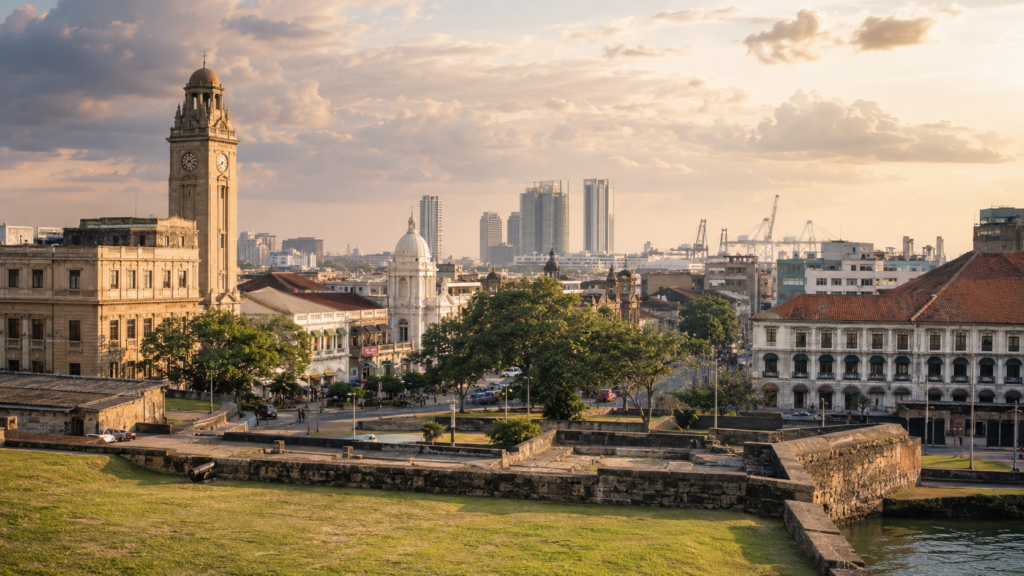
The name “Fort” comes from the fortified settlement that once stood in this part of Colombo. The Portuguese first developed Colombo as a strategic coastal stronghold because of its harbour and position along Indian Ocean trade routes. Later, the Dutch expanded and strengthened the area, turning it into a more organised military and administrative centre.
By the time the British took control, Colombo Fort began changing from a defensive zone into a commercial district. The walls and ramparts that once defined the area were gradually removed, making way for roads, offices, banks, hotels, warehouses and trading houses. This transformation gave Fort the identity it still carries today: a business district built on a colonial foundation.
That is what makes Colombo Fort fascinating. It is not only a place of old buildings. It is a place where the function of the city changed — from fortification to finance, from empire to administration, from harbour town to modern capital.
A Walk Through Old Ceylon’s Business Streets
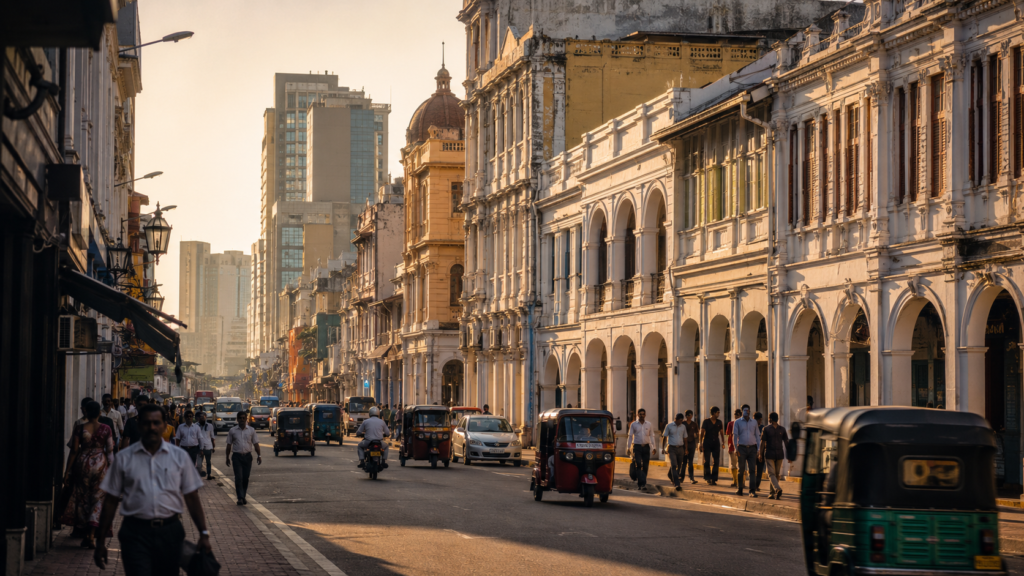
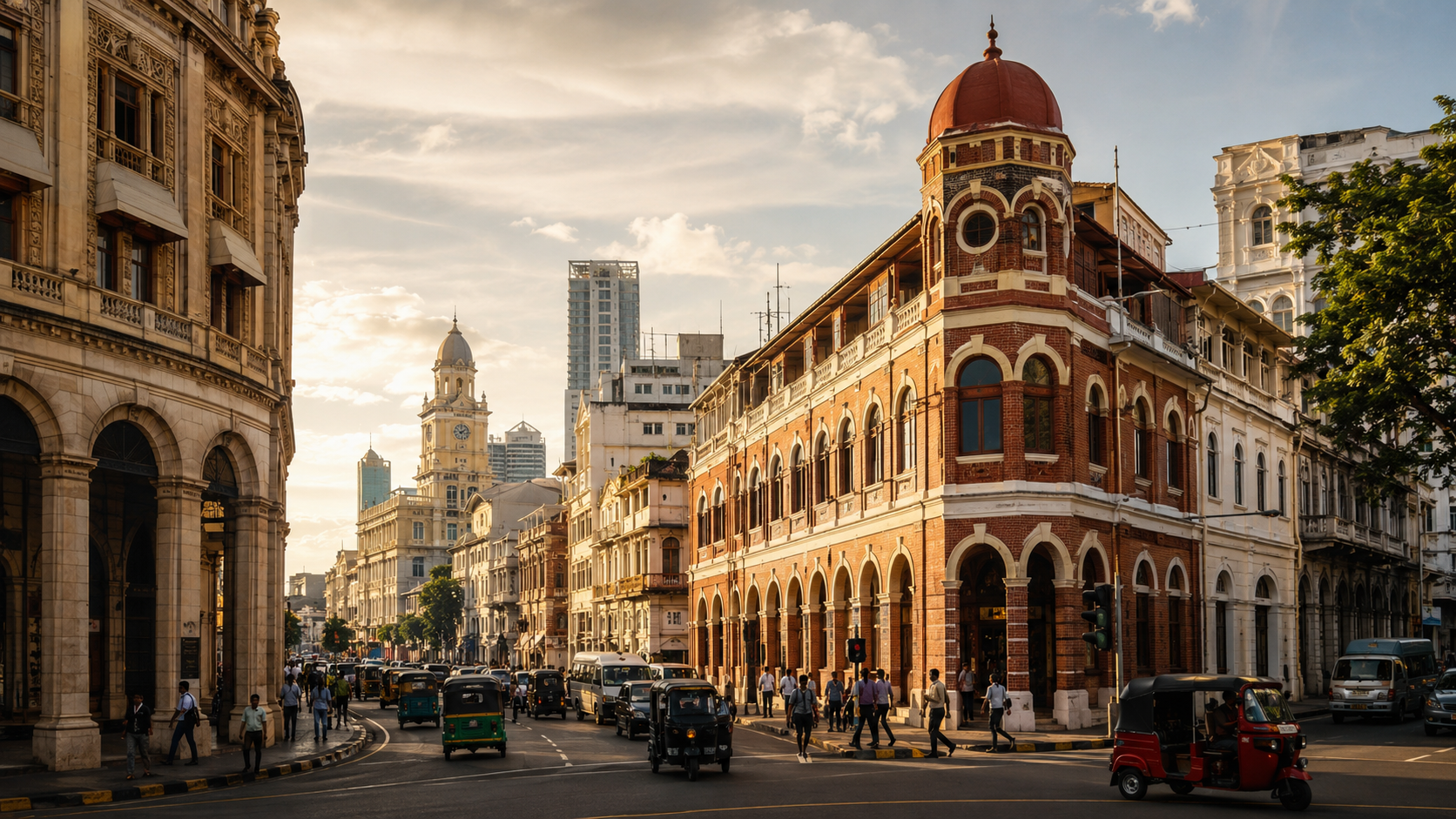
A walk around Colombo Fort can feel like moving between different eras. One moment you see glass-fronted towers and modern banks. A few steps later, you come across arched windows, thick columns, old shopfronts, colonial façades and weathered masonry that belong to another century.
Streets such as York Street, Chatham Street and Queen Street still carry the atmosphere of old commercial Colombo. These were once the streets of shipping companies, trading firms, banks, merchants and colonial offices. Even today, Fort remains closely tied to finance, government and business.
The area can feel busy and practical rather than polished for tourists. That is part of its appeal. Colombo Fort is not a recreated heritage zone. It is a working city district where heritage buildings still stand among daily life. Office workers hurry past old colonial façades. Tuk-tuks move through streets once used by horse carriages. Railway passengers arrive near buildings that once served an empire.
The Cargills Building: A Red Landmark of Colonial Colombo
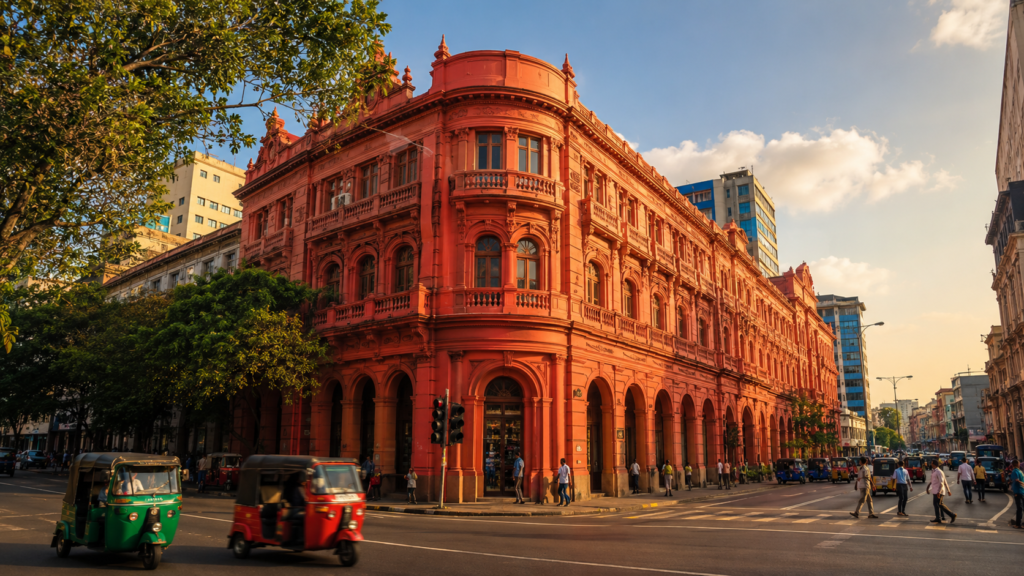
One of the most recognisable colonial buildings in Fort is the red Cargills building on York Street. With its striking red exterior, arched windows and strong street presence, it has become one of Colombo’s most photographed heritage landmarks.
The building reflects the commercial elegance of British Ceylon. It was not a palace or a church, but a business building — and that is important. Colombo Fort’s colonial identity was deeply connected to trade. Tea, rubber, spices, shipping, banking and retail all helped shape the district.
Today, the Cargills building reminds visitors that colonial Colombo was not only about governors and officials. It was also about merchants, shopkeepers, clerks, port workers and customers. It was a place where business gave the city its pace.
Click on here “Colombo Before Modern Entertainment When Life Was Slower, Kinder and Beautifully Human”
The Grand Oriental Hotel and the Harbour View
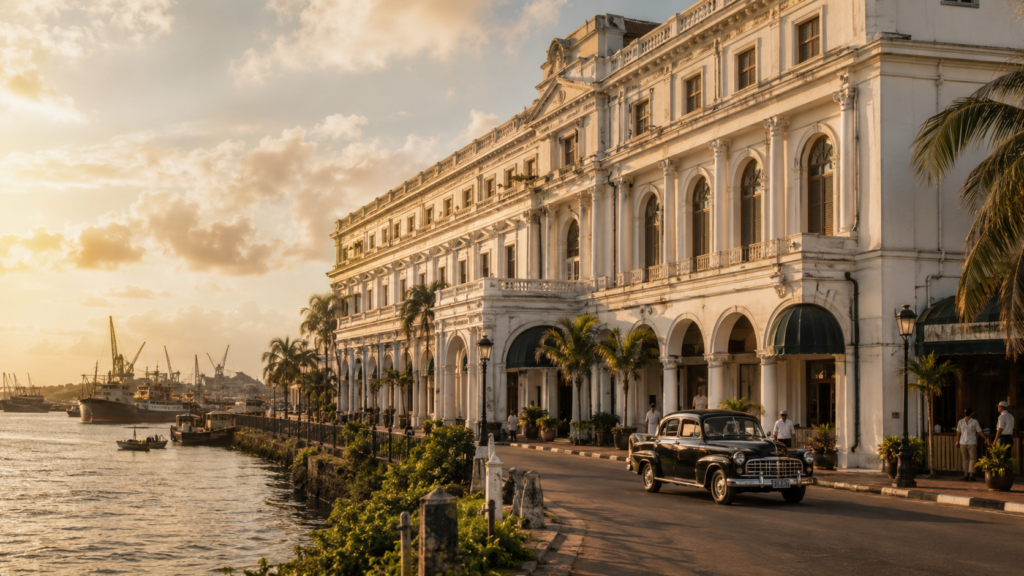
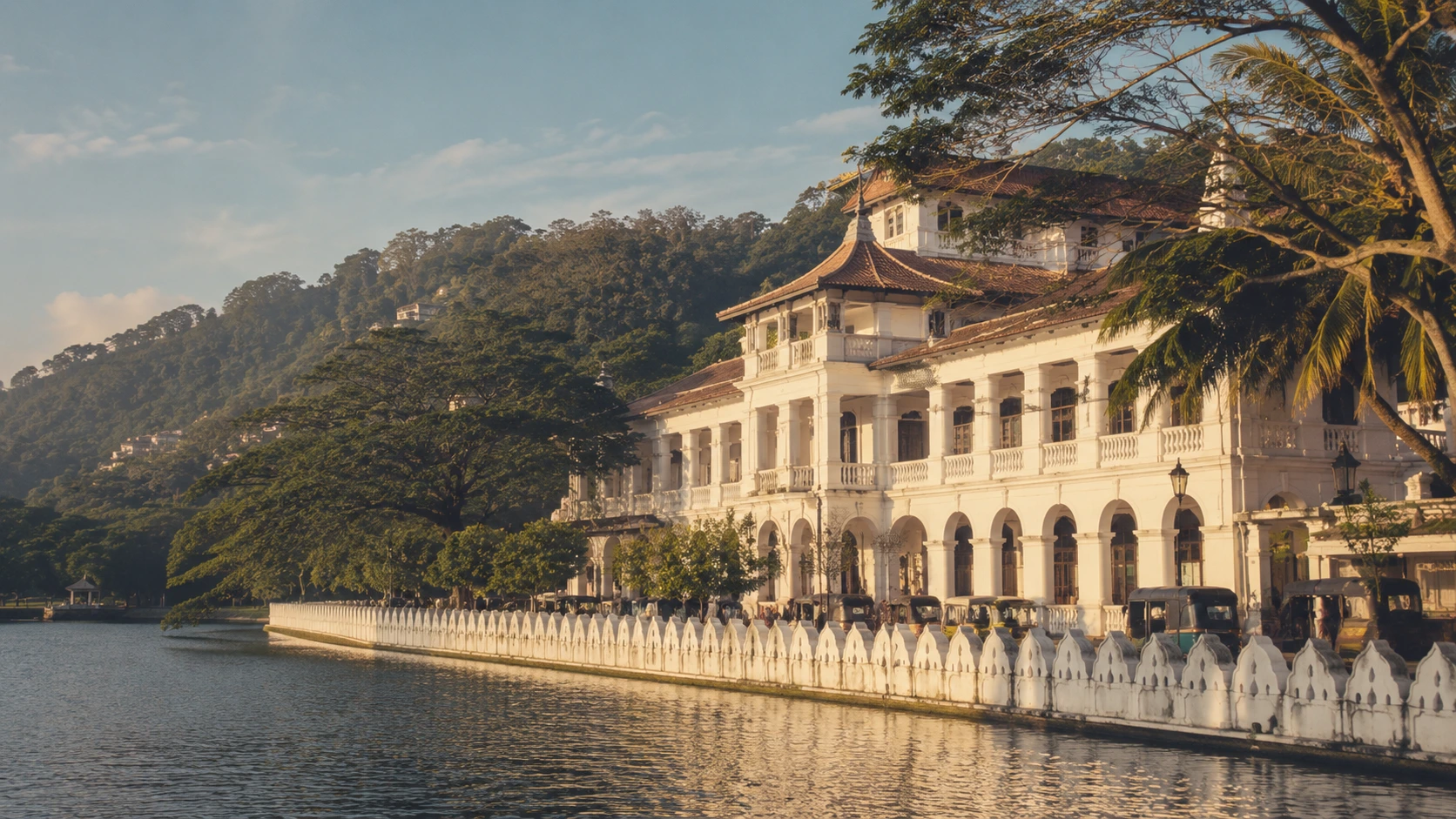
Another major landmark in Fort is the Grand Oriental Hotel. Its location near the harbour tells a story of old Colombo as a gateway to Ceylon. Before modern air travel, visitors arrived by sea. Colombo Harbour was the first impression many travellers had of the island.
The Grand Oriental Hotel was closely linked to this maritime world. It served travellers, traders, colonial officials and visitors who moved between ships, offices and the city. To imagine old Colombo from this point is to imagine steamships, harbour lights, luggage trunks, formal dinners and verandas overlooking the sea.
For today’s visitor, the hotel is more than a building. It is a reminder that Colombo was once one of the great port cities of the Indian Ocean, shaped by ships long before airport arrivals became the norm.
The Lighthouse Clock Tower: Time, Trade and Navigation
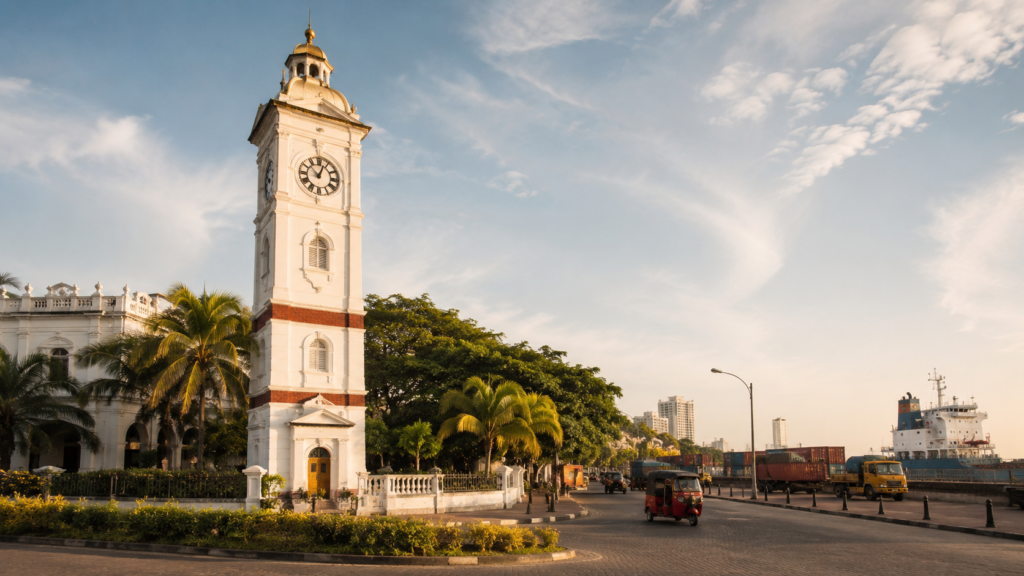
The Colombo Lighthouse Clock Tower is another unusual feature of Fort. It once functioned as both a clock tower and a lighthouse, reflecting the district’s connection to maritime navigation and city life.
In colonial times, such structures were practical but also symbolic. A clock tower represented order, timekeeping and civic discipline. A lighthouse represented guidance for ships entering the harbour. Together, they captured what Fort meant to colonial Colombo: a place of trade, movement, control and coordination.
Today, standing near the tower, it is easy to miss its importance because the city around it has changed so much. But for heritage travellers, it is one of those small landmarks that helps decode the deeper story of the area.
The Old Parliament and the Seafront
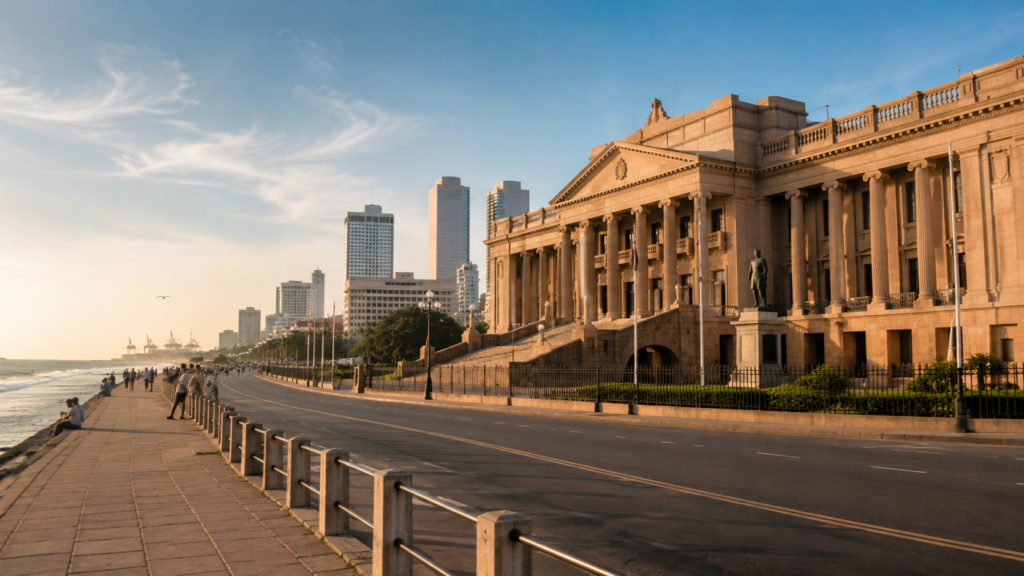
Near the edge of Fort, facing the sea, stands the Old Parliament Building. Its grand colonial architecture gives this part of Colombo a formal and official character. With its columns, symmetry and imposing presence, the building reflects the administrative face of British Ceylon.
This area links Fort with Galle Face, one of Colombo’s most famous open seafront spaces. The contrast is striking. On one side, you have the business and administrative buildings of Fort. On the other, the open sky and sea breeze of Galle Face. Together, they show how colonial Colombo was planned around both power and place — offices close to the harbour, government facing the ocean, and public space opening towards the sea.
For travellers, this is one of the best places to understand Colombo’s urban personality. The city is not only old or new. It is both at once.
The Dutch Hospital Precinct: Heritage Reimagined
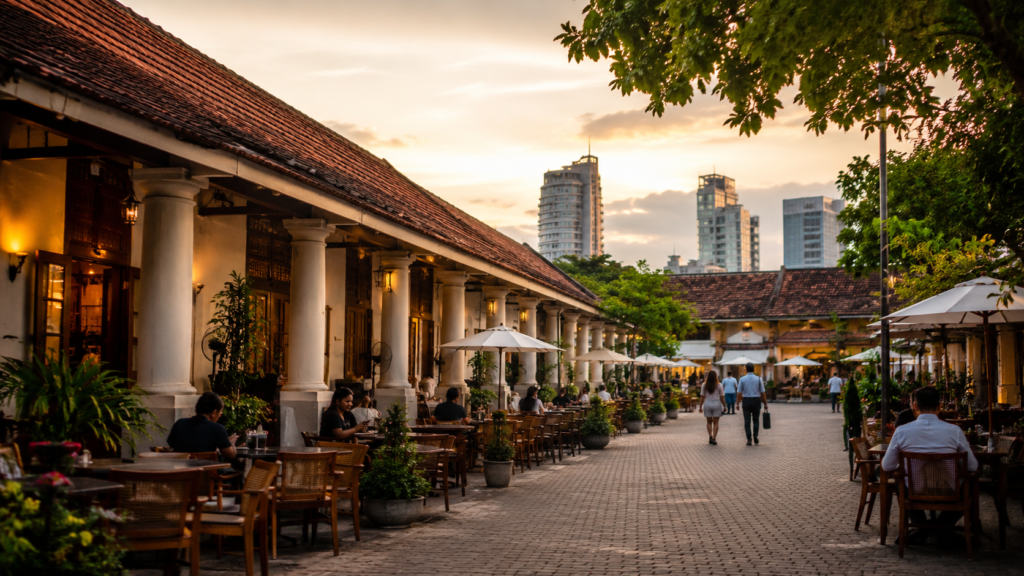
The Dutch Hospital precinct is one of the best-known examples of colonial architecture being reused for modern life. Its thick walls, courtyards and low, solid form reflect an older period of Colombo’s history. Today, the space has been adapted into a dining and lifestyle area.
This makes it one of the easiest heritage stops for visitors. You can walk through the courtyard, notice the architecture, have a meal, take photographs and then continue exploring Fort. It also shows how colonial buildings can survive when they are given a new purpose.
The Dutch Hospital is not just attractive because it is old. It works because it allows people to experience heritage casually, without needing a formal museum visit.
Why Colombo Fort Still Matters
Colombo Fort still shapes the city because it remains central to Colombo’s identity. It connects the harbour, railway station, government district, commercial offices, hotels and historic streets. Even as new buildings rise, the old colonial grid continues to influence how people move through the city.
For locals, Fort is often a place of work, transport or official errands. For travellers, it can be a place of discovery. The key is to slow down. Look above street level. Notice the old windows, balconies, columns, signs and stonework. Many of Fort’s stories are not immediately obvious from the pavement.
Unlike some heritage destinations, Colombo Fort does not feel frozen in time. It is noisy, active, imperfect and alive. That is exactly why it matters. It shows how history continues to exist inside a modern city, not separate from it.
Visiting Colombo Fort Today
Colombo Fort is best explored in the morning or late afternoon when the heat is easier to manage. Comfortable walking shoes are useful, as the area is best experienced on foot. Visitors can combine Fort with nearby Pettah, Galle Face Green, the Dutch Hospital, the Old Parliament area and Colombo Harbour viewpoints where accessible.
It is also a good area for photography, especially for those interested in architecture, street scenes and old-world city details. The best images often come from contrasts: colonial buildings beside modern towers, old façades under tropical light, and quiet architectural corners hidden within one of Colombo’s busiest districts.
Final Thoughts
Colombo Fort is not just the historic centre of Colombo. It is one of the clearest examples of how colonial Ceylon helped shape modern Sri Lanka’s commercial capital. Its streets still carry the memory of forts, ships, traders, banks, hotels, officials and travellers.
For anyone interested in Old Ceylon, colonial architecture or urban travel, Colombo Fort deserves more than a quick passing glance. It is a district where the city’s past still works, moves and breathes — right in the middle of present-day Colombo.