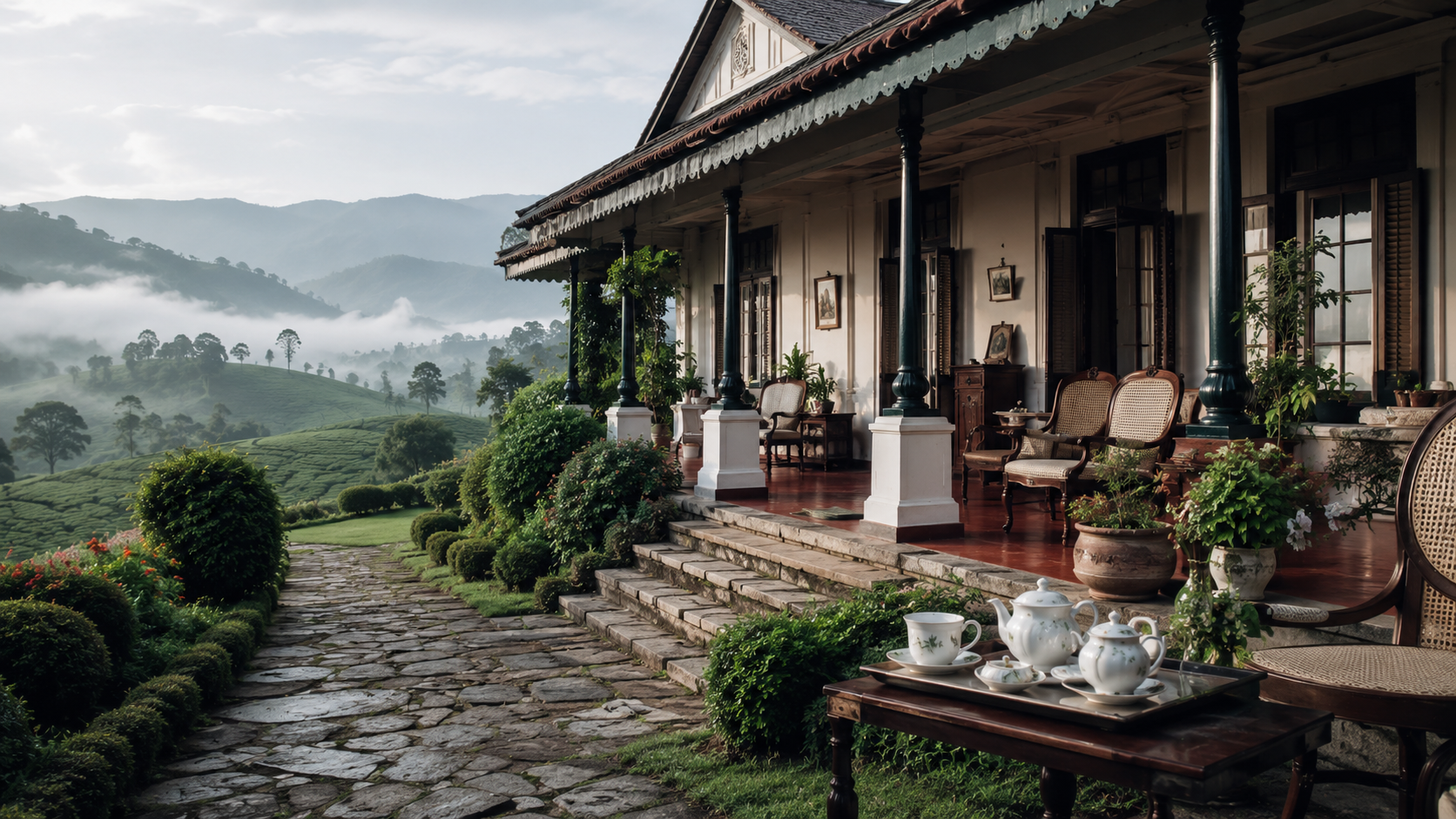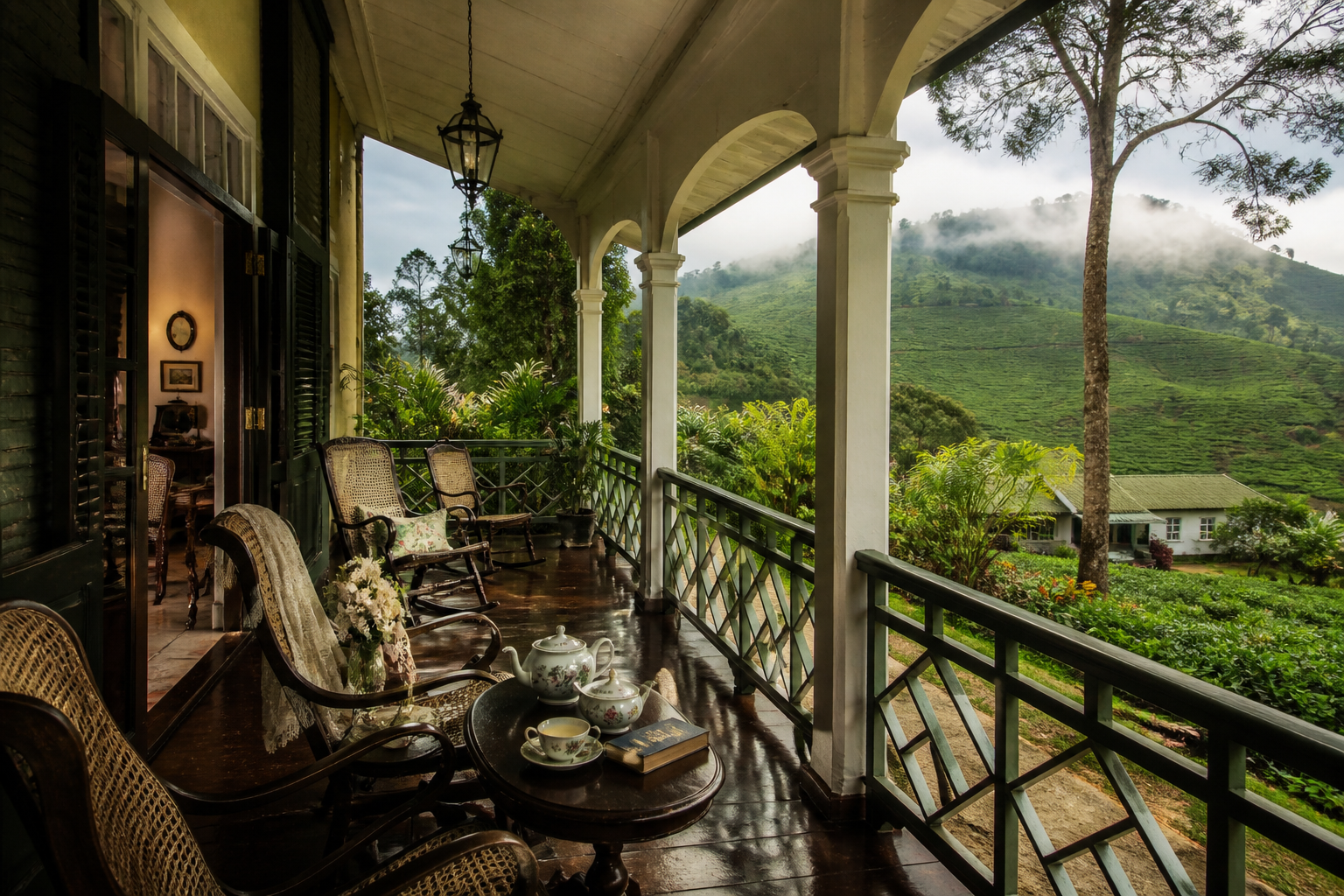
Sri Lanka’s hill country has a mood unlike anywhere else on the island. The air is cooler, the roads curve through emerald tea fields, and the morning mist often hangs low over the mountains. In places like Nuwara Eliya, Hatton, Haputale, Kandy and Ella, travellers still encounter a world shaped by old estate roads, colonial-era bungalows, stone churches, manicured gardens and tea factories that seem to belong to another age.
Behind much of this atmosphere lies one of the most fascinating heritage stories of Old Ceylon: the Scottish legacy in the island’s tea country.
From the early days of tea planting to the estate names that still echo across the hills, Scottish planters played a major role in shaping the identity of Ceylon tea. Today, that legacy has become part of Sri Lanka’s hill country travel experience visible in its architecture, landscapes, tea traditions and historic plantation routes.
A Highland Feeling in Ceylon’s Hills
For many visitors, the hill country feels almost unexpected. After the heat of Colombo, Galle or the southern coast, the climb into the central highlands brings a dramatic change in climate and scenery. The tropical lowlands give way to pine-covered slopes, cool winds, waterfalls, misty valleys and endless tea plantations.
This landscape became the heart of Ceylon’s plantation world during the 19th century. British and Scottish planters were drawn to the hills because of the climate, altitude and fertile soil. Over time, the region developed a distinct identity part tropical island, part colonial hill station, part tea-growing frontier.
The Scottish influence was especially strong. Many planters came from Scotland, bringing with them estate names, architectural habits, club culture, gardening styles and a love for cool mountain living. In the highlands of Old Ceylon, they found a landscape that reminded them, in some ways, of home.
That is why travellers today still come across names such as Glasgow, Aberdeen, Glenloch, Strathdon and Craighead in Sri Lanka’s tea country. These names are not accidental. They are reminders of a time when Scottish planters left their mark on the island’s mountain districts.
Click on here “What Life Really Felt Like in Colonial Ceylon: Tea, Trains, Letters and Lost Elegance”
James Taylor and the Birth of Ceylon Tea
No story of Scottish planters in Ceylon can begin without James Taylor.
Born in Scotland, James Taylor arrived in Ceylon as a young man in the 19th century and became closely associated with Loolecondera Estate near Kandy. It was there that he helped establish tea as a serious commercial crop on the island.
Before tea became famous, Ceylon’s plantation economy was largely built on coffee. But when coffee plantations were devastated by disease in the 19th century, estate owners began searching for an alternative. Tea soon emerged as the answer.
James Taylor’s work at Loolecondera became a turning point. His early experiments helped lay the foundation for what would become one of Sri Lanka’s most globally recognised exports: Ceylon tea.
For travellers interested in tea heritage, Loolecondera remains one of the most meaningful locations in the country. It is not merely another estate; it is part of the origin story of Ceylon tea. Visiting the area gives travellers a chance to connect with the beginning of a global brand that still defines Sri Lanka in the eyes of the world.
Scottish Names Across Tea Country
One of the most charming ways to notice the Scottish legacy in Sri Lanka is through estate names.
As travellers move through the hill country, especially around Kandy, Hatton, Nuwara Eliya, Talawakelle, Haputale and Bandarawela, they may notice names that sound more like the Scottish Highlands than the tropics. Estates and places with names such as Glasgow, Aberdeen, Glenloch, Strathdon and Craighead reflect the personal memories and cultural background of the planters who named them.
These names added a layer of Old World character to the Ceylonese hills. They also helped create the romantic image of tea country that still appeals to travellers today mist, stone walls, winding roads, mountain air, tea bushes and old estate signs standing beside narrow roads.
For those who enjoy slow travel, simply driving through these old estate routes can feel like moving through a living museum. Each name on a weathered signboard hints at a story of plantation life, mountain isolation, tea cultivation and the global journey of Ceylon tea.
Tea Bungalows and Planter Life
Perhaps the most beautiful reminder of the Scottish and British plantation era is the old tea bungalow.
Built for estate managers and planters, these bungalows were designed for life in the cool hills. Many had wide verandas, fireplaces, high ceilings, timber floors, large gardens and sweeping views over the plantations. They were practical homes, but they were also symbols of estate life.
Today, some of these bungalows have been converted into boutique hotels and heritage stays. For travellers, they offer one of the most atmospheric ways to experience Sri Lanka’s tea country.
A stay in an old planter bungalow is not just about accommodation. It is about waking up to mist over the tea fields, having breakfast on a veranda, walking through old gardens, listening to the quiet of the hills and enjoying a slower rhythm of travel.
The details matter: antique furniture, polished timber, old photographs, tea trays, garden paths, fireplaces and mountain views. These small elements help recreate the feeling of Old Ceylon without needing to over-explain it.
For tourism, this is where the Scottish planter legacy becomes most visible not in textbooks, but in the traveller’s experience of place.
Nuwara Eliya and the Colonial Hill Station Experience
No discussion of Old Ceylon’s hill country is complete without Nuwara Eliya.
Often called “Little England,” Nuwara Eliya became one of the island’s most famous colonial hill stations. Its cool climate, gardens, racecourse, golf course and old hotels made it a favourite retreat during the British period.
Although the town is usually associated with English-style hill station life, the wider plantation culture around it carried a strong Scottish presence through tea estates and planter communities.
For modern travellers, Nuwara Eliya remains one of the best places to experience this heritage atmosphere. The town has a different rhythm from the rest of Sri Lanka. Mornings are often cold and misty. Flowers grow in abundance. Old buildings, churches and bungalows sit among newer developments. Nearby tea estates stretch across the hills in every direction.
A good Old Ceylon itinerary can include a walk through Victoria Park, a visit to the old post office, high tea at a heritage hotel, a round of golf, a drive through nearby tea estates, and a stop at a working tea factory.
It is this combination of landscape, architecture and climate that keeps Nuwara Eliya central to Sri Lanka’s colonial heritage tourism.
Tea Trails for Travellers Today
The Scottish legacy in Ceylon’s tea country is not confined to one town or estate. It is spread across the highlands.
Travellers can explore this story through several scenic routes:
The Kandy region is ideal for those interested in the early history of Ceylon tea, especially because of its connection to Loolecondera and James Taylor.
Hatton and Dickoya offer some of the most beautiful tea landscapes in the country, with misty valleys, old bungalows and dramatic estate roads.
Nuwara Eliya gives travellers the classic hill station experience, with cool weather, colonial buildings, gardens and easy access to tea factories.
Haputale and Bandarawela provide some of the finest viewpoints in Sri Lanka, with tea fields rolling towards deep valleys and distant mountain ranges.
Ella offers a more relaxed, modern travel scene while still being surrounded by tea estates, railway heritage and mountain scenery.
The train journey through the hill country is one of the best ways to experience this landscape. The route from Kandy to Ella, passing through tea estates, tunnels, bridges and mountain stations, has become one of Sri Lanka’s most famous travel experiences.
For travellers following the Old Ceylon story, the train is more than transport. It is part of the atmosphere a slow passage through the world that tea built.
Tea Factories and the Taste of Ceylon
Another way to experience the Scottish planter legacy is through tea factory visits.
Many tea factories in the hill country still preserve the old industrial character of the plantation era. Inside, travellers can see how tea leaves are withered, rolled, fermented, dried, graded and packed. The scent of fresh tea, the sound of machinery and the sight of workers sorting leaves all add to the experience.
A tea tasting session is especially important. It connects the landscape outside with the cup in front of you. Black tea, broken orange pekoe, silver tips, golden tips and different regional flavours all tell a story of altitude, climate and craft.
For many visitors, this is the moment when Ceylon tea becomes more than a souvenir. It becomes a sensory memory of the hill country.
What Travellers Can Still See Today
The Scottish influence in Old Ceylon has not disappeared. It remains visible across the hill country in quiet, understated ways.
Travellers can still see it in:
old estate bungalows with wide verandas and fireplaces, Scottish-inspired estate names, historic tea factories, colonial-era churches, garden landscapes, estate roads, railway routes, old clubs, cemeteries, tea museums and plantation viewpoints.
These are not always presented as grand monuments. Often, they are simply part of the scenery. A signboard at a bend in the road. A bungalow on a hill. A tea factory beside a misty valley. A fireplace in a heritage hotel. A garden that feels more Highland than tropical.
That is the beauty of travelling through Sri Lanka’s tea country. The past is not locked away. It sits quietly in the landscape.
Why This Legacy Still Matters for Tourism
For Sri Lanka, Ceylon tea is not just an export. It is part of the country’s global image. Around the world, the name “Ceylon Tea” still carries a sense of quality, tradition and place.
The Scottish planters helped shape that early story, and their influence remains part of the heritage appeal of the hill country. For travellers, this legacy adds depth to the journey. It turns a scenic drive into a historical route. It turns a cup of tea into a connection with Old Ceylon. It turns a bungalow stay into an encounter with another era.
This is why the Scottish legacy in old Ceylon’s tea country continues to matter. It is not only about the people who planted tea. It is about the landscapes, names, buildings and rituals they left behind many of which now form part of Sri Lanka’s most memorable travel experiences.
Final Thoughts
The hill country of Sri Lanka is one of the island’s most atmospheric regions. Its beauty lies not only in its tea fields and mountain views, but also in the layers of history that shaped it.
The Scottish legacy in Old Ceylon can still be felt in estate names, planter bungalows, tea factories, gardens, railway journeys and the enduring romance of Ceylon tea. For travellers, it offers a gentle but fascinating way to explore the island’s colonial heritage through scenery, architecture and taste.
To visit Sri Lanka’s tea country is to step into a landscape where history is still alive in the mist, in the mountains, and in every cup of tea.