Why Post Offices Matter
Colonial-era post offices are among Sri Lanka’s most understated yet enduring landmarks. Built to serve a growing empire, these compact structures linked railways, roads, plantations, and ports — forming a network that carried letters, newspapers, and money orders across Ceylon and the world.
Many still function today, while others stand as living heritage. For travellers, they are photogenic reminders of a world that valued communication through ink, paper, and human hands. Step inside and you’ll find a space where time slows, stamps click, and the scent of old timber lingers.
A Short Origin Story
Ceylon’s postal system evolved in the 19th century, parallel to the rise of modern transport and trade. Hill-country planters relied on mail for market updates, ports needed it for shipping records, and growing towns framed their civic cores around it.
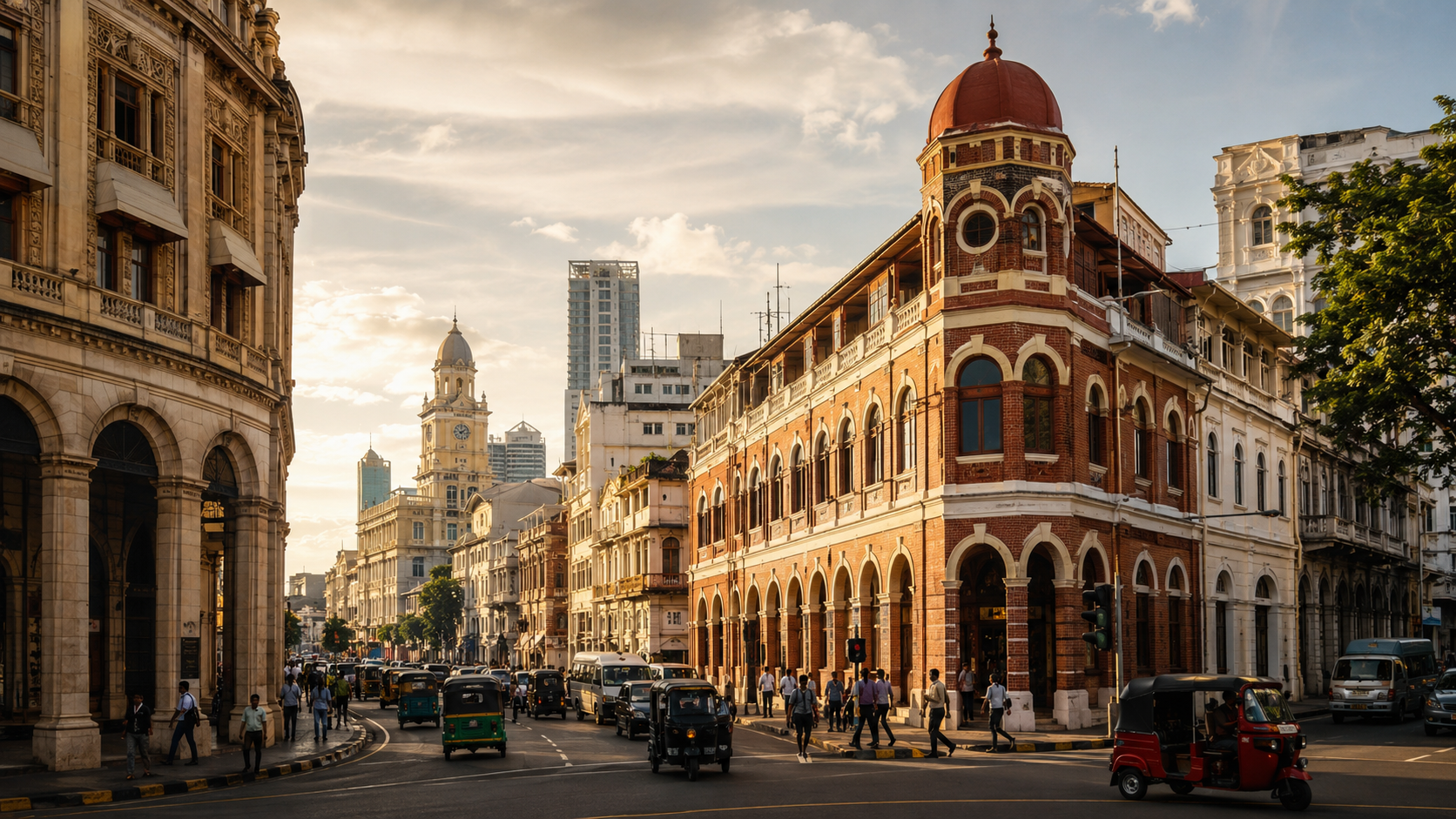
Architecturally, these post offices blended British and European influences with tropical practicality: thick walls, shady verandas, and high-pitched roofs to withstand rain and heat. Look for details such as limewashed walls, jackwood doors, red brick, ridge tiles, and cast-iron rain gutters — the subtle signatures of their era.
Highlights to Put on Your Map
- Nuwara Eliya Post Office
Perhaps Sri Lanka’s most photographed post office, this Tudor-style red-brick landmark sits by Victoria Park. Its clock tower and gabled roofs contrast beautifully with the misty tea hills. Visit early morning for soft light and fewer crowds — and don’t leave without posting a card stamped in Nuwara Eliya ink.
- Galle Fort Post Office
Inside the Dutch-era grid of streets, the Galle Fort post office occupies a colonial block with timber doors and thick plaster walls. Late-afternoon sunlight turns its façade golden. Combine your visit with the Lighthouse and Dutch Reformed Church for a full heritage walk.
- Kandy Town Post Office
Near the lake and bustling market grid, Kandy’s central post buildings reflect the royal-meets-colonial blend of the old capital. Use them as a waypoint while exploring the Temple of the Tooth, market arcades, and colonnaded shopfronts.
- Badulla and the Up-Country Line
Smaller hill towns like Haputale and Badulla hide sturdy postal buildings beside railway stations. Look for the old royal coat of arms above the door or brass letter slots that still gleam. Combine the visit with a slow train ride or a tea estate stop.
- Jaffna Town Post Office
Post-war Jaffna mixes restoration with surviving colonial structures. The town post office remains part of a civic ensemble that includes the library, the fort, and nearby kovils. Morning light brings out the pastel tones of its walls.
Tip: In most towns, the post office stands close to the railway or bus station — a reminder of how logistics shaped colonial planning.
Click on here “WEEKEND ESCAPES FOR THE BUSY TRAVELER: 2-DAY TRIPS NEAR COLOMBO”
Reading the Architecture
- Roofs: Terracotta tiles with deep overhangs to shed monsoon rain.
- Walls: Brick or lime-plastered masonry for insulation.
- Openings: Timber-framed doors and sash windows with upper vents for airflow.
- Details: Cast-iron gutters, enamel nameplates, and brass post boxes still marked “POST & TELEGRAPH.”
Etiquette and Access
Most post offices remain active. Be discreet, respect queues, and avoid obstructing counters or entrances for photos. Always ask permission before photographing interiors. Buy stamps or mail a postcard — it supports the service and gives you a real souvenir.
A Two-Day Heritage Loop
- Day 1: Galle Fort and the South Coast
Morning: Walk the ramparts, then explore the Galle post office.
Midday: Pause for tea or a museum visit.
Afternoon: Visit Ambalangoda or Matara to spot smaller postal buildings.
Evening: Return to Galle for sunset over the fort.
- Day 2: The Hill Country
Catch the early train to Nanu Oya and continue by tuk-tuk to Nuwara Eliya. Photograph the post office before crowds gather, visit a tea factory, then explore the park and colonial club precinct. If time allows, continue to Badulla for an overnight near the station.
Photography Playbook
- Light: Blue hour for cooler brick tones; golden hour for warm plaster glow.
- Angles: Shoot low to frame towers and gables. Step back to include verandas.
- Details: Focus on letter slots, signboards, and stamps counters.
- People: Include a cyclist or passer-by for scale — always with consent.
- Weather: Mist in the hills adds atmosphere; carry a microfiber cloth for your lens.
Philately for Travellers
Many counters still sell commemorative stamps. Collect designs tied to your journey — wildlife, railways, or historical figures. Date your postcard and mail it to yourself; it becomes a travel keepsake with an official cancellation mark.
Responsible Travel
- Support the postal service by purchasing stamps and postcards.
- Respect office hours and local staff.
- Avoid entering restricted rooms or photographing customers.
- Do not lean on or touch fragile timberwork or balustrades.
Practical Notes
- Hours: Weekday mornings to late afternoons; short Saturdays.
- Cash: Keep small notes for stamp purchases.
- Transport: Rail and post offices were designed to work together — explore on foot for context.
Suggested Reading of Place
Stand outside any post office and observe its neighbours: the courthouse, market, station, and bus stand. These clusters reveal how colonial towns were organised around movement and communication. Trace those lines, and you’ll uncover rest houses, churches, kovils, mosques, and schools — all orbiting the same civic heart.
Click on here “JAFFNA FLAVORS: DISCOVERING THE NORTH THROUGH ITS CUISINE”