Kandy’s Famous Old Lady: The Timeless Queens Hotel
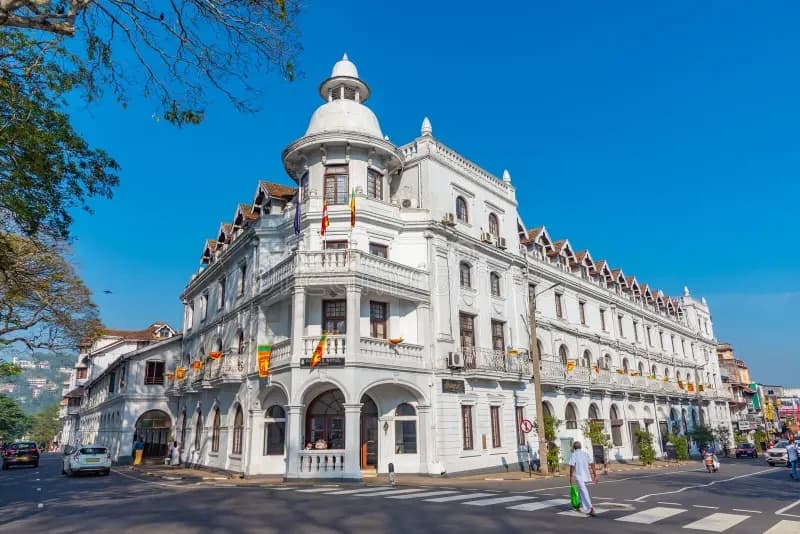
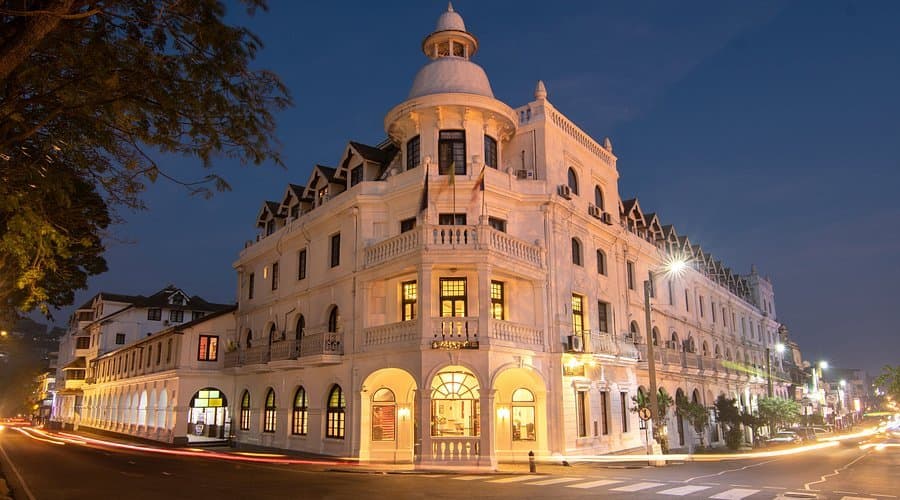
For more than 160 years, Queens Hotel has stood at the edge of Kandy Lake as one of Sri Lanka’s most iconic heritage landmarks. Known fondly as “the old lady of Kandy,” this grand colonial hotel carries stories from the era of British rule, royal processions, political gatherings, literary visitors, and countless travellers who passed through the hill capital. Today, it remains a living architectural museum—elegant, slightly old-world, and unmistakably charming.
This article explores the hotel’s history, architecture, cultural value, and modern identity, offering a deep look at why Queens Hotel remains one of Sri Lanka’s most beloved heritage spaces.
A Landmark Rooted in History
Queens Hotel began its life as a Governor’s residence in the early 19th century, at a time when the British were consolidating their presence in the central highlands. With its commanding position opposite Kandy Lake and the Temple of the Tooth Relic, the site held strategic and symbolic value.
By the mid-1800s, the building was converted into a hotel—initially called Queen’s Hotel and Boarding House—catering to colonial administrators, tea planters, and travellers who needed comfortable lodging close to the administrative centre.
Through the decades, the hotel evolved into a grand establishment, becoming a meeting point for aristocrats, dignitaries, politicians, and famous writers. Its guest books are believed to include signatures from heads of state, governors, scholars, and artists.
Even today, despite modernisation around it, Queens Hotel remains a proud testament to Kandy’s layered history.
Colonial Architecture with Enduring Personality
One of the most striking features of Queens Hotel is its architecture. This “old lady” has not been aggressively renovated or modernised—its charm lies in the fact that it feels preserved in time.
Key architectural elements include:
• Wide verandas and arched colonnades
These create the hotel’s signature façade, offering lake views and cooling shade.
• High ceilings with timber beams
Designed to keep the building cool during Kandy’s warm months.
• Large colonial windows and French doors
Allowing light to sweep through hallways and lounges.
• A sweeping central staircase
One of the hotel’s most photographed interior features, reminiscent of 19th-century administrative buildings.
• Vintage furnishings and décor
Carved wooden furniture, old photographs, antique clocks, and framed prints add to the atmosphere.
The building retains an unmistakable character—part faded grandeur, part elegant nostalgia. For many travellers, this is exactly what makes Queens Hotel so unforgettable.
A Front-Row Seat to Kandy Lake and Esala Perahera
Queens Hotel occupies one of the most prime locations in Kandy’s cultural triangle. Situated at the heart of the city:
• To the front lies Kandy Lake, shimmering throughout the day and beautifully lit at night.
• To the side stands the Temple of the Sacred Tooth Relic, Sri Lanka’s most revered Buddhist shrine.
• Across the road runs the route of the Kandy Esala Perahera, one of the oldest and grandest cultural processions in the world.
The hotel’s balconies and verandas offer some of the best viewing points for the Perahera. Generations of families have booked rooms here specifically to watch the drums, dancers, elephants, and torch carriers passing below.
For travellers who want an immersive cultural experience, no other hotel in Kandy offers quite the same proximity or atmosphere.
The Legendary Queens Bar and Social Hub
A key part of Queens Hotel’s heritage is its bar and lounge, which has been a meeting point in Kandy for over a century.
Historically, this was where planters, administrators, civil servants, and traders gathered at sunset for drinks and conversation. Today, it retains a relaxed, old-school charm with:
• Wooden bar counters
• Vintage bottles and barware
• Soft lightning and retro décor
• A quiet atmosphere suited for calm conversation
For many locals and expatriates, Queens Bar has served as a social anchor in the city—a place where friendships were formed, deals were discussed, and stories were exchanged.
Culinary Traditions Rooted in Heritage
The hotel’s restaurants and dining halls reflect a mix of Sri Lankan and British colonial influences.
Notable culinary highlights include:
• Classic high tea with sandwiches, cakes, and Sri Lankan short eats.
• Traditional Kandyan rice and curry, served in generous, warm portions.
• Old-style buffet spreads that evoke memories of British-era club dining.
• Homemade soups, pastries, and puddings, prepared using recipes unchanged for decades.
The dining rooms—quiet, spacious, airy—create an atmosphere that feels both old-fashioned and comforting. For many visitors, the experience is as memorable as the food itself.
Queens Hotel as a Cultural and Historical Symbol
Beyond being a hotel, Queens is a symbol of Kandy’s identity. It represents a time when the city was a meeting point between colonial influence and Kandyan tradition. Its location, architecture, and legacy tie together several important threads of Sri Lankan history.
Cultural significance includes:
• Its role in colonial governance
The building served important administrative functions during early British rule.
• Its association with Kandy’s aristocracy and political leadership
Many notable figures frequented the hotel over the decades.
• Its role during festivals and national celebrations
From Perahera to Independence Day, the hotel often becomes part of the city’s stage.
• Its representation in travel writing and historical accounts
Queens Hotel appears in travel diaries and colonial literature as a cultural landmark.
Through fires, political transitions, and urban development, the hotel has remained a steady and iconic presence.
Click on here “THE SRI LANKAN SHORT EATS: CHINESE ROLLS, CUTLETS, PATTIES AND FISH BUNS”
Accommodation with an Old-World Feel
Rooms at Queens Hotel are intentionally not modernised into generic corporate spaces. Instead, they retain a nostalgic charm:
• Wooden floors
• Heritage-style furniture
• Tall windows with curtains that catch the afternoon breeze
• Spacious layouts rarely seen in modern hotels
Some travellers adore this old-world atmosphere; others may find it too dated. But for those seeking authenticity, Queens provides something unique—a stay within living history.
Balancing Heritage with Present-Day Expectations
Queens Hotel continues to evolve gently without losing its essence. Recent updates include:
• Refreshed lobby and public areas
• Enhanced housekeeping and service standards
• Improved facilities while retaining historical character
The management aims to preserve the building’s identity while ensuring comfort for a new generation of travellers. This balancing act is essential for any heritage hotel—and Queens manages it with dignity.
Why the “Old Lady of Kandy” Still Matters
Queens Hotel is not simply a place to stay. It is a cultural experience, a window into history, and a symbol of Kandy’s evolving identity.
It matters because it preserves:
• Architectural history
• Colonial-era urban identity
• A legacy of hospitality spanning centuries
• Cultural and festival traditions
• Collective memory for locals and travellers alike
In an age where hotels often look identical across the world, Queens Hotel stands out precisely because it dares to remain itself.
Conclusion
Kandy’s Queens Hotel is more than just accommodation—it is a character, a presence, an old friend in the heart of a fast-changing city. With its colonial architecture, deep-rooted history, and intimate connection to Kandy’s cultural landscape, it remains one of Sri Lanka’s most celebrated heritage hotels.
Whether you visit for the Perahera, stroll through Kandy Lake’s promenade, enjoy high tea on the terrace, or simply want to sleep within a storybook setting, Queens Hotel continues to offer something few places can: a living reminder of the past, preserved with grace.