Sacred Journeys in Sri Lanka: Discovering the Island’s Timeless Religious Experiences
Sacred Journeys in Sri Lanka: Discovering the Island’s Timeless Religious Experiences | Sri Lanka is not just a tropical island of beaches and mountains. Beneath its natural beauty lies a profound spiritual rhythm that has guided its people for over two thousand years. Here, faith is not confined to temples or churches—it flows through the …
Sacred Journeys in Sri Lanka: Discovering the Island’s Timeless Religious Experiences | Sri Lanka is not just a tropical island of beaches and mountains. Beneath its natural beauty lies a profound spiritual rhythm that has guided its people for over two thousand years. Here, faith is not confined to temples or churches—it flows through the forests, rivers, and ancient ruins. For travelers seeking a genuine religious experience in Sri Lanka, the island offers a rare blend of ritual, reflection, and renewal.
The Spirit of Many Faiths
Sri Lanka’s religious landscape is as diverse as its geography. Buddhism forms the island’s spiritual foundation, but Hinduism, Islam, and Christianity all thrive here in harmony. This coexistence has created a living mosaic of shrines, pilgrimages, and ceremonies that invite everyone—believer or not—to witness devotion in its purest form.
Walk through the sacred city of Anuradhapura, and you step into the heart of Buddhist history. The Sri Maha Bodhi tree, said to have grown from a branch of the very tree under which the Buddha attained enlightenment, still stands as a symbol of peace and perseverance. Monks in saffron robes chant beneath its shade, while devotees light clay lamps, whispering prayers that seem to rise with the smoke.
Travel further north to Nallur Kandaswamy Kovil in Jaffna, and you’ll encounter Hindu devotion in vivid color—fragrant flowers, rhythmic drums, and priests carrying flames in daily rituals of puja. In the evenings, golden light filters through temple pillars as families gather with offerings of fruit and ghee lamps, seeking blessings from Lord Murugan.
Click on here “SACRED TRAILS: DISCOVERING SRI LANKA’S SPIRITUAL SITES BEYOND THE TOURIST MAP”
Adam’s Peak—A Journey of Faith
Among Sri Lanka’s sacred sites, none captures the island’s shared spirituality more powerfully than Sri Pada, or Adam’s Peak. Rising over 2,200 meters, this mountain is revered by Buddhists as the footprint of the Buddha, by Hindus as that of Lord Shiva, by Muslims as Adam’s first step on Earth, and by Christians as St. Thomas’s.
The pilgrimage season begins in December and continues until Vesak in May. Pilgrims start the ascent at midnight to reach the summit by dawn. Along the steep path, oil lamps flicker, chants echo, and strangers offer tea to weary climbers. When the sun breaks over the horizon, casting gold over mist-filled valleys, every face reflects quiet awe. It is less about religion than revelation—a moment of connection between heaven and earth.
For those who seek a spiritual travel experience in Sri Lanka, this climb remains unmatched. It teaches humility, endurance, and the beauty of collective devotion.
Kataragama – Faith Without Boundaries
In the southern town of Kataragama, faith takes on a vibrant, living form. The Kataragama Devalaya is one of the few places on earth where Buddhists, Hindus, and Muslims worship side by side. Here, Lord Skanda (Murugan) is venerated with fire, song, and sacrifice. The annual Kataragama Festival, held in July or August, draws thousands who walk barefoot across burning embers to demonstrate devotion and courage.
The soundscape is unforgettable—drums, bells, and chanting blending into a heartbeat of faith. The temple complex is alive with fragrance: jasmine garlands, incense smoke, and sweet fruit offerings. For visitors, the energy feels ancient yet timeless—a reminder that Sri Lanka’s spirituality transcends religious divisions.
Meditation and Stillness: The Inner Pilgrimage
Beyond rituals and pilgrimages, Sri Lanka offers places for inward journeys too. Meditation centers in Kandy, Polgasduwa, and Nilambe welcome both locals and travelers who wish to explore mindfulness and silence. A few days in a forest monastery—rising with the dawn bell, meditating under trees, eating simple vegetarian meals—can reset both body and mind.
The Nilambe Meditation Centre, tucked away in misty hills, is one such haven. No phones, no noise, no hurry. Just the rhythm of breath and the sound of rain on leaves. For many travelers, this simplicity becomes a deeper religious experience than any grand monument.
Click on here “PINNAWALA ELEPHANT ORPHANAGE: A MUST-VISIT WILDLIFE SANCTUARY IN SRI LANKA 2025”
Sacred Architecture and Living Heritage
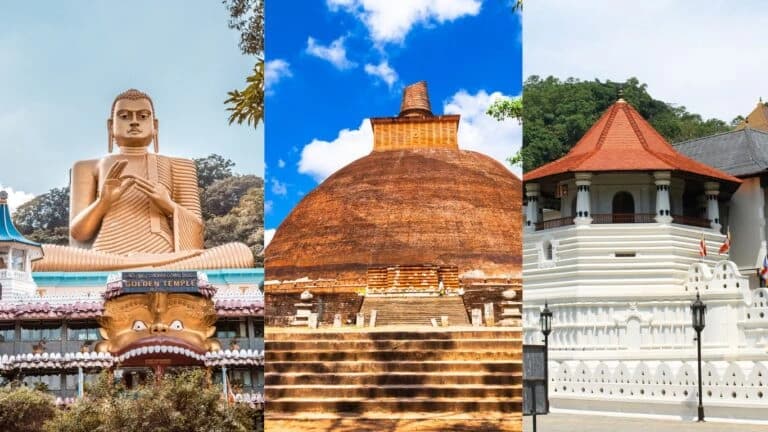
Every region of Sri Lanka holds stories carved in stone and painted in prayer. The Dambulla Cave Temples showcase over a hundred Buddha statues beneath rock ceilings adorned with ancient frescoes. The Temple of the Tooth Relic in Kandy stands as a center of Buddhist reverence, its daily rituals continuing an unbroken tradition of 1,600 years.
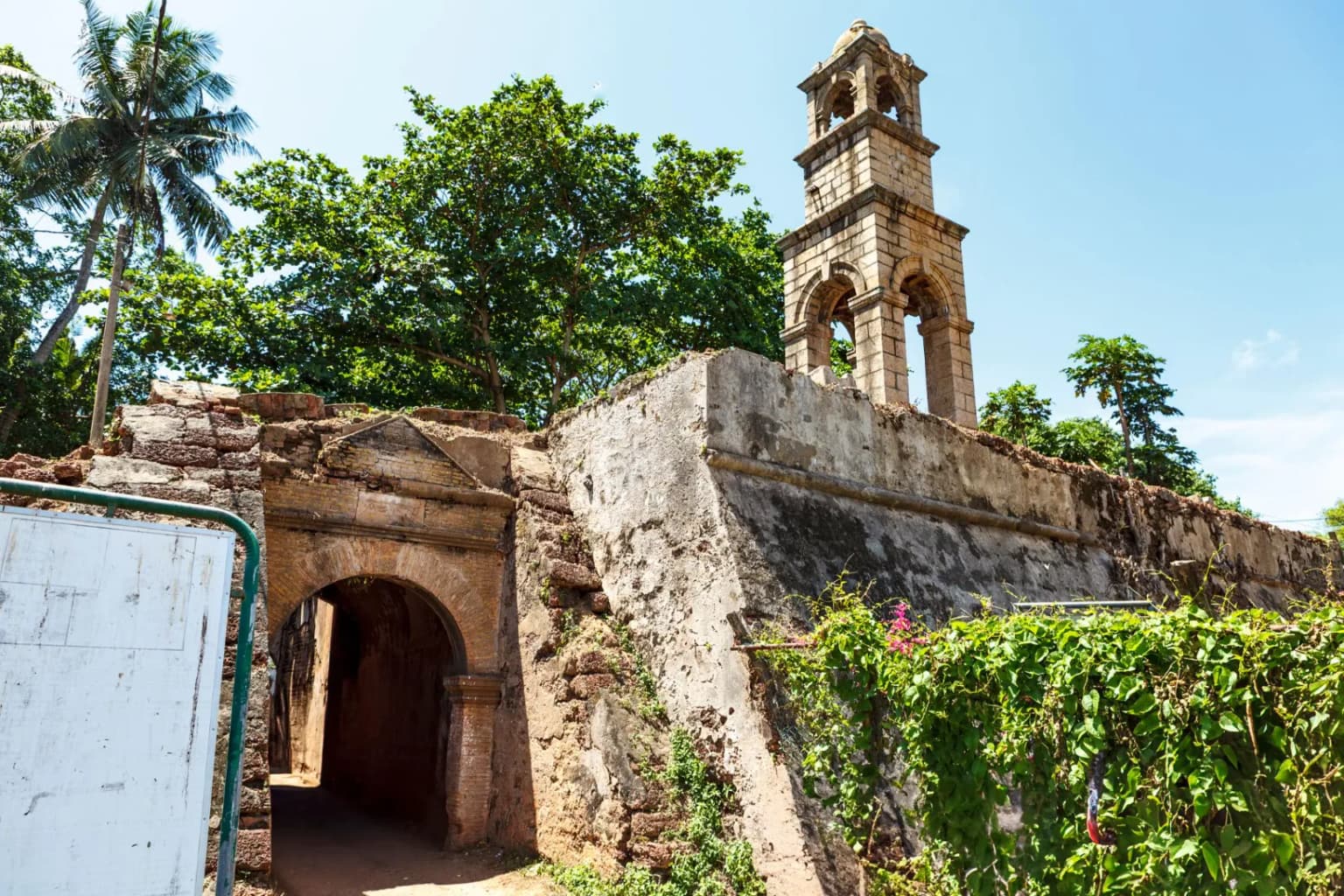
In Mannar, old Catholic churches still ring their bells to fishing villages at dawn. In Galle, the white walls of St. Mary’s Cathedral stand beside a mosque and kovil—living proof that faith here is plural yet peaceful. Every town tells a similar story: belief not as competition, but as coexistence.
How to Travel Respectfully
To truly absorb Sri Lanka’s sacred spirit, approach with mindfulness.
- Dress modestly. Shoulders and knees covered.
- Remove shoes when entering temples or shrines.
- Avoid photography during prayer or rituals unless invited.
- Speak softly—silence often carries the greatest reverence.
- Offer flowers or light a lamp if permitted, as a universal gesture of respect.
Religious travel here is not performance—it is participation. When you move slowly, listen deeply, and watch quietly, Sri Lanka opens its spiritual heart.
The Meaning You Carry Home
A religious experience in Sri Lanka is less about belief and more about belonging. It teaches that spirituality can be found in shared silence, in the act of walking together, and in the kindness of strangers offering you tea on a mountain path.
Whether it’s standing at dawn atop Adam’s Peak, sitting under the Bodhi Tree in Anuradhapura, joining a puja at Nallur, or meditating beside a still lake in the hills, each moment adds another layer to your understanding of faith—unspoken, simple, human.
When you leave, you take more than memories of temples and incense. You carry a quieter mind, a slower breath, and a sense that the sacred lives everywhere—if only you pause to see it.
Click on here “GIANTS IN PERIL: THE RISING CONFLICT BETWEEN ELEPHANTS AND HUMANS IN SRI LANKA”