When Five Cents Mattered: The Forgotten Small Change of Old Ceylon
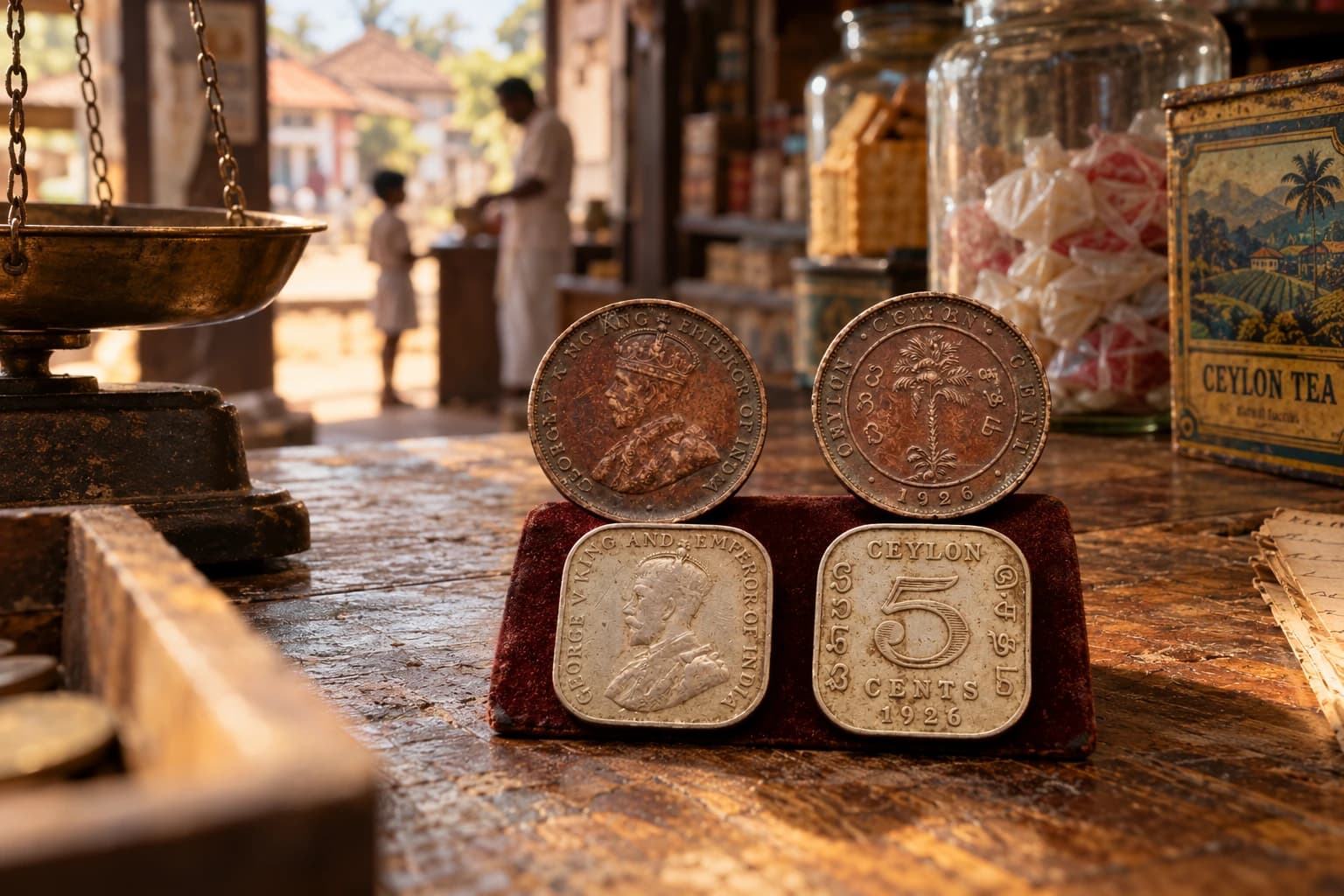
1926 Ceylon coins | In 1926, a copper cent and a little square five-cent coin passed through the hands of people across British Ceylon. A century later, these worn pieces of money tell a story of village shops, market mornings, modest wages and a time when even the smallest coins had a place in everyday life.
When a Few Cents Meant Something
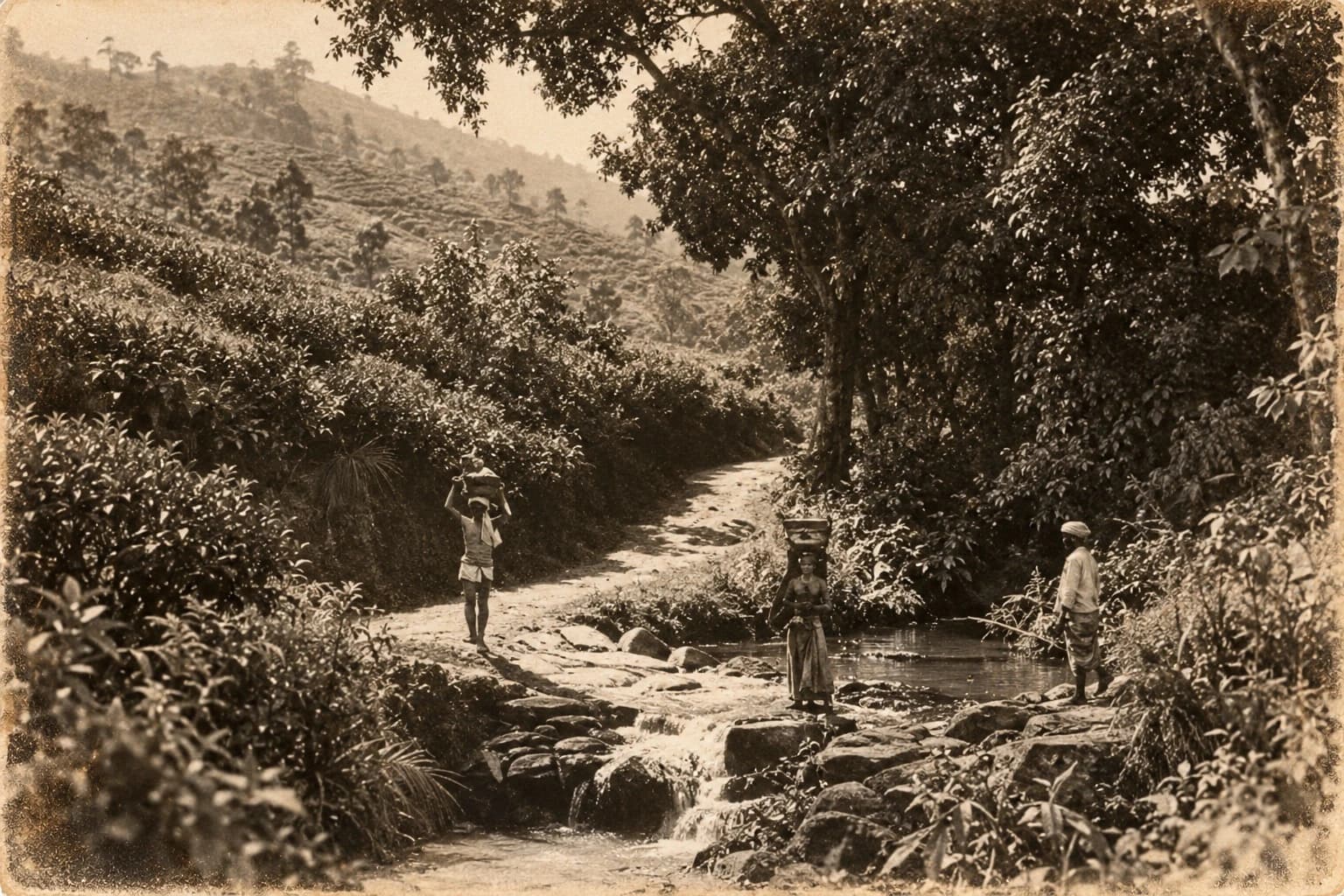
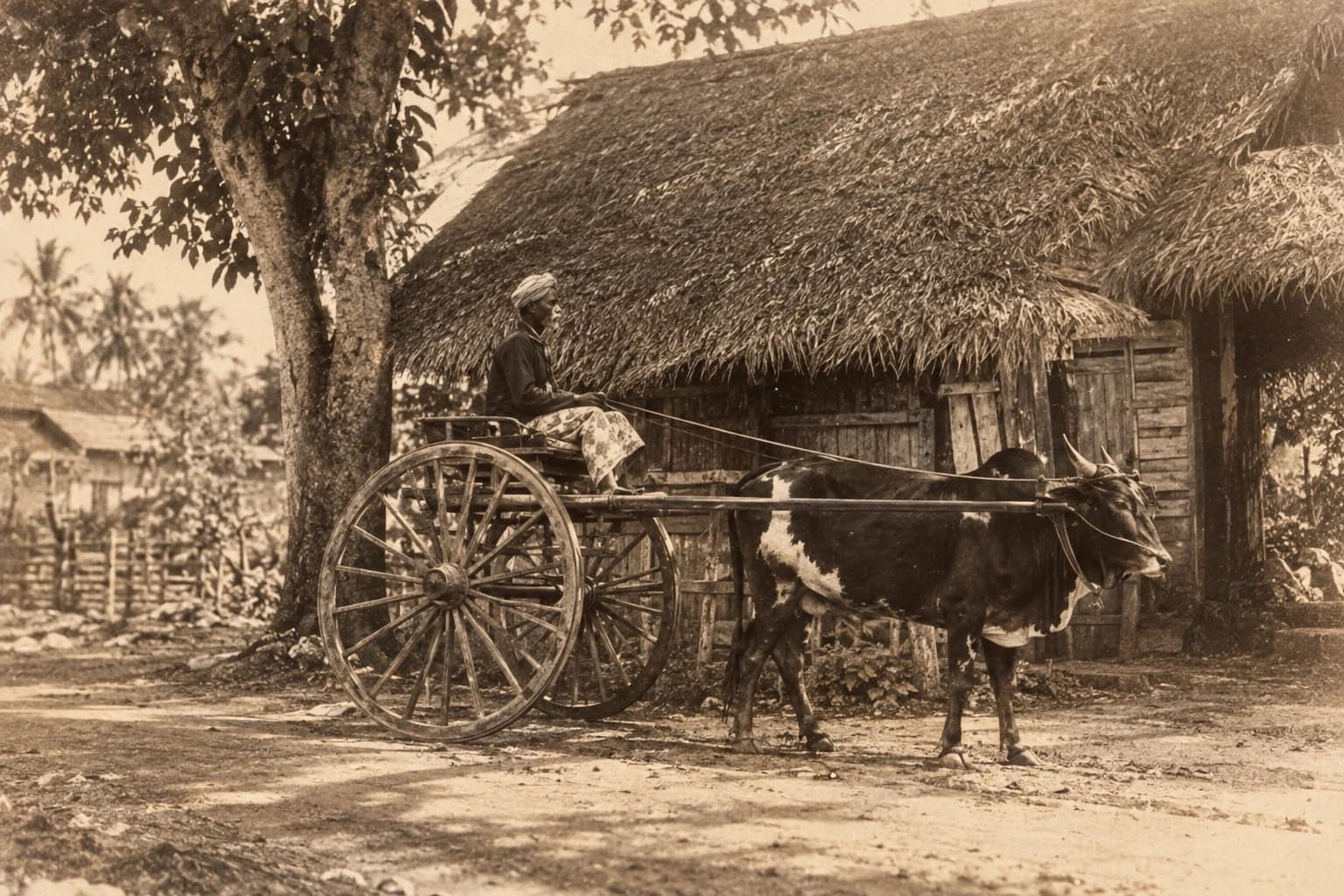
There was a time in Ceylon when the sound of a few coins falling onto a wooden shop counter meant something. A child sent to the village boutique with a small sum of money, a housewife counting out the change after buying provisions, or a labourer reaching into his pocket at the end of a working day would all have been familiar with the little copper and nickel coins of the British period.
Among them were the round one-cent piece and the distinctive square five-cent coin, both bearing the portrait of King George V. They were unremarkable objects in their own day, made to be handled, exchanged and eventually worn smooth. Nobody needed to preserve them for history. They were simply money, passing from one person to another through the ordinary business of daily life.
Today, however, a pair of coins dated 1926 provides a glimpse into a very different Ceylon. The rupee had considerably greater purchasing power, small transactions were an essential part of daily commerce, and the design of a coin reflected both the island’s identity and its place within the British Empire. What now looks like a modest collector’s item was once part of the money people depended upon.
A Little Copper Coin with a Ceylon Palm
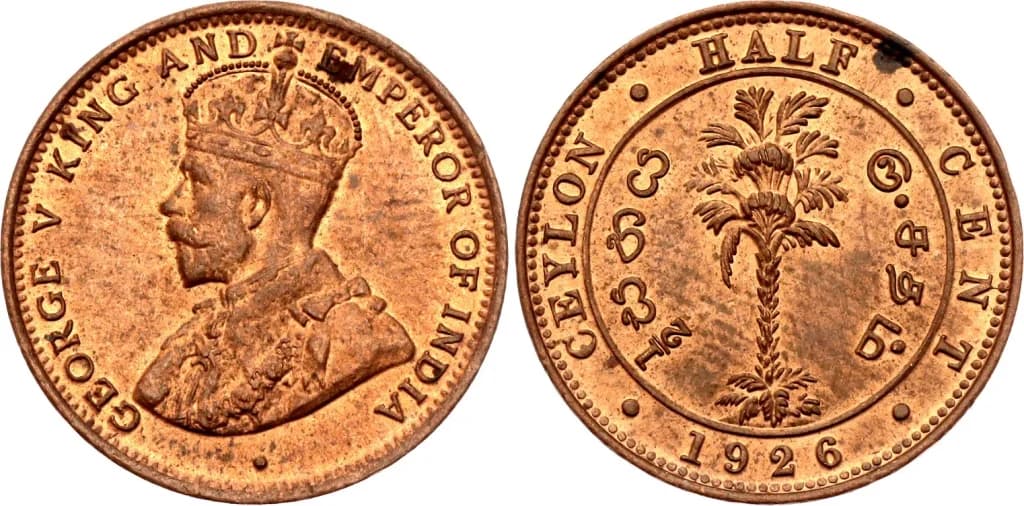
The one-cent coin of 1926 was made of copper. On one side appeared the crowned portrait of King George V, surrounded by his imperial title, identifying him as King and Emperor of India. On the other was a palm tree, framed by the name Ceylon, the denomination and inscriptions in Sinhala and Tamil.
The palm was not merely an ornamental flourish. It was identified in historical accounts of Ceylon’s coinage as the talipot palm, a tree associated with the island’s landscape and cultural history. It provided an unmistakably local symbol on a coin issued under a distant monarch. There was an interesting contrast between the two faces of the coin. One represented imperial authority, while the other acknowledged the country in which the money circulated.
The five-cent piece was different. Made of copper-nickel, it was square with gently rounded corners, a shape that made it instantly recognisable among ordinary round coins. Its reverse carried a large numeral five, the name Ceylon, and the denomination in English, Sinhala and Tamil. Both coins had something practical about them. Their designs were simple enough to read, their denominations easy to distinguish and their construction sturdy enough for years of handling.
Why Ceylon Had Square Coins
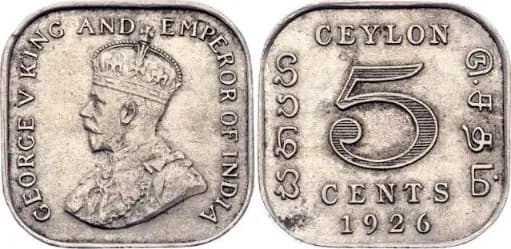
The unusual shape of the five-cent coin had an explanation rooted in colonial administration. In the early twentieth century, the Ceylon Government wanted to replace the older, cumbersome copper five-cent piece with a smaller copper-nickel coin. An initial proposal for a coin resembling the Indian anna met opposition from the Government of India, which did not want Ceylon issuing a similar coin.
The solution recommended by the Royal Mint was a square piece with rounded corners. It was a practical compromise that also gave the new coin a distinctive appearance. The copper-nickel five-cent coin became legal tender on 1 January 1910, and by 1926 its unusual shape was already an established feature of the island’s currency.
What generations of Ceylonese would remember simply as a square five-cent coin had therefore begun as a decision made between colonial administrations. Few people using the coins in village shops or town markets would have known anything about those discussions. To them, the unusual shape was merely a convenient way of recognising five cents.
What Could a Few Cents Buy in 1926?
Perhaps the most interesting question is not what these coins looked like, but what they were worth to the people who carried them. It is tempting to imagine that one cent could buy almost anything in those distant days. The truth was rather more complicated. Prices varied according to location, season, availability and the type of goods being purchased. Life was certainly cheaper in rupee terms, but incomes were also vastly smaller.
A historical account of food prices and wages in Ceylon, published in The Indian Medical Gazette in 1943, provides a useful comparison. Its figures for the period 1926–1930 suggest that an ordinary measure of rice cost about 27½ cents, while the daily wage figure quoted in the same table was approximately 52 cents. Wages varied between districts, and these figures should be understood as a historical comparison rather than a universal price or wage across Ceylon.
That places the little five-cent coin in perspective. It represented nearly a tenth of the daily wage in that comparison. A single cent, insignificant by modern standards, could still matter when a day’s earnings were counted in cents rather than hundreds or thousands of rupees. A household buying rice, dhal, dried fish and other provisions had to consider every expenditure carefully.
These were not necessarily days of comfortable abundance. Behind the appealing memory of inexpensive goods lay the realities of modest wages, difficult working conditions and households in which money had to stretch a long way. For a labouring family, the difference between a few cents saved and a few cents spent was not always trivial.
The Village Boutique and the Art of Giving Change
The old Ceylon village boutique occupied an important place in daily life. Long before supermarkets and electronic payments, it was the familiar shop where people stopped for provisions, conversation and news. A wooden counter, glass jars holding sweets, tins of biscuits and a shopkeeper reaching for a handful of change would have been familiar features of this world.
The round copper cents and square five-cent pieces were perfectly ordinary objects in such a setting. Children grew up understanding the value of small change, especially when sent to buy something for the household. Money could be counted slowly, one coin at a time, and the amount left over from an errand was worth checking before returning home.
In the towns, too, small coins served their purpose. From the streets of Colombo to the markets of Kandy, Galle and Jaffna, currency provided a common means of exchange across communities speaking different languages. The inscriptions on the coins reflected this diversity. English represented the colonial administration, while Sinhala and Tamil made the denominations recognisable in the languages of the island.
It was a small but revealing detail of British Ceylon. Even its humblest currency carried evidence of a multilingual society, where people from different communities used the same coins in their everyday transactions.
Before the Rupee and Cent Became Familiar
Ceylon had not always counted its money in rupees and cents. Earlier generations had known a confusing variety of coins and monetary units inherited from Portuguese and Dutch influence and later British rule. Among the names that survived in common usage were the panam, tuttu, salliya and patagaya. The Indian rupee eventually became the foundation of the island’s monetary system.
The modern decimal arrangement, dividing one rupee into 100 cents, came into operation on 1 January 1872. For ordinary transactions, it offered a simpler way to reckon prices and make payments. The new system also brought greater uniformity to everyday commercial life, replacing older calculations with denominations that could be understood across the island.
Yet old habits did not disappear overnight. Traditional names for money lingered, particularly in everyday speech. A 1939 account of Ceylon’s currency recorded several older expressions that continued to be associated with particular cent values long after the coins from which they originated had disappeared.
It was one of those small ways in which the past remained alive in ordinary conversation. A person might be using modern decimal currency while still speaking of money in terms inherited from earlier generations. The coins changed, but the old words could survive in the language of the marketplace and the home.
Coins That Travelled Further Than Their Owners
An interesting detail about the 1926 coins is that they were produced at a time when Ceylon’s coinage was again being supplied by the Royal Mint in London. Earlier arrangements had involved mints in British India, including Calcutta and Bombay. In 1926, production returned to the Royal Mint, partly because improvements in its facilities made it more competitive and efficient.
The coins were therefore part of a much larger imperial network. Minted overseas, they entered circulation in an island thousands of miles away, where they passed from one pair of hands to another through the routines of daily life. A coin produced in London might eventually find itself in a village boutique, a railway station, an estate settlement or a busy market in Ceylon.
The 1926 issues were not exceptionally rare. Recorded mintages include 3.75 million one-cent coins and 3 million five-cent coins. They were produced for circulation, not for preservation, and their value to ordinary people lay in what they could purchase rather than in their appearance or rarity.
But historical value is not always measured by rarity. A coin that has survived a hundred years may have passed through hundreds of hands. It might have been used by a shopkeeper, an estate worker, a railway passenger or a child buying something on the way home. There is no way of knowing its individual history, yet its very wear suggests the ordinary circulation for which it was intended.
When the King’s Portrait Disappeared
Ceylon gained independence in February 1948, but the transition in its currency was gradual. Coins bearing British monarchs did not vanish immediately, and older money continued to circulate alongside newer issues. Independence changed the country’s political position, but the familiar currency remained part of everyday life.
The Central Bank of Ceylon was established in 1950, assuming responsibility for the country’s monetary administration. In 1963, a new coin series was introduced using the emblem of Ceylon rather than the portrait of a British sovereign. The change marked another stage in the island’s journey from colonial rule to independent nationhood.
For those who had grown up handling the old coins, the newer designs must have seemed different, although money itself continued to serve the same familiar purpose. Coins were still needed for purchases, fares, wages and the small transactions of everyday life. The designs changed more quickly than the habits of the people using them.
Over time, inflation changed the meaning of small denominations. The one-cent and five-cent values that had once been useful in everyday trade gradually lost their practical significance. Coins that had moved freely through markets and village boutiques found their way into old tins, drawers, inherited collections and occasionally the hands of people who remembered using them.
The Small Change We No Longer Remember
There is something particularly evocative about old coins because they were never intended to be treasured. Unlike a family photograph or an important letter, a coin was made to pass from one stranger to another. It was handled by people who had no connection beyond a purchase, a payment or a small amount of change.
The 1926 one-cent piece and square five-cent coin have now completed a century of existence. Their worn surfaces carry no names, and their dates tell us nothing about the people who once owned them. Yet they remind us of a Ceylon in which the smallest denominations had meaning, where a few cents could form a noticeable part of a day’s earnings and where the ordinary act of paying for provisions involved coins that have now almost disappeared from memory.
Perhaps that is why an old coin can sometimes evoke the past more effectively than a grand colonial building. Buildings remind us of the people who governed and prospered, while small coins remind us of the ordinary commerce of everyone else. Somewhere in the history of that little square five-cent piece is an ordinary day in Old Ceylon, when someone placed it on a wooden counter, received their purchase and walked away without giving the coin another thought.
They could hardly have imagined that, a hundred years later, we would be looking at it and remembering their world.
Visit us: https://trippingsrilanka.com/