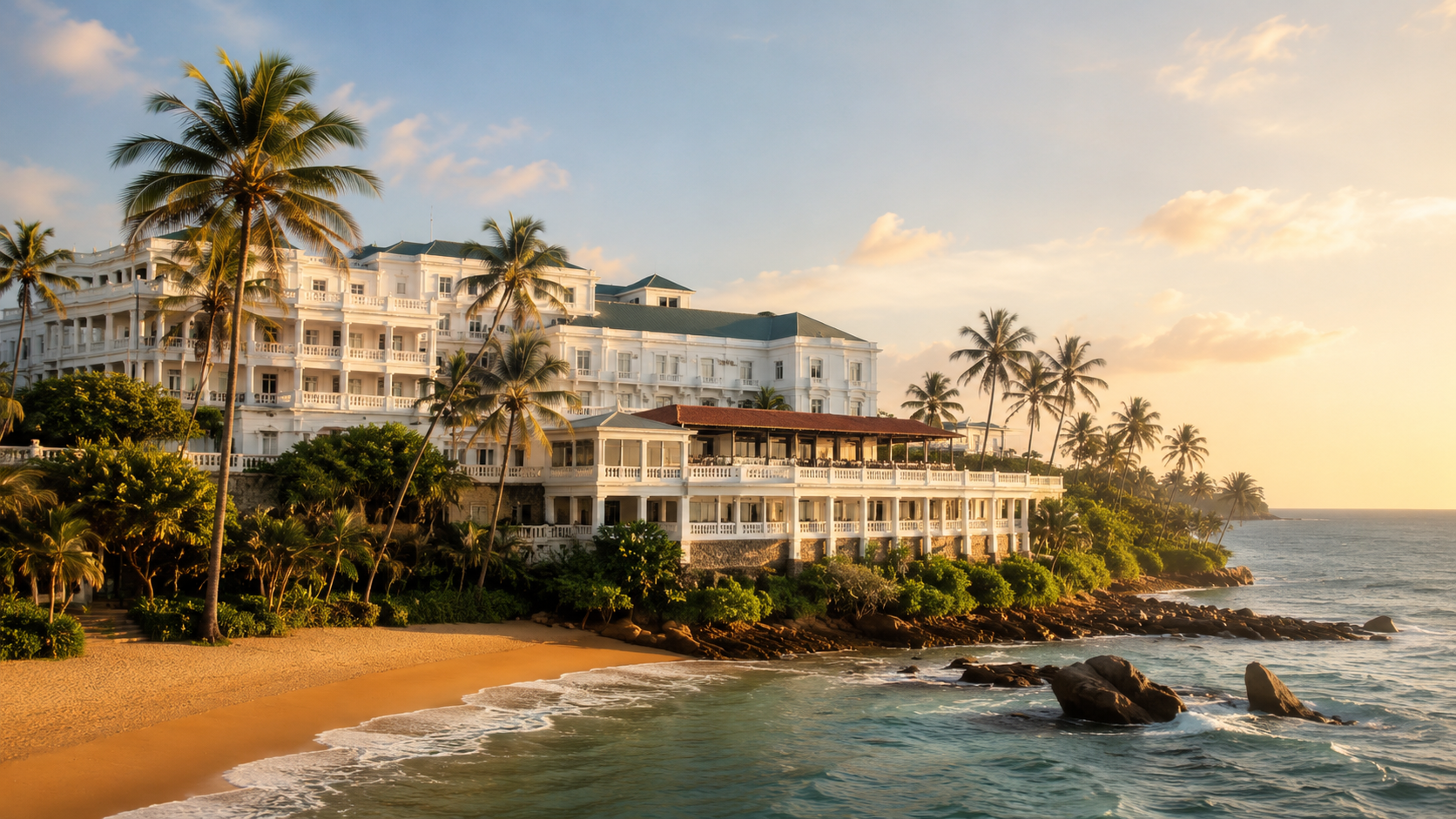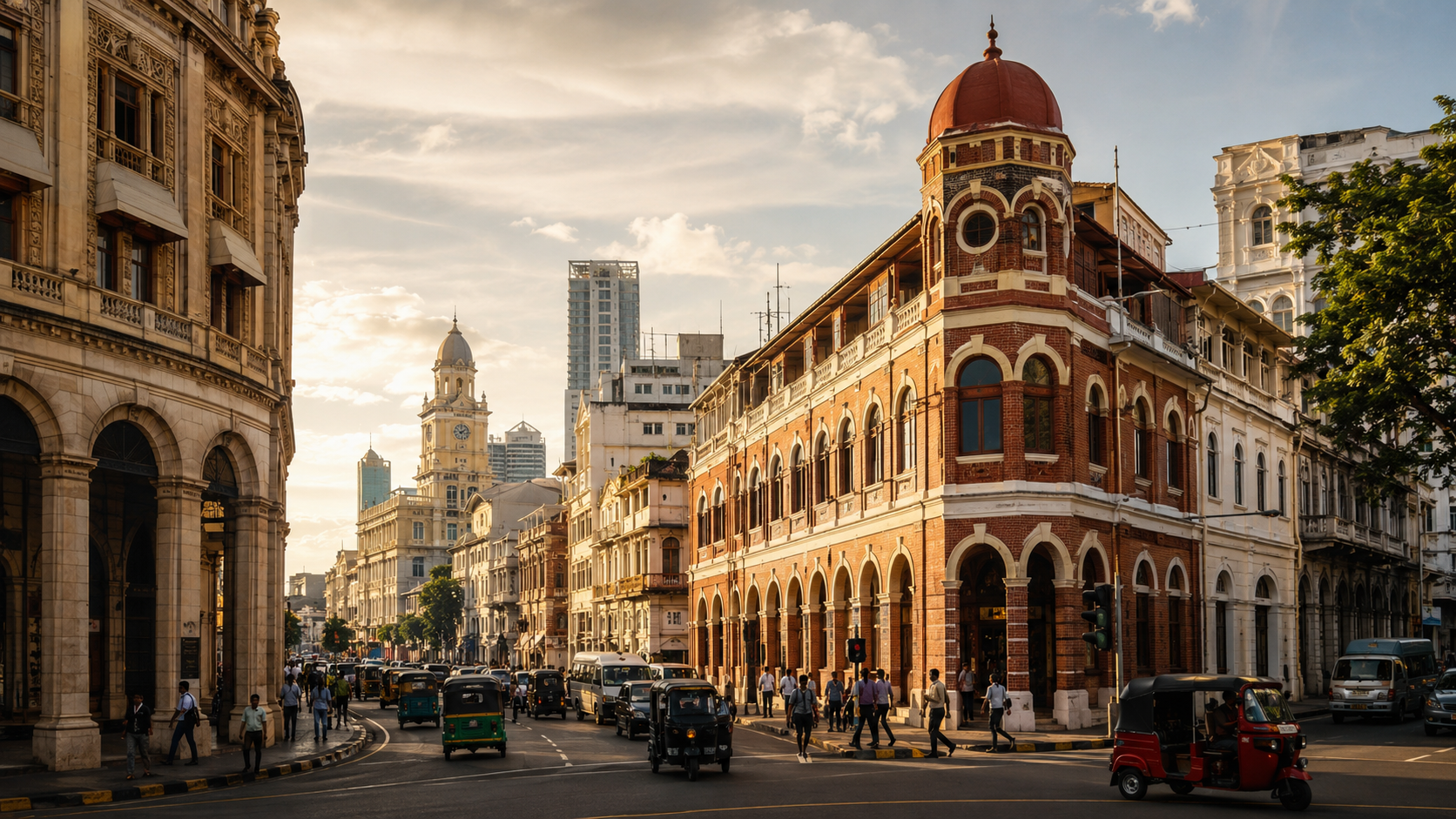
Dutch Forts of Sri Lanka – Tracing the Island’s Colonial Heritage | Sri Lanka’s coastline hides a network of stone guardians — forts built centuries ago by European powers who fought for control of trade and sea routes. Among them, the Dutch left the most enduring mark. From Galle to Jaffna, Kalpitiya to Batticaloa, their bastions still watch over the island’s bays, lagoons, and harbors. Each Dutch fort tells a story of maritime ambition, architecture adapted to the tropics, and the blend of European and Sri Lankan craftsmanship that defines the country’s colonial landscape today.
The Dutch arrival and fort legacy
After the Portuguese arrived in 1505, they built a chain of coastal fortifications to secure trade in spices, gems, and elephants. The Dutch East India Company (VOC) entered Sri Lanka in the early 1600s, at first as allies of the Kandyan Kingdom, but soon as rulers of most coastal areas. Between 1640 and 1796, the Dutch took over or rebuilt the Portuguese forts, adding their geometric bastions, wide ramparts, and star-shaped plans.
Their goal was not only defense but trade control — cinnamon, pearls, and cinnamon oil made Ceylon one of the VOC’s richest territories. To manage these routes efficiently, the Dutch fortified every strategic harbor, from Jaffna in the north to Matara in the south, ensuring that no rival fleet could land unchallenged.
Architectural identity
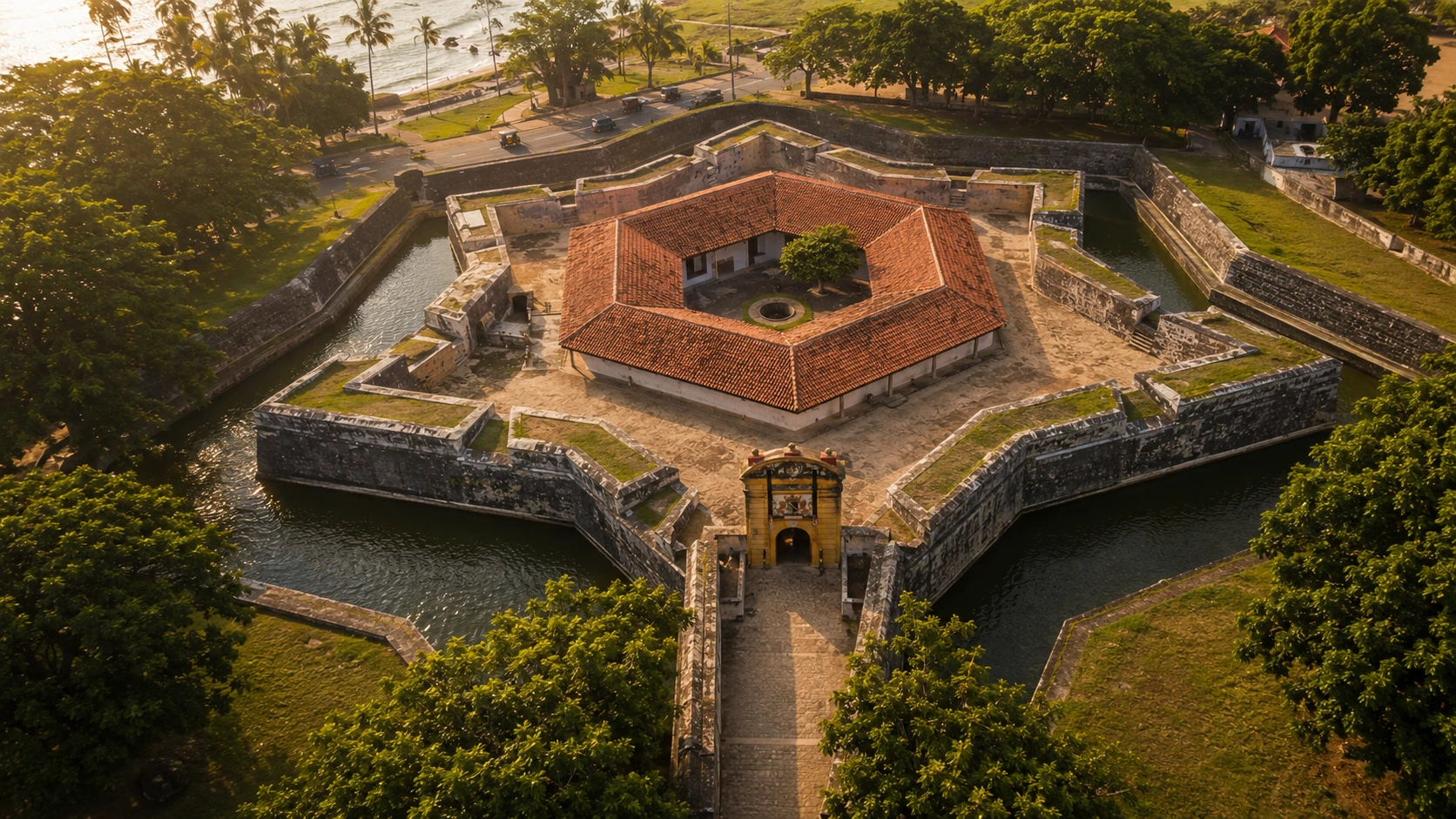
Dutch fort design followed strict principles of European military engineering. They replaced medieval round towers with angular bastions that could resist cannon fire and offer overlapping fields of defense. Thick coral-stone walls absorbed shock; wide moats and curtain walls surrounded central squares, churches, and warehouses.
Inside the ramparts, a small town would rise — orderly streets, governor’s residence, a church, and dwellings for officers and traders. The tropical climate forced adaptation: high roofs, lime plaster, wide verandas, and ventilation grilles. Over time, the rigid Dutch geometry softened with Sri Lankan materials and craftsmanship, creating the island’s signature colonial look.
Click on here “DISCOVER CEYLON: A JOURNEY THROUGH SRI LANKA’S COLONIAL HERITAGE”
Major Dutch Forts in Sri Lanka
1. Galle Fort (Southern Province)
The most complete Dutch fort in Asia and a UNESCO World Heritage Site. Built over Portuguese foundations in 1640, it became the administrative capital of the VOC in Ceylon. Within its 36-hectare ramparts lie narrow lanes, churches, the famous lighthouse, and a living community of homes, shops, and schools. Galle Fort remains a thriving town — a rare mix of history and daily life.
2. Jaffna Fort (Northern Province)
Constructed in 1618 by the Portuguese and expanded by the Dutch, Jaffna Fort commands the northern coastline. Its star-shaped plan and wide moat reflect pure Dutch military architecture. Although damaged during civil conflict, restoration continues, and the fort now serves as a cultural and tourist landmark overlooking the lagoon.
3. Batticaloa Fort (Eastern Province)
Built by the Portuguese in 1628 and captured by the Dutch in 1638, Batticaloa Fort stands by a calm lagoon connected to the sea. Four bastions guard its corners, and colonial buildings survive within the compact enclosure. The fort’s scenic waterside location and nearby Kallady Bridge make it one of the east coast’s most photogenic sites.
4. Trincomalee’s Fort Fredrick
Originally Portuguese, renamed by the Dutch, Fort Fredrick rises on Swami Rock beside the deep natural harbor of Trincomalee. Its thick ramparts frame views of the ocean and the famed Koneswaram Temple. Still partially used by the military, the fort’s lanes and deer-filled slopes recall centuries of maritime contest.
5. Kalpitiya Fort (North-Western Province)
Built in 1667 on a peninsula facing the Puttalam Lagoon, this fort guarded Dutch pearl-diving fleets and trade routes to India. The square design with four bastions is compact but strong. It later served as a garrison and today stands amid the tranquil setting of fishing villages and dolphin-filled waters.
6. Matara and Star Forts (Southern Province)
Matara’s twin forts show both Dutch engineering and adaptation to local rebellion. The main fort sits by the Nilwala River, while the smaller Star Fort, built in 1765, has six bastions forming a true star shape — a rare example of 18th-century military geometry in Sri Lanka.
7. Mannar Fort (Northern Province)
Overlooking the causeway to the mainland, Mannar Fort was built in 1560 by the Portuguese and strengthened by the Dutch. Coral stone walls and arched gates remain, with the island’s windy desolation adding to its atmosphere. It once protected the pearl fisheries of the Gulf of Mannar.
8. Tangalle Fort (Southern Province)
A small, rectangular fort built to house Dutch officials and soldiers guarding the southern coast. Today it functions as a prison, yet the outer ramparts and sea views still evoke its colonial origins.
9. Katuwana Fort (Hambantota District)
Unusual for its inland setting, Katuwana Fort (built 1645) defended Dutch interests against Kandyan forces. The compact hilltop structure has two bastions and offers panoramic views of the dry-zone plains.
10. Negombo Fort (Western Province)
Negombo’s fort protected the cinnamon trade north of Colombo. Though mostly destroyed by the British, remnants of its ramparts and gate remain beside the lagoon, near the old Dutch canal that once carried goods to Colombo.
11. Colombo Fort
The capital’s original Dutch fort no longer stands; modern office blocks and the Port City now occupy its site. Yet the area’s street names — Chatham Street, Janadhipathi Mawatha — trace the outline of the vanished stronghold that once dominated colonial Colombo.
Other notable Dutch-era forts
Smaller outposts dotted the island: Arippu and Pooneryn near Mannar; Kayts and Fort Hammenhiel guarding Jaffna’s lagoon; Elephant Pass controlling access to the peninsula; Hanwella and Ruwanwella securing the Kelani River routes; Kalutara and Ratnapura defending the gem country; and Malwana, Menikkadawara, and Arandora forming inland watchpoints. Many survive as ruins or earth mounds, their coral walls reclaimed by vegetation, but they complete the chain that once ringed the island.
Living heritage and restoration
What makes these forts remarkable is endurance. For over 350 years they have faced monsoons, wars, and modernization. Restoration projects by the Department of Archaeology, UNESCO, and local councils aim to conserve them as living spaces rather than frozen relics. Galle Fort’s adaptive reuse — homes, schools, hotels, and museums — shows how colonial architecture can sustain contemporary life without losing identity. Jaffna and Mannar restorations are reconnecting the north’s heritage to tourism and education after decades of conflict.
The human dimension
Behind the stone walls lies a social story. These forts were once centers of trade and law, where Sri Lankan clerks, masons, and soldiers worked alongside Dutch officers. Churches hosted mixed congregations; markets sold cinnamon and coir; schools taught in both Dutch and Sinhala. The architecture reflects this blending — European in outline, Asian in spirit. Even today, many coastal communities trace surnames, customs, and words to this era of exchange.
Visiting the Dutch forts today
Travelers can explore a loop covering the major surviving forts:
- Southern Route: Colombo → Kalutara → Galle → Matara → Tangalle → Katuwana
- Northern Route: Puttalam → Kalpitiya → Mannar → Jaffna → Delft Island → Elephant Pass
- Eastern Route: Trincomalee → Batticaloa → Arugam Bay
Each region offers different moods: Galle’s elegance, Kalpitiya’s solitude, Jaffna’s resilience, Trincomalee’s blue harbor. Entry is mostly free; some forts serve as museums or administrative offices. Early morning or sunset hours reveal the best light for photography. Always respect local residents and restricted areas, especially where forts remain under military use.
Why they matter
Dutch forts are more than remnants of colonial conquest. They map Sri Lanka’s role in a global maritime network that connected Asia, Africa, and Europe long before modern globalization. They show how engineering traveled and evolved under new skies. And they remind us that history is not static — these same walls now host schools, families, and tourists who give them new purpose.
In every bastion that faces the sea, you can sense centuries of arrivals and departures — soldiers, traders, monks, and fishermen — all leaving traces on the island’s memory. Visiting them is not only to see ruins but to walk through layers of exchange, adaptation, and resilience that shaped Sri Lanka’s identity.
Click on here “COLONIAL POST OFFICES IN SRI LANKA: LITTLE RED PILLARS OF HISTORY”