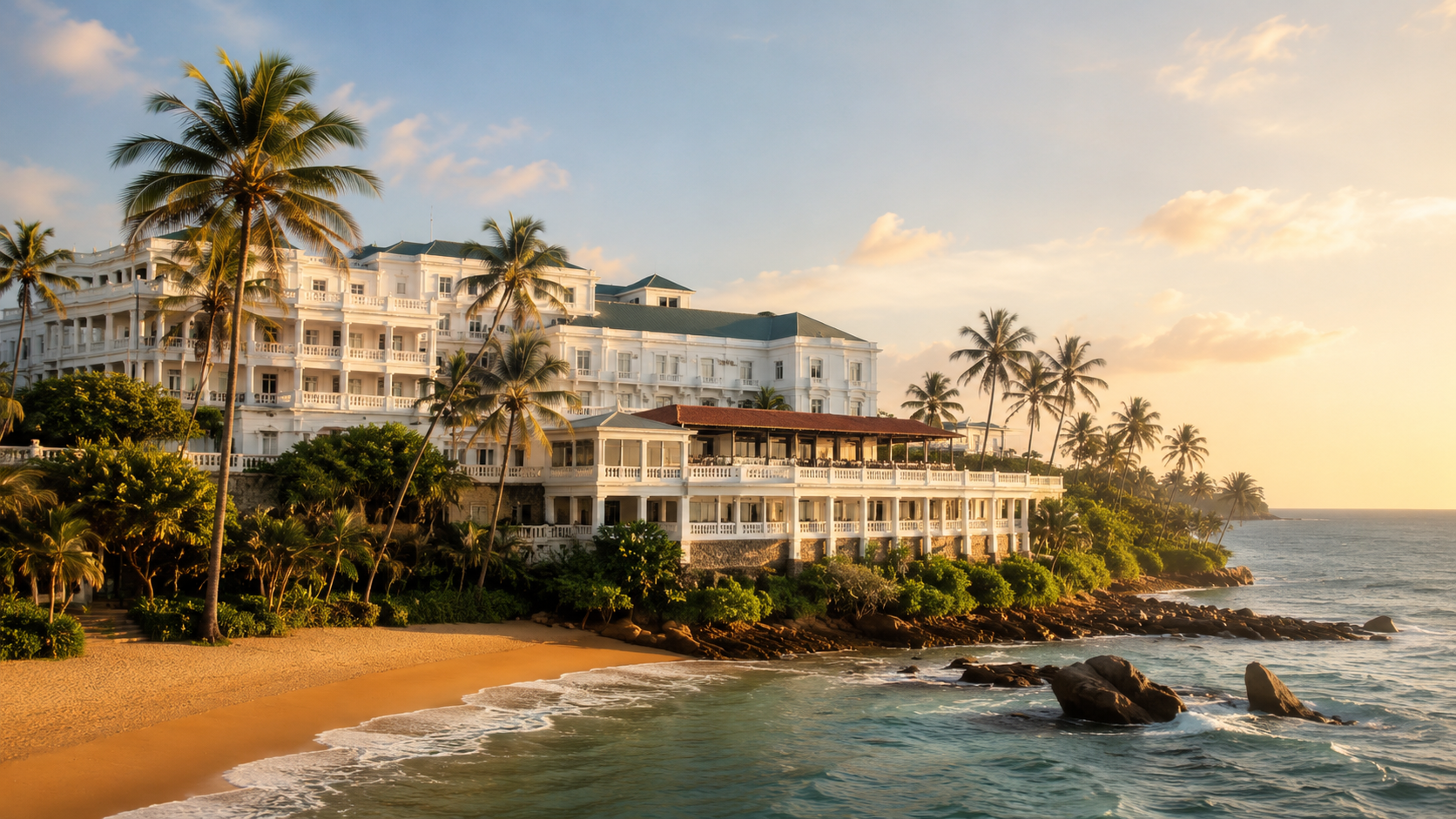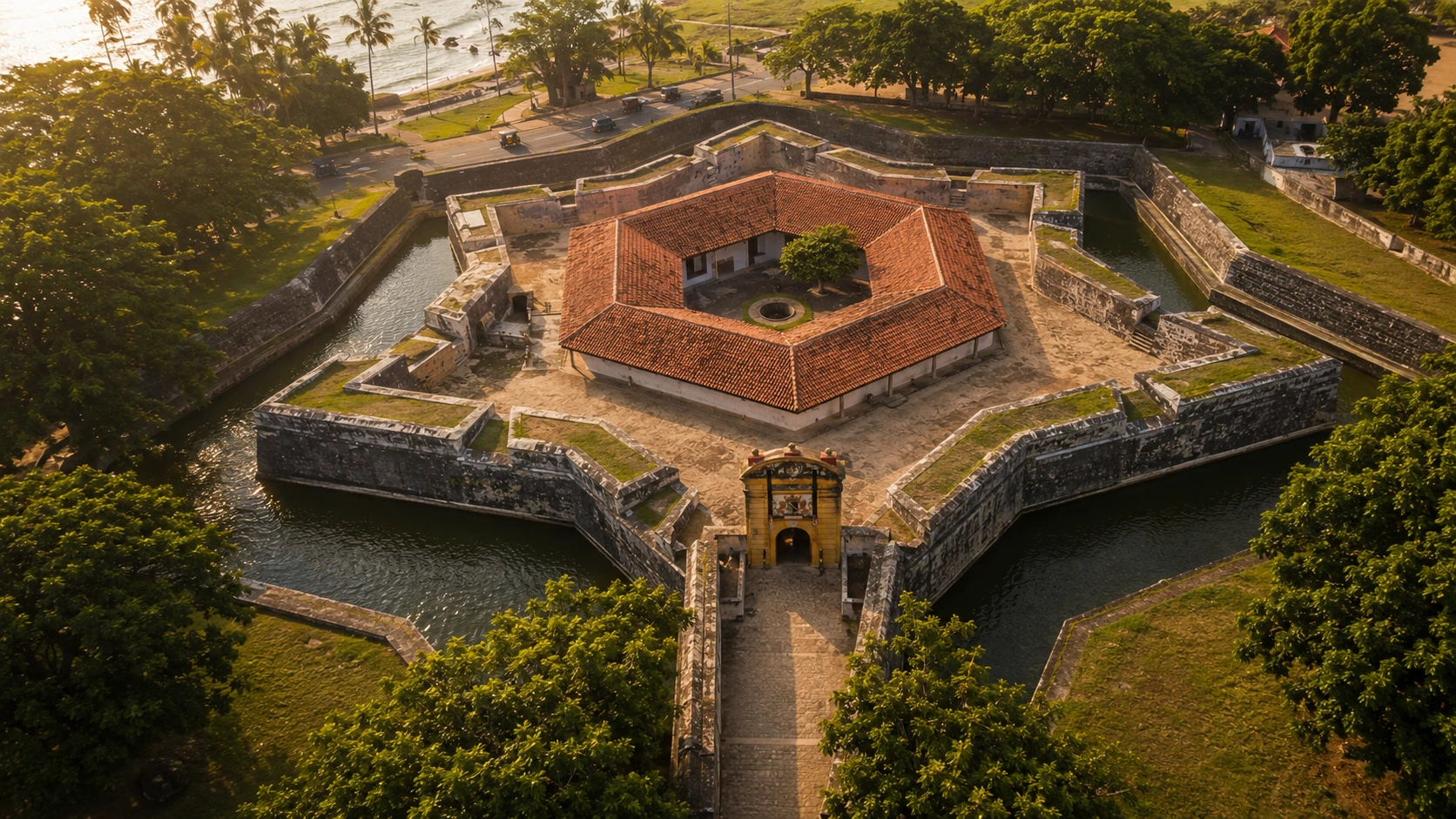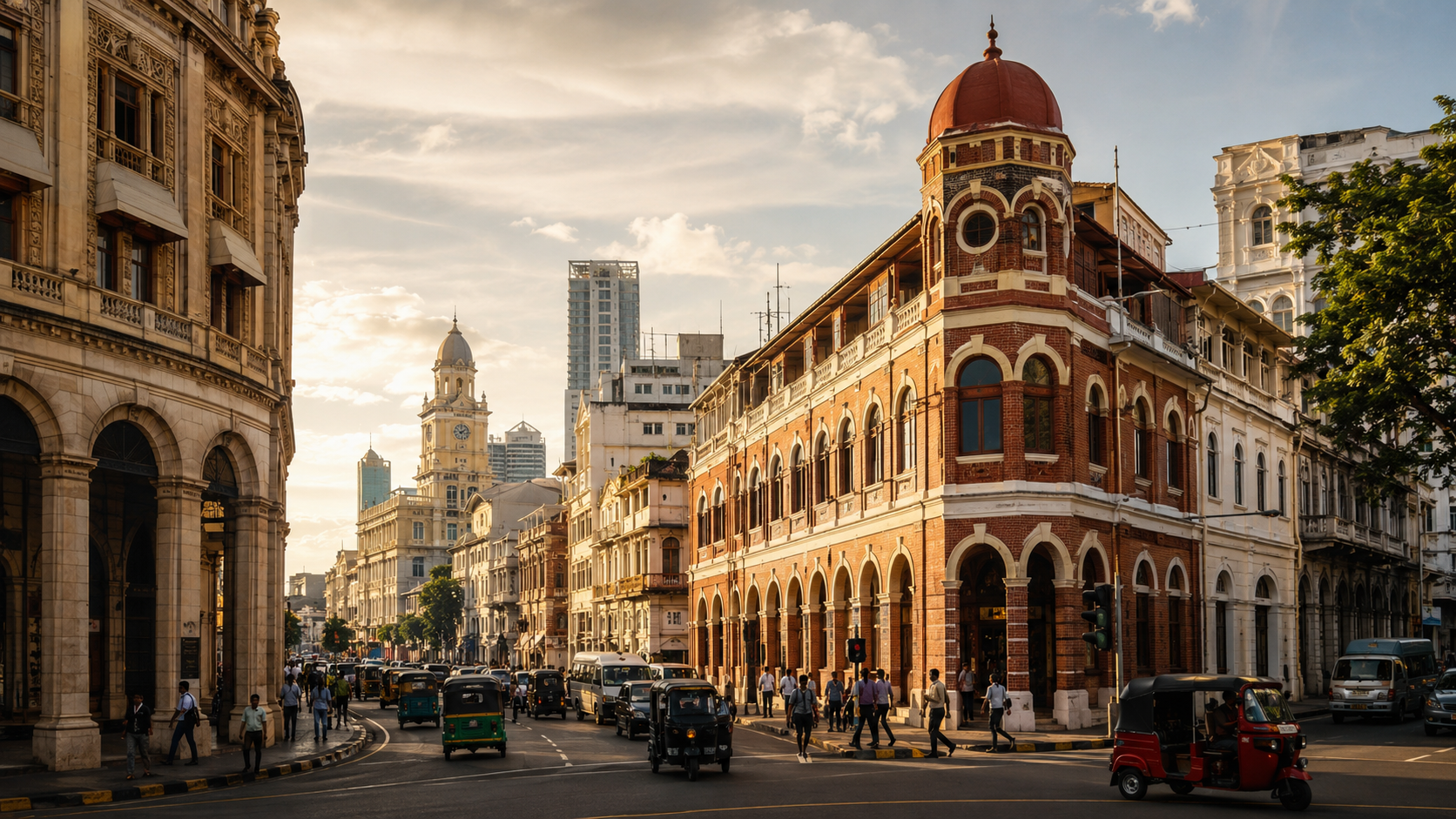
Colombo Fort is not a fortress anymore. The cannons are silent, the ramparts long gone, and the sea breeze now threads through offices, banks, and cafés. Yet a walk across these few compact streets still feels like stepping into the filing cabinet of Ceylon’s past. Here, decisions that shaped an island moved on paper and ink; tea and rubber prices echoed across telegram rooms; ships signalled at the Old Lighthouse Clock Tower while clerks in linen hurried beneath. If you want to touch the operational heart of Old Ceylon, Fort is the map.
A quick orientation
“Fort” once meant the fortified administrative core first reinforced by the Portuguese, reshaped by the Dutch, and rationalised by the British. Today it sits between the Indian Ocean and the bazaar energy of Pettah. The district is walkable and layered. You will meet Edwardian façades, Dutch-era remnants, Anglican spires, and Art Deco curves, all compressed into a grid that still runs on business time from Monday to Friday, and on the city’s slower pulse on weekends.
Best way to see it: on foot, morning or late afternoon. The light is kinder, traffic thinner, and the stone glows.
Begin at the Old Lighthouse Clock Tower
The Old Lighthouse Clock Tower marks a clean starting point. In the 19th century, this served ships as a lighthouse and the city as a clock. Stand here and face the sea. Imagine lanterns guiding steamers in, cargos of tea chests stacked below deck, and letters bound for London’s commodity houses. Turn inland and the buildings around you read like chapters—post office red brick, sandstone banks, and colonnaded verandahs that once shaded planters and brokers.
The avenues of power
Walk down Chatham Street, York Street, and Baillie Street. These names belong to the British chapter, but many structures sit on Dutch foundations. Look up for neoclassical features—pediments, pilasters, dentil cornices—and down for rounded granite curbs and old manhole covers stamped with crests. Fort is an open-air archive if you read its edges.
Notable landmarks along a short loop:
- Old General Post Office: grand frontage, Corinthian columns, postage lion crests.
- Cargills & Millers Building: a deep red façade that photographs beautifully; once a department store where Ceylon’s middle class tried on modern life.
- Central Point (restored): circular grace with a soaring atrium; a fine lesson in adaptive reuse.
- Grand Oriental Hotel (GOH): ship-spotter’s balcony bar facing the harbour; echoes of officers’ toasts and farewell dinners.
Dutch Hospital: commerce with a conscience of stone
The 17th-century Dutch Hospital complex is Fort’s most successful restoration. Thick walls, clay tiles, and long verandahs now frame a courtyard of cafés and boutiques. Order tea here. The place makes time slow. The geometry is simple and calming, proof that tropical architecture learned to breathe long before air-conditioning.
Tip: Visit late afternoon on a weekday. You get the mellow light and room to wander the colonnades.
Where Fort meets Pettah: the edge of exchange
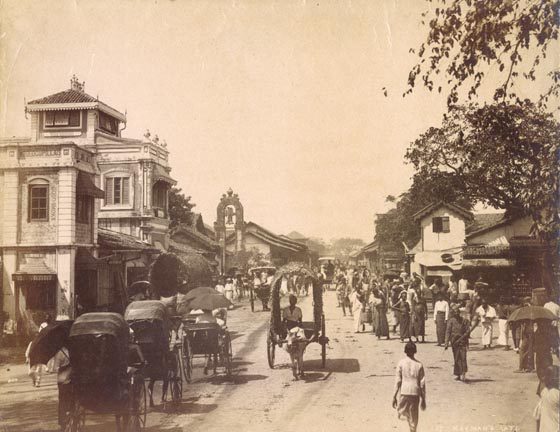
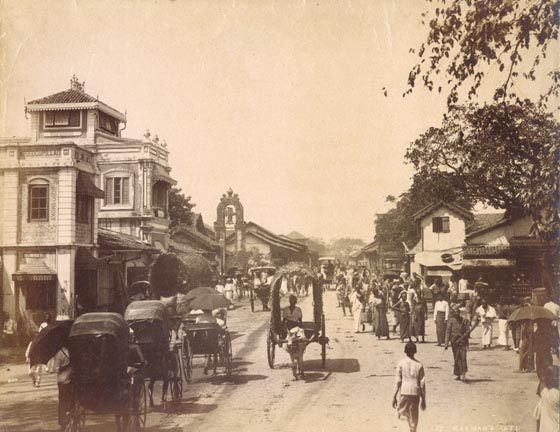
At the Khan Clock Tower the city tilts from boardroom to bazaar. This is the soft border of Fort and Pettah, where ledgers once met loud bargaining. If you have energy, angle into Main Street for a sensory jolt—spices, sarees, phone parts, and voices threading through lanes like wire. Then step back into Fort’s calmer grid and you will feel how clearly the old city separated money, goods, and rule.
Churches, clubs, and civic calm
Fort’s power needed rituals and rooms. St. Peter’s Church holds a pared-back Anglican elegance within coral-stone walls. Nearby, the colonial clubs once filtered who could dine and dance; today the façades survive while the city writes new rules. The Old Parliament building sits across the Galle Face edge of Fort, a restrained neoclassical block facing the sea—the state’s face to the ocean.
Read the stone, hear the sea
The trick to Fort is to move slow. Study door fanlights carved like lace. Trace cast-iron downpipes stamped with dates. Let the rhythm of arcades set your pace. Between buildings the sea sends a salt note. Fort worked to the timetable of ships for centuries; your footfall should mirror that metronome.
A short self-guided walking route (90–120 minutes)
- Start: Old Lighthouse Clock Tower.
- Stroll Chatham Street → York Street. Pause at the Old GPO and Cargills.
- Turn to Central Point and the surrounding bank buildings.
- Break at Dutch Hospital for tea.
- Continue to GOH for harbour views.
- Walk to the Khan Clock Tower to sense Pettah’s threshold.
- Loop back via Baillie Street and end at St. Peter’s Church.
This loop keeps gradients gentle, offers shade under long verandahs, and crosses reliable public spaces for short rests.
Practical details
When to go: November to March gives drier skies and softer sea light. Mornings year-round are workable; late afternoons offer colour.
Dress: Light cotton or linen. Covered shoulders and knees if you plan to enter churches.
Heat planning: Carry water. Use verandahs as waypoints. Step into Dutch Hospital to cool down.
Safety: Fort is busy in office hours and quieter on weekends. Normal urban awareness is sufficient. Avoid photographing security checkpoints.
Photography notes
- Golden hour on York Street is flattering to façades.
- The red Cargills building pairs well with neutral clothing for human-scale shots.
- From GOH’s balcony, frame cranes and harbour with a foreground balustrade for depth.
- Details matter: brass nameplates, timber shutters, tile patterns.
Ethical travel in a working district
Fort is not a museum. People still work here. Give way on narrow pavements, avoid blocking doorways for photos, and buy a drink or a snack where you linger. Respect signage in government buildings. If a guard says no photographs, it is no photographs.
Extend your day
- Galle Face Green: sunset on the lawn, kites and isso wade.
- Colombo National Museum: to place Fort within a longer civilisational arc.
- Old Town Hall & Pettah Museum: for industrial-era curiosities and market history.
- Sambodhi Chaithya (Marine Drive side): a raised temple with views back toward the port, if you are comfortable with stairs.
Why Fort still matters
Other Sri Lankan towns carry older stones, but Fort concentrates the operating system of Ceylon into a few walkable blocks. This is where an island faced outwards, processed its fortunes, and learned the habits of modern administration. The walls came down, the files went digital, the ships got bigger. Yet Fort remains the city’s handshake with the sea. Walk it slowly and you can still feel the ledger, the tide, and the turning of a clock that once doubled as a lighthouse.