The Uva Rebellion, also known as the Great Rebellion of 1817–1818, remains one of the most powerful chapters in Sri Lanka’s colonial history. It was not a small local disturbance, nor a simple protest against British rule. It was an organised and emotionally charged resistance that rose from the Kandyan highlands, especially the Uva and Wellassa regions, only a few years after the British took control of the Kandyan Kingdom in 1815.
To understand the Uva Rebellion, we have to look beyond dates and battles. It was born out of broken promises, political humiliation, cultural disruption, economic hardship, and the anger of a people who saw their ancient kingdom being reshaped under foreign authority. For anyone interested in Old Ceylon, this rebellion reveals a Sri Lanka that was never passive under empire. It resisted, suffered, remembered, and carried forward the spirit of independence long before 1948.
The World Before the Rebellion
In 1815, the Kandyan Kingdom came under British control through the Kandyan Convention. The British presented themselves not as conquerors, but as protectors of the people, Buddhism, customs, and traditional authority.
At first, some Kandyan chiefs may have believed this arrangement would preserve the old order while removing an unpopular king, Sri Wickrama Rajasinghe. But that expectation did not last long.
The British soon began interfering with traditional systems of governance. Their administrative changes, revenue demands, and political appointments disrupted the relationship between village society, Buddhist institutions, and Kandyan chiefs. What had been promised as protection began to feel like occupation.
The Kandyan people had lost a king, but they had not accepted the destruction of their way of life.
Why Uva Became the Centre of Resistance
The rebellion began in the Uva-Wellassa region, a fertile and strategically important part of the Kandyan highlands. Wellassa was known for its agricultural richness, often associated with abundance and paddy cultivation.
This was not just a remote frontier. It was a region with deep cultural roots, strong local loyalties, and close ties to land, temples, irrigation, chiefs, and inherited systems of authority. When British rule began to disturb these patterns, resentment grew quickly.
The anger in Uva was not only political. It was personal. People saw their lands threatened, their leaders undermined, and their traditions treated as obstacles to colonial administration. British-backed local appointments also created suspicion, as many viewed them as insults to Kandyan authority.
Uva became the natural ground for resistance: proud, rural, difficult to control, and deeply attached to the old Kandyan order.
The Spark That Lit the Fire
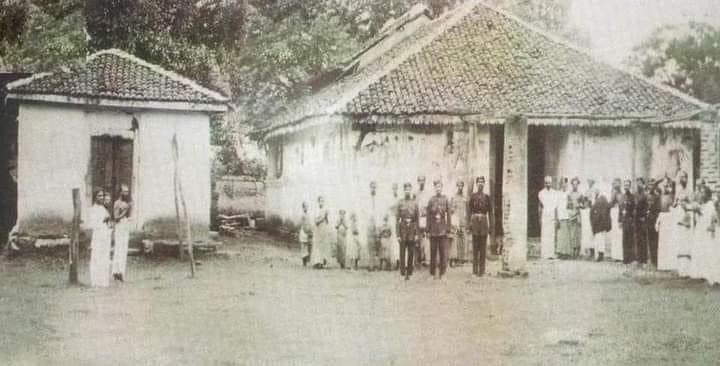
One of the most remembered figures of the rebellion was Keppetipola Disawe. He was initially sent by the British to suppress the uprising. But instead of crushing the rebels, he joined them.
This decision transformed him into one of the great heroic figures of Sri Lankan resistance. His defection gave the rebellion legitimacy, leadership, and symbolic strength. When a high-ranking Kandyan chief crossed over to the rebels, the uprising became more than local unrest. It became a serious challenge to British authority in the former Kandyan territories.
Other leaders and regional chiefs also supported the resistance, and the rebellion spread across parts of the Kandyan provinces.
A Fight for the Lost Kingdom
The Uva Rebellion was, in many ways, an attempt to restore the sovereignty of the Kandyan Kingdom. It was not merely about taxes or individual grievances. It carried the deeper ambition of removing British rule from the Kandyan interior.
In Kandyan political culture, kingship was not only political. It was also religious and symbolic. The king was linked to the protection of Buddhism and the island’s moral order. Without a king, and with foreign authority interfering in local life, many people felt that the natural order had been broken.
This made the rebellion especially dangerous to the British. A movement with leadership, territorial support, and royal symbolism had the potential to unite scattered resistance into a larger war.
The Role of the Kandyan Chiefs
The role of the Kandyan chiefs was complex. Some had helped the British remove the last king in 1815. Some remained loyal to the British. Others joined the rebellion when they realised that colonial rule threatened their authority and the Kandyan social structure.
This complexity matters because the rebellion was not a simple story of people versus foreigner. It was also a story of calculation, betrayal, loyalty, survival, and changing political realities.
For ordinary villagers, the decisions of chiefs carried great weight. Kandyan society was shaped by layered obligations between rulers, chiefs, temples, and village communities. When a chief joined the rebellion, local support could grow quickly. When a chief remained loyal to the British, villages could be divided.
British Retaliation and the Scorched Earth Policy
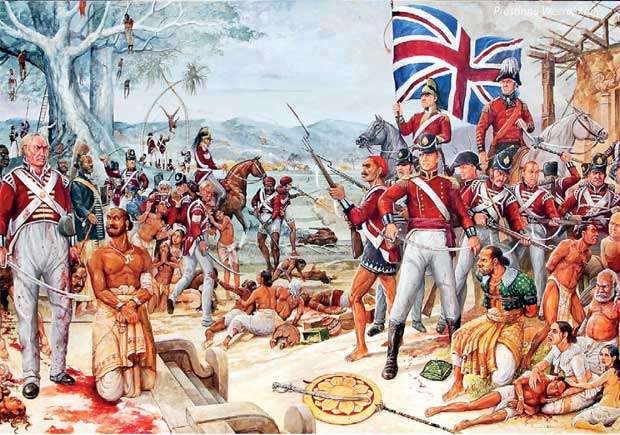
The British response was severe. As the rebellion spread and became harder to control, the colonial authorities adopted brutal counter-insurgency methods.
Villages were destroyed. Crops were burned. Cattle were seized or killed. Food supplies and local livelihoods were targeted. The aim was not only to defeat armed rebels, but to break the social and economic base that supported them.
This remains one of the darkest parts of the Uva Rebellion. The punishment fell heavily on civilians. Uva-Wellassa, once known for agricultural wealth, suffered devastation, hunger, displacement, and long-term decline.
The British strategy was clear: make rebellion impossible by making survival difficult.
Keppetipola: The Hero of Uva
Keppetipola Disawe stands out because his story is not only about military leadership. It is about moral choice.
As someone originally acting under British authority, he could have remained safe within the colonial system. Instead, he chose to join the rebellion, knowing the risks. After the rebellion was defeated, he was captured and executed.
In Sri Lankan memory, Keppetipola is remembered not as a failed rebel, but as a man who chose honour over comfort and loyalty to country over personal safety. His story still resonates because it reflects a timeless question: when power and conscience clash, which side does a person choose?
Why the Rebellion Failed
The Uva Rebellion had courage, local knowledge, and support in several areas. But it faced serious disadvantages.
The British had superior military resources, stronger supply lines, and the ability to bring reinforcements. Internal divisions also weakened the resistance. Not all Kandyan chiefs supported the rebellion, and without full unity among the local leadership, the movement struggled to become an island-wide war.
The absence of a widely accepted royal figure also limited its ability to form a stable alternative government. By 1818, the rebellion had been crushed. Many leaders were executed, exiled, or punished. Lands were confiscated, families were ruined, and Uva-Wellassa was left deeply scarred.
Why the Uva Rebellion Still Matters
The Uva Rebellion matters because it challenges the idea that Sri Lanka quietly accepted British rule. It shows that resistance began almost immediately after the fall of the Kandyan Kingdom.
It also reminds us that colonial history cannot be remembered only through railways, hill stations, tea estates, and old buildings. Colonial Ceylon also had conquest, dispossession, punishment, and resistance.
For travellers today, Uva is often associated with misty hills, waterfalls, tea country, and scenic train journeys. But behind that beauty lies a deeper historical landscape. Places such as Badulla, Bandarawela, Haputale, Ella, and the surrounding villages belong not only to tourism, but also to memory.
To travel through Uva with historical awareness is to see more than scenery. It is to recognise a region that once stood at the centre of a national struggle.
Conclusion: The Fire That Was Not Extinguished
The Uva Rebellion was defeated militarily, but not historically. The British crushed the uprising, punished its leaders, and devastated its heartland. Yet the memory survived.
It survived in the name of Keppetipola. It survived in the stories of Wellassa. It survived in the later recognition that those once branded traitors were, in truth, among the island’s defenders.
The Uva Rebellion was not simply an event of 1817–1818. It was a warning, a sacrifice, and a statement. It told the British that Ceylon would not be ruled without resistance. And it reminds us today that history must be remembered not only through monuments and dates, but through the landscapes and communities that endured it.