In the middle of modern Colombo, where busy roads, office buildings and diplomatic residences now shape the cityscape, it is easy to forget that this same city once looked to the sky with great seriousness. Long before satellites, mobile weather alerts and digital forecasts, colonial Ceylon depended on careful observation, handwritten records and scientific instruments to understand the world above it.
The Old Colombo Observatory belongs to that quieter chapter of Colombo’s history. It was not a dramatic landmark like a fort, a lighthouse or a grand colonial hotel. It did not attract crowds or command the skyline. Yet its role was deeply important. It helped Ceylon observe rainfall, study weather patterns, record atmospheric changes and connect the island to a wider world of scientific knowledge.
Today, the name “Colombo Observatory” is almost forgotten outside specialist circles. But its story reveals a fascinating side of Old Colombo — a city not only of trade, law, administration and colonial society, but also of measurement, science and curiosity.
Key Points
- The Colombo Observatory was formally established in 1907 on Bullers Road, now known as Bauddhaloka Mawatha.
- It played an important role in meteorology, rainfall recording and climate observation during the British colonial period.
- Its work helped develop the foundation for modern weather forecasting in Sri Lanka.
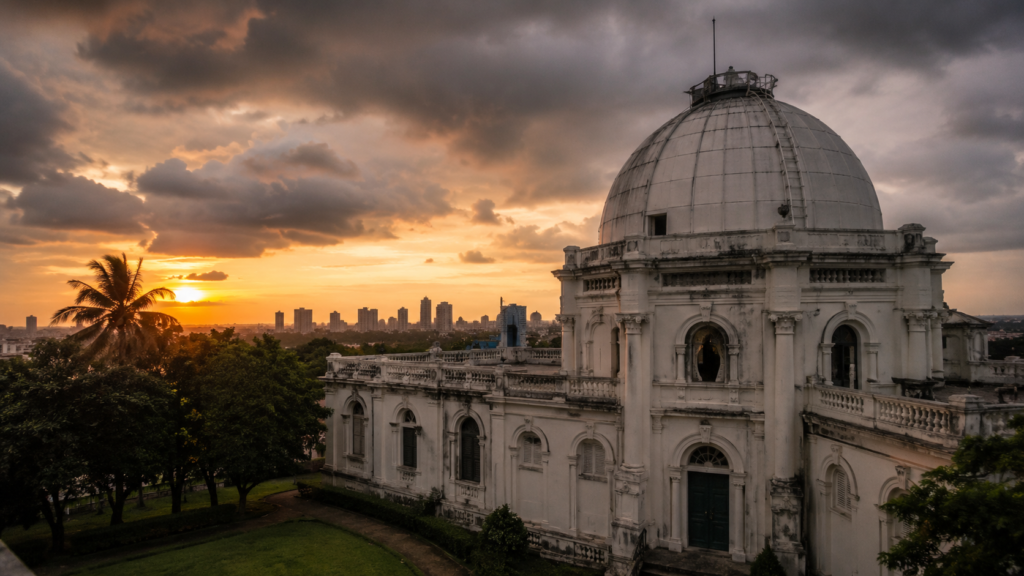
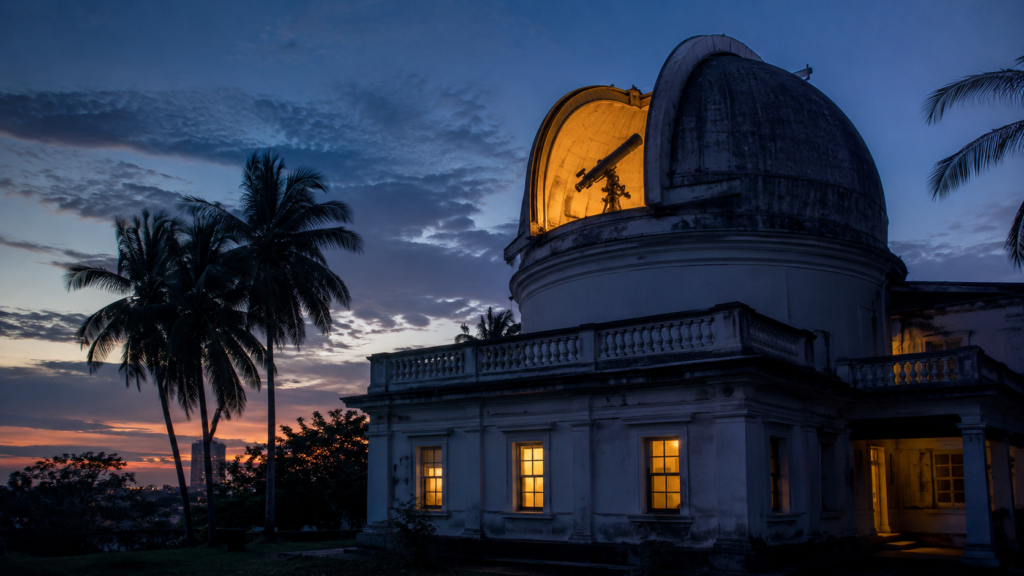
- The Observatory’s story also connects with Colombo’s astronomy heritage, especially through the historic Molesworth telescope and the University of Colombo’s old observatory dome.
- It remains an overlooked part of Sri Lanka’s scientific and colonial history.
A Hidden Scientific Landmark in Colombo
When people think of colonial Colombo, they usually picture the Fort, the Galle Face Hotel, old court buildings, churches, clubs, railway stations and tree-lined avenues. These are the visible symbols of the colonial city. They are easy to photograph, easy to explain and easy to include in a heritage walk.
The Old Colombo Observatory is different. Its value lies less in visual grandeur and more in what it represented. It was part of a colonial system that tried to measure and understand the natural environment. Rainfall, wind direction, pressure, temperature and seasonal change were not just scientific interests. They affected agriculture, shipping, plantations, public works and daily life across the island.
For the British administration, the sky above Ceylon was not only beautiful. It was useful. Understanding the weather meant understanding crops, transport, trade and even disease patterns. A heavy monsoon was not merely a natural event. It could affect roads, estates, ports and food supply.
The Observatory therefore stood at the meeting point of science and empire. It watched the sky, but it also served the practical needs of colonial government.
Click on here “There’s a hill in Colombo where law, empire and Old Ceylon still meet”
The Importance of Weather in Old Ceylon
Sri Lanka has always lived according to the rhythm of rainfall. Long before colonial rule, ancient kingdoms depended on irrigation, tanks and seasonal water management. Agriculture, settlement and survival were closely linked to the behaviour of the monsoon.
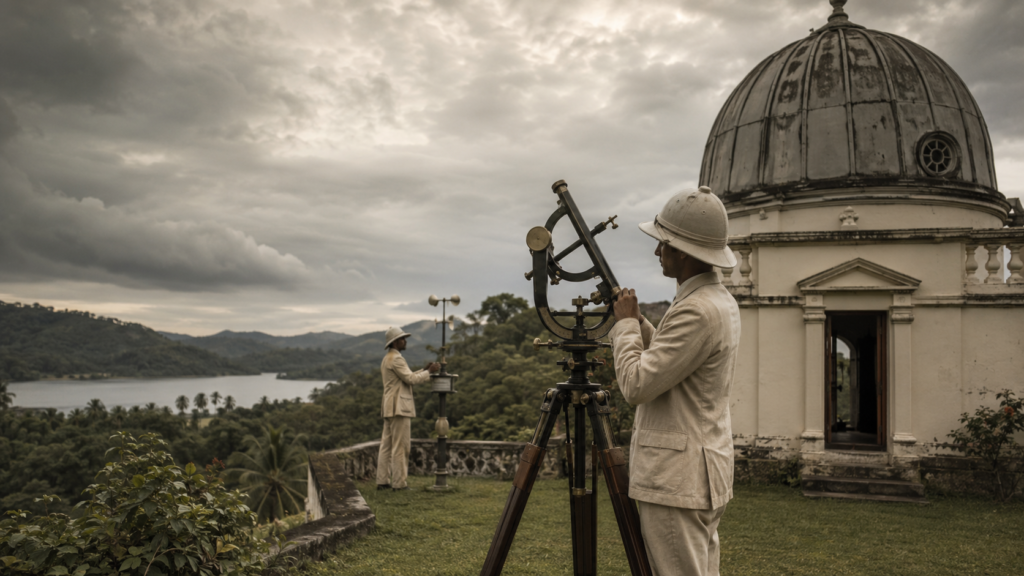
The British period introduced a more formal and systematic way of recording the weather. Rain gauges, instruments and observation stations slowly turned everyday weather into official data. Rainfall was no longer only something remembered by farmers or experienced by villages. It became something written down, compared and studied.
This may sound ordinary today, but it was a major shift. Once weather was recorded over many years, patterns could be identified. Droughts, floods and rainfall differences between regions could be better understood. The island’s climate became part of a scientific record.
The Colombo Observatory gave this work an institutional home. It helped collect observations, organise information and build a clearer picture of Ceylon’s climate.
The Observatory on Bullers Road
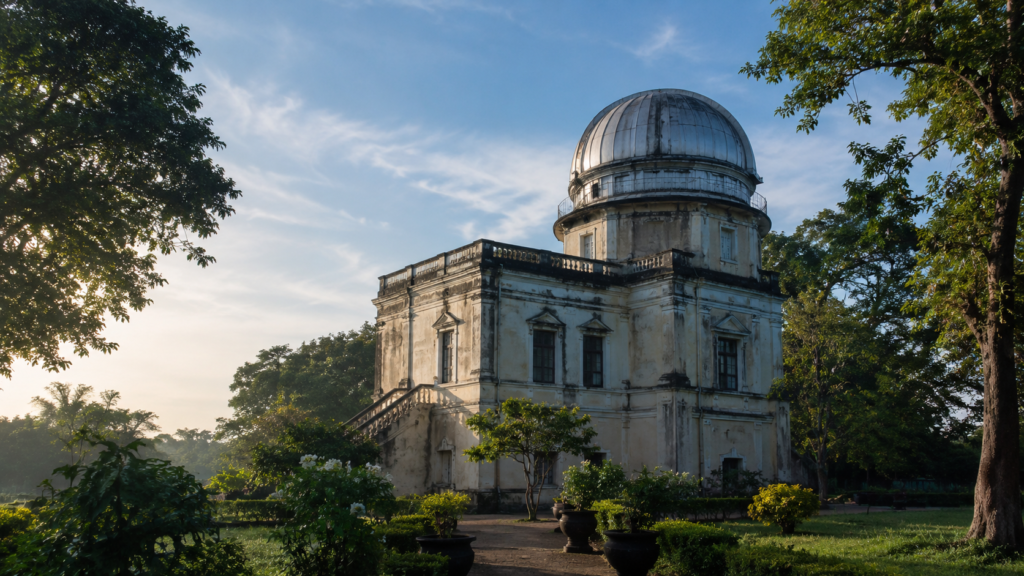
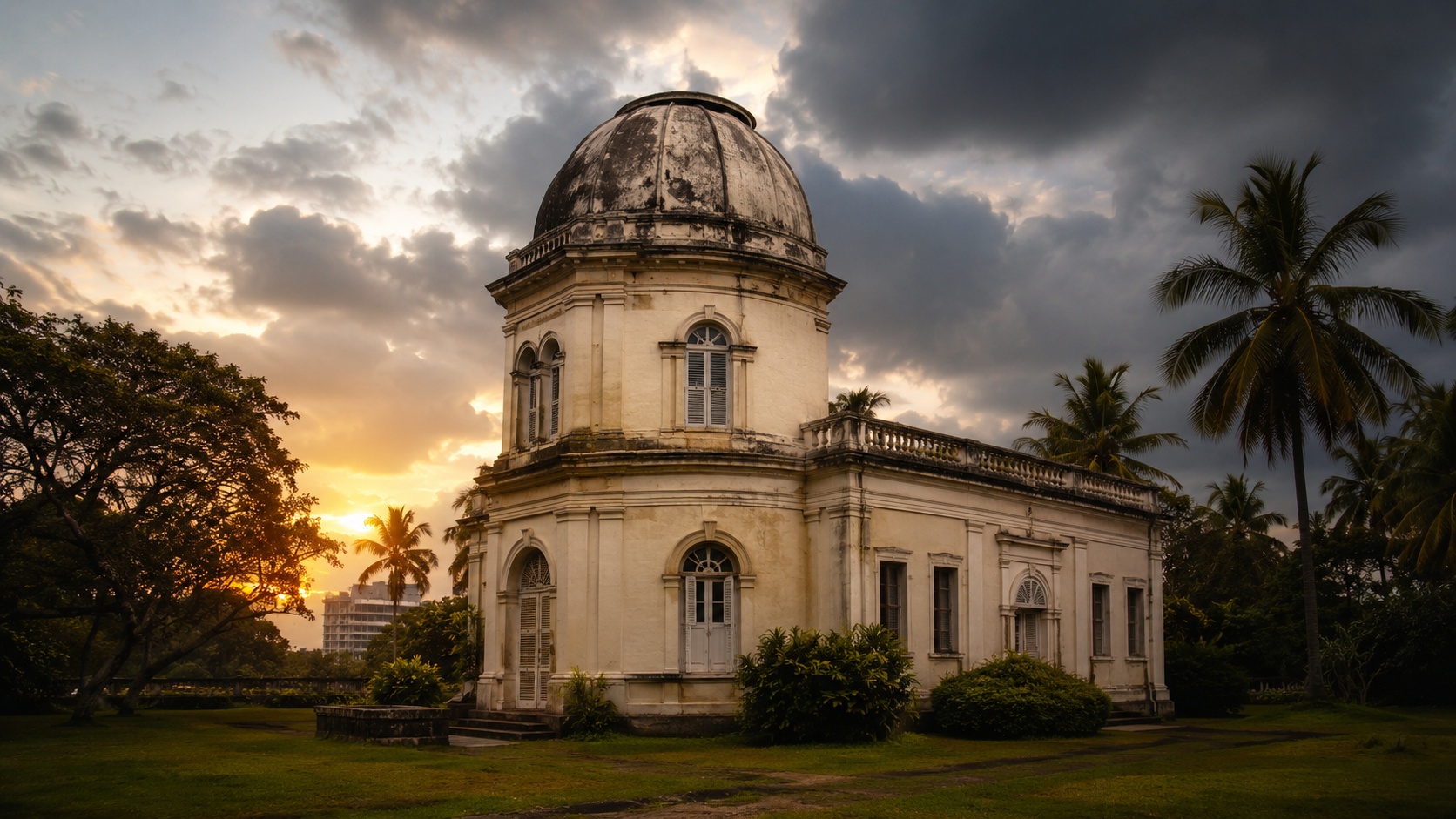
The Colombo Observatory was established in 1907 on Bullers Road, the road now known as Bauddhaloka Mawatha. At that time, this area of Colombo was part of the city’s more spacious colonial expansion, away from the dense commercial centre of Fort and Pettah.
Its location was suitable for careful scientific work. The area was quieter, greener and more open than the crowded old city. It allowed observers to work with instruments and records in a setting that was better suited to measurement.
The Observatory functioned as a centre for meteorological work and gave weather science in Ceylon a stronger identity. It was not simply a place where one person looked at the sky. It was part of a wider network of stations, records and official reports that helped build knowledge about the island’s climate.
In a city often remembered for its merchants, lawyers, governors and social clubs, the Observatory represented another kind of discipline: the discipline of patient observation.
Watching the Colonial Sky
The sky above Colombo has always been dramatic. It shifts quickly from harsh sunlight to heavy cloud. The sea breeze changes the feel of the city. The monsoon can turn the air thick and grey before rain sweeps across the streets.
For the observers of colonial Ceylon, these changes were not simply atmospheric moods. They were details to be recorded. A fall in pressure, a change in wind direction, a sudden storm or a period of unusual dryness all mattered.
Imagine the early twentieth-century Observatory. There were no radar screens or satellite maps. Instead, there were instruments, ledgers, printed tables and trained observers. The work required consistency. The same details had to be measured again and again, day after day, year after year.
That is what made the Observatory important. It created memory. A single shower is weather. A hundred years of rainfall records become climate history.
From Colonial Records to Modern Meteorology
The work connected to the Colombo Observatory eventually fed into the development of modern meteorology in Sri Lanka. As the twentieth century progressed, weather observation became more organised, more technical and more connected to global scientific systems.
The island’s weather services later became part of a broader international framework. But the foundation was built through earlier efforts: rain gauges, observation stations, records and institutions like the Colombo Observatory.
This is why the Observatory should not be dismissed as an old colonial office. It was part of the long road that led to the modern weather information Sri Lankans depend on today. Every time we check a forecast before travelling, planning an event or expecting monsoon rain, we are benefiting from a tradition of observation that began much earlier.
The Astronomy Connection
Although the Colombo Observatory is mainly remembered for meteorological work, Colombo’s observatory heritage also has a strong link to astronomy.
One of the most fascinating connections is the Molesworth telescope. Major Percy Braybrooke Molesworth, born in Colombo in 1867, became known for his serious astronomical observations, especially of planets such as Mars and Jupiter. His telescope later became part of Colombo’s scientific heritage and was connected with the University of Colombo.
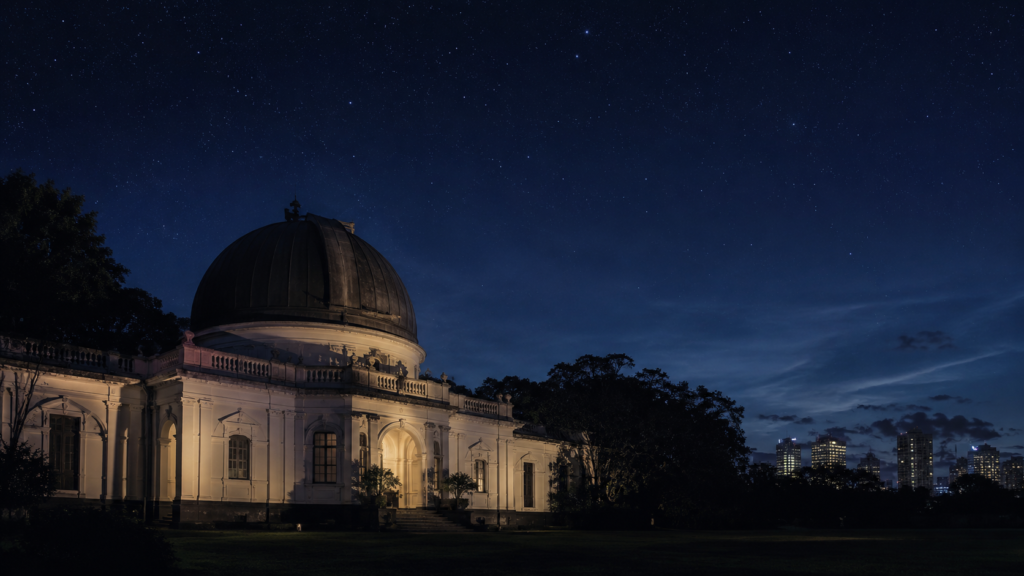
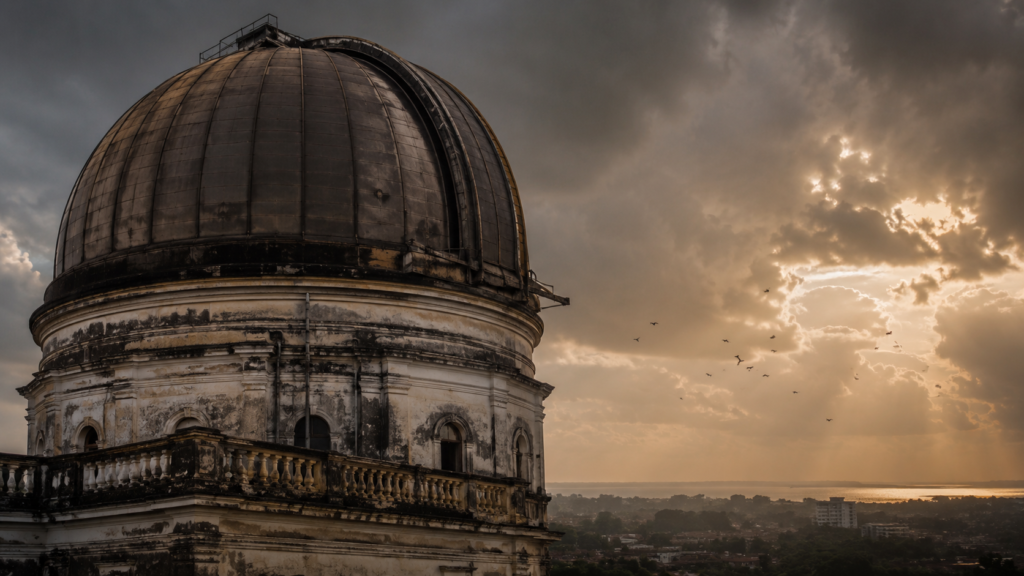
The old observatory dome near the University of Colombo remains a meaningful symbol of this tradition. It reminds us that Colombo’s relationship with the sky was not limited to rainfall and weather. There was also wonder, curiosity and the desire to look beyond the island into the wider universe.
This makes the Observatory’s legacy richer. One side of the story belongs to monsoon science and climate records. Another side belongs to telescopes, planets and the quiet fascination of looking into space.
Why This Story Matters to Travellers
For travellers exploring Colombo, the Old Colombo Observatory is not the kind of place that usually appears on glossy travel lists. It is not as famous as Galle Face, Independence Square or the old Fort area. But that is exactly why it matters.
It belongs to the hidden Colombo — the Colombo of surveyors, scientists, mapmakers, engineers and observers. These were the people who helped shape the island’s modern systems, often without leaving behind monuments that ordinary travellers immediately recognise.
Understanding the Observatory allows visitors to see Colombo differently. The city was not only a port. It was not only an administrative capital. It was also a place where knowledge was gathered, measured and organised.
Colonial Colombo measured land through surveys, time through clocks, trade through port records and weather through observatories. The Old Colombo Observatory was part of that measured world.
A Forgotten Window Worth Remembering
The Old Colombo Observatory deserves a stronger place in Sri Lanka’s heritage memory. It tells a story that is quiet but powerful. It reminds us that history is not only found in battles, governors, mansions and monuments. Sometimes history is found in instruments, weather records, domes and forgotten scientific buildings.
It also shows how closely Sri Lanka’s past is connected to the natural world. Rainfall, wind, humidity and monsoon cycles have always shaped life on the island. The Observatory helped turn those patterns into knowledge.
Today, Colombo has changed almost beyond recognition. Bullers Road has become Bauddhaloka Mawatha. Colonial Ceylon has become independent Sri Lanka. Handwritten records have given way to digital systems. Yet the basic human instinct remains the same: to look up, observe and understand.
The Old Colombo Observatory may no longer be widely remembered, but its legacy still lingers every time dark clouds gather over the city, every time the monsoon arrives, and every time Colombo waits for rain.