
When the German Mail Steamer Called at Colombo: A Forgotten Journey Aboard the Seydlitz
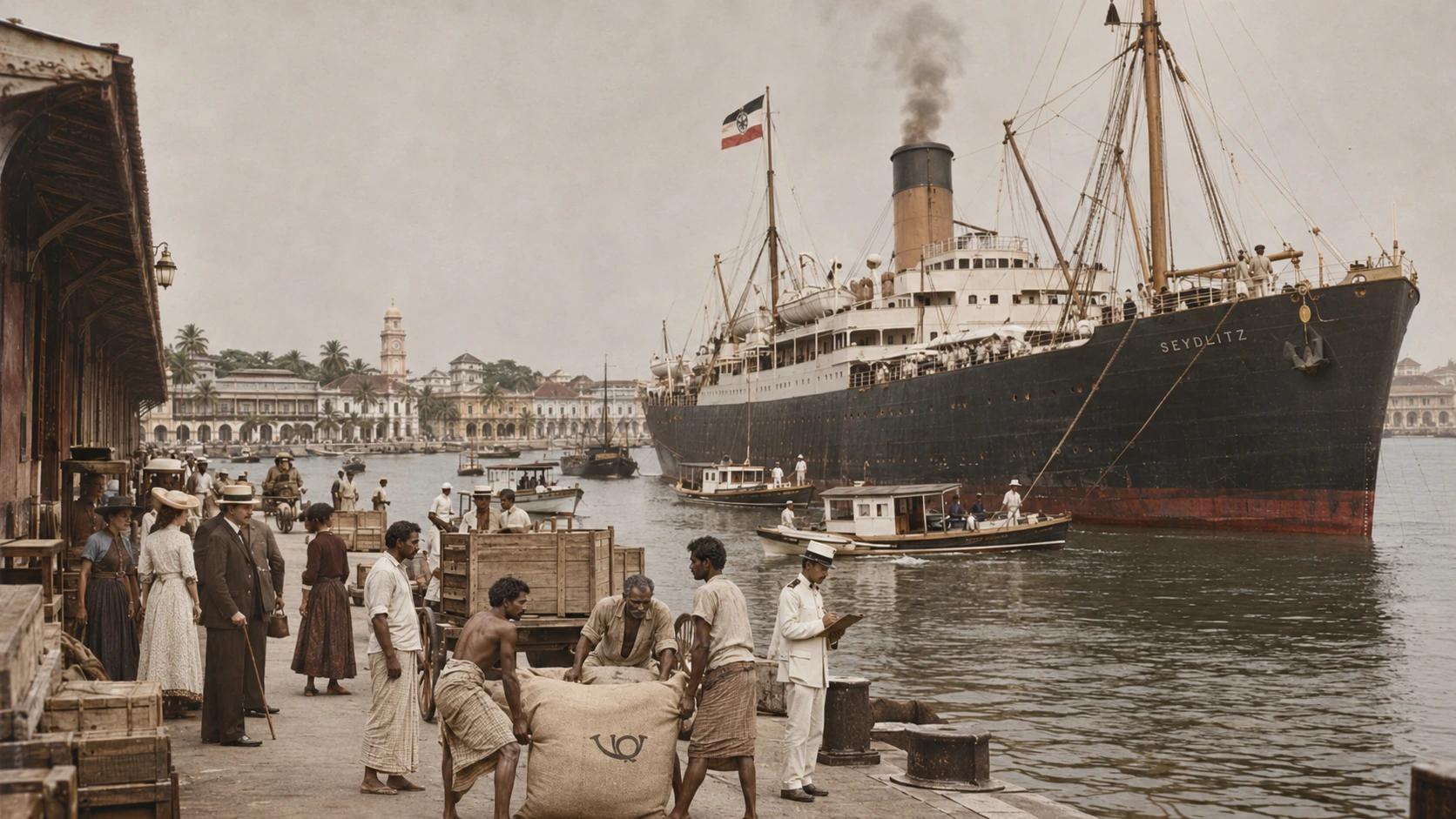
German mail steamer | An old newspaper announcement records the arrival of the German mail steamer Seydlitz at Colombo Harbour, carrying passengers, letters and cargo from Europe. It offers a glimpse of the days when Ceylon was an important stopping point on the long sea journey between Europe and Australia.
An Old Newspaper Notice from Colombo Harbour
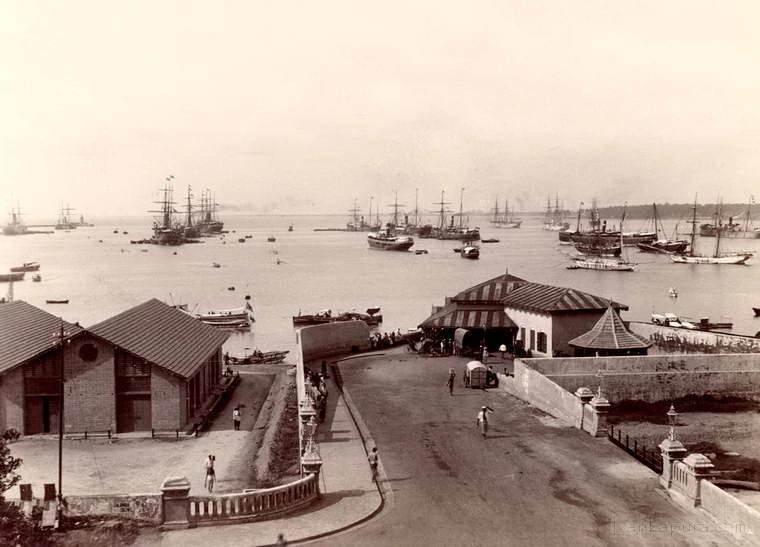
There was a time when the arrival of a ship in Colombo was news worth printing. Not because someone famous was on board or because anything extraordinary had happened at sea, but because the arrival of a mail steamer brought passengers, cargo and long-awaited letters from distant countries. The shipping columns of Ceylon’s newspapers regularly recorded these movements, giving readers a useful account of the vessels entering and leaving the harbour.
One such announcement, headed The Outward German Mail, records the arrival of the German steamship Seydlitz from Bremen at 11.30 at night. She was carrying the London and Berlin mails of 16 June, together with general cargo and several passengers whose names were carefully listed. The newspaper also reported that the vessel was expected to leave for Sydney the following morning.
It was a short announcement, the kind that readers might have glanced at before turning to another column. There was no elaborate description of the ship or the people travelling aboard her. Yet more than a century later, those few lines provide an interesting glimpse into the maritime life of Old Colombo, when the harbour connected Ceylon with some of the busiest shipping routes in the world.
When Colombo Was a Stop on the Way to Australia
At the beginning of the twentieth century, Colombo was an important port of call for passenger and mail steamers travelling between Europe and Australia. Its position in the Indian Ocean made it a convenient stopping point for vessels sailing through the Suez Canal and continuing eastwards. Ships arriving from Europe brought mail, cargo and passengers, while others called on their way towards ports in Southeast Asia and Australia.
The journey from Bremen to Sydney was a substantial undertaking. A passenger might travel through the Mediterranean, pass through the Suez Canal and continue across the Indian Ocean before reaching Colombo. From Ceylon, the voyage continued towards Australia, with contemporary North German Lloyd schedules including ports such as Aden, Colombo and Fremantle.
For travellers accustomed to spending weeks at sea, the sight of Colombo Harbour must have been welcome. After days of looking out across the ocean, there would suddenly be land, harbour activity and the prospect of a brief change from life aboard ship. Some passengers might have been travelling to Australia to begin new lives, while others were returning to familiar places or continuing journeys connected with business and employment.
The harbour itself was a busy place, with steamships, smaller launches, cargo-handling operations and people moving between vessels and the shore. For the people who worked there, the arrival of another European mail steamer was part of the ordinary routine of a major colonial port.
For those waiting ashore, however, a particular ship could have a much more personal importance. It might bring a family member returning from overseas, news of a business transaction or a letter that had spent weeks travelling from Britain or continental Europe.
Four Names Preserved in a Newspaper
One of the most interesting details in the announcement is the short passenger list. The newspaper named Mr and Mrs E. M. Flint, Dr Arthur Fitz and Mr Charles Hettiatchy among those arriving at Colombo. No explanation accompanied their names, and the notice did not identify their occupations, destinations or reasons for travelling.
They were simply passengers disembarking from a German mail steamer. Yet their names survived in print while almost everything else about that particular journey has disappeared from the brief record. We do not know whether someone was waiting to meet them, whether they intended to remain in Ceylon or whether Colombo was only one stage of their travels.
There may have been relatives expecting their arrival, business appointments to attend or arrangements for onward travel. Perhaps one of them was returning to the island after spending time abroad. These are possibilities rather than facts, but they remind us that each name in an old shipping report belonged to someone with a life beyond the few lines printed in the newspaper.
Shipping notices are particularly valuable for this reason. They preserve the movement of ordinary people who might never appear in a more formal historical account. A passenger list, an arrival time or the name of a vessel may be the only surviving public record of a particular journey.
For descendants researching family history, such a notice can sometimes provide an unexpected connection with the past. The arrival of a relative in Colombo, reported without ceremony in a newspaper, might help explain a date, a journey or a family story remembered across generations.
The German Steamship Seydlitz
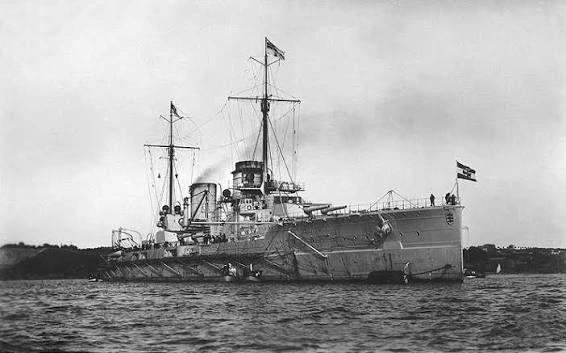
The Seydlitz belonged to Norddeutscher Lloyd, or North German Lloyd, the major German shipping company based in Bremen. During the late nineteenth and early twentieth centuries, the company operated extensive passenger and mail services connecting Europe with ports around the world. Its vessels were familiar sights on important international sea routes.
Built in Danzig and entering service in 1903, the Seydlitz was designed to carry passengers, mail and cargo over long distances. Her accommodation extended across several passenger classes, reflecting the different circumstances of those who travelled aboard ocean liners during that period. Some passengers enjoyed comparatively comfortable accommodation, while others travelled more economically, including emigrants seeking opportunities overseas.
The Seydlitz was therefore part of a much larger system of international movement. Shipping companies connected European ports with colonial territories, commercial centres and countries receiving large numbers of migrants. Passenger steamers also played an important role in the movement of correspondence and goods before air transport became a practical alternative for long-distance journeys.
For Colombo, a vessel such as the Seydlitz was another regular visitor contributing to the commercial and maritime activity of the harbour. Her arrival brought people and mail from Europe, while her onward voyage maintained the connection between Ceylon and Australia.
The announcement does not suggest that anything unusual occurred during this particular call. The vessel arrived late at night, passengers were listed, and preparations were made for departure the following morning. It was precisely the sort of routine movement upon which international shipping depended.
A Ship with an Eventful History
Although the Colombo newspaper records an ordinary port call, the Seydlitz would become associated with more dramatic events during her working life. In October 1913, she was among the vessels involved in rescuing survivors from the burning steamship Volturno in the North Atlantic. The disaster attracted international attention, with several ships responding to the emergency and participating in efforts to save passengers and crew.
The Seydlitz also became involved in the events surrounding the outbreak of the First World War in August 1914. Her movements from Sydney during the opening days of the conflict formed part of a very different chapter from the peaceful passenger and mail services for which she had originally been built.
These later episodes show how quickly the circumstances of international shipping could change. A passenger steamer that had carried travellers between Europe and Australia during peacetime suddenly found herself operating in a world where maritime routes were affected by war.
Yet none of that drama appears in the small Colombo newspaper announcement. The Seydlitz was simply a German mail steamer arriving from Bremen and preparing to continue her scheduled journey. Her passengers, cargo and correspondence were the immediate concern of the people working around the harbour.
For the readers of the shipping column, the vessel’s arrival was another entry in the regular movement of ships through Colombo.
The Colombo That Welcomed the Mail Steamers
We often remember Old Colombo through photographs of its streets, tramcars, shops, hotels and impressive colonial buildings. But the harbour was just as important to the identity of the city. It connected Ceylon with trading centres, families and communities thousands of miles away, bringing a steady movement of people and goods to the island.
The shipping industry supported a large part of Colombo’s commercial life. Merchants depended upon vessels carrying export produce and imported goods, while shipping agents, clerks, customs officials and harbour workers attended to the many tasks involved in keeping the port operating. Hotels and businesses around Fort also benefited from the arrival of travellers who passed through the city.
The Grand Oriental Hotel, situated close to the harbour, was among the establishments associated with this world of steamship travel. Passengers arriving in Colombo might require accommodation, transport or assistance with their onward journeys. The streets around Fort were therefore closely connected with the movement of people through the port.
An arrival from Bremen was not simply another foreign ship calling at a British colonial harbour. It represented part of the wider network that connected Ceylon with Europe, Asia and Australia. The passengers might have remained only briefly, but the vessel’s visit formed part of the international activity upon which Colombo’s commercial importance depended.
For many local residents, the ships entering the harbour were familiar enough to attract little attention. For others, particularly those awaiting news from overseas, the arrival of a particular mail steamer could be an occasion of considerable interest.
When Letters Travelled Across the Ocean
Perhaps the most revealing detail in the newspaper notice is its reference to the London and Berlin mails. Today, a message can travel from Colombo to Europe in seconds, and a telephone conversation with someone living overseas requires little preparation. At the beginning of the twentieth century, communication depended far more heavily upon the movement of ships.
A letter posted in Europe could spend weeks travelling through different ports and across long stretches of ocean before reaching Ceylon. Mail steamers carried correspondence for families, businesses and government institutions, making their arrival an important event for people waiting to hear from those living far away.
One can imagine someone in Colombo looking forward to a letter from a son studying in England or a relative who had settled in Australia. A merchant might be expecting documents connected with an overseas transaction, while another family waited for news about someone who had travelled abroad.
The newspaper’s brief reference to the mails tells us nothing about the individual letters aboard the Seydlitz. Their contents are unknown, as are the people who eventually received them. But the announcement reminds us how closely the shipping schedules of the period were connected with everyday communication.
For those whose families were separated by oceans, the arrival of a mail steamer could bring news that had been anticipated for weeks. That importance is easy to overlook when reading a shipping notice more than a century later.
A Forgotten Night in Colombo Harbour
There is something appealing about the very ordinariness of the Seydlitz announcement. The vessel arrived at 11.30 at night, the names of four passengers were recorded, and her departure for Sydney was expected the following morning. The newspaper considered the information worth publishing, but there was nothing to suggest that readers should regard the occasion as especially memorable.
The ship’s visit belonged to a period when Colombo was a busy stopping point on the long sea journey between Europe and Australia. Steamers arrived and departed, passengers continued towards new destinations, and mailbags carried news between countries separated by thousands of miles.
Much of that world has changed. The great passenger steamers no longer provide the principal connection between Europe, Ceylon and Australia, and international communication no longer depends upon letters travelling by sea. Colombo Harbour continues to be important, but its role and the nature of the vessels calling there are very different from those of the early twentieth century.
What remains is the newspaper cutting, with its short account of a ship arriving from Bremen and preparing to sail for Sydney. The four passengers whose names appeared in the report have become part of a small historical record, preserved not because they were famous but because they happened to arrive aboard the Seydlitz on that particular voyage.
For the people involved, it was probably an ordinary day of travelling, working and waiting. For us, it offers a glimpse of the time when ships and their schedules shaped the connections between Ceylon and the wider world.
And somewhere in an old newspaper, the arrival of the German mail steamer Seydlitz remains a reminder of that vanished age of ocean travel.
Visit us: https://trippingsrilanka.com/stories
More from Old Ceylon
The YWCA of Old Colombo: A Place Where Women Found Friendship, Faith and Independence

S. Thomas’ College Chapel, Mount Lavinia: A Place Where Generations Have Prayed