The YWCA of Old Colombo: A Place Where Women Found Friendship, Faith and Independence
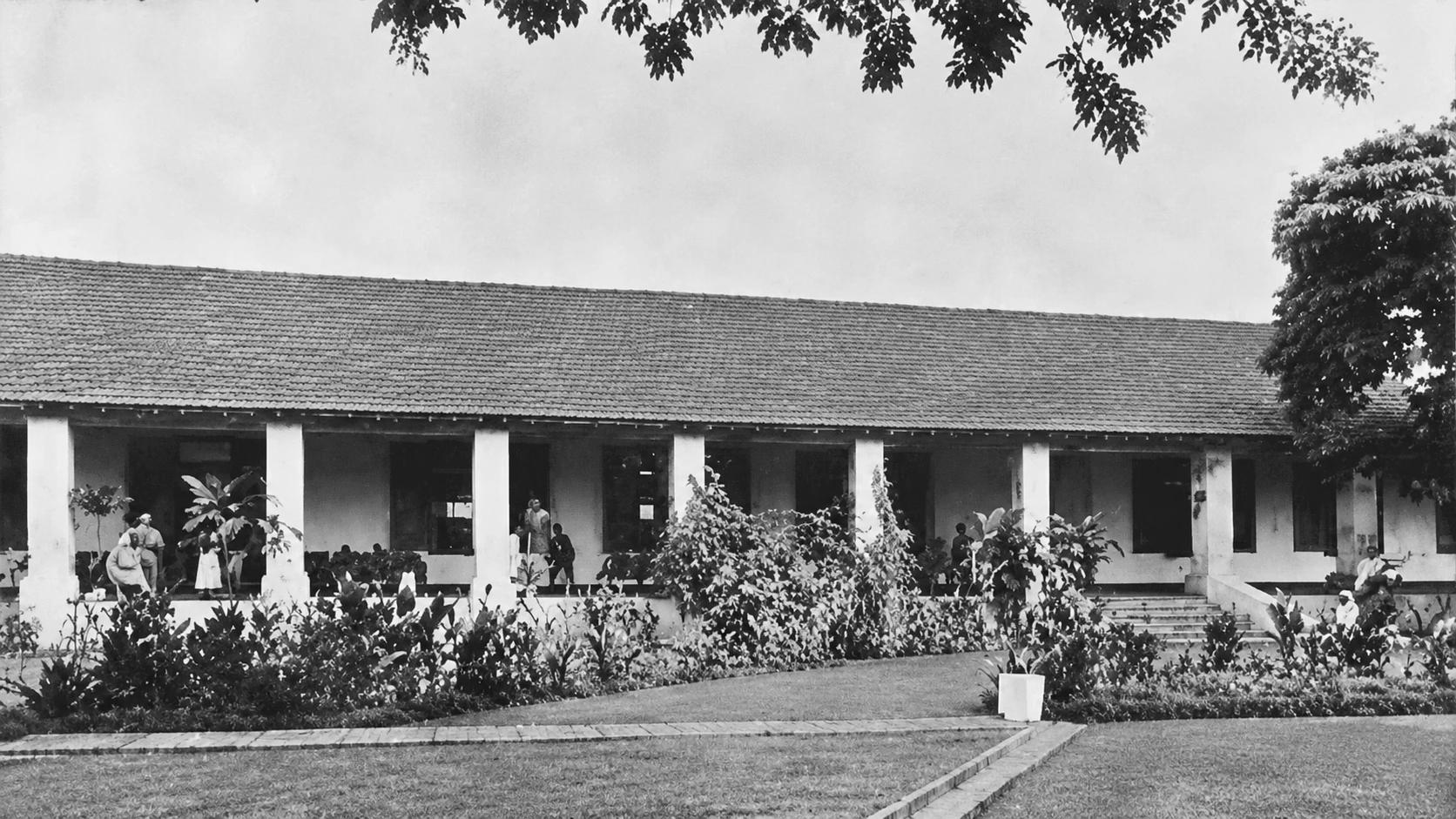
An old postcard of a bungalow-like building surrounded by gardens offers a glimpse into a lesser-known part of Colombo’s history. Behind its shaded verandah was an organisation that helped generations of women find friendship, accommodation, education and opportunities beyond their family homes.
An Old Postcard of a Different Colombo
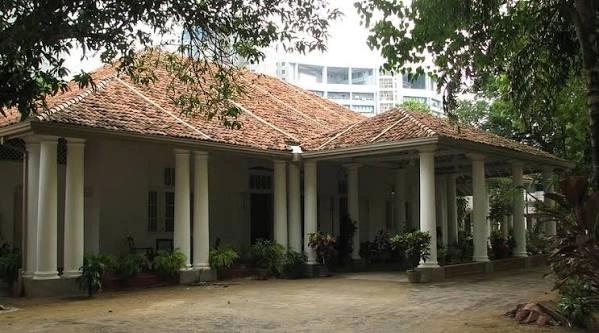
There is something particularly charming about this old postcard of the YWCA in Colombo. A long, low building stands behind a neatly maintained garden, its tiled roof stretching almost the entire width of the picture. White pillars support a deep verandah, and a pathway leads towards the entrance. A few figures can be seen in the shade, although the photograph is too old to make out their faces clearly.
Two signs bearing the letters YWCA identify the premises. Unlike the imposing colonial buildings usually featured in photographs of Old Colombo, this one has the comfortable appearance of a large bungalow. There are no ornamental towers or elaborate façades, only a broad verandah, plenty of shade and a garden that appears to have been carefully tended.
It is easy to imagine visitors approaching the building along the pathway, perhaps arriving for a meeting or an afternoon gathering. The verandah would have provided a pleasant place to sit, particularly during the hotter hours of the day. Although we cannot identify the people in the photograph or establish what brought them there, the scene suggests a quieter side of Colombo’s social life.
The building is interesting in its own right, but the organisation it housed has a much longer story. For generations of women, the Young Women’s Christian Association represented friendship, Christian fellowship, practical assistance and opportunities to participate in a changing society.
When the YWCA First Came to Ceylon
The history of the Young Women’s Christian Association in Ceylon goes back to 1882, when the movement was established in Colombo. Its arrival came during a period when the island was undergoing significant social and economic change under British colonial rule. Colombo was expanding as an administrative and commercial centre, and increasing numbers of people were travelling to the capital for employment, education and other opportunities.
The international YWCA movement had begun in Britain in 1855, at a time when more women were leaving their family homes to seek work or pursue opportunities elsewhere. Its early activities combined Christian fellowship with practical assistance, particularly for young women who needed accommodation, companionship and support while living away from their families.
The organisation’s approach reflected both the religious values and social expectations of its time. It sought to provide women with suitable places to meet, learn and take part in organised activities, while also addressing some of the practical difficulties they encountered when moving into unfamiliar urban surroundings.
In Ceylon, the movement gradually expanded beyond Colombo. During its early decades, associations were established in places including Kandy, Galle, Panadura and Jaffna. What had begun as a Christian women’s organisation developed into a wider network that would eventually reach communities across the island.
A Different Side of Colonial Colombo
When we think of Colombo during the British period, we often picture the harbour, Fort, horse-drawn carriages, tramcars, fashionable shops and the large commercial establishments that dominated the city. Those familiar images certainly tell part of Colombo’s story, but they leave out many of the smaller institutions that shaped everyday life.
There was another Colombo of boarding houses, church societies, reading rooms, charitable associations and modest buildings where people gathered to learn, work and help one another. These places rarely attracted the attention given to grand hotels or government buildings, yet they provided important services to the city’s growing population.
The YWCA belonged to this quieter world. For a young woman arriving in Colombo from another part of Ceylon, the city might offer employment, professional training or educational opportunities that were not available closer to home. At the same time, living away from one’s family could present practical difficulties, particularly in a society where considerable importance was attached to expectations of propriety and suitable accommodation.
Finding somewhere acceptable and secure to stay was often a major consideration for young women and their families. The wider YWCA movement became particularly associated with providing accommodation for women living away from home, usually alongside opportunities for social participation and religious observance.
In this respect, the organisation occupied an interesting position in colonial society. It worked within many of the conventions of its period while also helping women establish lives beyond the immediate supervision of their households. It was not independence in the modern sense, but it represented an important practical development in the opportunities available to women.
Life Around the Shaded Verandah
Looking again at the old postcard, the long verandah is perhaps the most inviting feature of the building. In Ceylon’s tropical climate, verandahs were often among the most pleasant parts of a house or institution. They provided shelter from the sun, allowed air to circulate and offered a place where visitors could sit without entering the more private rooms.
Such a space would have suited the activities associated with organisations like the YWCA. Across South Asia, early associations organised gatherings involving sewing, Bible study, reading, discussion, recreation and social occasions. These activities brought women together outside their immediate family circles and helped establish friendships and networks of mutual support.
One can imagine a group of women gathering on the verandah for an afternoon meeting, discussing an upcoming event or sharing news over tea. Others might have arrived to enquire about accommodation, meet a friend or take part in an organised activity. These are possibilities rather than documented events from the photograph, but they reflect the wider purposes for which YWCA premises were used.
The association’s formal objectives confirm that its work extended well beyond social gatherings. When the YWCA of Colombo was incorporated under Ordinance No. 23 of 1920, its stated aims included the spiritual, intellectual, social and physical welfare of young women. The ordinance also provided for libraries, reading rooms, rest rooms and assistance to young women travelling through Colombo.
It is a revealing historical record. Behind the familiar image of a Christian women’s association was an institution concerned with education, recreation, companionship and practical assistance. These activities helped women participate in community life at a time when their opportunities were changing, although often within considerable social restrictions.
The Women Who Helped Build the Movement
The history of the YWCA in Ceylon was shaped by women who devoted time and effort to voluntary service, fundraising, committee work and organisational leadership. During the colonial period, women’s participation in public affairs was limited by prevailing expectations, but charitable and religious organisations provided some avenues through which women could exercise responsibility.
Within the YWCA, members could help organise activities, administer services, raise funds and participate in decisions affecting the association. Such responsibilities offered valuable experience in public and community work, particularly at a time when opportunities for women to take leadership roles in other institutions were more restricted.
Among the women associated with the organisation’s history were Marjorie de Mel, Lady Evelyn de Soysa, Gladys Loos and Marguerite Piachaud. Their involvement formed part of the development of a movement that gradually established its own leadership and wider national identity.
Although the organisation had Christian foundations, its work eventually extended to women from different religious and ethnic backgrounds. This development reflected broader changes in Ceylonese society, as women’s organisations increasingly addressed concerns that went beyond the interests of a single social or religious circle.
The work undertaken by these women rarely appears prominently in conventional accounts of colonial Colombo. Yet their contribution helped create institutions and services that continued to benefit later generations.
When the YWCA Became a National Organisation
By the middle of the twentieth century, Ceylon itself was changing. Independence in 1948 brought new responsibilities and opportunities, while many institutions that had developed during the colonial period began establishing their own national identities.
The YWCA followed a similar course. For many years, the Ceylon associations had operated within a wider organisational structure linking India, Burma and Ceylon. In 1951, the National YWCA of Ceylon was formally recognised as an independent national association within the international movement.
Marjorie de Mel became its first National President, marking an important stage in the association’s development. The recognition meant that an organisation whose early history had been shaped by British colonial influences was now able to develop its leadership and direction within independent Ceylon.
The Christian principles upon which the movement had been founded continued to influence its work, but its activities increasingly reflected the needs of local women and communities. Over time, the YWCA became involved in wider concerns relating to women’s welfare, education, community development and social participation.
Its history therefore followed some of the broader changes taking place in the country. As Ceylon moved into a new political and social period, the association continued to adapt while maintaining its original commitment to supporting women.
A Home Away From Home
One of the YWCA’s most enduring contributions has been the provision of accommodation for women. For families living outside Colombo, the availability of a recognised institution offering suitable lodging could make a considerable difference when a daughter wished to study or work in the capital.
The Colombo YWCA acquired premises known as St James in 1913, establishing an important part of its institutional presence in the city. Its International Guest House, established in 1942, later became another feature of the accommodation services associated with the organisation.
In 1956, the National YWCA opened a hostel for female students at Rotunda Gardens, Kollupitiya. The hostel became an important institution for women who had travelled to Colombo to pursue higher education and professional training.
The Rotunda Gardens hostel also has architectural significance through its later building, designed by Geoffrey Bawa, who would become one of Sri Lanka’s most celebrated architects. The connection illustrates how the organisation’s services continued to develop during the decades after independence.
In 2018, the hostel was reported to accommodate approximately 170 female students, many from rural areas who had come to Colombo for educational and professional opportunities. That figure belongs to a much later period than the old postcard, but it demonstrates the continuing importance of accommodation services for women living away from home.
For a family in a distant town, knowing that their daughter had somewhere established to stay could provide considerable reassurance. For the young woman herself, accommodation in Colombo might make the difference between pursuing an opportunity and having to abandon it because suitable lodging was unavailable.
The YWCA was therefore much more than a meeting place or social club. Its accommodation services helped women gain access to education and employment opportunities that were increasingly important in a changing society.
The Garden and Verandah of Old Colombo
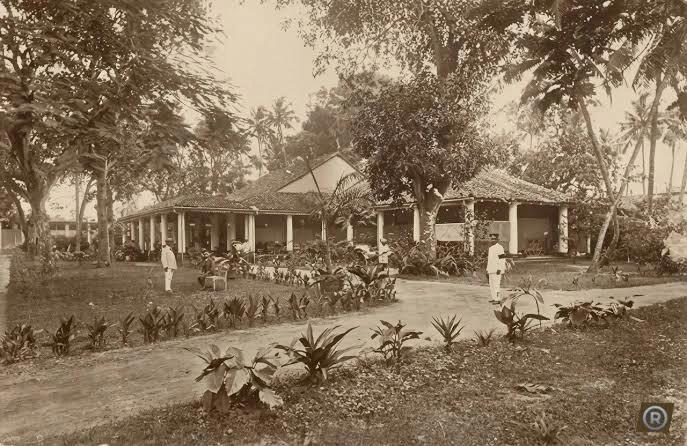
There is one detail about the postcard that deserves particular attention: the building is surrounded by greenery. Planting beds appear close to the verandah, while a broad pathway leads through the garden towards the entrance. The grounds seem carefully maintained, giving the premises the appearance of a quiet retreat within the city.
Such surroundings would have been familiar in parts of Old Colombo before increasing urban development transformed many residential and institutional properties. Large bungalows, gardens and shaded verandahs were features of a city that still retained considerable open space in certain neighbourhoods.
It is tempting to admire the photograph simply for this glimpse of colonial-era architecture. The tiled roof, white pillars and well-kept garden certainly have their appeal. But the building’s greater historical interest lies in what took place behind those pillars.
This was a period when women’s opportunities were changing, sometimes slowly and against considerable resistance. Organisations such as the YWCA created spaces where women could meet others, develop friendships, acquire skills and participate in organised community activities.
The photograph does not tell us who the people beneath the verandah were or what brought them to the building that day. They may have been members attending a meeting, visitors or people connected with its daily operations. Without further evidence, their identities and activities remain unknown.
The postcard is also insufficient to identify the premises with certainty. It should not automatically be treated as a photograph of the later Rotunda Gardens hostel or the YWCA’s present premises. What it does establish is that the building was associated with the YWCA in Colombo at the time the image was produced.
Remembering the YWCA of Old Colombo
Many of Colombo’s old institutions are remembered because of their imposing architecture, famous visitors or association with prominent families. The YWCA deserves to be remembered for a different reason. Its history is closely connected with the lives of women who studied, worked, travelled, volunteered and sought opportunities in the city.
Some would have stayed in its accommodation, while others attended meetings, joined activities or contributed their time to helping people in need. Women who became involved in its administration gained experience in organising events, managing responsibilities and taking part in community work.
The association’s activities continued to develop over the decades, extending into areas such as children’s welfare, women’s rights and community development. Its role changed with the society around it, but the idea of providing women with support, companionship and opportunities remained an important part of its identity.
The old postcard, with its quiet garden and shaded verandah, captures only one moment in this much longer history. It does not tell us what was being discussed inside the building or identify the women who may have passed through its doors. Yet it reminds us of an institution whose contribution to Colombo’s social life extended far beyond its modest appearance.
There would have been women for whom the YWCA was simply a familiar place to meet friends. For others, it may have been their first home away from their families or the institution that helped them settle into life in Colombo. Some would have remembered a particular meeting, a helpful member of staff or the friendships made during their time there.
Their individual stories are largely absent from the postcard, but they form the most important part of the YWCA’s history.
Behind those familiar letters lies a chapter of Old Colombo worth remembering: a time when women were gradually finding new opportunities to study, work, organise and take a greater part in the life of their city.
Photograph credit: Everything from Ceylon to Sri Lanka — vintage postcard shared with acknowledgement to the original copyright owner.
Visit us: https://trippingsrilanka.com/stories