Holyrood Estate, Talawakelle: An Old Ceylon Bungalow and a Name That Echoes Scotland
An Old Bungalow in the Hills of Talawakelle
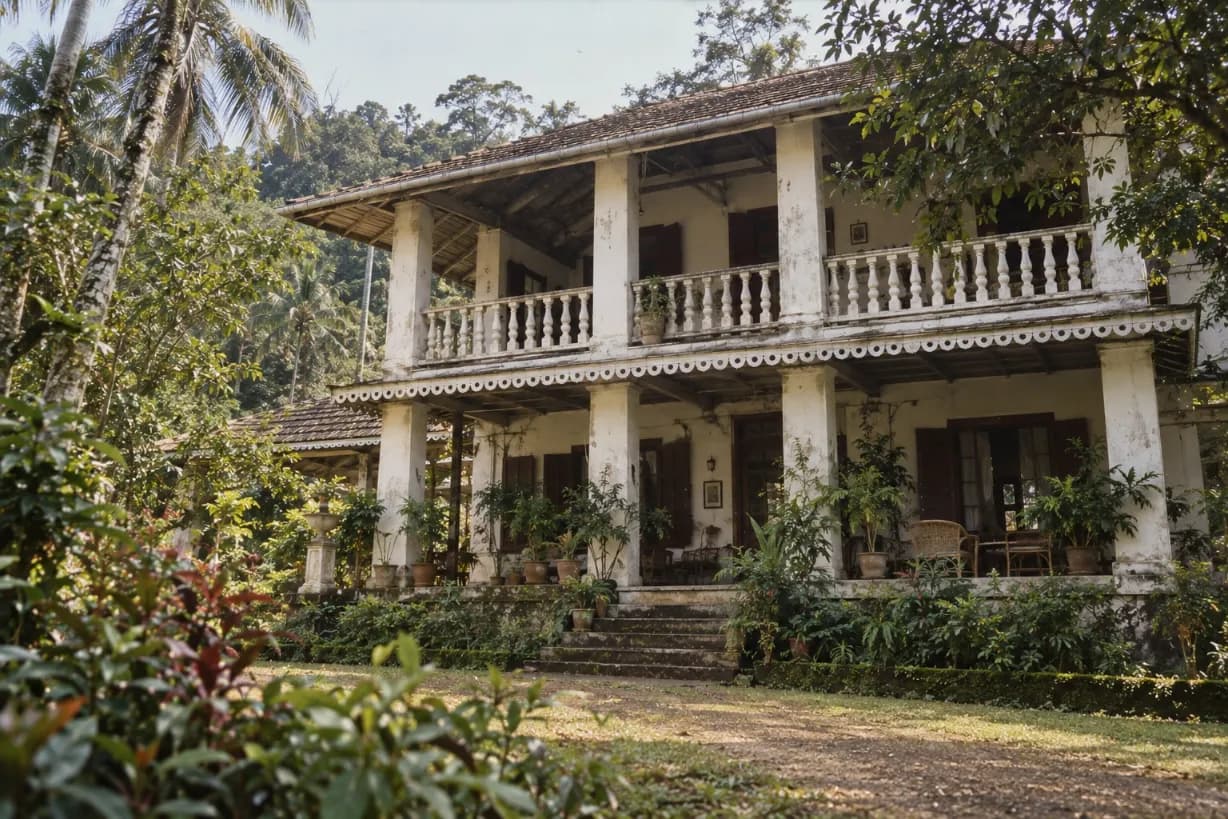
Holyrood Estate Talawakelle | There is something about the old estate bungalows of Ceylon that makes them difficult to forget. Perhaps it is the broad red-tiled roofs, the long verandahs looking out towards the garden, or the way these houses seem to belong so naturally among the misty hills. They were built for another time, yet many remain remarkably familiar.
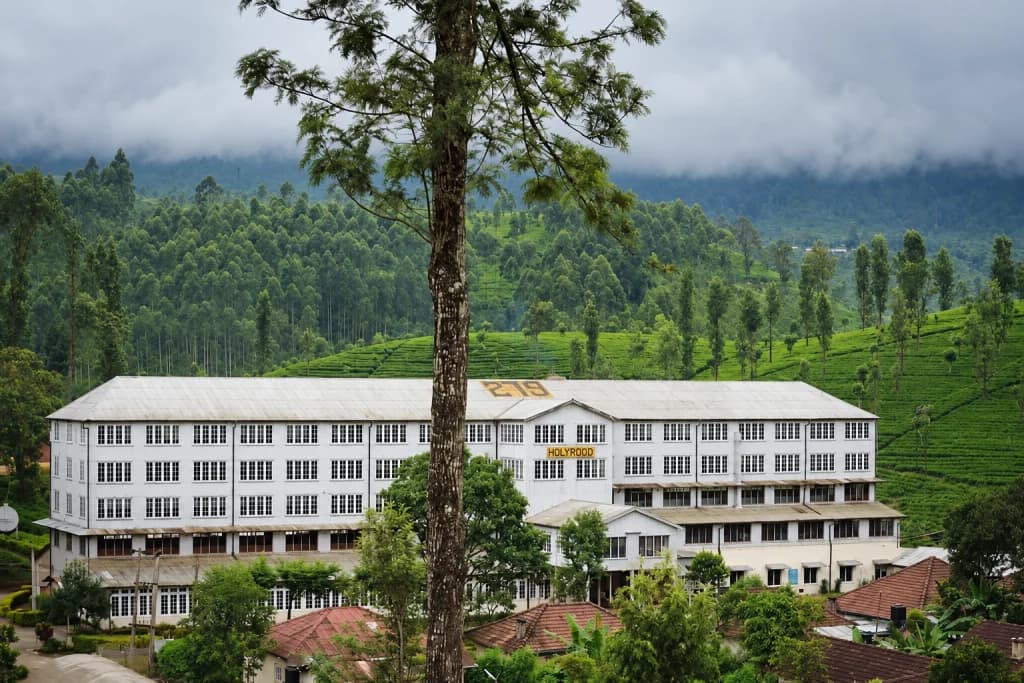

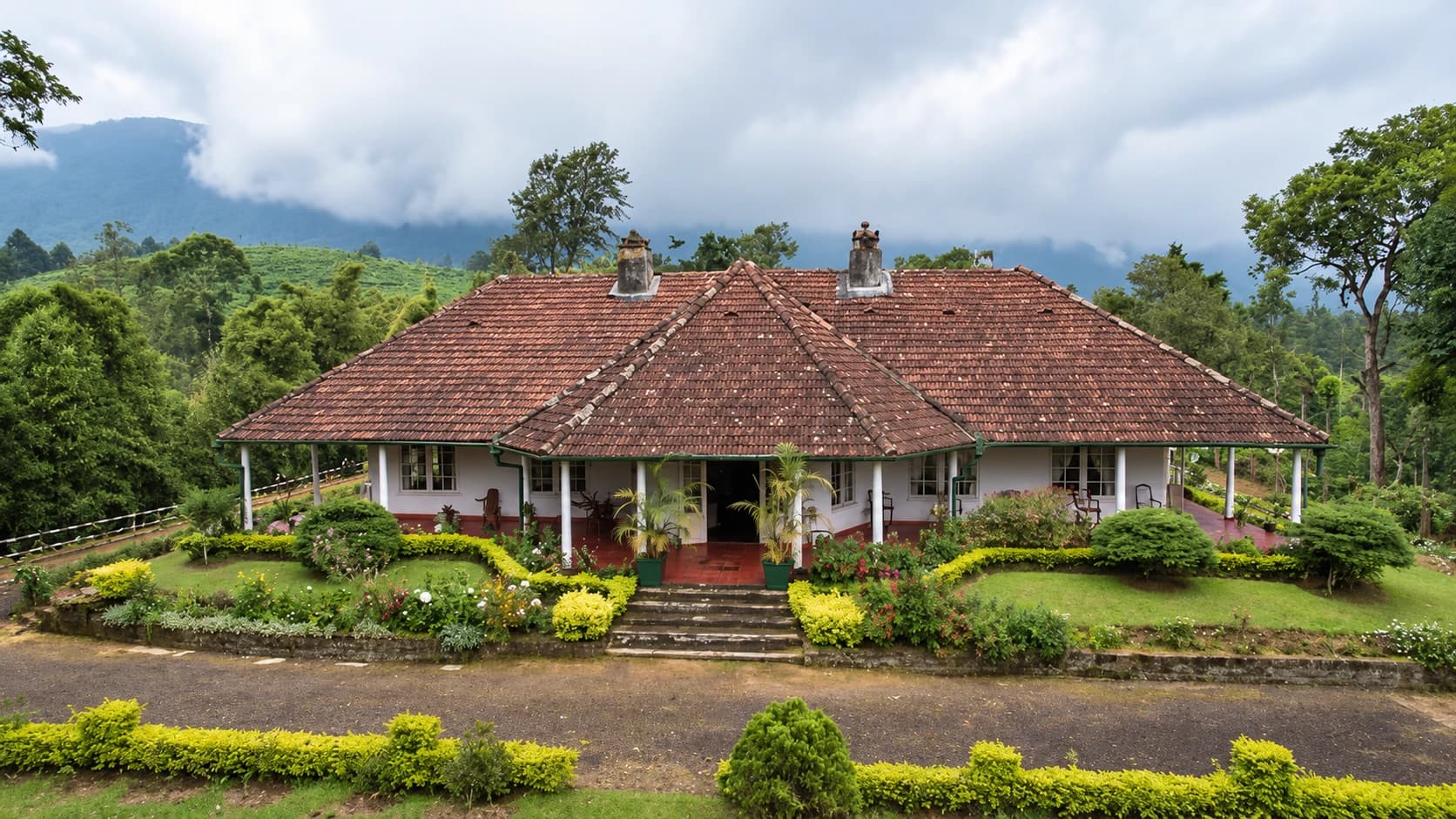
The superintendent’s bungalow at Holyrood Estate in Talawakelle is one such house. With its whitewashed walls, spreading roof and carefully maintained garden, it recalls an era when the tea plantations of Ceylon were administered from residences such as this, often standing a little apart from the factories, tea fields and workers’ quarters. Even the name Holyrood carries an interesting echo of the past.
A Scottish Name in the Hills of Ceylon
Far away in Edinburgh, Scotland, stands the Palace of Holyroodhouse, the historic royal residence associated with the Scottish monarchy. Beside it are the remains of Holyrood Abbey, founded in 1128 during the reign of King David I. The name Holyrood, meaning Holy Cross, has been part of Scotland’s history for centuries, long before tea was planted in the mountains of Ceylon.
The connection is intriguing because Scottish planters played a significant role in the development of Ceylon’s plantation industry. During the nineteenth century, men from Scotland travelled to the island to establish and manage coffee estates and, later, tea plantations. They brought with them their knowledge, ambitions, customs and sometimes names that reminded them of places back home.
Across the hill country, British place names became part of the plantation landscape. Holyrood in Talawakelle fits into this wider tradition. Whether the estate was specifically named after Edinburgh’s Holyrood has not been conclusively established, but the shared name recalls the strong Scottish influence on Old Ceylon.
One place was associated with kings, queens and abbeys. The other became part of a landscape of tea bushes, winding estate roads and mountain mist. Yet the name survives in both.
When Talawakelle Became Tea Country
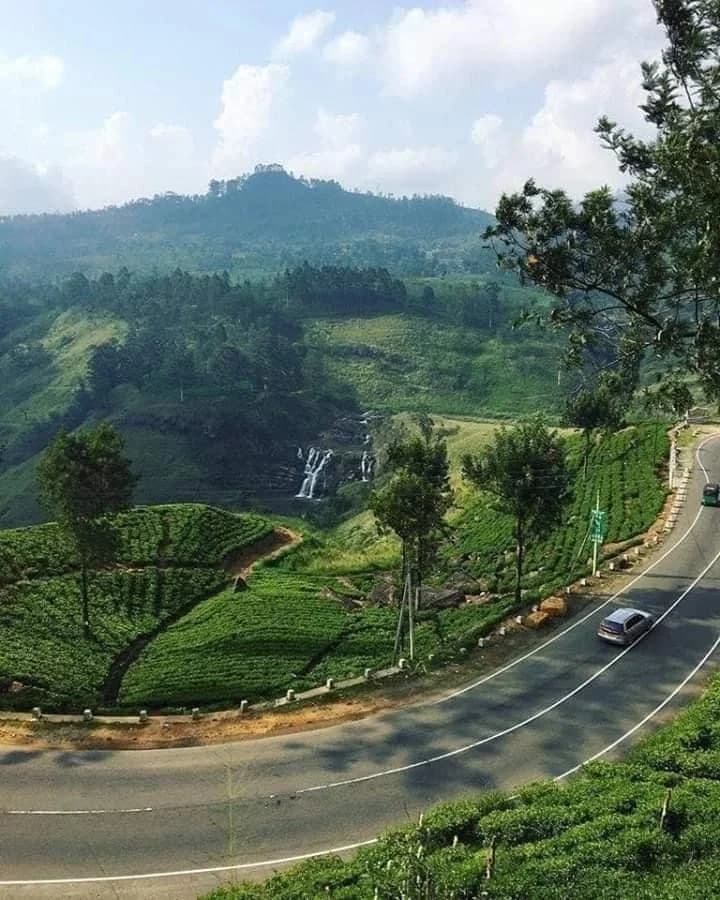
Before tea transformed the central highlands, coffee was the great plantation crop of Ceylon. During the nineteenth century, extensive areas of the hill country were cleared and planted with coffee, attracting European investors and planters. But the coffee industry was devastated by coffee leaf disease, which spread through the plantations from the late 1860s. Tea gradually replaced coffee, and by the end of the century, districts such as Dimbula and Talawakelle had become important centres of tea production.
Holyrood Estate belongs to this celebrated tea-growing region. Situated at an elevation of approximately 4,300 feet, in the landscape surrounding the Great Western mountain range, it occupies country well suited to the cultivation of high-grown Ceylon tea. The cool climate, regular rainfall and mountain terrain helped shape the character of the estates established across this part of the central highlands.
The railway was equally important to the development of the district. With improved connections to Colombo, tea could be transported more efficiently from the hills to the port, where it entered markets around the world. As the industry expanded, the estates developed their own communities and institutions. Factories, workers’ settlements, schools, estate offices and bungalows became permanent features of the landscape.
Life at the Superintendent’s Bungalow
The superintendent’s bungalow served as both a family residence and a place where plantation business could be conducted. The day often began early, with fields to inspect, factory operations to supervise, accounts to examine and matters concerning labour, transport and production to resolve. The superintendent’s responsibilities extended across almost every aspect of estate management.
Back at the bungalow, domestic life followed another rhythm. One can imagine a misty morning with breakfast served in the dining room before the superintendent left for his rounds. The verandah would have offered a sheltered place to sit during the afternoon, while visitors from neighbouring estates might arrive along the gravel driveway. In the colder months, fireplaces and heavy curtains helped keep out the chill. Wooden furniture, framed photographs, bookshelves and old-fashioned dining tables were familiar features of many plantation homes.
The architecture of the Holyrood bungalow reflects the practical character of these residences. Its broad roof provides protection against the heavy hill-country rain, while the surrounding verandahs create sheltered outdoor spaces. The house is substantial without being unnecessarily grand, and its proportions seem particularly suited to the cool, damp climate of Talawakelle.
The Gardens Around the Old Bungalow
The garden, too, tells its own story. Old estate bungalows were often surrounded by carefully maintained lawns, flowering shrubs, clipped hedges and pathways. Roses, hydrangeas, dahlias and other plants suited to the cooler climate were cultivated with considerable care. For many families, gardening became part of everyday plantation life, and the gardens surrounding these houses were often remembered as fondly as the houses themselves.
A garden also gave the bungalow a sense of separation from the working estate. Beyond its lawns lay the tea fields, factory buildings, estate roads and workers’ settlements. Within the garden, life could appear quieter and more domestic. Trees planted decades earlier offered shade, while the changing seasons brought different flowers into bloom.
Much of this work depended on gardeners and other estate employees whose names rarely appeared in descriptions of planter households. The carefully maintained gardens remembered in old photographs were not simply the result of a planter’s interest in flowers. They also represented years of skilled and often unrecorded labour.
The Other Side of Plantation Life
The story of these bungalows cannot be separated from the people who sustained the estates. For generations, Ceylon’s tea industry depended heavily upon the labour of plantation workers, many descended from Tamil families brought from southern India during British colonial rule. Their lives were very different from those lived inside the superintendent’s bungalow.
While the planter’s residence offered space, privacy and domestic comfort, many estate workers lived in crowded line rooms and faced difficult working and living conditions. Women, in particular, carried much of the daily burden of tea plucking, alongside responsibilities within their households. The industry depended on their labour, yet their contribution was not always given the recognition it deserved.
The peaceful appearance of an old estate bungalow can make it easy to romanticise the plantation past. But the history of Ceylon tea is also a history of hard labour, unequal living conditions and generations of families whose contributions made the industry possible. The bungalow represents one aspect of that history. The tea fields, factories and workers’ settlements tell another, equally important story.
A Changing World in the Tea Country
As the decades passed, the plantation world began to change. Ceylon gained independence in 1948, and the ownership and administration of the tea industry evolved considerably over the following decades. The nationalisation of many estates during the 1970s and the subsequent restructuring of plantation management altered the older systems.
The European planter community gradually diminished, while generations of Sri Lankan superintendents and estate managers took over responsibilities once largely held by expatriates. The plantations themselves continued to operate, but the society that had grown around the old European planting community was no longer quite the same.
Many of the old bungalows continued to serve as official residences. Others were modernised, converted into guesthouses or adapted for different purposes. Some were abandoned or demolished as the expense of maintaining large, ageing houses became increasingly difficult to justify. Those that survived retained something of the architectural character of the old plantation districts, with their red-tiled roofs, broad verandahs and gardens remaining familiar sights along estate roads.
Memories Beneath the Red-Tiled Roof
Looking at the Holyrood bungalow, it is not difficult to imagine the atmosphere of an earlier Talawakelle. Rain falling steadily on the roof, mist moving slowly across the garden, the sound of a vehicle making its way along the estate road and, somewhere in the distance, the machinery of the tea factory continuing its work. For those who grew up on the plantations, these were ordinary parts of everyday life.
The bungalow was not simply a colonial building to be admired from a distance. It was a familiar landmark within the estate, associated with generations of managers, workers, families and visitors. Perhaps someone remembers visiting the bungalow as a child. Perhaps an older estate employee remembers the superintendent who once lived there, or the days when the garden was tended by a familiar group of workers.
Such memories rarely appear in official histories. Estate records may preserve the names of managers, the acreage under cultivation and the amount of tea produced, but they seldom record the smaller details of life within and around a bungalow. Those memories often survive only through photographs, family recollections and the people who spent their working lives on the estate.
The Name That Still Echoes Scotland
And then there is that name again: Holyrood. In Edinburgh, it belongs to a landscape of palaces, abbeys and Scottish history. In Talawakelle, it has become part of the story of Ceylon tea. The two places are separated by thousands of miles, but their shared name offers a reminder of the historical connections between Scotland and the island’s plantation country.
Today, the old superintendent’s bungalow remains a reminder of a world that has changed considerably. The tea industry continues, but the social customs, management structures and lifestyles of the nineteenth and early twentieth centuries have largely passed into history. The bungalow belongs to a landscape where old estate names, railway stations, factories and churches still recall the generations who helped shape the planting districts.
The red-tiled roof, the verandah and the garden remain recognisable. And somewhere in the hills of Talawakelle, the name Holyrood continues to preserve an echo of Scotland in the landscape of Old Ceylon.
Visit us: https://trippingsrilanka.com/