Who Were Cultural Local Council Members in Ceylon: Old Ceylon Chiefs
A Striking Image from Colonial Ceylon
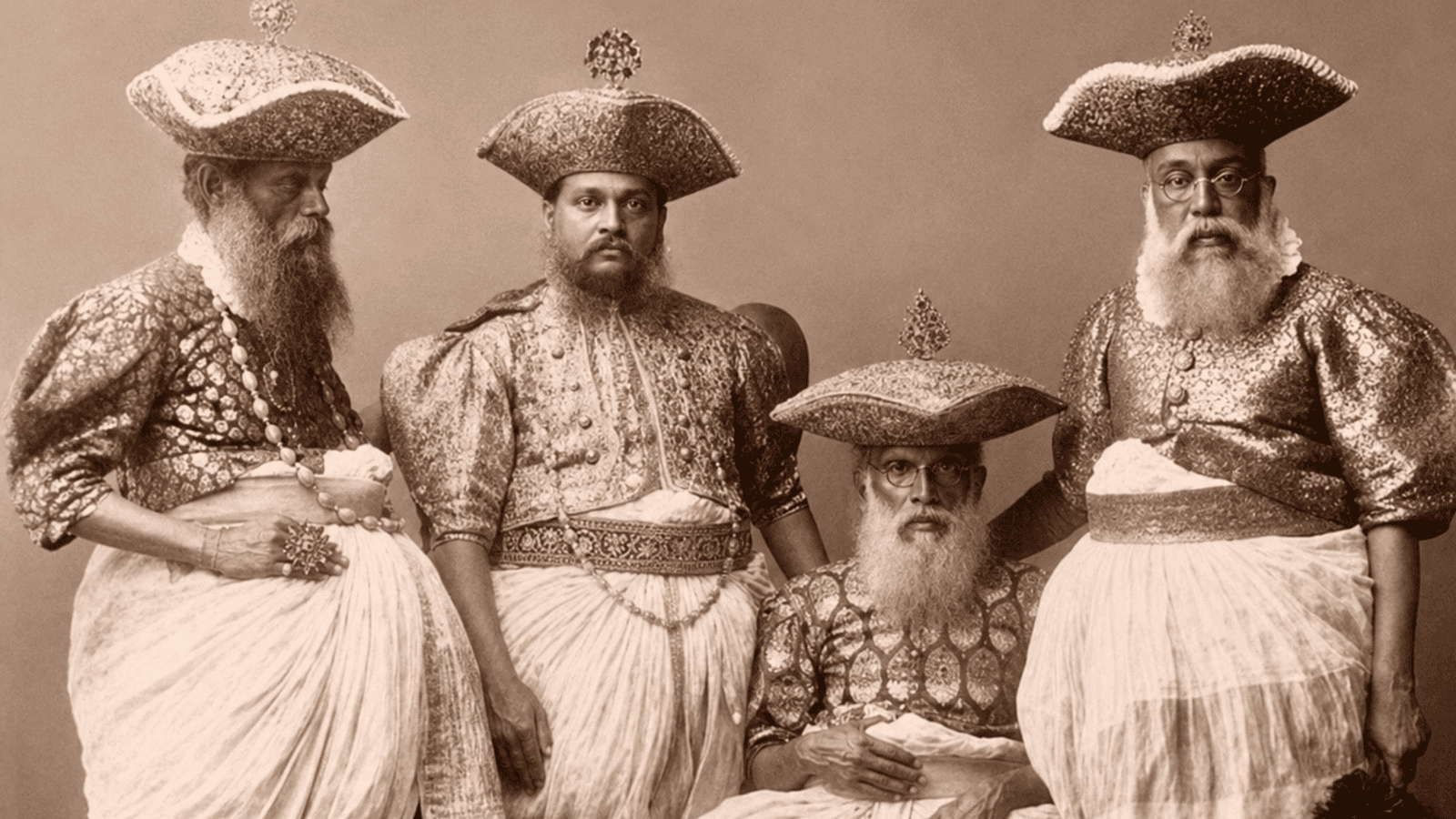
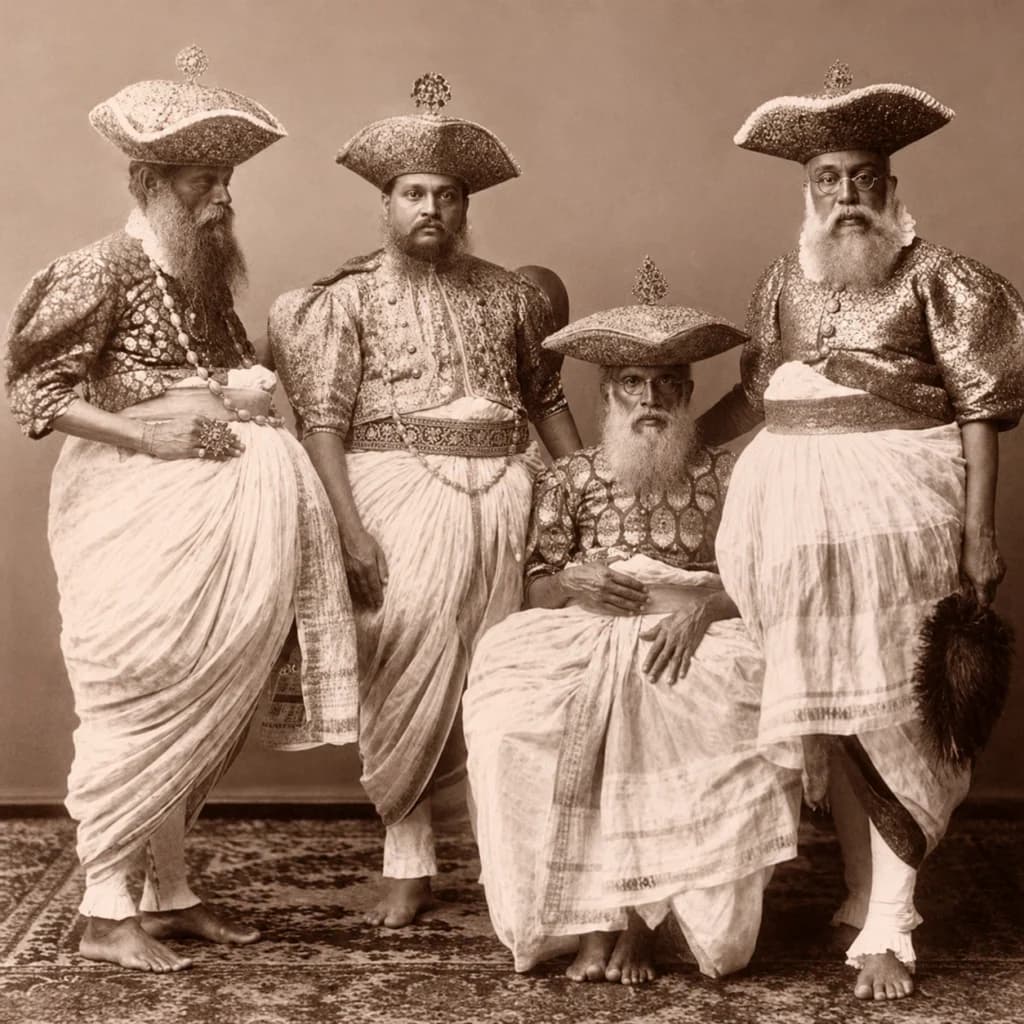
This remarkable old photograph is titled “Local Council Members in Ceylon circa 1880 | Colombo, Western Province.” The image text also identifies it as “Local Council Members (Chiefs) by Charles T. Scowen, Kandy, Ceylon, c. 1880.”
At first glance, the photograph is visually powerful. Four men are shown in formal traditional dress, wearing elaborate headgear, layered jewellery, waist cloths and ceremonial garments. One figure is seated while the others stand around him, creating a carefully arranged portrait of dignity, authority and status.
But this image is more than a studio portrait. It opens a window into the world of Old Ceylon, when local chiefs and council members played important roles in administration, ceremony and community leadership under British colonial rule.
For heritage travellers and history lovers, this photograph captures a fascinating moment where traditional authority, colonial photography and local identity came together.
Who Were These Local Council Members?
The men in the photograph are described as local council members or chiefs. In nineteenth-century Ceylon, such figures often belonged to respected local families and held recognised positions within the administrative structure of the time.
They were not ordinary villagers. Their dress, posture and formal presentation suggest rank and public importance. Local chiefs, headmen and council members acted as intermediaries between colonial authorities and local communities.
Their responsibilities could include matters connected to village administration, land, taxation, dispute settlement, public order and ceremonial duties. They helped connect traditional systems of local leadership with the colonial government’s administrative framework.
This made them important figures in daily governance. While governors, government agents and British officials often appear in written histories, local chiefs and council members were the people who carried authority into towns, villages and districts.
The Role of Chiefs in Colonial Administration
During British rule, Ceylon’s local administration relied heavily on existing systems of rank and influence. Rather than replacing every local structure immediately, the colonial government often worked through headmen, chiefs and local elites.
These men understood local customs, family networks, land relationships and community loyalties. Their knowledge made them useful to the colonial administration.
At the same time, their position was complex. They stood between two worlds. On one side was the colonial government, with its laws, records and official hierarchy. On the other side were local communities, traditions and expectations.
This is why photographs like this are so interesting. The men are not dressed like British officials. They are dressed in a way that expresses local rank, inherited prestige and cultural identity. Yet the formal studio portrait itself belongs to the colonial era of photography and documentation.
The result is an image that shows both continuity and change.
The Ceremonial Dress of Authority
One of the most striking features of the photograph is the clothing.
The men wear elaborate headgear, traditional cloth, jewellery and formal upper garments. Their appearance immediately signals status. Every element of the dress seems deliberate.
The large hats or headdresses are especially eye-catching. They suggest ceremonial identity rather than everyday clothing. The jewellery across the chest and arms adds further emphasis to rank and dignity.
In Old Ceylon, dress was not merely personal style. It communicated position, caste, office, region and social standing. A person’s clothing could tell others who he was, what role he held and how he should be received.
For modern viewers, the photograph offers a rare opportunity to study the visual language of authority in nineteenth-century Ceylon.
Charles T. Scowen: Photographer of Old Ceylon
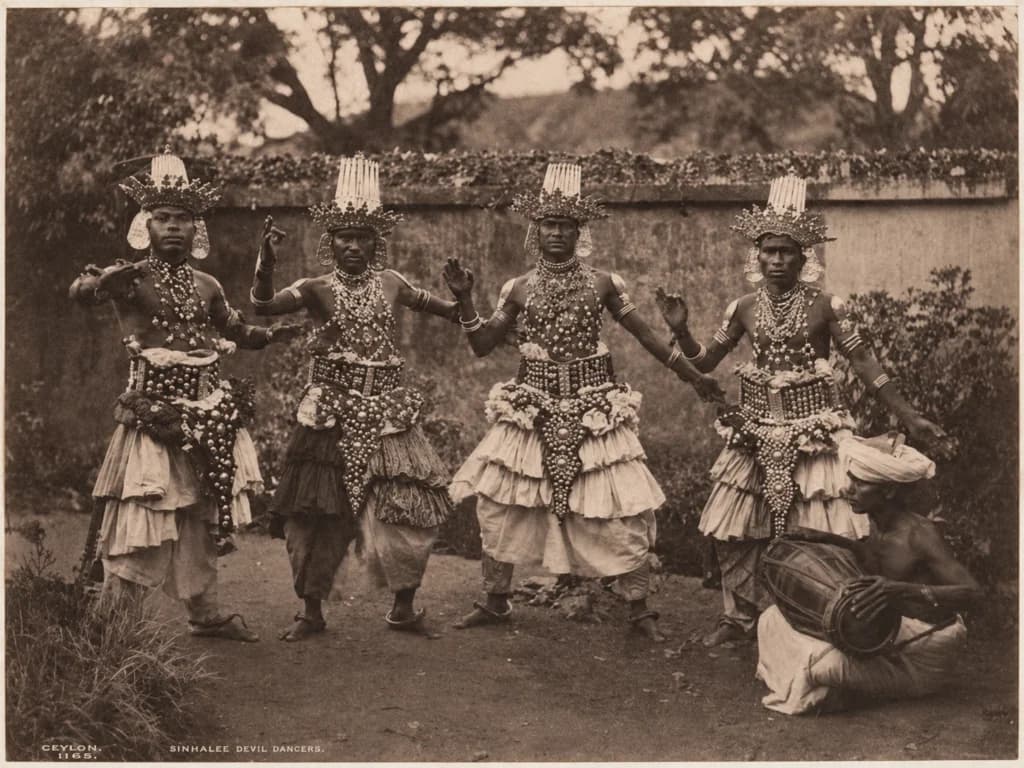
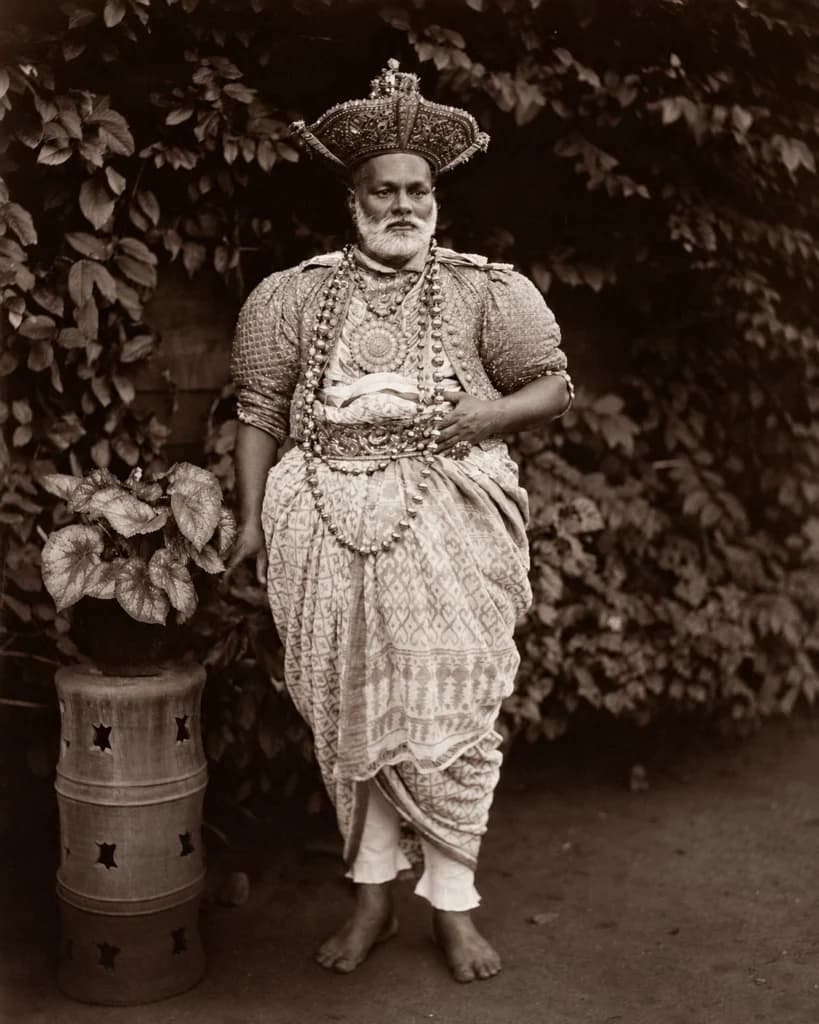
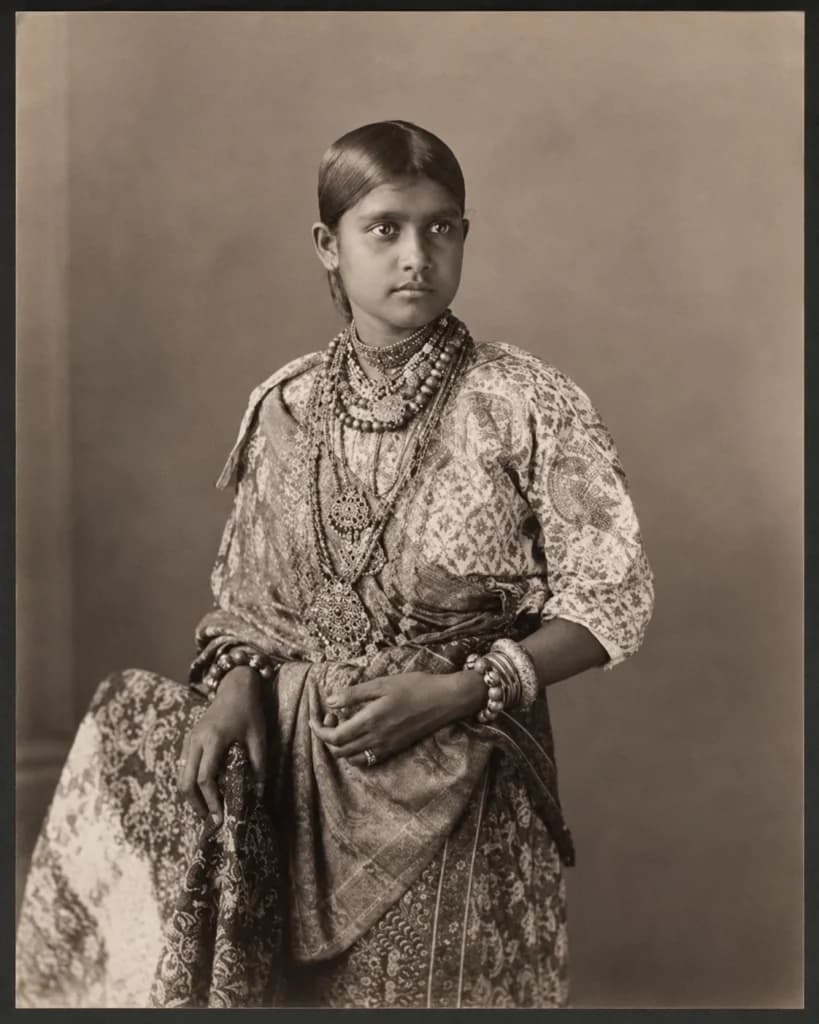
Photots by Charles T. Scowen
The image is credited to Charles T. Scowen, one of the important photographers associated with nineteenth-century Ceylon.
Scowen and his studio are well known for colonial-era photographs of Ceylon, including portraits, landscapes, buildings, plantation scenes and ethnographic images. His work helped shape how Ceylon was visually presented during the late nineteenth century.
Photography during this period was not casual. It required equipment, planning, studio arrangements and technical skill. A portrait such as this would have been carefully staged. The seated and standing positions, the arrangement of the figures, the lighting and the clothing all contribute to the final image.
Scowen’s photographs are valuable today because they preserve visual details that written records often miss. They show faces, garments, posture, architecture, landscape and social presentation from a world that has largely disappeared.
Kandy, Colombo and the Question of Location
The visible text connected with the image contains two location references. One line describes it as “Local council members in Ceylon circa 1880 | Colombo, Western Province.” Another identifies it as “Local Council Members (Chiefs) by Charles T. Scowen, Kandy, Ceylon, c. 1880.”
This difference is worth noting.
Charles T. Scowen was strongly associated with Kandy, and many of his studio portraits were connected to the Kandyan world of chiefs, headmen and traditional elites. However, images from the period often circulated widely, and later captions could sometimes add or change locations.
Old photographs frequently carry layers of identification. A studio location, subject location, collector’s note, later caption or online post may not always refer to the same thing.
For this reason, the safest reading is that this is an 1880-era Ceylon portrait of local council members or chiefs, photographed by Charles T. Scowen, with later online references linking it to Colombo and Western Province as well as Kandy.
That uncertainty does not reduce the value of the photograph. In fact, it makes it more interesting for researchers.
A Portrait of Power and Presentation
This photograph was clearly composed to communicate authority.
The seated figure draws the eye first. His position suggests seniority or importance. The standing figures around him create balance and formality. Their expressions are serious. Their bodies are still. Nothing about the image feels casual.
This was common in nineteenth-century studio photography. Portraits were designed to preserve status. They were not quick snapshots. They were carefully made representations of how a person or group wished to be remembered.
For local chiefs and council members, such a photograph would have carried meaning. It showed them as dignified public figures. It preserved their role in a changing colonial society. It also allowed their image to circulate beyond their immediate community.
Today, the photograph helps us understand how authority was performed visually in Old Ceylon.
What the Photograph Reveals About Old Ceylon
This image reveals several important aspects of nineteenth-century Ceylon.
First, it shows that local leadership remained visible and important during colonial rule. These men were not hidden figures. They were formally photographed and presented as recognised members of society.
Second, it shows the richness of ceremonial dress in Ceylon. Clothing, jewellery and headgear carried deep social meaning.
Third, it shows how photography became part of colonial documentation. Photographers like Scowen recorded people, places and customs, creating images that continue to shape how we imagine the period.
Finally, it shows the layered identity of Ceylon itself. The photograph is colonial in format, but local in dress and subject. It belongs to both the world of British-era photography and the older world of regional authority and tradition.
Why Images Like This Matter Today
Old photographs like this are more than historical curiosities. They are visual archives.
They help modern Sri Lankans and overseas descendants understand how people looked, dressed and presented themselves more than a century ago. They also help heritage travellers see that colonial Ceylon was not only about governors, forts, railways and plantations.
It was also about local figures who carried authority in towns and villages.
For genealogy researchers, such images are especially meaningful. Even when the individuals are not named, the photograph preserves clues about social rank, dress and community leadership. It may help families understand the world in which their ancestors lived.
For cultural historians, the image is equally valuable. It records how power was displayed through clothing, posture and formal portraiture.
Reading the Image Carefully
When looking at this photograph, it is useful to ask a few questions.
Who were these men?
What local offices did they hold?
Were they photographed in Kandy, Colombo, or elsewhere?
Was the portrait made for official record, personal memory, or commercial circulation?
What do their garments tell us about rank and identity?
These questions cannot all be answered from the image alone. But they make the photograph richer. They remind us that every old image is both a record and a mystery.
The visible details are clear: local council members or chiefs, Ceylon, circa 1880, photographed by Charles T. Scowen. The deeper story lies in the social world behind those words.
A Heritage Traveller’s View
For travellers interested in Old Ceylon, this photograph connects beautifully with places such as Kandy, Colombo, old administrative towns, colonial museums, historic archives and former council buildings.
It also encourages a different kind of travel. Rather than only visiting famous monuments, travellers can begin looking for the human history behind them.
The old chiefs and council members of Ceylon were part of the island’s administrative and cultural fabric. Their stories are connected to courts, temples, government offices, village councils, land records, ceremonial processions and family histories.
A single photograph can therefore lead to a much wider journey through Sri Lanka’s past.
Final Thoughts: Faces of Authority in Old Ceylon
The photograph of local council members in Ceylon circa 1880 is a powerful reminder that history is not only written in books. It is also preserved in faces, clothing, posture and silence.
These men sit and stand before the camera with dignity. Their names may not be visible in the post, but their presence remains strong. Through the lens of Charles T. Scowen, they continue to speak across time.
They represent a world in which traditional authority, colonial administration and local identity overlapped. They remind us that Old Ceylon was not a simple story of rulers and subjects, but a layered society shaped by negotiation, status, ceremony and memory.
For modern readers, the image offers a rare glimpse into that world.
It is not just a photograph of four men. It is a portrait of power, tradition and Old Ceylon itself.
Visit Us: https://trippingsrilanka.com/stories
More from Old Ceylon
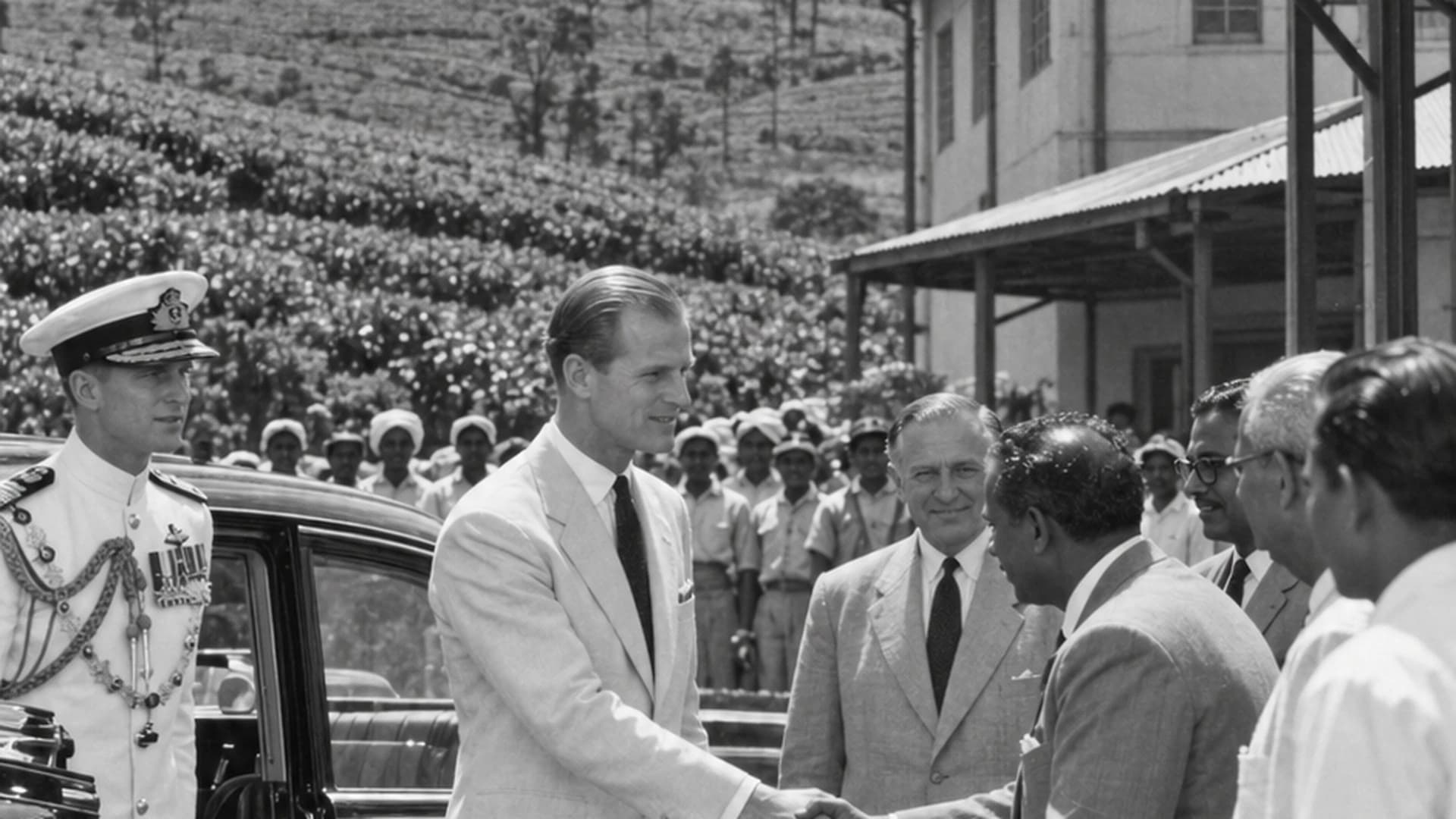
When Prince Philip Visited Pedro Estate: The Royal Visit That Became Part of Ceylon Tea History in 1954
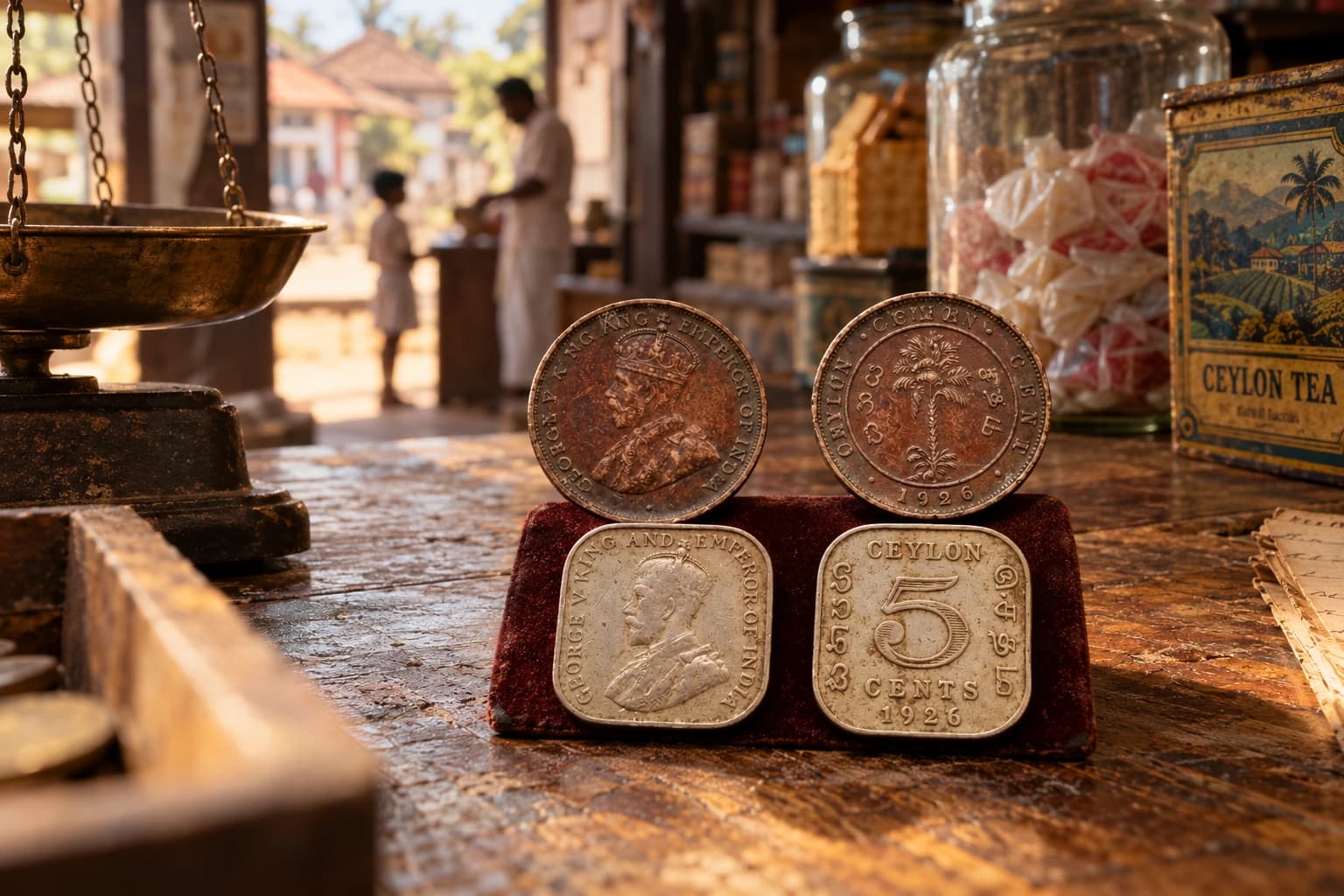
When Five Cents Mattered: The Forgotten Small Change of Old Ceylon