A Hill-Country Image from Another Time
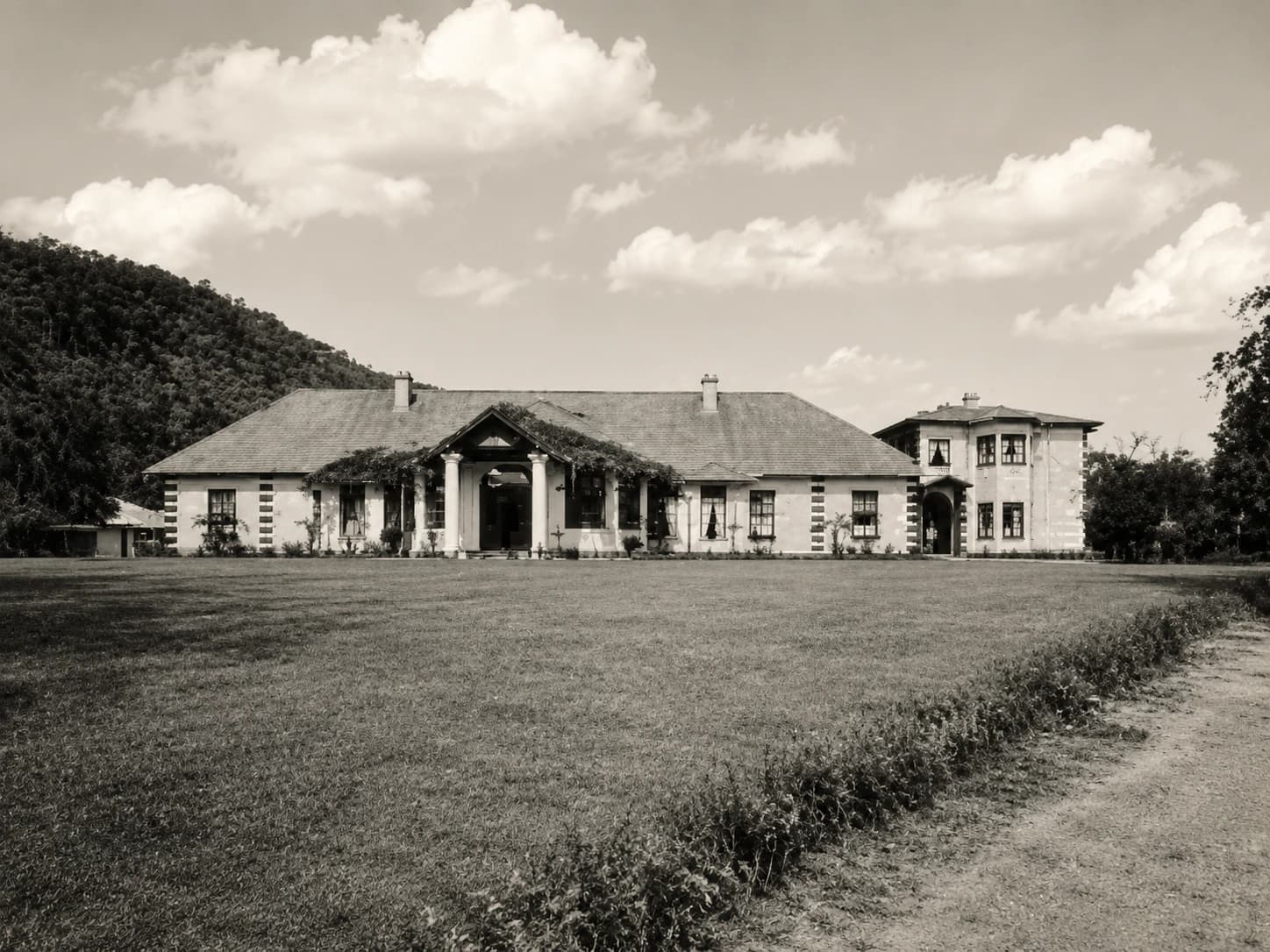
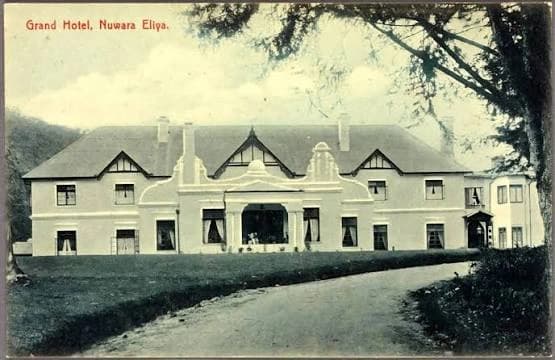
An old postcard of the Grand Hotel, Nuwara Eliya shows a quiet scene from Ceylon’s hill-country past. The building stands low and elegant against the cool landscape, with open lawns in front and hills rising behind it. The caption identifies it as “Grand Hotel – Nuwara Eliya – Old Ceylon Postcard”, with photo credit to Plâté & Co.
At first glance, it appears to be a simple hotel postcard. But for anyone interested in Old Ceylon, the image carries a deeper meaning.
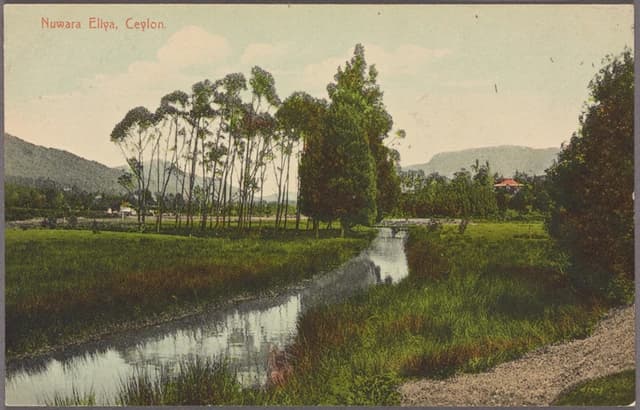
It shows Nuwara Eliya not as a busy modern town, but as a quiet colonial hill station — a place of cool air, gardens, verandahs, fireplaces, formal dinners, horse races, afternoon walks and seasonal escape from the heat of the lowlands.
The Grand Hotel was one of the great symbols of that world.
Check our previous article – https://trippingsrilanka.com/stories/old-ceylon-postcards-to-england
Nuwara Eliya: The “Little England” of Ceylon
Nuwara Eliya became famous during the British period because of its climate and landscape.
High in the central mountains, it offered cool weather, misty mornings and open scenery very different from Colombo, Galle or the coastal towns. British officials, planters and visitors saw it as a retreat from the tropical heat.
Over time, the town developed the character of a colonial hill station. It had gardens, clubs, churches, hotels, bungalows, a racecourse, golf links and carefully maintained public spaces. This gave Nuwara Eliya its familiar nickname: “Little England.”
The postcard of the Grand Hotel belongs to that visual tradition.
It presents Nuwara Eliya as calm, orderly and scenic — a place where travellers came not only to stay, but to experience a particular way of life in the hills.
Check our previous article – https://trippingsrilanka.com/stories/nuwara-eliya-little-england
The Grand Hotel as a Colonial Landmark
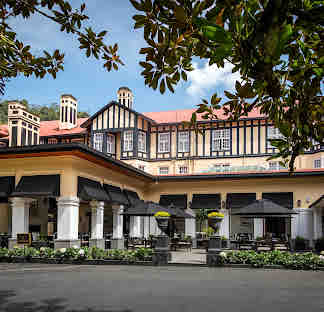
The Grand Hotel is one of Nuwara Eliya’s best-known heritage buildings.
Its story is closely linked to the colonial development of the town. Hotels like this were not simply places to sleep. They were part of the social life of the hill station. Guests arrived from Colombo, Kandy, the plantation districts and sometimes from overseas.
A stay at the Grand Hotel meant entering a world of formal hospitality.
There would have been lounges, dining rooms, gardens, fireplaces, verandahs and staff attending to the needs of travellers. The hotel served officials, planters, families and visitors who came to Nuwara Eliya for the season.
In Old Ceylon, hill-country hotels had a special place. They were part rest house, part social club and part symbol of colonial leisure.
The Grand Hotel represented that world at its most elegant.
What the Postcard Shows
The postcard image shows the hotel in a quiet garden setting.
The building appears broad and low, with a central entrance and a more prominent section to one side. The wide open lawn gives the hotel a sense of space. The surrounding landscape feels uncrowded, with hills and trees framing the view.
This is important because old postcards were carefully chosen images. They were meant to capture the essence of a place.
In this case, the postcard does not show traffic, crowds or busy streets. It shows calm. It shows a hotel surrounded by air, garden and mountain scenery.
That was the image of Nuwara Eliya that visitors wanted to remember and send to others.
Plâté & Co. and the Postcard World of Old Ceylon
The image is credited to Plâté & Co., one of the best-known names associated with old Ceylon photography and postcards.
During the late nineteenth and early twentieth centuries, postcards became an important way of showing Ceylon to the world. They carried images of Colombo streets, Galle Fort, Kandy, ancient ruins, tea estates, waterfalls, railway stations, temples and hill-country hotels.
A postcard was small, but powerful.
It allowed travellers to send a view of Ceylon across the sea. It turned places into memories. It also shaped how the island was imagined by people who had never visited.
The Grand Hotel postcard belongs to this larger postcard culture.
It was not only a photograph of a hotel. It was part of how Old Ceylon presented itself — scenic, elegant, orderly and memorable.
Life at the Grand Hotel in Old Ceylon
To understand the postcard properly, we must imagine the daily life behind the image.
A traveller arriving in Nuwara Eliya may have come by train to Nanu Oya and then continued by road into town. The air would have felt colder after the journey through the lowlands and tea country. Luggage would be carried in. Rooms would be prepared. Fires might be lit in the colder months.
The day could begin with breakfast in the dining room, followed by walks through the town, garden visits, golf, horse racing during the season, church services, afternoon tea or drives through the surrounding estates.
Evenings would have carried their own rhythm.
Guests might gather in lounges, write letters, read newspapers, dress for dinner or speak about plantation news, Colombo affairs and travel plans.
The hotel was therefore not only a building. It was a stage for hill-station life.
The Garden Setting
One of the most striking things about the postcard is the open lawn.
The garden was an important part of the colonial hill-station experience. In Nuwara Eliya, lawns, hedges, flower beds and tree-lined roads helped create the feeling of an English-style town in the tropics.
The Grand Hotel’s garden setting gave visitors a sense of calm and prestige.
It allowed the building to be seen from a distance. It created space for walking, viewing and photography. It also helped separate the hotel from the busier life of the town.
For Old Ceylon travellers, gardens were not decorative extras. They were part of the identity of hill-country leisure.
Nuwara Eliya and the Planter Season
The Grand Hotel was also connected to the social world of the plantation districts.
Planters from surrounding tea estates often came to Nuwara Eliya for rest, sport and social gatherings. The town’s hotels, clubs, racecourse and golf links became part of the seasonal life of the hill country.
After weeks or months on remote estates, Nuwara Eliya offered a change of atmosphere.
There were shops, hotels, church services, dances, races, club events and opportunities to meet other families from the plantation world.
The Grand Hotel therefore belonged to the wider social geography of Ceylon tea country.
It was a meeting point between plantation life and colonial leisure.
Architecture and Atmosphere
The building in the postcard has the character of a colonial hill-country hotel.
Its broad shape, formal entrance and garden frontage suggest comfort and order rather than dramatic grandeur. This was typical of many hill-station buildings. They were designed to suit climate, hospitality and social use.
In Nuwara Eliya, architecture had to respond to cool weather and frequent rain. Hotels and bungalows often used fireplaces, pitched roofs, thick walls, verandahs and sheltered entrances.
The Grand Hotel’s atmosphere came not only from its rooms, but from its relationship with the landscape.
It stood as part of a mountain town where climate, architecture and lifestyle worked together.
Why the Grand Hotel Matters to Old Ceylon
The Grand Hotel matters because it represents one of the most distinctive aspects of Old Ceylon: the hill-station world.
It connects several important themes:
- British colonial leisure
- Nuwara Eliya’s identity as Little England
- Plantation society and seasonal travel
- Hill-country hotel architecture
- Postcard photography and travel memory
- Garden culture in the mountains
- The link between Nanu Oya railway travel and Nuwara Eliya hospitality
For Tripping Sri Lanka readers, the hotel is not just accommodation. It is part of the story of how the central highlands were imagined, photographed and experienced.
Reading the Postcard Today
Today, the old postcard feels almost dreamlike.
There are no modern vehicles, no crowds and no visual clutter. The hotel appears calm and spacious. The hills behind it seem to hold the whole scene in silence.
But the image should not be read only as nostalgia.
It also reminds us how colonial Ceylon created selective views of itself. Postcards often showed beauty, order and leisure, while leaving out the labour and inequalities that supported that world.
Behind the comfort of Nuwara Eliya were the tea estates, railway workers, hotel staff, domestic workers, gardeners, coach drivers and plantation labourers whose work made hill-station life possible.
A fuller reading of the postcard should include both the charm of the image and the people behind the scene.
A Place for Modern Heritage Travellers
For modern travellers, the Grand Hotel remains an important stop in Nuwara Eliya.
Even those who do not stay there can appreciate its heritage value from the outside and understand its place in the town’s story. It can be explored as part of a wider Old Ceylon route through Nuwara Eliya.
Nearby heritage experiences include:
- Nuwara Eliya Post Office
- Queen Victoria Park
- Holy Trinity Church
- The racecourse
- Hill Club surroundings
- Gregory Lake
- Old tea estates around Nuwara Eliya
- Nanu Oya railway route
- Hakgala and the old hill-country road
Together, these places help travellers understand why Nuwara Eliya became one of the most memorable hill stations in Ceylon.
The Grand Hotel as a Living Postcard
The old postcard shows a past moment, but the Grand Hotel still continues the story.
Its survival allows visitors to connect the image with the present. The lawns, architecture and cool air still help preserve the atmosphere that made Nuwara Eliya famous.
This is what makes heritage hotels important.
They are not only buildings from the past. They are places where travellers can still experience fragments of an older world — through architecture, setting, gardens, service traditions and memory.
The Grand Hotel remains one of the strongest symbols of that experience in Nuwara Eliya.
Final Thoughts: A Postcard from Little England
The old Plâté & Co. postcard of the Grand Hotel is more than a historic image.
It captures the mood of Nuwara Eliya in Old Ceylon: quiet lawns, mountain air, colonial architecture and the refined world of the hill station.
For travellers, it offers a way to see the Grand Hotel not only as a famous hotel, but as part of a larger story — the story of how Ceylon’s highlands became a place of escape, elegance and memory.
The image may be faded, but its atmosphere remains strong.
It reminds us that Nuwara Eliya was not simply visited.
It was imagined, photographed, written about and sent across the world — one postcard at a time.
Visit Us: https://trippingsrilanka.com/stories
Heritage places mentioned
Grand Hotel Nuwara Eliya
More from Old Ceylon
When the King’s Birthday Was Celebrated on Galle Face Green: A Glimpse of Colombo in 1933
Holyrood Estate, Talawakelle: An Old Ceylon Bungalow and a Name That Echoes Scotland