A Machine That Changed the Road
motorcycles in Old Ceylon | There was a time in Ceylon when a motorcycle was not just a vehicle. It was a statement, a sound, and a sign that the road was beginning to change. A man riding one through a town, along an estate road or across a dusty country stretch would have been noticed long before he arrived. The sound came first – a hard mechanical note rising above carts, bicycles, voices and the ordinary noise of the road. Then the machine appeared, small by today’s standards, perhaps awkward, perhaps unreliable, but full of movement.
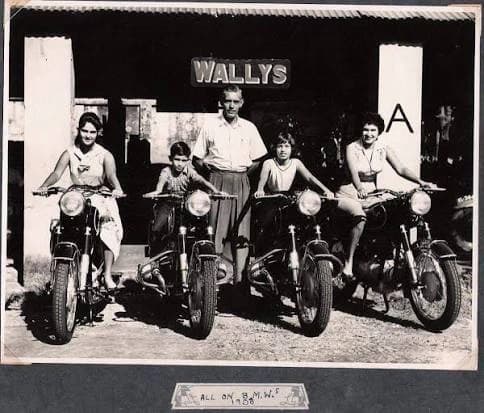
A motorcycle could go where a car was too expensive, where a bicycle was too slow and where walking would take half the day. In old photographs, motorcycles often appear almost accidentally: a rider beside a bungalow, a policeman on a machine, a young man posing proudly in town, or a motorcycle parked near a shopfront, rest house or estate office. The photograph may have been taken for another reason, but the motorcycle pulls the eye. It belongs to a moment when Ceylon was beginning to move differently.
Before the Road Became Fast
Old Ceylon was not built for speed. Roads bent around hills, crossed bridges, passed through towns and followed the shape of the land. A journey could be slowed by rain, mud, animals, broken surfaces, railway crossings or a vehicle that simply refused to continue. Travelling took patience, and distance felt larger than it does now.
A motorcycle changed that feeling. It did not remove distance, but it made distance more personal. One rider could set out alone without needing a carriage, a driver, a full motorcar or a railway timetable. He could leave early, stop where he wished, ask for directions, repair what he could and continue. That freedom must have felt remarkable in a country where movement was still shaped by weather, roads and time.
Today, when motorcycles are everywhere in Sri Lanka, it is easy to forget how striking they once were. In the early decades of motor travel, a motorcycle was still part of a new world. It was modern, noisy and slightly daring. It belonged to the first generation of road users who began to feel that the island could be crossed not only by rail, cart or foot, but by a private machine answering directly to its rider.
Through Colombo Streets
In Colombo, the motorcycle belonged naturally to a city already changing. Fort, Pettah, Slave Island, Kollupitiya and Bambalapitiya were filling with new kinds of movement. There were carts, bicycles, motorcars, buses, rickshaws and pedestrians. The harbour brought goods and people, while offices, shops and government departments created a city that was always in motion.
A motorcycle could cut through that world. It could carry a messenger, a police officer, a young clerk, a mechanic, a trader or someone simply proud of owning a machine. One can imagine it outside a Chatham Street shop, near the railway station, beside a garage or parked under the shade of a verandah while its rider attended to business. Colombo was becoming louder, busier and more mechanical. The motorcycle added its own sound to the city.
On Estate Roads
The motorcycle becomes even more interesting when imagined away from Colombo. On the tea estates, it must have been useful in very practical ways. Estate roads could be long, narrow and difficult, especially in wet weather or hill country. A planter or assistant superintendent might need to move between divisions, visit a factory, check a field, reach a neighbouring estate or ride down towards the nearest town.
A car was not always necessary, and in some places it may not have been convenient. A motorcycle could do the job. It could follow rougher roads, climb into colder country and move quickly enough to save time in a landscape where time was often lost to distance. It was not comfortable in the romantic sense. Rain would soak the rider, mud would collect on the tyres, and a breakdown far from a proper workshop would be a serious irritation.
But estate life was full of such practical inconveniences. That was the point. A motorcycle was not bought because it was elegant. It was bought because it could work. In a world of scattered bungalows, field divisions, factories and estate tracks, that mattered more than polish.
The Rider and the Machine
Old motorcycle photographs often show the rider almost as carefully as the machine. The posture matters. The rider stands beside it or sits upright on it, aware that the photograph is recording something worth showing. His clothes may be formal by modern standards , boots, jacket, hat or helmet, perhaps even a tie. Sometimes there is a sense of pride that is difficult to miss.
The motorcycle was not hidden in the background. It was part of the identity of the person in the image. It said something about mobility, confidence and modern life. To own or ride such a machine meant one had access to a new kind of independence. The rider was no longer tied completely to train times, cart routes or the availability of a car.
He could go. That small word mattered. It meant movement on one’s own terms, even if the road was difficult and the machine unreliable. In Old Ceylon, where journeys often required planning, waiting and compromise, that kind of freedom had real meaning.
Garages, Repairs and Petrol
The romance of the motorcycle should not make us forget the less glamorous side. Machines needed petrol, oil and repairs. Tyres wore down, chains needed attention, engines misbehaved, and parts had to be found, ordered, adapted or repaired by someone who understood what he was doing. Every journey carried the possibility of a mechanical problem.
This created another small world within Old Ceylon: garages, mechanics, petrol stores, tool kits and roadside repairs. A motorcycle on the road carried all of that behind it. The rider may have looked free, but the freedom depended on people who could keep machines alive. Mechanics in towns and estate workshops became part of the story of motor travel.
They knew how to listen to an engine, tighten what had loosened, clean what had clogged and make an old machine continue long after it should probably have stopped. That practical knowledge rarely appears in formal histories. Yet without it, the motorcycle would not have gone very far. Behind every rider on an old road was a hidden network of repair, fuel, improvisation and mechanical patience.
Police, Post and Public Work
Motorcycles also belonged to the working life of the island. They were useful for people who needed to move quickly without the expense or size of a car. Police, messengers, estate staff, public officers and commercial employees could all find uses for them. A motorcycle could carry news, instructions, documents or a person needed urgently somewhere else.
It could appear at a railway station, government office, police post, estate factory or roadside shop. In this way, the motorcycle was part of a wider change in communication and administration. Ceylon was being connected not only by railways and telegraphs, but also by smaller machines moving along ordinary roads. These were not grand machines and not famous machines. They were useful machines, and that may be why they mattered so much.
The Sound of Arrival
Every old vehicle has a sound attached to it. A train announces itself from far away. A cart creaks slowly into hearing. A motorcar rolls differently depending on the road. A motorcycle has a sharper presence. It arrives before it is seen.
That must have mattered in smaller places. In a village, on an estate road or outside a rest house, people would hear the machine approaching. Children might look up, dogs might bark, and someone might step aside as the rider came around a bend. The motorcycle brought the road closer. It made arrival sudden.
In Old Ceylon, where so much moved slowly, sudden arrival had its own drama. The rider did not have to be important for the moment to feel important. The machine itself created attention. Its sound cut through the ordinary pace of the day and announced that something modern had entered the scene.
A Different Kind of Traveller
The motorcycle also created a different kind of traveller. Not the railway passenger looking out from a carriage. Not the hotel guest arriving by car. Not the planter in a formal motor vehicle. The motorcycle traveller was more exposed to the road and more directly involved in the journey.
He felt the weather immediately. Dust, rain, cold air and heat all became part of the ride. He had to watch the surface, the bend, the bridge, the animal ahead and the lorry coming the other way. He travelled through the country rather than behind a window. That gave the motorcycle journey a rawness that is easy to romanticise now, though it must often have been tiring.
Still, there was something powerful in it. A man on a motorcycle could leave Colombo, climb towards the hills, descend into valleys, stop at rest houses, follow old estate roads and arrive with mud on the machine and a story to tell. The journey was not separate from the traveller. It was written onto his clothes, his machine and his memory.
The Motorcycle in Old Photographs
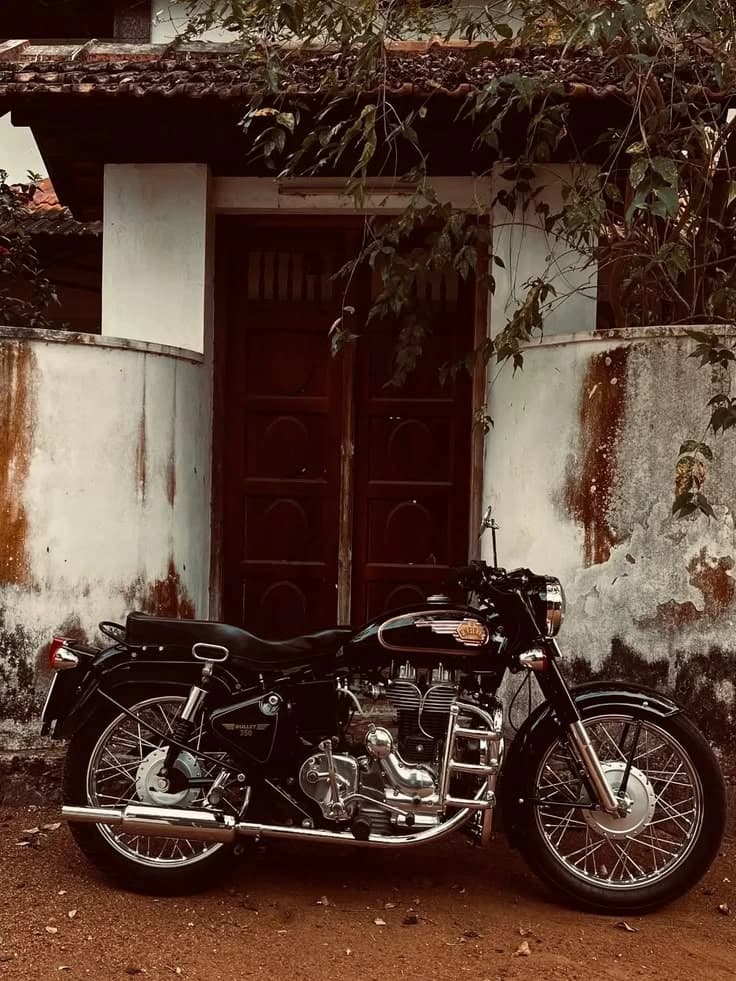
When a motorcycle appears in an old Ceylon photograph, it is worth pausing over it. Look at the road surface. Look at the rider’s clothing. Look at whether the machine is parked near a bungalow, a town street, a field, a shop, a railway station or a government building. The motorcycle may not be the main subject, but it often explains the period better than the people intended.
It tells us that the world in the photograph was changing. The older Ceylon of carts, horses, walking and slow road travel had not disappeared. But a new mechanical age had arrived, sometimes quietly and sometimes noisily. That arrival did not always come with a large motorcar, a grand journey or an official event. Sometimes it came with a single motorcycle leaning on its stand.
That is what makes these small details valuable. They show modernity entering ordinary life. They show how people moved, worked, posed and imagined themselves. A motorcycle in an old photograph is not only a machine. It is evidence that the road, and the idea of distance, had begun to change.
Why This Small Machine Matters
Motorcycles matter to the story of Old Ceylon because they sit between two worlds. They were modern, but still exposed. Mechanical, but still personal. Faster than older forms of transport, but not yet part of the smooth convenience we associate with travel today. They carried something of the future while still belonging closely to the roughness of the old road.
They connect several small but important histories. They belong to old road travel in Ceylon, estate life and plantation mobility, Colombo’s changing street culture, garages and repair work, police and messenger services, private motorised movement, and the romance and inconvenience of the open road. These are not always the stories that dominate history books, but they help us understand how daily life changed.
They remind us that history is not only found in famous buildings, railway lines and grand events. Sometimes it is found in a machine parked beside a road. Sometimes it is found in the way one person could suddenly travel further, faster and more independently than before. The motorcycle made Old Ceylon feel a little smaller, not by changing the island, but by changing how people moved through it.
Final Thoughts: Following the Motorcycle Back
The old motorcycle was not a decorative object. It was used. It carried people through dust, rain, heat and hill-country cold. It moved between estates, towns, offices, garages, rest houses and homes. It broke down, was repaired, started again and continued. That is why it belongs in the memory of Old Ceylon.
Not as a polished museum piece, but as part of the working road. A small machine with a loud engine. A rider leaning into a bend. A line of dust behind him. A road stretching ahead through a country that still felt large. These are simple images, but they carry a whole world of movement.
Before travel became guided by screens and measured by arrival times, the motorcycle gave some people a different kind of freedom. Not perfect freedom. Not comfortable freedom. But the freedom to follow the road and find out what lay beyond the next town.
Visit us: https://trippingsrilanka.com/
More from Old Ceylon
Holyrood Estate, Talawakelle: An Old Ceylon Bungalow and a Name That Echoes Scotland
All Saints’ Church, Maskeliya: The Old Stone Church and the People Who Never Left