The Lonely Tower of Mannar: The Narapadu Watchtower That Outlived Its Purpose
A Tower Built to Watch
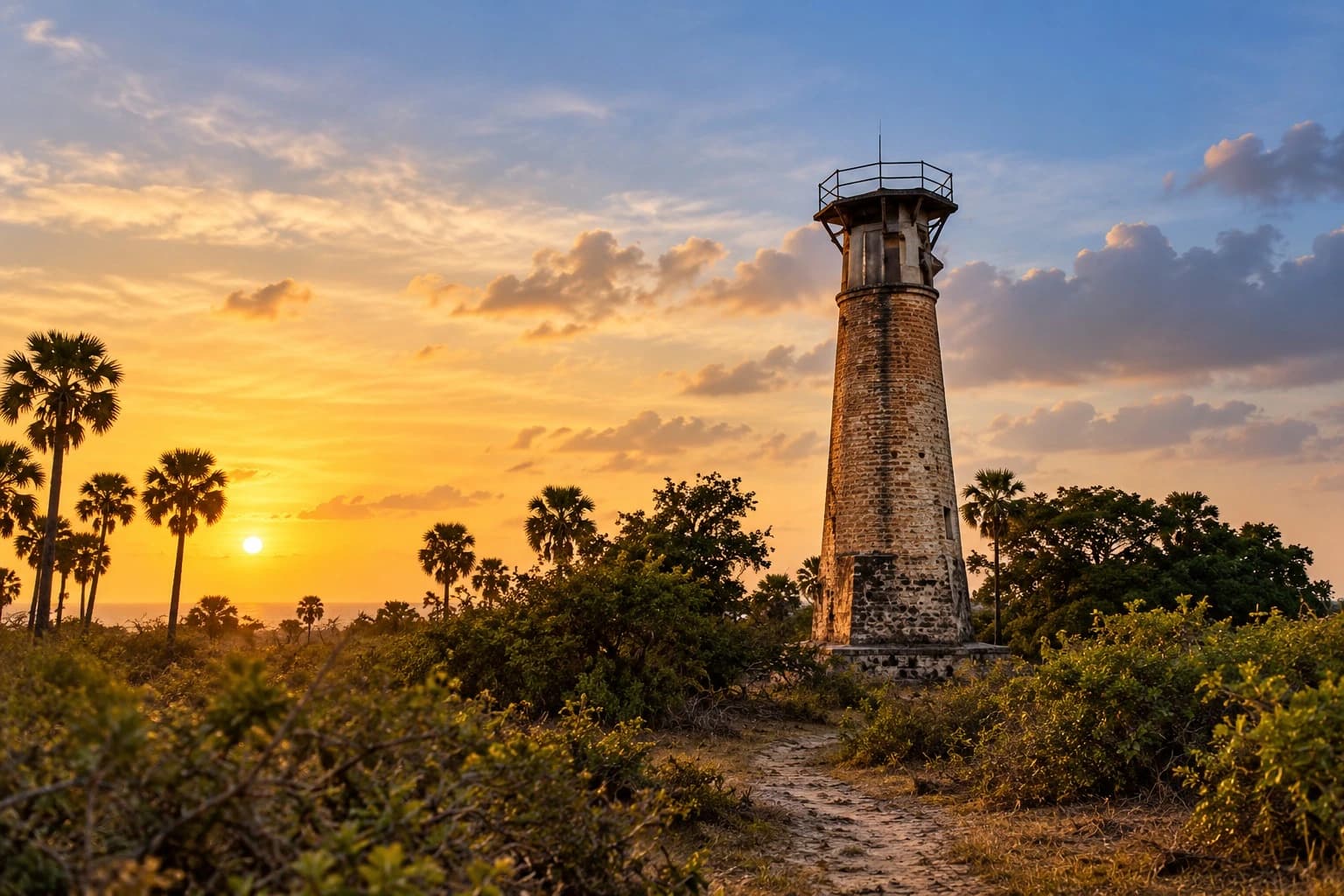
Narapadu Watchtower | There is something strangely moving about old watchtowers. They were built to look outward, to watch the horizon, to wait for ships, strangers, storms or trouble. Yet long after the people who stood inside them have disappeared, the towers themselves often remain. On Mannar Island, near Narapadu, one such tower still rises above the dry northern landscape.
Today it is quiet. Palmyrah trees stand around it, the roads nearby are far less important than they once were, and there are no guards scanning the sea or surveyors climbing to the top with instruments. But more than a century ago, this lonely tower was still very much alive.
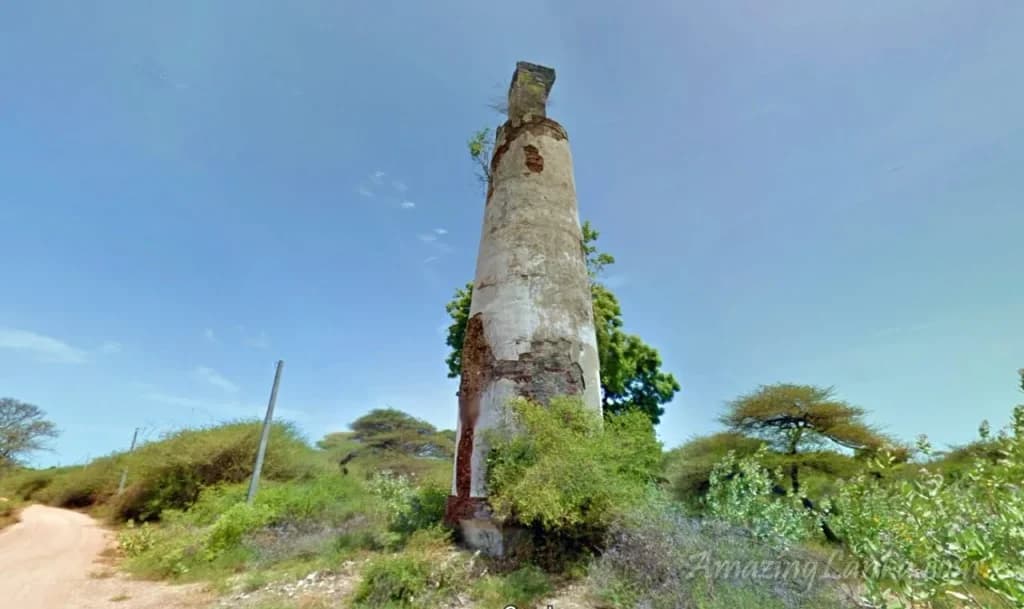
Old records refer to it by different names. Some called it the Sampeturu Round Tower, while others knew it as the San Pedro or Narapadu watchtower. Even its exact origins are not completely certain. Some nineteenth-century writers believed it was Portuguese, while later records and archaeological descriptions generally connect it with the Dutch period. Perhaps that uncertainty suits Mannar, a place that passed through different hands, different administrations and different worlds.
Mannar and the Sea Road to India
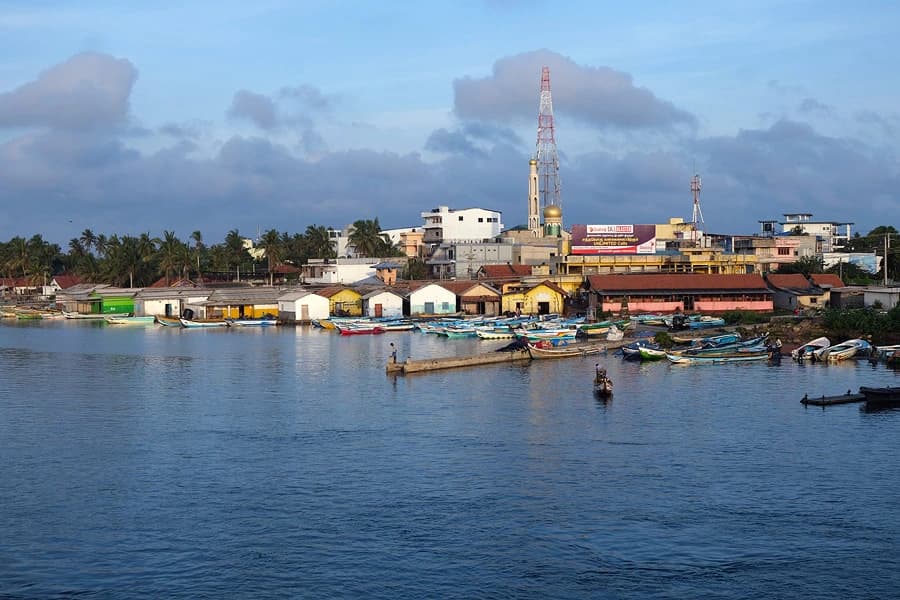
For centuries, Mannar was far from isolated. Across the water lay India, and ships moved through the strait carrying people, goods, messages and wealth. The waters around Mannar linked Ceylon with the Indian coast, and anyone who controlled those waters had reason to watch them closely.
From the top of the tower, a lookout would have had a wide view across the surrounding country and towards the sea. Imagine standing there two or three centuries ago. There were no engines on the horizon, no electric lights, no radios, and no messages announcing an approaching vessel. A ship would first appear simply as a pale shape in the distance, perhaps only a sail or mast breaking the line where sea met sky.
Someone in the tower would have watched and waited. Was the vessel approaching Mannar? Was it heading towards India? Was it a trading ship? Did it owe customs duties? Was it expected? In those days, questions like these mattered.
An Old Tower Finds a New Purpose
By the nineteenth century, the world around the tower had begun to change. The Dutch had gone and the British now governed Ceylon. Steamships were slowly replacing the sailing vessels that had crossed these waters for generations. An old coastal lookout no longer had quite the same importance, but the tower was not abandoned.
Instead, it found another life. The British Survey Department realised that a tall structure standing above the flat landscape of Mannar was extremely useful for mapping the island. The tower became a triangulation station.
Long before satellites or GPS, surveyors depended on measured distances, angles and fixed observation points. High places were invaluable, whether they were mountain peaks, church towers or old coastal structures such as this one. So the tower that had once watched ships began helping people measure the land.
John Scott’s Photograph in 1906
By the time John Scott visited Mannar in December 1906, the tower had already acquired another unusual feature. Scott, who served as an Assistant Government Agent in Mannar, photographed the structure. Those photographs survive today, and they give us one of the most evocative glimpses of the tower in its later life.
A wooden platform had been constructed at the top, apparently for survey work. Railings surrounded it, and wooden supports projected from the old masonry. The whole arrangement looked almost improvised, as though nineteenth-century surveyors had simply taken an old coastal tower and built their own observation station on top of it.
The photograph captures two different periods of Ceylon’s history in the same frame. Below is the old masonry tower, belonging to the age of sailing ships and colonial coastal administration. Above it is the wooden survey platform of British Ceylon. Standing nearby are several people who could never have imagined that strangers more than a century later would still be looking at their photograph.
Inside the Dark Tower
Scott did not merely photograph the tower. He climbed it. By then, the original staircase had deteriorated badly. A wooden ladder had apparently been placed inside, probably for the surveyors who still needed to reach the upper platform. The interior was dark and full of bats. Scott remembered large numbers of them flying around inside the tower as he climbed, as well as the overpowering smell.
It is a wonderfully ordinary detail. History often becomes polished with time. We see monuments, dates, governors and maps, but we forget the heat, the dust, the insects and the discomfort of actually being there.
Scott’s memory brings all of that back. You can imagine him stepping into the tower from the fierce Mannar sunlight, his eyes slowly adjusting to the darkness. Somewhere above him was the opening leading to the platform. Around him, bats were disturbed from their resting places. He climbed upwards through the narrow interior until, suddenly, the bright landscape appeared again.
The View Across Mannar
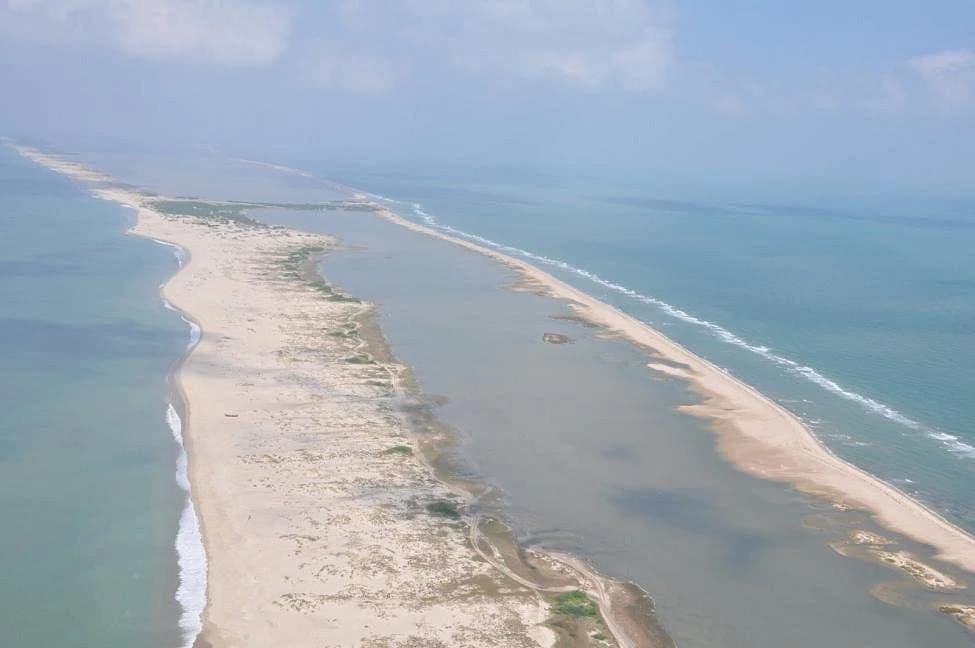
And then there was the view. Scott later remembered an enormous spread of palmyrah across Mannar. There were other trees too, including the unusual baobabs that still give parts of the island their distinctive character. Agricultural clearings appeared between the vegetation, while dry fields stretched across the landscape.
The Mannar that Scott saw in 1906 was already old, but it was also changing quickly. Railways were arriving, steamships had transformed travel, and colonial administration was becoming increasingly organised. Survey maps were turning landscapes once known through paths, villages and memory into measured coordinates on paper.
Standing in the middle of all that change was an old watchtower that had already outlived its original purpose.
A Tower Used by Many Worlds
Perhaps that is what makes the Narapadu tower so fascinating. It survived because each generation found another reason to use it. Perhaps Portuguese eyes once watched the horizon from there. Perhaps Dutch officials later used it to observe ships moving through the strait. British surveyors then climbed the same structure to measure angles across the land.
Eventually, even that work ended. The wooden platform disappeared. The surveyors left. The ships changed. The colonial administrations vanished.But the tower remained.
Today it stands in a landscape that would still contain things familiar to John Scott: palmyrah, dry earth, sea wind and the extraordinary northern light of Mannar. Yet almost everything that once gave the tower its purpose has disappeared.
The Photograph and the People Who Vanished
There is something deeply nostalgic about looking at Scott’s photograph now. The people standing beside the tower have names we may never know. Their lives continued after the camera shutter closed. They walked away from the tower that afternoon, returned to their homes, grew older and eventually disappeared from living memory.The wooden survey platform has vanished too. Only the old masonry remained stubborn enough to survive.
More than 120 years have passed since that photograph was taken, and the tower was already old then. Perhaps that is why places like this matter. Not because they were grand palaces or famous battlefields, but because they quietly witnessed ordinary history unfolding around them.
Final Thoughts: The Tower That Kept Standing
Ships came and went. Empires changed. Surveyors climbed ladders. Bats filled the darkness. Palmyrah trees moved in the wind.And through all of it, the lonely tower of Mannar simply kept standing.
It no longer watches for sails. It no longer guides surveyors. It no longer belongs to the official world that once found use for it. But it still holds the memory of those worlds in stone.
That is the quiet power of places like Narapadu. They do not explain themselves loudly. They simply remain long enough for us to begin asking what they once saw.
Visit Us: https://trippingsrilanka.com/