Colombo is often introduced to visitors as Sri Lanka’s commercial capital — a city of office towers, hotels, traffic, ports, cafés and constant development. But to understand the deeper story of the city, you must walk through Pettah and Fort. These two adjoining districts hold the memory of colonial Colombo more clearly than any skyline can.
Fort and Pettah were not ordinary neighbourhoods. They formed the administrative and commercial heart of colonial Ceylon. Fort was the centre of power, military control and later British administration. Pettah, just outside the old fortified area, became the restless trading district where goods, communities, languages and livelihoods mixed together. One represented authority. The other represented movement.
Today, the old walls of Colombo Fort are gone, and Pettah has become one of the busiest markets in Sri Lanka. But the colonial story is still visible. It can be found in street names, old façades, churches, mosques, warehouses, clock towers, commercial buildings and the crowded lanes that still follow the rhythm of a port city.
For visitors interested in colonial Sri Lanka, this walk through Pettah and Fort is one of the best ways to see Old Colombo beyond the modern skyline.
Why Fort and Pettah Matter in Colonial Ceylon
Colombo’s colonial importance began with its harbour. The Portuguese recognised the strategic value of the port in the early 16th century. They built a fort and used Colombo as a base for trade and military influence. The Dutch later captured the city and reorganised its fortified centre. The British then turned Colombo into the main administrative and commercial capital of Ceylon.
This layered colonial history shaped the division between Fort and Pettah. Fort was the protected centre. Pettah was the town outside the fort. Even the name Pettah is linked to the idea of being outside the fortified space. In Sinhala, the area is often called Pita Kotuwa, meaning outside the fort.
That distinction matters. Fort belonged to the world of governors, military officers, banks, shipping firms and colonial departments. Pettah belonged to traders, shopkeepers, port workers, religious communities and ordinary city life. Together, they formed the old heart of Colombo.
Starting the Walk in Colombo Fort
A heritage walk can begin in Colombo Fort, where old colonial buildings still stand between newer towers and commercial blocks. This area can feel modern at first glance, but the past appears quickly if you look above street level. Arched windows, classical columns, old balconies, decorative cornices and red-brick façades reveal a different Colombo.
Fort was once a real fortified town. The Portuguese created the first major fortifications, the Dutch expanded and reorganised them, and the British later adapted the area for administration. By the late 19th century, the old fort walls had become less useful for defence and were removed to allow urban development. But the name “Fort” remained, preserving the memory of the old colonial enclosure.
This makes Colombo Fort interesting in a different way from Galle Fort. In Galle, the walls remain. In Colombo, the walls have disappeared, but the identity of the place has survived. The fort now exists as a historical memory embedded in the city.
Chatham Street, York Street and the Commercial City
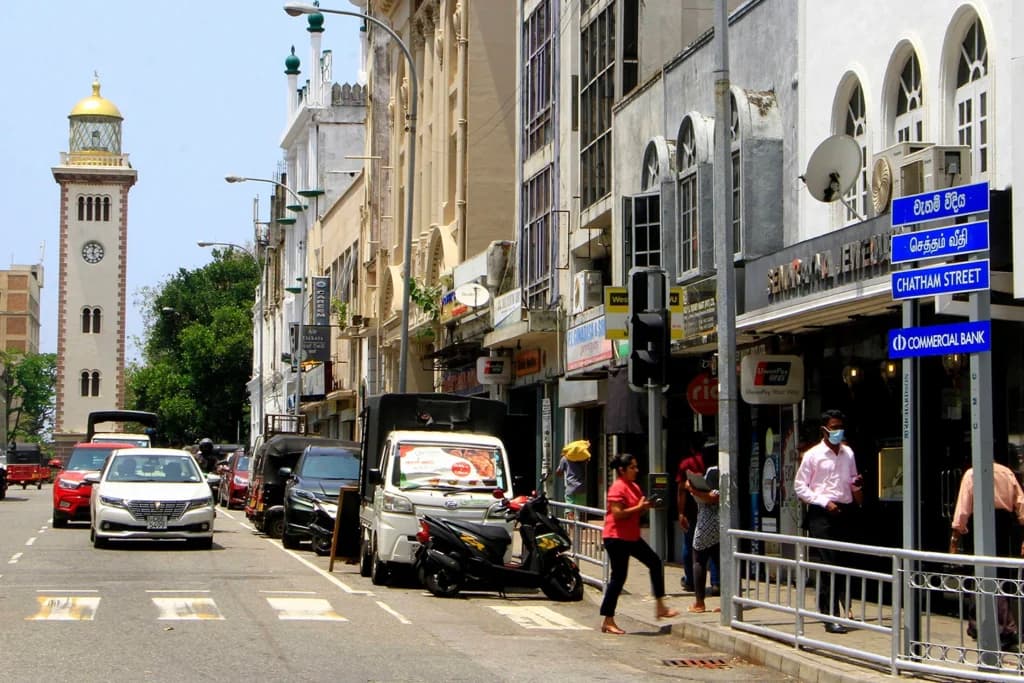
From the Fort area, streets such as Chatham Street, York Street and Queen Street reveal the commercial character of British Ceylon. These were not just roads. They were part of a colonial business district connected to shipping, banking, retail, government and plantation wealth.
During the British period, Colombo grew rapidly as the island’s main port and capital. Goods from the interior reached the harbour. Imported products arrived from overseas. Banks, insurance companies, department stores and shipping offices turned Fort into the business centre of Ceylon.
The best way to appreciate these streets is to walk slowly and look upward. Modern signage and traffic often hide the older architecture at ground level. But above the shops and offices, the city still speaks in the language of colonial architecture: tall windows, arcades, symmetry and heavy façades designed to project confidence and order.
The Cargills Building and Urban Colonial Elegance
One of the most recognisable buildings in Colombo Fort is the old Cargills building. Its red façade, white detailing and long frontage make it a landmark of colonial Colombo. For many visitors, it is one of the easiest places to see how Fort once looked as a grand commercial district.
Buildings like this show that colonial Ceylon was not only governed through forts and official residences. It was also shaped by retail culture, imported goods, department stores and the urban lifestyle of the colonial capital. Fort was where plantation wealth, maritime trade and city consumption met.
The Cargills building also works as a visual bridge between past and present. Behind and around it, Colombo’s modern skyline rises. The contrast is sharp. It shows how the city has changed, but also how colonial architecture continues to define the character of Old Colombo.
The Fort Clock Tower and the Memory of the Harbour
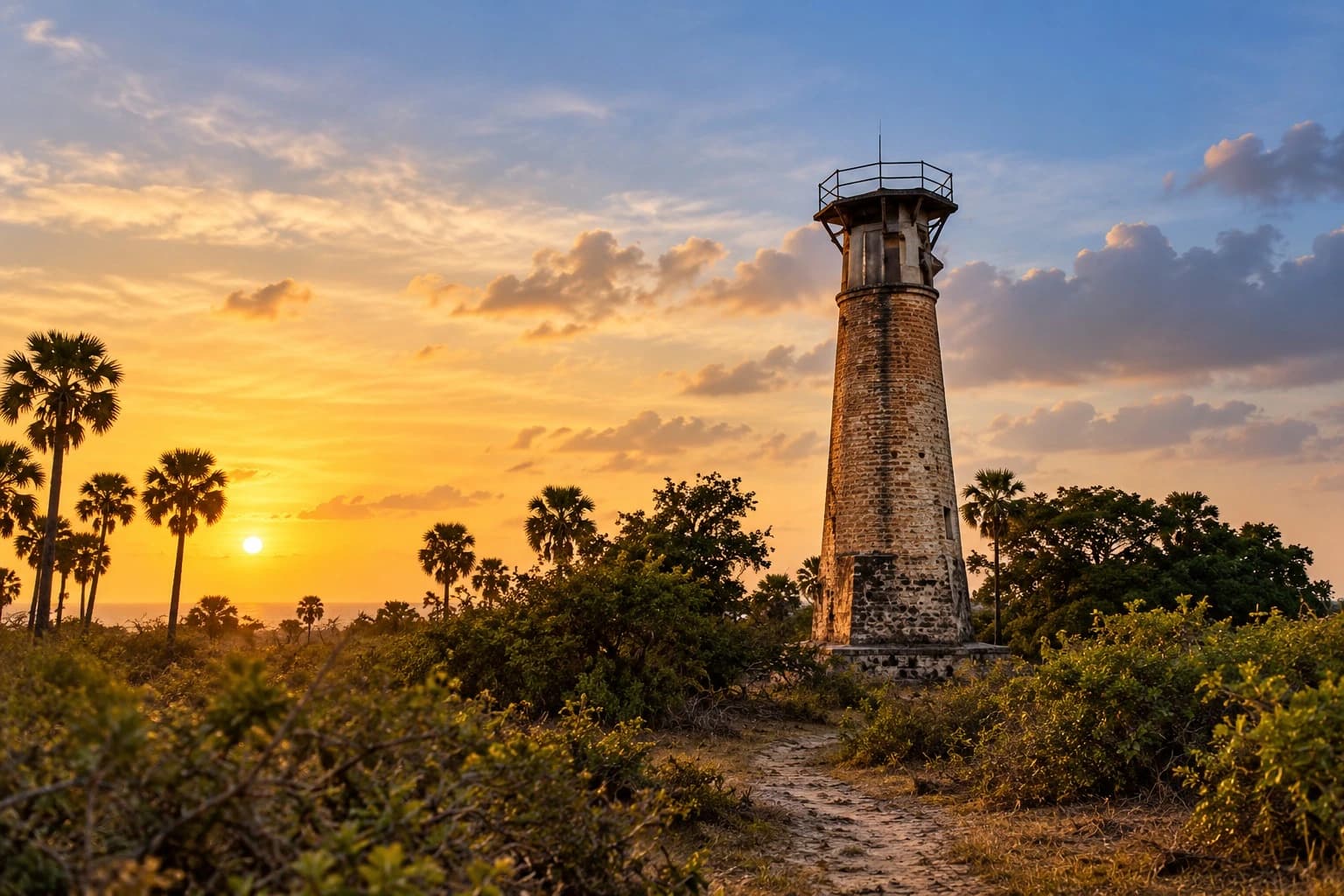
Another important stop is the Colombo Fort Clock Tower. Today it stands in the middle of a busy cityscape, but historically it was connected to the maritime world of the port. It served as a lighthouse before becoming known mainly as a clock tower.
This makes it a powerful symbol of colonial Colombo. A lighthouse guided ships. A clock measured urban time. Both were important to a port city organised around shipping schedules, administrative routines and commercial discipline.
Standing near the clock tower, it is worth remembering that Colombo was not simply a local town. It was connected to Indian Ocean routes, European empires and global trade. The harbour gave the city its importance, and Fort became the place where that importance was managed.
Crossing Into Pettah
The mood changes when you move from Fort into Pettah. Fort is formal, administrative and architectural. Pettah is dense, noisy and alive. The shift is one of the most interesting parts of walking through Old Colombo.
Pettah’s streets are crowded with vendors, shoppers, porters, tuk-tuks, wholesale traders and small shops. Textiles, electronics, spices, religious items, jewellery, bags, shoes, food and household goods spill into the movement of the streets. It can feel chaotic, but that chaos is historical. Pettah has always been a place of trade.
In colonial times, Pettah stood outside the fortifications but close enough to the harbour to benefit from the movement of goods. It became the commercial space where local and migrant communities built livelihoods around trade. Its present-day energy is not separate from its past. It is a continuation of its old port-town function.
Main Street and the Market World of Pettah
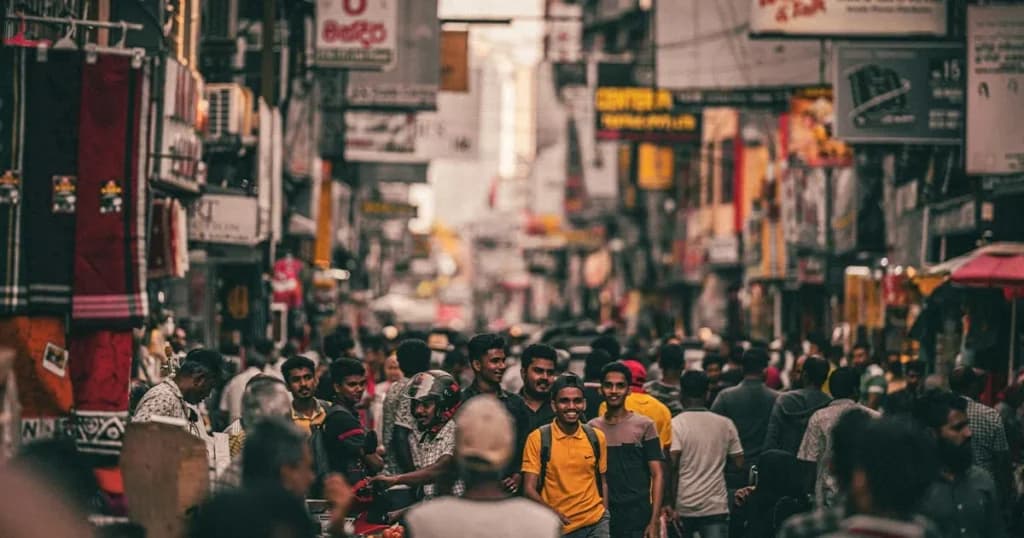
Main Street is one of the best places to feel the old commercial pulse of Pettah. It is crowded, practical and full of movement. The street does not offer the polished colonial beauty of Fort, but it offers something equally valuable: continuity.
Here, history is not always preserved as a monument. It survives as a habit. Shops open early. Goods are carried by hand. Bargaining continues. Traders know their lanes. Customers move through familiar circuits. This is the living economy of Old Colombo.
For visitors interested in colonial Sri Lanka, Pettah shows how colonial port cities were sustained by everyday labour. Fort may have held the offices, but Pettah carried much of the commercial energy. The two districts depended on each other.
Sea Street, Gold Shops and Merchant Communities
Sea Street is one of Pettah’s most famous areas, especially for jewellery and gold. It reflects the role of merchant communities in shaping Colombo’s commercial life. Pettah has long been multicultural, with Muslim, Tamil, Sinhalese, Burgher and other communities contributing to its identity.
This multicultural character is essential to understanding colonial Colombo. European rule shaped the city’s administration, but the life of the city was built by many communities. Traders, artisans, port workers, religious leaders, shopkeepers and families gave Pettah its social texture.
A walk through Sea Street also reminds visitors that heritage is not only about old buildings. It is also about inherited trades, community memory and street-based economies that survive across generations.
Jami Ul-Alfar Mosque and the Visual Drama of Pettah
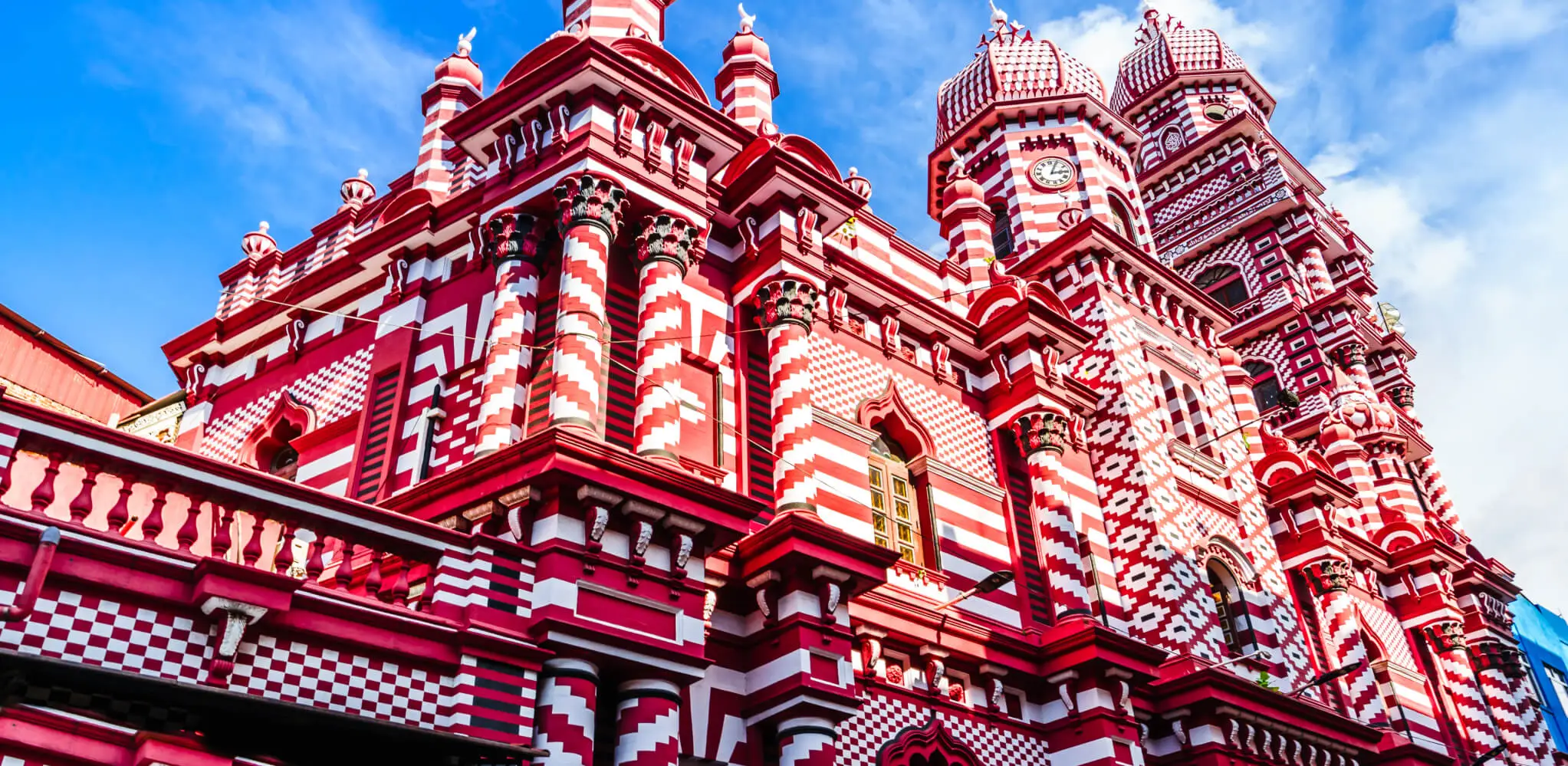
One of Pettah’s most photographed landmarks is the Jami Ul-Alfar Mosque, also known as the Red Mosque. Its red-and-white patterned exterior rises dramatically above the surrounding streets. Although it belongs to a later period than the earliest colonial fortifications, it has become one of the defining images of historic Pettah.
The mosque adds to the district’s layered identity. Pettah is not a single-story colonial quarter. It is a neighbourhood where religious architecture, market streets and old commercial buildings overlap. That is what makes it so visually and historically rich.
For visitors, this is a good place to pause and observe the density of the neighbourhood. Within a short walk, you can see traders, worshippers, colonial traces, market stalls and modern city life moving together.
Wolvendaal Church and Dutch Colombo
A deeper colonial history appears at Wolvendaal Church, one of the most important Dutch colonial buildings in Colombo. Located on higher ground in Pettah, the church offers a quieter and more reflective contrast to the market below.
Built during the Dutch period, Wolvendaal Church is a reminder that Pettah was not only a trading zone. It also formed part of the social and religious landscape of Dutch Ceylon. Its architecture, tombstones and memorials preserve the memory of Dutch officials, families and colonial society.
This stop is especially important for history readers. It shows how colonial Colombo was not limited to Fort. Dutch influence extended into the surrounding town, and Pettah still preserves some of those traces.
The Dutch Period Museum
Another valuable stop in Pettah is the Dutch Period Museum. Housed in a historic building, it gives visitors a clearer view of Dutch influence in Colombo and Ceylon. The museum setting helps connect the streets outside with the wider history of colonial administration, domestic life, trade and material culture.
A museum visit is useful because Pettah’s history can otherwise feel hidden beneath its present-day activity. The streets are busy, and the old layers are not always easy to identify. The museum provides context before or after walking through the district.
For researchers, students and heritage travellers, this is one of the most useful stops in Old Colombo.
How to Walk Pettah and Fort Safely and Comfortably
The best time to explore Fort and Pettah is in the morning, before the heat becomes too strong. Fort is easier to walk through, while Pettah requires more patience because of crowds, traffic and narrow streets.
Comfortable shoes are important. Visitors should carry water, keep valuables secure and be careful when taking photographs in crowded areas. Some religious sites may require modest dress or restricted access. Government and security-sensitive buildings in Fort should be viewed respectfully from outside.
This walk is best enjoyed with an open mind. Pettah is not a polished tourist district. Its value lies in its authenticity, energy and layered history. Fort is more formal and architectural. Pettah is more human and immediate. Together, they create the most complete picture of Old Colombo.
Why This Heritage Walk Matters
Pettah and Fort reveal Colombo’s colonial history in two different voices. Fort speaks through architecture, administration and the memory of empire. Pettah speaks through trade, migration, community and street life.
To walk between them is to understand how colonial Ceylon functioned as a port capital. Ships brought goods and people. Fort managed power and commerce. Pettah absorbed movement and turned it into everyday urban life.
This is why Pettah and Fort remain essential for anyone interested in colonial Colombo. They show that history is not only found in restored monuments or quiet museums. It is also found in working streets, crowded markets, old shopfronts and buildings that stand between the modern skyline and the memory of Ceylon.
Old Colombo is still there. You just have to walk slowly enough to see it.
FAQs About Pettah and Fort in Colombo
Why are Pettah and Fort important in Colombo’s history?
Pettah and Fort formed the old administrative and commercial heart of colonial Colombo. Fort was linked to government, military control and business, while Pettah developed as the busy trading district outside the fortified area.
What does Pettah mean?
The name Pettah is linked to the idea of a town outside the fort. In Sinhala, Pita Kotuwa also carries the meaning of outside the fort.
Can visitors walk from Fort to Pettah?
Yes, Fort and Pettah are close to each other and can be explored on foot. However, visitors should be prepared for heat, traffic and crowded streets, especially inside Pettah.
What are the main heritage sites to see in Pettah and Fort?
Important stops include the Fort Clock Tower, old commercial buildings in Fort, the Cargills building, Main Street, Sea Street, Jami Ul-Alfar Mosque, Wolvendaal Church and the Dutch Period Museum.
Is Pettah worth visiting for colonial history?
Yes. Pettah is one of the best places to understand the living commercial side of colonial Colombo. It may be busy and crowded, but its historic streets, religious buildings and market culture make it essential to Old Colombo.
Visit Us: https://trippingsrilanka.com/