Prince Street, Colombo: When a Trip to Fort Was Something to Look Forward To
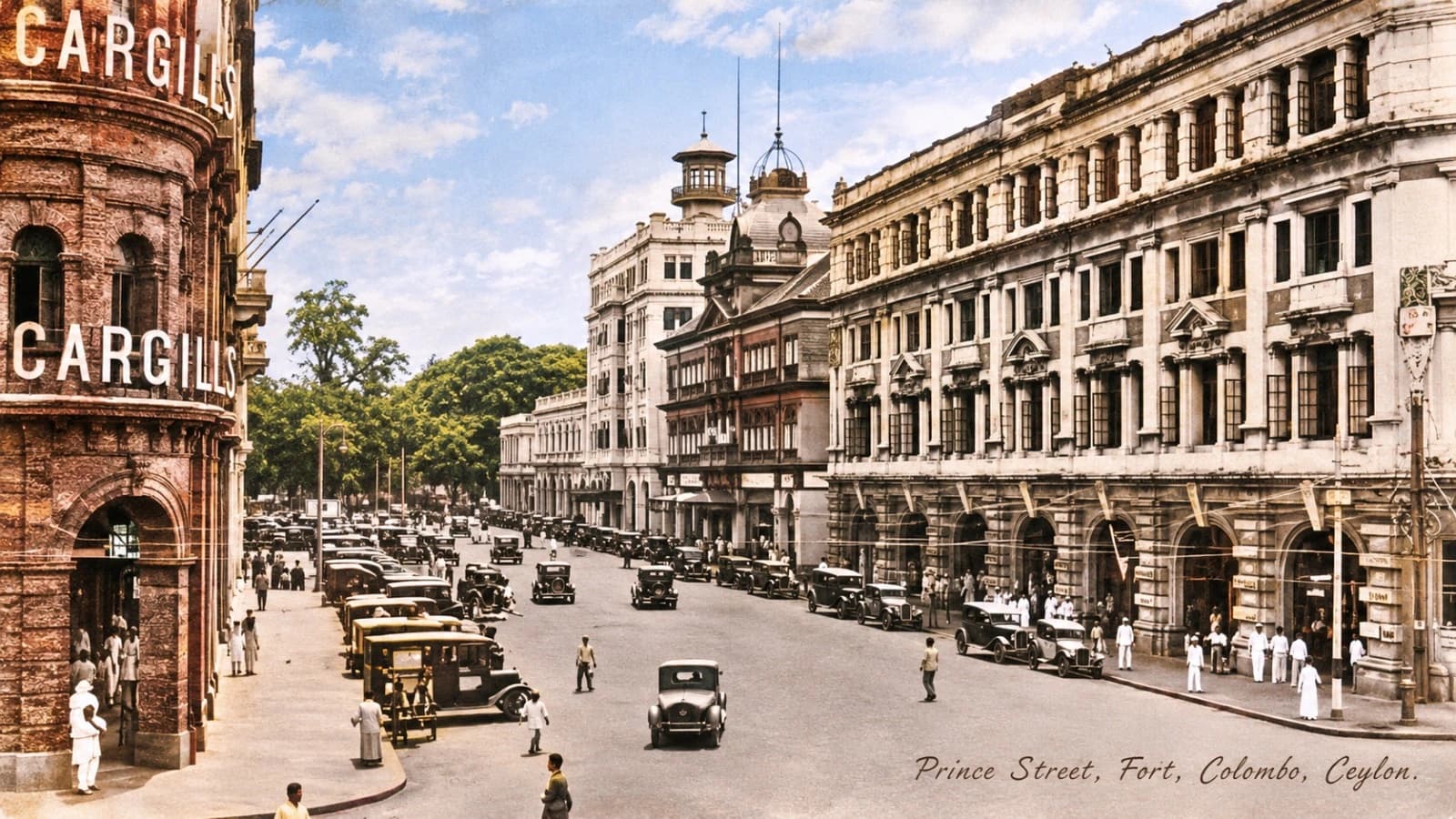
An old postcard of Prince Street brings back a Colombo of department stores, smartly dressed shoppers, motorcars and afternoons spent in the heart of the city.
When Going to Fort Was an Outing
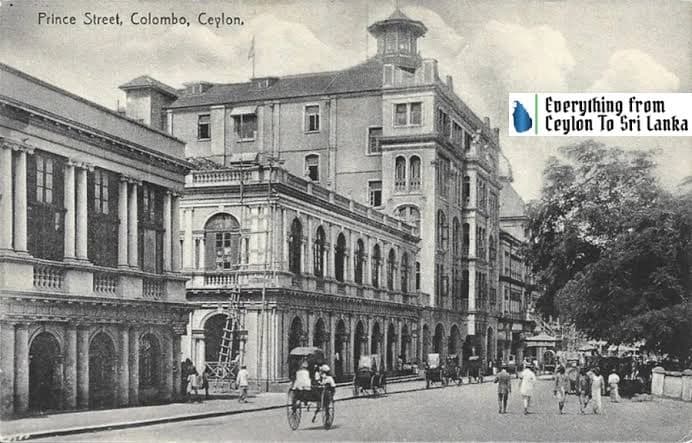
There was a time when going to Fort was something of an outing. For an earlier generation of Colombo families, a visit to the city centre could mean a morning spent shopping, meeting someone for lunch, calling at the bank or simply walking past the large department stores to see what was on display. Prince Street was part of that Colombo, a place associated with familiar shops, important errands and the busy commercial life of the capital.
An old postcard, probably dating from the earlier decades of the twentieth century, shows a street that many people today would struggle to recognise. Motorcars are parked along the roadside, pedestrians cross between moving vehicles, and the imposing buildings of Colombo Fort stand almost shoulder to shoulder. On the left is the unmistakable frontage of Cargills, its name displayed prominently above the street. Across the road, a long row of commercial buildings stretches into the distance.
It is not a photograph of a special occasion. There are no decorations or crowds gathered for a celebration, and nobody appears to be taking much notice of the camera. It is simply Colombo going about its business, with people walking, vehicles moving and shops opening their doors to another day’s customers. That is what makes the picture so interesting. It preserves a perfectly ordinary moment in a part of the city that has changed enormously over the years.
When Cargills Was Part of the Colombo Shopping Experience
Today, we think of Cargills mainly as a familiar supermarket name. But for an earlier generation, Cargills in Fort meant something rather different. The grand department store was associated with a style of shopping that belonged to another era, when counters, display windows and imported merchandise were part of the attraction of visiting Colombo’s commercial centre.
For families who remember the old Fort, shopping was not always a matter of rushing into a store and leaving with a bag of groceries. There were shop windows to look at, purchases to consider and familiar establishments that people returned to over the years. A visit might involve several different errands, with time set aside to look at something in a window or stop at another shop before going home.
The Cargills building itself helped make the experience memorable. Its impressive exterior was not merely a shopfront but one of the landmarks by which people recognised the city. In the postcard, the name Cargills dominates the left side of the picture, and even though much of the building is outside the frame, there is no mistaking its presence.
It is easy to imagine someone arranging to meet a friend outside Cargills, knowing that no further directions would be necessary. The building was familiar enough to serve as a meeting place, and its position in the heart of Fort made it part of the everyday geography of Colombo. For generations, people associated the name not only with shopping but also with the experience of visiting the city centre.
A Street Full of Small Errands
Look beyond the buildings and there is a great deal happening in the photograph. Cars line the kerb, a few vehicles move along the middle of the road, and pedestrians cross at different points, apparently accustomed to finding their own way through the traffic. There are no great crowds, but the street is certainly not empty. It has the appearance of a normal working day in Colombo Fort.
Somewhere in those buildings were offices where clerks worked through correspondence, businesses dealing with customers and establishments that depended upon the daily movement of people through the commercial district. A man might have come into Colombo to settle an account or visit a shipping office. Someone else might have been collecting a purchase, meeting a relative or making the short journey between Fort and Pettah.
We cannot know what brought the people in this particular photograph to Prince Street. One person appears to be crossing the road while another vehicle approaches, and further along the street the cars grow smaller until they almost disappear into the distance. Each person had somewhere to go, some business to attend to or someone to meet. For those present, there was probably nothing especially memorable about the day.
That is part of the postcard’s charm. The people were not trying to preserve a piece of history. They were getting on with their ordinary lives, unaware that the buildings, vehicles and streets around them would eventually become subjects of nostalgia for a later generation.
When the Buildings Were Part of the Attraction
Prince Street was one of the principal commercial thoroughfares of Colombo Fort. Its buildings reflected the importance of the district during the British colonial period, when Colombo was developing into a major administrative and commercial centre. Banks, trading establishments and other businesses occupied substantial premises along the street, contributing to the formal appearance of the city’s commercial quarter.
Some of those buildings were designed to impress. Tall windows, decorative façades and carefully arranged entrances gave the street an architectural character quite different from the practical concrete buildings that became common in later decades. Their scale reflected the commercial importance of Fort and the prosperity of businesses operating within the colonial economy.
But it would be a mistake to think that everyone walking down Prince Street was admiring the architecture. For the people who worked there, these were simply their everyday surroundings. The great buildings were places where wages were earned, paperwork accumulated, customers complained and office doors opened and closed throughout the working day.
Perhaps someone employed in one of those offices passed the same entrance for thirty years without ever giving its architecture a second thought. The building was familiar because it was where they worked, just as the neighbouring shops and streets were familiar because they passed them every day. It is often only after a city changes that people begin to notice the details they once took for granted.
The Prince Street That Became Sir Baron Jayatilaka Mawatha
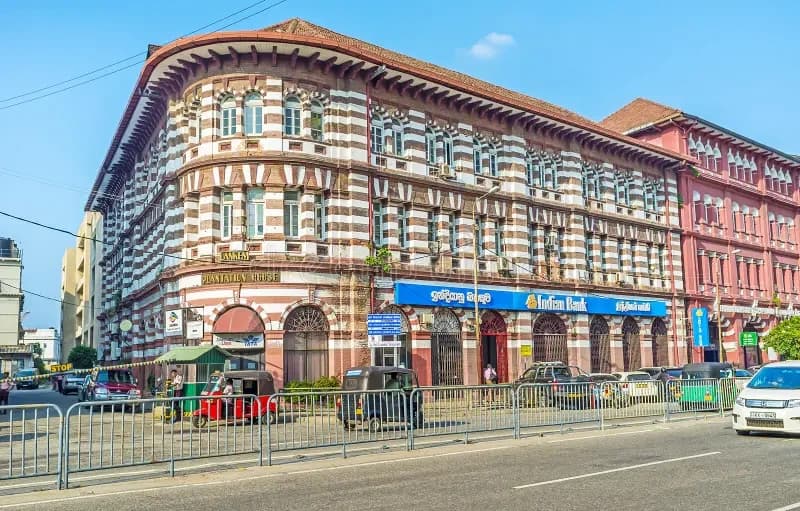
Prince Street in Fort is now known as Sir Baron Jayatilaka Mawatha, named in honour of the Ceylonese statesman and national leader. The change of name is one of many reminders of how Colombo’s streets acquired new identities as the country moved beyond the colonial period. Names that had belonged to an earlier political and social order were gradually replaced, although the buildings and streets themselves often remained.
The old street continues to form part of the Fort district, but its surroundings and everyday character have changed considerably. Some historic buildings survive, retaining architectural details that once defined the commercial centre. Others have been altered, restored or adapted for different purposes, while changes in transport and business activity have transformed the way people use the area.
There is also a small but important distinction worth remembering. The old Prince Street in Fort should not be confused with the similarly named street in Pettah. For anyone attempting to identify the scene in this postcard, the prominent Cargills frontage is a particularly useful landmark.
Old street names can sometimes be confusing when looking at photographs, directories and maps from different periods. A road may have been renamed, a business may have moved and a familiar building may have acquired a completely different purpose. Yet the old names remain important clues for anyone trying to reconstruct the Colombo that earlier generations knew.
The Colombo Our Parents and Grandparents Remembered
For those who grew up hearing stories about Old Colombo, Fort was more than a collection of offices and commercial buildings. It was where important errands were done, where people went to buy things that were not always available closer to home, and where a day in the city sometimes included a little pleasure after the necessary business had been completed.
There were familiar shops, restaurants and meeting places. People knew buildings by their old names, even when the businesses occupying them had changed. A particular shop might have been associated with school supplies, another with clothing or household purchases, while a favourite restaurant became part of the routine whenever the family came into town.
A trip to Fort could become part of a family’s memories. Children remembered the shops their parents visited and the streets they walked along. Young office workers learnt their way around the commercial district, while older residents developed habits that lasted long after the city itself had changed.
Not everyone would have fond memories of the same Colombo, of course. For many, the commercial district was primarily a place of work, crowded transport and long hours. The clerks, shop assistants, drivers, labourers and office workers who kept Fort functioning experienced a rather different side of the city from the families who came there for an afternoon of shopping.
Yet places acquire meaning through repetition. The same shop window, the same street corner, the familiar walk from one office to another and the buildings used as meeting places all became part of people’s memories. Familiarity is often what people miss most when a city changes.
When Fort Was the Centre of a Day Out
In an earlier Colombo, a journey to Fort could involve more planning than it does today. People might travel from the suburbs by train, bus or motorcar, arriving in the city with several things to do before returning home. Shopping, banking, office visits and family errands could all be fitted into a single trip, with the streets around Prince Street forming part of the day’s route.
The commercial district had a particular atmosphere. There were large establishments with impressive façades, smaller shops occupying the ground floors of old buildings, and offices connected with the island’s trading economy. The movement of people through these streets reflected Colombo’s importance as the country’s principal port and commercial centre.
For those who visited only occasionally, the city itself could be part of the attraction. A large shop window, a new motorcar parked beside the road or a familiar building seen from a different angle might be enough to make the outing memorable. Children accompanying their parents could become familiar with particular landmarks long before they understood the commercial importance of the district.
The postcard preserves some of that older atmosphere. The street is active without appearing overwhelmingly crowded, and the buildings still dominate the view rather than disappearing behind modern traffic and advertising. It belongs to a period when the architectural character of Fort was an important part of the experience of walking through Colombo.
One Last Look at Prince Street
Return to the postcard and look at the little motorcar near the centre of the road. Someone was driving it somewhere, perhaps in a hurry or perhaps with an appointment to keep. Along the pavement, other people were attending to their own concerns, moving between shops and offices or making their way towards another part of Fort.
None of them could have known that, decades later, a photograph of their ordinary day would be passed around by people curious about the Colombo that existed before their time. The buildings are interesting, certainly, as are the cars and the old shop signs. But the most appealing thing about the photograph is that nobody seems particularly interested in being photographed.
Prince Street was not putting on a performance. It was simply being Prince Street, a working commercial road in the heart of a city where people came to shop, earn a living and attend to their everyday affairs.
For those who remember Colombo Fort as it once was, perhaps the postcard is enough to bring back an entire afternoon. It might recall a shop they visited with their parents, a familiar building where they once worked or the excitement of going into town when such journeys were still considered something of an occasion.
For those who never knew that Colombo, the photograph offers a reason to look a little more closely the next time they walk through Fort. The streets may be busier and the businesses different, but pieces of the old city remain among the buildings and road names.
And somewhere behind the modern traffic is the memory of Prince Street, when a trip to Fort was something to look forward to.
Visit us: https://trippingsrilanka.com/stories