When the Regal Opened Its Doors: A Night at Colombo’s New Cinema in 1930
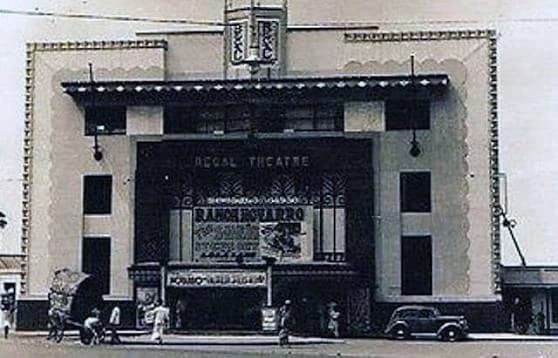
An advertisement published in The Times of Ceylon on 25 July 1930 announced the opening of a new cinema on Parsons Road. The Regal was preparing to welcome its first audience, promising Colombo a modern theatre unlike anything its promoters believed the city had seen before.
An Advertisement from July 1930
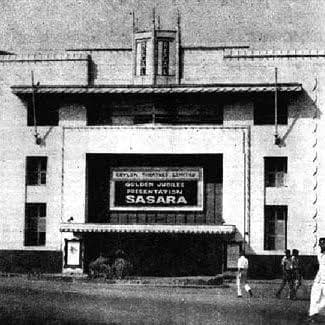
There are old newspaper advertisements that are interesting because of what they were selling, and others that become interesting simply because so much time has passed since they appeared. This advertisement for the opening of the Regal Theatre in Colombo, published in The Times of Ceylon on Friday evening, 25 July 1930, belongs to the latter kind. The Regal was to open the following night, Saturday, 26 July, at 9 p.m. To someone reading the newspaper that Friday, the building pictured in the advertisement was not an old cinema or a familiar Colombo landmark. It was brand new.
The publicity was certainly not modest. Across the top of the page, the Regal was described as “The Largest in Ceylon – The Finest East of Suez.” The advertisement also promised that the theatre would be luxurious in every detail, with comfort as its principal consideration. It was presented not merely as a cinema, but as a venue capable of accommodating large touring theatrical companies. The owners clearly wanted Colombo to know that something substantial had been built on Parsons Road.
A New Kind of Picture House for Colombo
Cinema itself was not new to Ceylon in 1930. Moving pictures had already been shown in the island for several decades, first through travelling exhibitions and other early venues, and later in established picture houses. By the end of the 1920s, however, film entertainment was changing with the arrival of synchronised sound, and cinema proprietors were investing in buildings and equipment suited to the new technology.
The Regal was developed by Ceylon Theatres, the company associated with Chittampalam Abraham Gardiner, later Sir Chittampalam A. Gardiner. Its opening represented a significant investment in Colombo’s entertainment industry. The new theatre was intended to offer audiences not only films but also the comfort and surroundings of a modern auditorium.
The advertisement included two photographs that help explain what the management was trying to promote. One showed the exterior of the new theatre, with a small group of people near its entrance. The other showed the interior, where rows of seats filled the auditorium and balconies rose above them. These photographs are particularly interesting because they record the Regal before years of regular performances and familiar audiences had made it part of the city.
Inside the Brand-New Regal
The interior photograph is perhaps the more revealing of the two. Its rows of seats, balconies and substantial auditorium belong to an era when cinema buildings were designed to be attractions in their own right. Going to the pictures was not simply a matter of choosing a film. The theatre, its seating arrangements and the experience of an evening out were part of the occasion.
The advertisement placed particular emphasis on comfort and the quality of the premises. Such claims were common in the publicity of the period, but the photographs suggest that the Regal’s owners had invested heavily in presenting the new cinema as a modern addition to Colombo. Later accounts describe the original theatre as accommodating approximately 900 people, although the precise original seating arrangements would need to be confirmed from contemporary records.
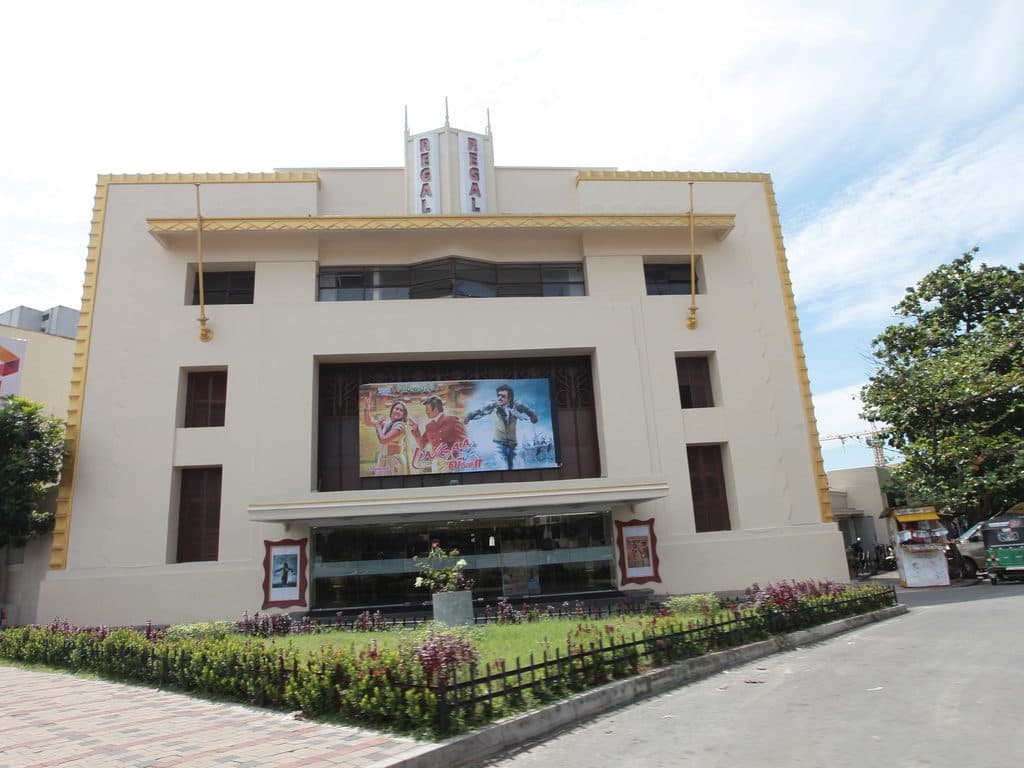
The theatre’s address was Parsons Road, a name familiar in older accounts of Colombo. The road is now Sir Chittampalam A. Gardiner Mawatha, commemorating the man closely associated with the development of Ceylon Theatres. The change of street name is one reminder of how much Colombo has altered since the Regal first opened.
The Film Chosen for Opening Night
The opening attraction was His Captive Woman, starring Milton Sills and Dorothy Mackaill. Their names were given prominent space in the newspaper advertisement, reflecting the importance of leading actors in attracting audiences to the cinema. The film had been released in the United States in 1929 and was directed by George Fitzmaurice.
The choice of film also places the Regal’s opening within an interesting period of cinema history. The industry was moving from silent pictures to films with recorded dialogue, music and sound effects. His Captive Woman belonged to this transitional period and is classified in surviving film records as a part-talkie, containing spoken sequences alongside other elements of silent-era presentation.
For Colombo audiences in 1930, the opportunity to watch films with synchronised sound was still a relatively recent development. The Regal’s modern facilities were therefore an important part of its appeal. The cinema was opening at a time when the technology and experience of watching films were changing rapidly.
What the Advertisement Promised Colombo
There is an interesting confidence in the wording of the advertisement. The management declared, “We have given you the thing you have longed for.” It promised modern conveniences and presented the theatre as an establishment that would maintain a high standard of entertainment. At the bottom of the page appeared the memorable advertising line: “If it is at ‘The Regal’ it must be good.”
Read today, the language seems distinctly old-fashioned. Yet it tells us something about how the management wanted the theatre to be received. The Regal was being introduced as an important new entertainment venue, and the advertising attempted to make its opening an occasion rather than merely another film screening.
The newspaper also announced that from Sunday onwards, the theatre would offer two performances daily. That detail gives us a glimpse of the programme being planned beyond the opening night. The management was not simply organising a single ceremonial event. It was establishing a cinema intended to become a regular part of Colombo’s entertainment life.
A Saturday Evening in Old Colombo
On Saturday, 26 July 1930, the Regal was scheduled to open at nine in the evening. Colombo was already a busy commercial city, with motorcars, tramcars and other forms of transport moving through its streets. Much of the modern city had yet to take shape, and an evening at a newly opened cinema could provide a welcome change from the ordinary routine.
Some readers of Friday’s newspaper may have decided to attend after seeing the advertisement. Others may already have heard about the theatre through friends or earlier publicity. Families and groups of friends would have made their arrangements according to the transport and entertainment habits of the time. We do not have their individual accounts, but the advertisement gives us an idea of the occasion being offered to them.
By the following evening, the auditorium photographed while still new would have been ready for its first audience. The seats, balconies and entrance that appeared in the newspaper were no longer simply features of a newly completed building. They had become part of a functioning picture house, with films to show and audiences to welcome.
The Regal Becomes a Colombo Landmark
The Regal would go on to become one of Colombo’s best-known cinemas. Through the decades that followed, it formed part of the city’s film culture, including the growth of Sinhala cinema and the popularity of large, single-screen theatres. For generations of filmgoers, the name Regal became associated with particular films, outings and memories of going to the pictures.
There was a time when people identified a film as much by the theatre showing it as by its title. The Regal, Empire, Majestic, Savoy and Liberty were familiar names in Colombo’s entertainment life, although their histories and periods of prominence differed. The theatre was often part of the experience people remembered, from buying tickets and finding seats to meeting friends outside before a performance.
That later history makes the 1930 advertisement particularly interesting. Most people encounter the Regal through memories of a cinema that had already been established for many years. Here, however, the theatre appears before those memories existed, when its owners were still introducing it to the city and promising audiences something new.
One Newspaper Page, One Evening in 1930
The advertisement was intended to attract customers for a particular Saturday evening. It was commercial publicity, printed for readers who might decide to buy tickets and attend the following night. There was little reason for anyone involved to think the page itself would become historically interesting.
Nearly a century later, it provides a remarkably detailed record of the Regal’s beginning. We can see the original building, look inside its auditorium, identify the opening film and read the promises made by its management. The photographs also preserve the appearance of the theatre before later generations of filmgoers came to know it.
Colombo has changed considerably since July 1930, and the cinema industry has changed even more. Films no longer depend on the same distribution methods, audiences have different ways of booking tickets, and the large picture houses that once dominated the city face a different entertainment landscape.
But the Regal’s name remains part of Colombo’s cinema history. The old newspaper advertisement takes us back to the moment before it became familiar, when it was simply a new theatre preparing to open on Parsons Road.
For the readers of The Times of Ceylon on 25 July 1930, the attraction was straightforward: there was a new cinema in Colombo, and its first performance was the following evening.They had only to decide whether to go.
Visit us: https://trippingsrilanka.com/stories