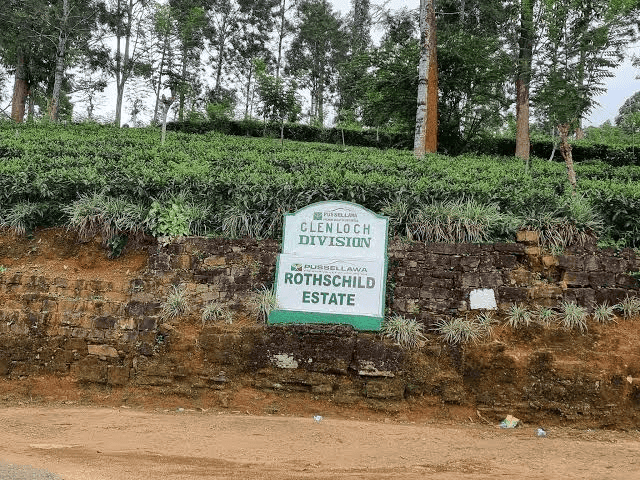
Rothschild Estate Pussellawa | The Rothschild name is usually associated with European banking and finance. Yet among the tea-covered hills of Pussellawa in Sri Lanka stands an estate bearing the same name, with a history stretching back to two brothers who came to Ceylon in the nineteenth century and experimented with growing tea long before it became the island’s most famous export.
An Unexpected Name in the Hills of Ceylon
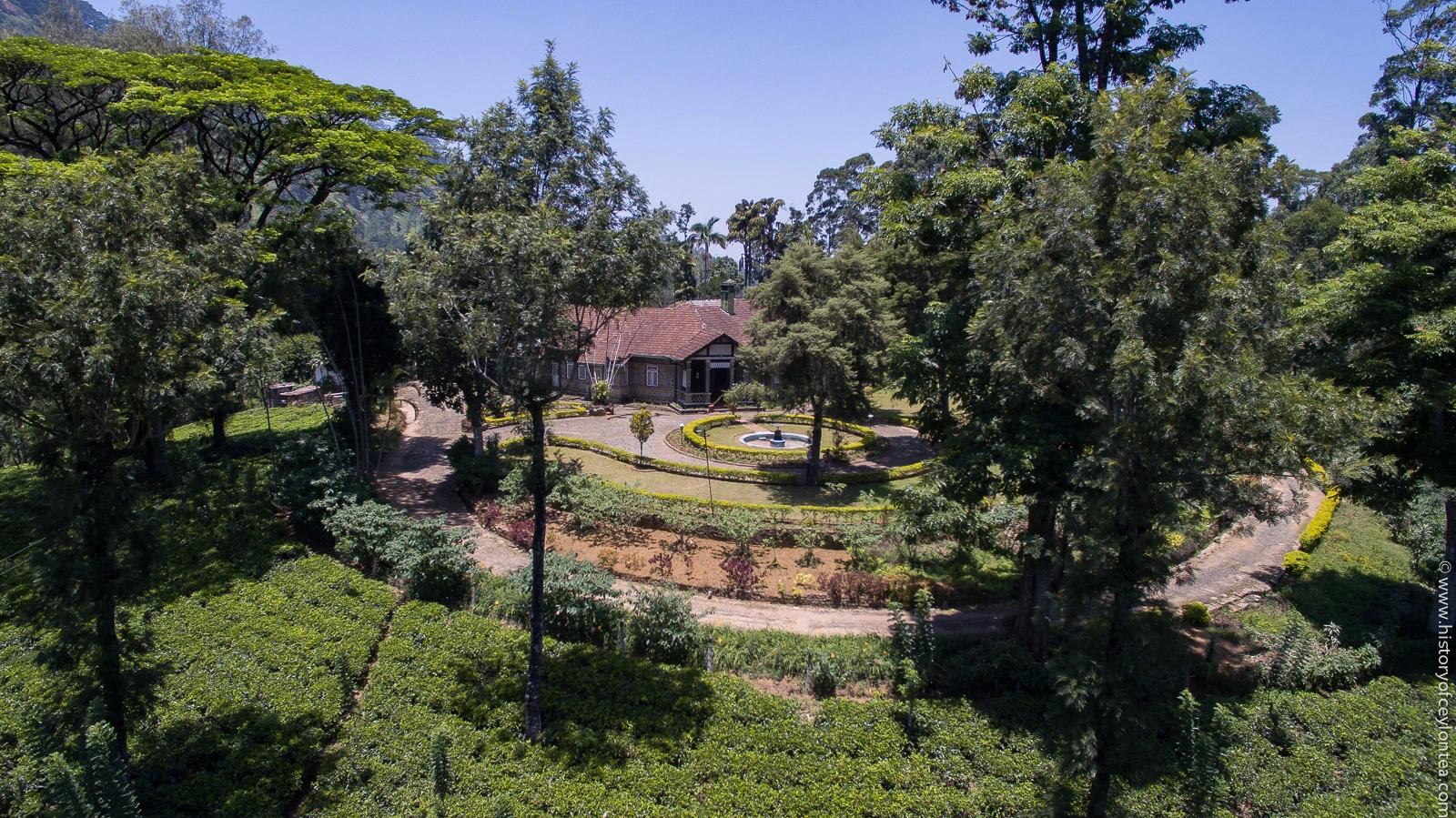
Anyone travelling along the old road from Gampola towards Nuwara Eliya will know the landscape around Pussellawa. Tea bushes cover the slopes, narrow estate roads disappear into the hills, and occasional colonial-era buildings remain among the greenery. It is a part of Sri Lanka where the plantation past is still very much present, although many travellers pass through without knowing much about the history of the estates around them.
One estate carries a name that seems particularly unexpected in this setting: Rothschild. It is a name more readily associated with banking houses in London and Paris than with the mountain country of Ceylon. Yet its appearance in Pussellawa is no coincidence, and behind it lies an interesting story of family connections, coffee plantations and one of the island’s early experiments with tea cultivation.
The story begins not with the famous bankers themselves, but with two brothers belonging to the extended Rothschild family. Maurice and Gabriel Worms came to be associated with substantial plantation interests in Ceylon at a time when coffee was becoming an important part of the colonial economy. Their activities would leave a name on the landscape long after they had departed the island.
The Rothschild Family Connection
Maurice and Gabriel Worms were closely related to the Rothschild banking family through their mother, Jeanette Rothschild. She was the sister of Nathan Mayer Rothschild, who established the London branch of the family’s banking business. The two brothers were therefore nephews of one of the best-known figures in nineteenth-century British finance.
Maurice Worms, later known as Maurice Benedict de Worms, initially pursued a business career in London. By the early 1840s, however, he had decided to travel, undertaking a journey through several parts of Asia. His travels took him to India, China, Singapore, Manila and Ceylon, exposing him to commercial opportunities very different from those of the London financial world.
Letters preserved by The Rothschild Archive provide glimpses of these journeys and the observations Maurice made along the way. Ceylon appears to have made a particularly strong impression upon him. The island’s developing plantation economy offered opportunities for investment, particularly in the central highlands, where European planters were clearing and cultivating land for coffee.
Unlike the better-known Rothschild banking operations in Europe, the brothers’ business in Ceylon was principally a plantation enterprise. The family connection explains the name and background of those involved, but the development of the estate was undertaken by Maurice and Gabriel through their own commercial activities.
When Maurice de Worms Arrived in Pussellawa
In February 1841, Maurice settled in Ceylon and acquired forest land around Pussellawa. He subsequently invited his brother Gabriel to join him, and together they began developing plantation interests in the central highlands.
Pussellawa occupied an attractive position along the route between Gampola and Nuwara Eliya. The surrounding country offered cooler temperatures than the coastal lowlands, along with extensive areas that colonial investors regarded as suitable for commercial cultivation. The mountain scenery that travellers admire today was, during the nineteenth century, undergoing considerable change as forest land was converted into plantations.
Coffee, rather than tea, was the principal crop attracting investors to Ceylon at that time. The development of coffee estates had already begun transforming parts of the central highlands, bringing new roads, processing facilities and settlements associated with the plantation industry.
Maurice acquired substantial areas of land around Pussellawa and neighbouring districts, gradually developing what became known as Rothschild Coffee Estate. In 1842, the brothers established the firm G. and M. B. Worms, dividing responsibilities within their expanding business.
Gabriel managed the Grandpass coffee mills and the company’s shipping interests, while Maurice concentrated on plantation activities in the hills. Their interests therefore extended beyond growing coffee, encompassing the processing and transport arrangements needed to move the crop towards overseas markets.
The Tea Experiment That Came Before James Taylor
Perhaps the most interesting part of the Rothschild story concerns an experiment undertaken shortly after Maurice arrived in Ceylon. According to The Rothschild Archive, he obtained tea cuttings from China and planted a small garden at Condegalle, in the Pussellawa district, in September 1841.
This was more than two decades before James Taylor established his pioneering commercial tea plantation at Loolecondera in 1867. The Rothschild Archive’s historical timeline credits the Worms brothers with introducing China tea cuttings for cultivation in Ceylon, making their activities an important part of the early history of tea experimentation on the island.
There is, however, a distinction worth making. Maurice’s planting was an early experiment, not the beginning of Ceylon’s commercially successful tea industry. The Worms brothers remained principally coffee planters, and their considerable plantation interests were developed around that crop.
Tea had been the subject of earlier botanical interest and experimentation in Ceylon, so the 1841 planting should not automatically be described as the first tea ever grown on the island. Its importance lies in the documented connection between the Worms brothers, the Pussellawa district and an early attempt to cultivate tea from Chinese plant material.
James Taylor’s work at Loolecondera later helped establish the practical foundations for commercial tea production. The two stories therefore belong to different stages of the island’s agricultural history, rather than competing claims to the same achievement.
Nevertheless, it is remarkable to think that tea was being cultivated experimentally in the Pussellawa hills in 1841, long before the familiar tea estates came to dominate the landscape.
The Growth of the Worms Brothers’ Plantations
Maurice and Gabriel gradually expanded their plantation interests across the central highlands. Historical accounts describe holdings of approximately 7,318 acres spread across twelve properties by the time the brothers decided to retire. Among the estates associated with their enterprise were Rothschild, Condegalle, Worms-Badulla and Hopewell-Hunugalla.
The scale of these holdings gives some indication of how extensively the coffee industry was developing in nineteenth-century Ceylon. Plantations required land, investment, transport connections, processing facilities and substantial labour. The brothers’ business extended into several of these activities, allowing them to participate in different stages of the coffee export trade.
Rothschild Estate later acquired a reputation for efficient plantation management. Its name became associated with the organised production methods and commercial ambitions of the period, when plantation development was regarded by colonial investors as one of the principal opportunities available in Ceylon.
The success of these estates also belonged to a wider and more complicated history. Plantation expansion involved the clearing of large areas of land and depended upon workers whose labour sustained the estates. The hill country’s transformation cannot be understood solely through the achievements of its European owners.
In 1863, Maurice and Gabriel decided to retire and return to England. Their Ceylon properties were placed in the hands of George Smyttan Duff of the Oriental Bank Corporation for disposal. Although the brothers left the island, the Rothschild name continued to be associated with the estate at Pussellawa.
When Coffee Gave Way to Tea
The years following the Worms brothers’ departure brought enormous changes to Ceylon’s plantation economy. During the latter part of the nineteenth century, coffee leaf rust, caused by a fungal disease, spread through the island’s coffee plantations and severely damaged the industry. Estate owners increasingly turned towards alternative crops, with tea eventually emerging as the most successful replacement.
The transformation did not occur overnight. Coffee remained important for a time, while experimentation with tea and other crops continued in different districts. Gradually, however, extensive areas of the central highlands were converted to tea cultivation, changing both the economy and the appearance of the countryside.
Pussellawa was part of this transition. Estates that had originally been developed for coffee increasingly became tea properties, and Rothschild Estate followed the broader movement towards the new crop. The land associated with Maurice de Worms’ early experiments thus became part of an industry that achieved commercial success after his departure.
Rothschild tea subsequently developed a reputation for quality in the London market. Historical accounts describe the estate as an efficient producer whose teas were recognised in Mincing Lane, once an important centre of London’s tea trade.
The estate’s history therefore covers two distinct periods of Ceylon’s plantation development: the coffee boom of the early and middle nineteenth century and the expansion of commercial tea production that followed
Read our previous article : https://trippingsrilanka.com/stories/alma-estate-kandapola
The People Who Made the Estates Work
The history of Rothschild Estate, like that of many old plantations, is often told through the names of proprietors, companies and managers. Maurice and Gabriel Worms left records of their investments and commercial activities, and their family connection has given the estate an unusual place in the historical literature.
But the daily operation of the plantations depended upon many others. Workers cleared land, cultivated crops, maintained estate roads, transported produce and carried out the numerous tasks necessary to sustain an agricultural enterprise in mountainous country.
As the plantation economy expanded, labour migration from South India became central to the development of Ceylon’s estates. Generations of plantation families subsequently made their homes in the hill country, contributing not only to its agricultural output but also to its communities, traditions and social history.
The familiar tea-covered landscape around Pussellawa is therefore more than the result of nineteenth-century European investment. It is also the product of generations of labour and experience. The workers and their descendants form an essential part of the district’s history, even though their names appear far less frequently in accounts of plantation ownership.
Remembering this wider history makes a visit to the tea country more meaningful. The estate bungalows, tea fields, roads and factories belong to a landscape shaped by many people over a long period.
Visiting Rothschild Estate Today
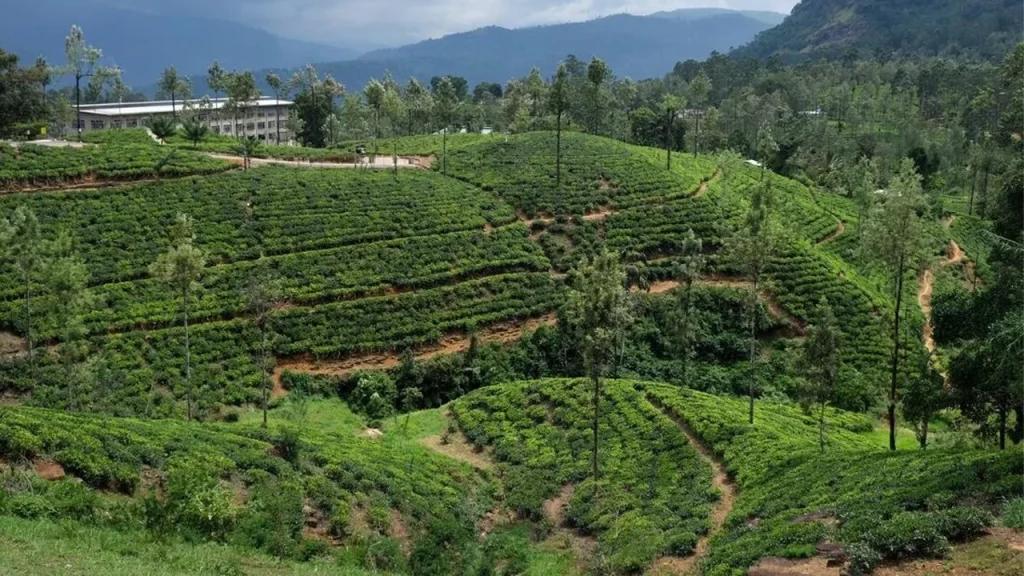
Rothschild Estate is situated in the Pussellawa area of Sri Lanka’s Central Province, along the historic route between Gampola and Nuwara Eliya. The district is known for its tea plantations, mountain scenery and colonial-era agricultural history.
Travelling through Pussellawa offers an opportunity to appreciate how extensively plantation development shaped this part of the island. Tea bushes cover the hillsides, estate roads connect the slopes, and older buildings occasionally appear among the greenery. The scenery changes with the weather, particularly when mist settles over the mountains or rain moves through the valleys.
Rothschild is a working tea estate rather than a conventional historical museum. Visitors should not assume that its factory, bungalows or other estate facilities are open to the public. Anyone wishing to explore the property or arrange a tea-related visit should seek permission from the relevant estate management in advance.
Even without entering private estate premises, the surrounding Pussellawa district offers considerable interest for travellers who enjoy the history and scenery of Sri Lanka’s tea country.
What to See Around Pussellawa
The journey through Pussellawa can easily form part of a wider visit to the central highlands. The road towards Nuwara Eliya passes several attractions connected with the region’s natural scenery, religious traditions and plantation history.
Ramboda Falls is among the best-known natural attractions along the route, particularly impressive after periods of rain. The surrounding mountains and valleys make this a popular stopping point for travellers making their way towards Nuwara Eliya.
The Shri Bhakta Hanuman Temple near Ramboda is another familiar landmark. Its prominent setting and views across the surrounding hills make it a point of interest for visitors travelling through the area.
The tea country around Pussellawa itself deserves attention. Estate roads, carefully planted slopes, shade trees, working factories and old plantation buildings provide glimpses of an agricultural landscape that has developed over nearly two centuries.
The wider Kotmale region, with its reservoir, mountain scenery and hydroelectric development history, offers another interesting excursion. Travellers wishing to explore the origins of commercial Ceylon tea may also consider the Loolecondera Estate area, associated with James Taylor’s work beginning in 1867.
These places offer different perspectives on the hill country, from its natural landscape to its plantation and industrial history.
How to Reach Pussellawa
Pussellawa lies along the A5 highway, between Gampola and Nuwara Eliya. It can be reached by road from Kandy, Colombo or Nuwara Eliya, making it accessible as part of a journey through Sri Lanka’s central highlands.
For travellers arriving by train, Gampola is a practical railway connection. From there, it is possible to continue by bus, taxi, three-wheeler or private vehicle. Those intending to visit several estates, viewpoints and waterfalls may find it more convenient to arrange transport for the full journey.
Travel times vary with traffic, weather and road conditions, particularly along the mountain sections. Drivers should allow additional time during heavy rain and periods of mist, when visibility can become poor.
Travelling Responsibly Through Tea Country
Sri Lanka’s tea estates are working agricultural communities, not simply scenic landscapes. The fields, factories, estate roads and residential areas form part of the daily lives of plantation workers and their families.
Visitors should obtain permission before entering private estate property, including tea fields, factories, bungalows and workers’ settlements. People working in the fields should also be asked before being photographed, rather than treated as part of the scenery.
The climate of the central highlands can change quickly, and a journey that begins in sunshine may encounter mist and rain within a short distance. Suitable footwear, a light rain jacket and care on winding roads will make visits more comfortable.
A little attention to these practical details helps ensure that travellers can appreciate the district’s history and scenery while respecting the people who live and work there.
A Forgotten Connection Between London and Pussellawa
The story of Rothschild Estate connects two very different worlds. One is nineteenth-century London, with its banking houses, international commerce and influential family networks. The other is the mountain country of Ceylon, where coffee plantations were being developed and experiments with tea were beginning long before the crop became the island’s principal agricultural export.
Maurice and Gabriel de Worms did not establish Ceylon’s successful commercial tea industry. Their primary plantation business was coffee, and the major expansion of tea came later. Yet Maurice’s decision to plant Chinese tea cuttings at Condegalle in 1841 gives the Pussellawa district an interesting place in the early history of tea cultivation.
The brothers eventually returned to England, their business interests changed hands, and the coffee economy gave way to tea. Yet the Rothschild name remained attached to the estate, surviving in the landscape long after the people who introduced it had departed.
For travellers passing through Pussellawa today, Rothschild is more than an unusual name among the tea estates. It is a reminder of the unexpected connections that shaped colonial Ceylon and of the long journey from the island’s coffee-growing past to the tea country we recognise today.
Visit us: https://trippingsrilanka.com/stories