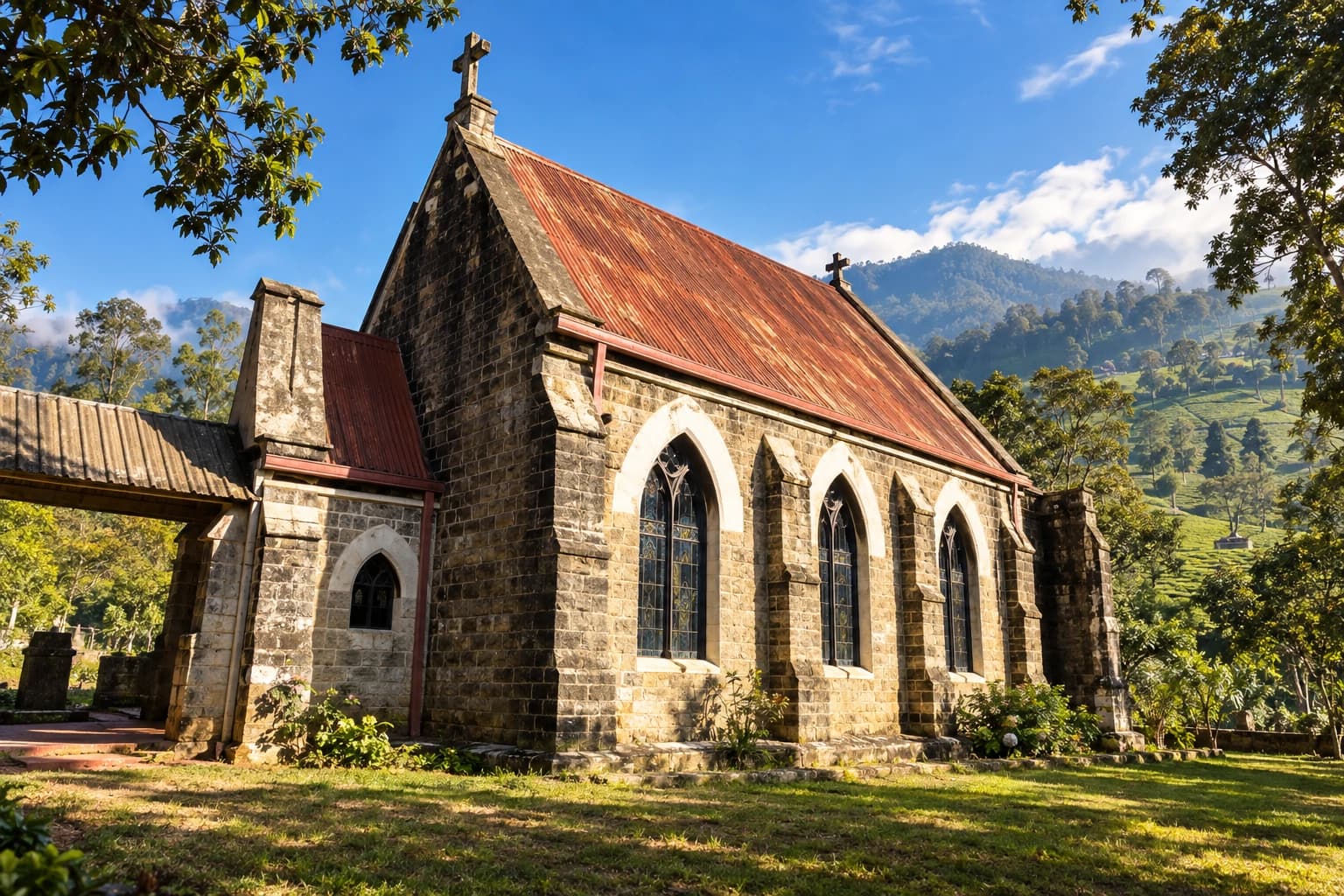
Alma Estate Kandapola: Coffee, Tea and the Planter World of Old Ceylon
A Moment on an Estate Road
Alma Estate Kandapola| A vintage photograph shows a smartly dressed estate superintendent standing beside a Land Rover on a quiet plantation road. Behind him, rows of tea rise across the hillside, following the natural curves of the Kandapola landscape. Nearby, a signboard marks the entrance to Alma Group, part of Sri Lanka’s high-grown tea country.
At first, it looks like a simple roadside portrait. But the scene tells a much wider story.
It captures a way of life that once shaped the hills of Old Ceylon: the life of estate roads, planters, superintendents, tea fields, bungalows, workers, factories, and vehicles moving through the mist.
According to the caption connected to the image, Alma Estate in Kandapola began as a coffee plantation in the 1860s under W. M. Thompson. After the coffee blight of the 1880s, the estate shifted to cinchona and tea. Later, David Sime Cargill acquired it in the mid-1880s, and tea cultivation expanded to more than 1,000 acres by the early twentieth century.
That history gives the photograph depth. The man beside the Land Rover is standing in a landscape that had already lived through coffee, disease, experiment, tea expansion and estate modernisation.
Check our previous article – https://trippingsrilanka.com/stories/coffee-blight-of-ceylon
Kandapola: A Life Shaped by Altitude
Kandapola is not just a place on a map. It is a climate, a rhythm and a mood.
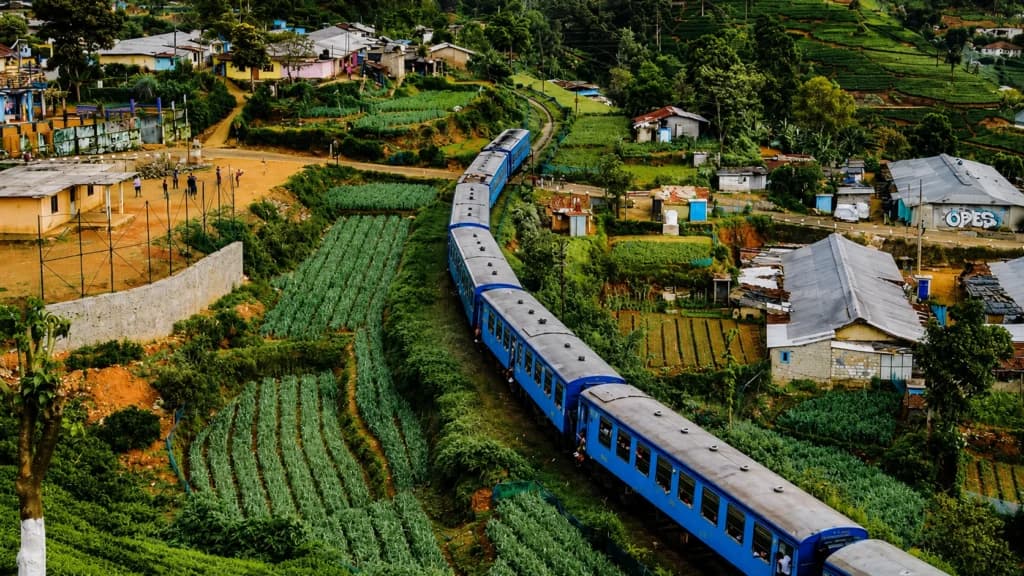
Set near Nuwara Eliya, Kandapola belongs to Sri Lanka’s cool high-grown tea country. The mornings can be misty. The evenings can turn cold. Rain moves quickly across the slopes. Roads wind between estates, vegetable plots, old bungalows and tea-covered ridges.
Life here was different from life in Colombo, Galle or Kandy.
The highlands created their own routine. People rose early. Estate work began with the weather. Tea had to be plucked, weighed, transported and processed. Roads had to be kept open. Vehicles had to be maintained. Fields had to be inspected. Factory operations had to be watched.
The estate was not only a workplace. It was a self-contained world.
At Alma Estate, as in many plantations, daily life would have revolved around land, labour, weather and production.
Check our previous article- https://trippingsrilanka.com/stories/goatfell-bungalow
Before Tea: The Coffee World of Alma Estate
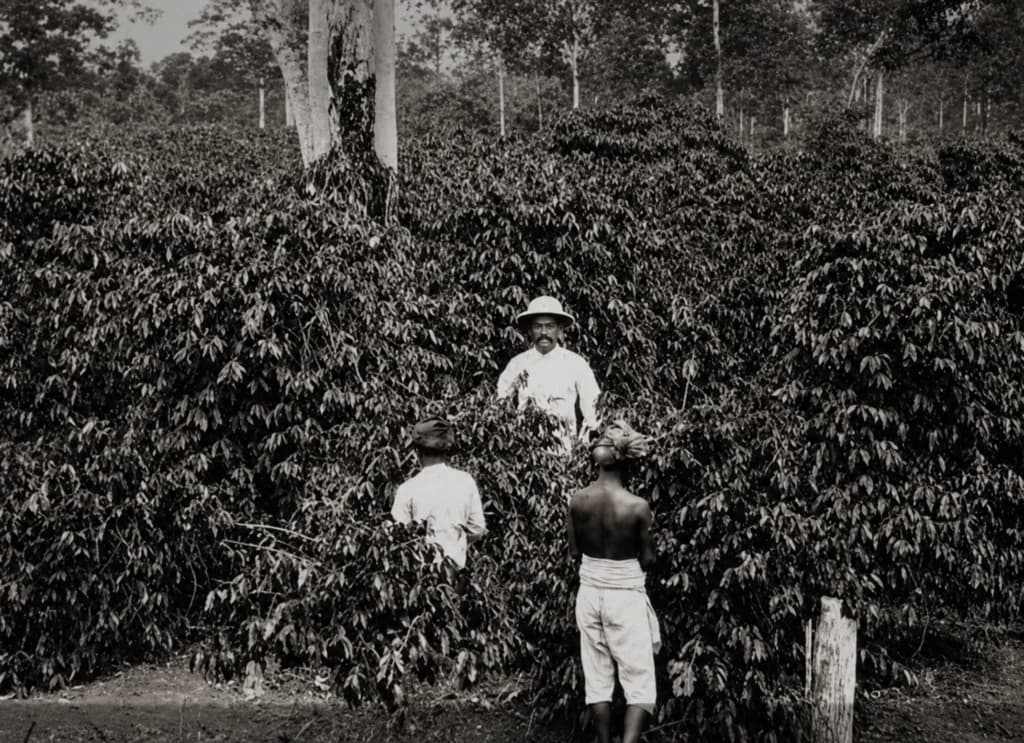
Today, it is natural to imagine Kandapola as tea country. But Alma Estate began in a different world — the world of coffee.
In the 1860s, when the estate was associated with W. M. Thompson, coffee was one of the great plantation dreams of British Ceylon. Planters believed the central highlands could bring wealth through coffee cultivation. Forests were cleared, estate boundaries were marked and bungalows were built on mountain land.
Life on a coffee estate would have been demanding.
The planter or superintendent had to manage cultivation, labour, crop disease, weather, transport and communication with commercial agents. Roads were difficult. Isolation was common. Supplies had to be brought from towns. Letters and instructions moved slowly compared with the speed of modern life.
Yet coffee created the first major plantation society of the highlands.
Alma Estate’s beginning as a coffee plantation places it within that early chapter of Old Ceylon’s hill-country transformation.
The Coffee Blight and a Changing Way of Life
The coffee blight of the 1880s changed everything.
The disease damaged coffee plants and reduced yields across Ceylon’s highlands. Estates that had once seemed full of promise began to fail. Planters faced debt, uncertainty and ruin. Some left the island. Others tried to survive by experimenting with new crops.
Alma Estate’s shift to cinchona and tea reflects this moment of adaptation.
For the people living and working on the estate, this was not just an agricultural change. It changed the rhythm of daily life.
Coffee harvesting, processing and transport gave way to different routines. Cinchona brought another kind of plantation experiment. Tea eventually created a more continuous cycle of labour, with regular plucking, factory processing and field maintenance.
The land remained, but the crop changed.
The estate community had to change with it.
Cinchona: The Forgotten Middle Chapter
Between coffee and tea, there was cinchona.
This detail is important because it reminds us that the rise of Ceylon tea was not a simple overnight success. After coffee collapsed, planters searched for alternatives. Cinchona, valued for quinine production, became one of the crops tested in the highlands.
For a time, estates like Alma may have carried the uncertainty of experiment.
Would cinchona succeed? Would tea become profitable? Would the land recover from the coffee crisis? Would the estate remain viable?
These were not abstract questions. They affected the lives of estate owners, superintendents, clerks, workers, suppliers and families who depended on plantation income.
The cinchona chapter shows us a more uncertain Old Ceylon — not the confident postcard world of tea, but a landscape searching for survival after failure.
The Rise of Tea at Alma Estate
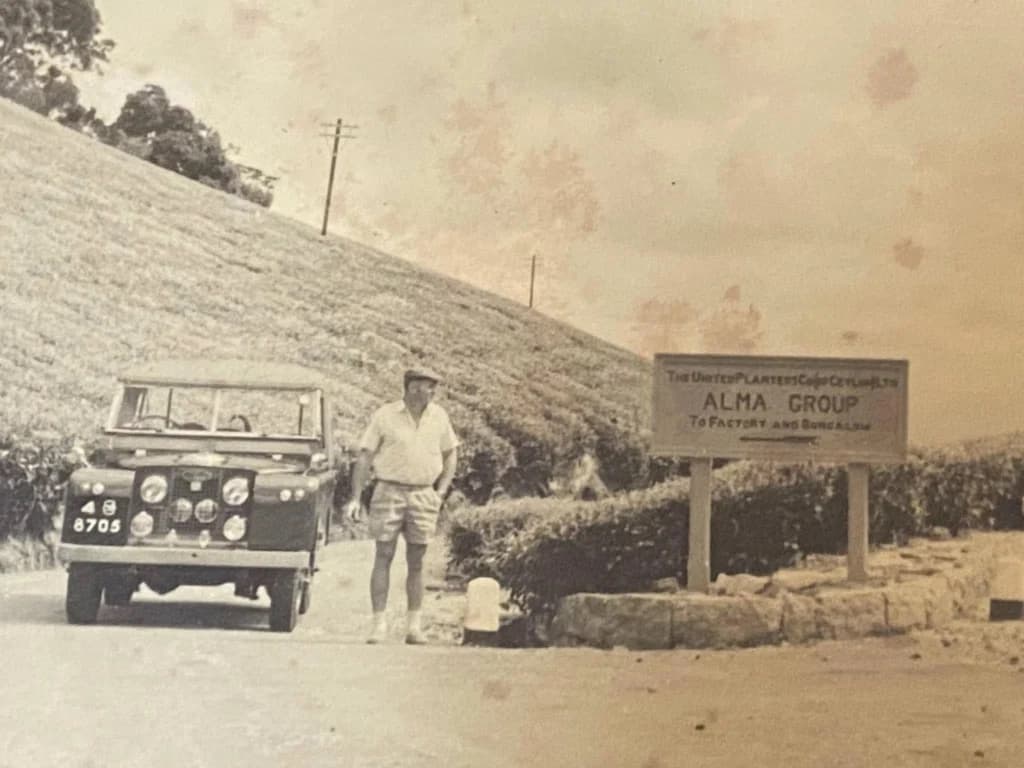
The caption notes that David Sime Cargill acquired Alma Estate in the mid-1880s, and that tea cultivation later expanded to more than 1,000 acres by the early twentieth century.
This was the moment when Alma became part of the new tea world of Ceylon.
Tea changed the daily organisation of estate life. Unlike coffee, tea required regular plucking and careful factory processing. The work was continuous. Fields had to be maintained with discipline. Leaf had to reach the factory in good condition. Timing mattered.
The estate became a system.
There were field divisions, roads, weighing points, factory routines, office records, transport schedules and labour arrangements. The superintendent had to move through this system daily, checking that each part worked.
This is the world hinted at in the photograph: a mature tea estate, organised, named and managed.
The Estate Superintendent’s Day
The man in the photograph is described as an estate superintendent.
In the plantation world, the superintendent was a central figure. He was not merely a man living in a bungalow. He was responsible for keeping the estate productive.
His day may have begun early.
He would check field work, inspect tea divisions, speak to staff, review factory operations, examine roads, attend to estate correspondence and report to owners or agency houses. He needed to understand crops, labour, machinery, weather, accounts and transport.
On a large estate, he could not remain in one place.
This is where the Land Rover becomes important.
The superintendent had to move. He had to climb estate roads, reach distant divisions, visit the factory, inspect drainage, attend to emergencies and travel between neighbouring estate points. His vehicle was part of his work.
The photograph captures that practical authority: the superintendent standing on the estate road, ready to move through the landscape he managed.
The Land Rover and the Estate Road
The Land Rover in the image is more than a stylish vehicle. It is part of the plantation way of life.
In tea country, estate roads were often narrow, rough, wet and steep. Ordinary cars were not always suitable. A Land Rover could handle the terrain better. It became closely associated with estate management because it could travel where the work demanded.
For the superintendent, it was a working tool.
It carried him through tea fields, across muddy roads, past labour lines, towards factories, offices and bungalows. It may have carried tools, documents, visitors, estate staff or supplies.
The Land Rover also symbolised a changing period.
Earlier planters moved by horse, cart or on foot. Later, motor vehicles changed estate supervision. They made movement faster and expanded the superintendent’s reach across large properties.
In the photograph, the Land Rover stands like a symbol of mid-twentieth-century estate life: practical, rugged and confident.
The Estate Bungalow and Domestic Life
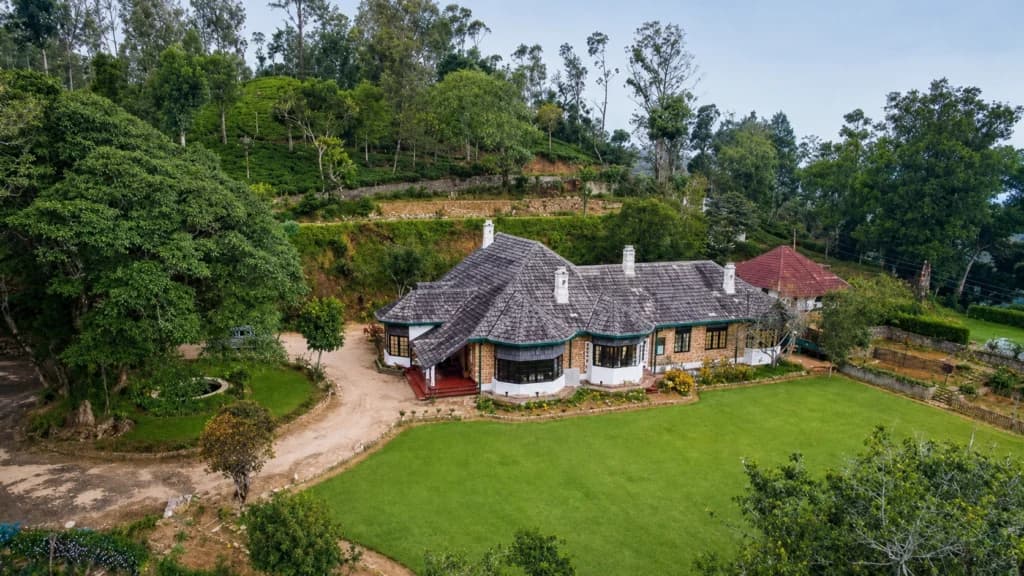
Behind the public image of the superintendent was the private life of the estate bungalow.
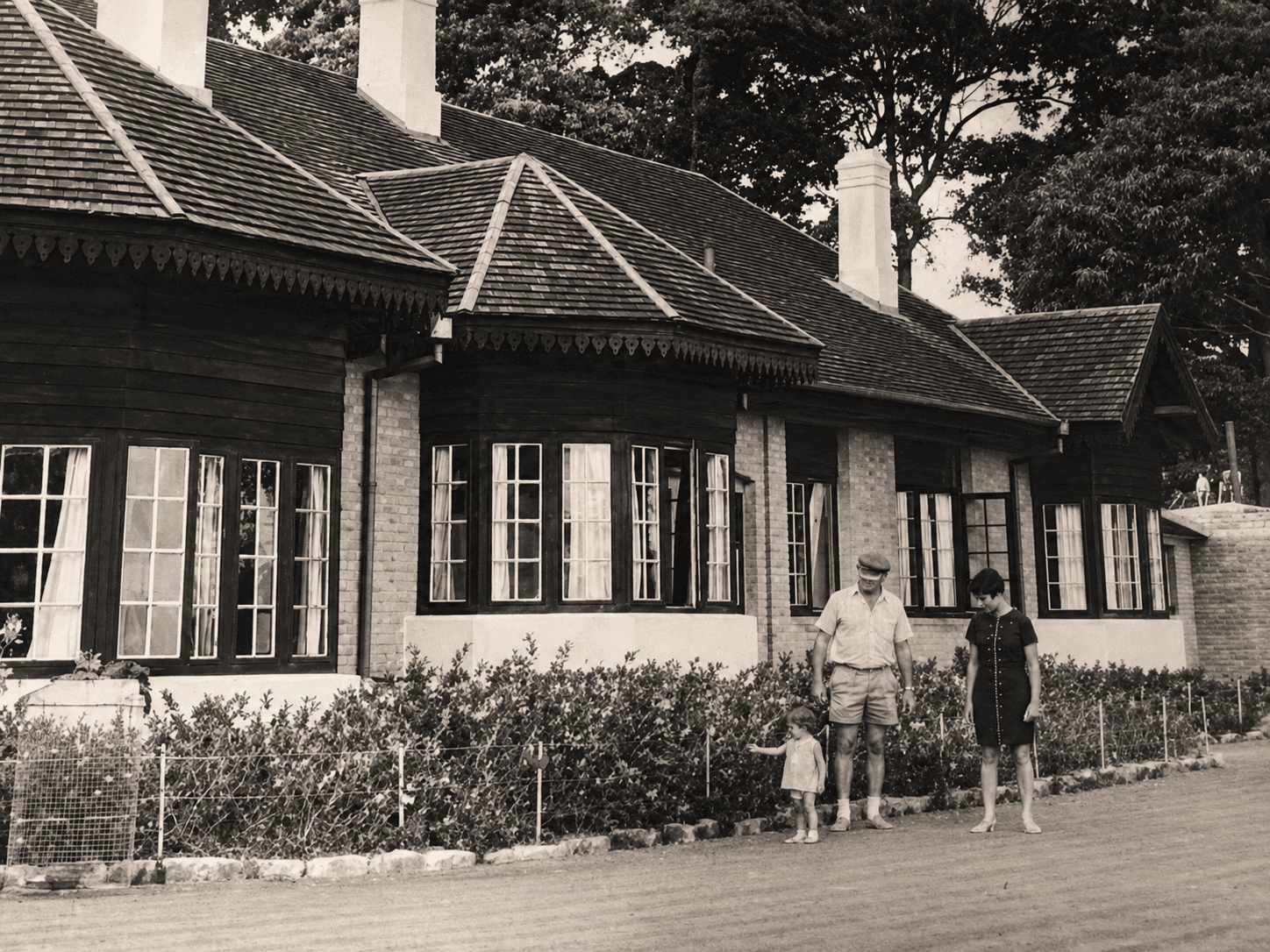
On estates like Alma, the bungalow was often the centre of domestic and social life for the superintendent and his family. It was where meals were served, letters were written, guests were received and estate matters were discussed after field rounds.
The bungalow would have had its own routines.
Morning tea. Breakfast. Office papers. Visits from clerks or staff. Garden maintenance. Supplies from town. Occasional guests from neighbouring estates. Evening drinks on the verandah. Cool nights, sometimes with mist pressing against the windows.
In the highlands, the bungalow was also a place of isolation.
It could be beautiful, but lonely. The nearest town might be some distance away. Weather could cut off roads. Social life depended on clubs, neighbouring estates, church gatherings, school connections and visits to Nuwara Eliya.
This was the quieter side of plantation life.
The Workers Who Made the Estate Possible
No account of life at Alma Estate is complete without recognising the estate workers.
The neat tea rows in the photograph were not created by scenery alone. They were planted, pruned, plucked and maintained by generations of labourers. Their work made the estate function every day.
Workers rose early. They moved through the cold hill-country mornings. They plucked tea leaf by leaf, carried baskets, walked estate paths, brought green leaf to weighing points and lived within the social structure of the plantation.
Their lives were often difficult.
The plantation system was unequal, and workers did not share the comfort or authority of the planter or superintendent. Yet their contribution was essential. Without their labour, there would have been no Alma Estate, no tea expansion and no Ceylon tea reputation.
A photograph of a superintendent and Land Rover therefore also asks us to remember the many unseen people behind the scene.
The Signboard and the Estate Identity
The signboard marked Alma Group is another important part of the image.
Estate signboards are simple, but they carry identity. They mark territory, ownership, organisation and memory. A signboard tells the traveller that this is not just a hillside. It is a named estate with a history.
In the plantation world, names mattered deeply.
Alma, Labookellie, Wanarajah, Loolecondera, Pedro, Great Western, St. Clair and many others became more than property names. They became part of the geography of Ceylon tea.
For workers, the estate name was home and workplace. For planters, it was responsibility and status. For traders, it was production. For travellers, it was landscape.
The Alma signboard in the photograph anchors the whole scene. It tells us where the moment belongs.
A Working Landscape, Not Just a Pretty View
Modern travellers often see tea country as scenery.
They see green slopes, mist, waterfalls and winding roads. But in the old plantation world, every part of that landscape had a function.
The road was for movement.
The tea rows were for production.
The bungalow was for management and domestic life.
The factory was for processing.
The labour lines were for estate workers.
The signboard marked organisation.
The vehicle allowed supervision.
The beauty of the landscape was real, but it was also a working system.
The Alma photograph reminds us of that. It shows tea country as lived space — not merely a postcard view.
Life Between Nuwara Eliya and the Estates
Kandapola’s closeness to Nuwara Eliya also shaped estate life.
Nuwara Eliya was the great hill station of Ceylon. It offered hotels, clubs, shops, churches, schools, gardens, races and social life. Estate families from nearby districts often had links with the town.
For a superintendent at Alma, Nuwara Eliya may have been the nearest centre of formal social life and supplies. Visits to town would have broken the routine of estate isolation.
But the estate remained the real centre of daily life.
The road between Kandapola and Nuwara Eliya connected two worlds: the working plantation and the hill-station society of Old Ceylon.
What This Photograph Preserves
The image preserves more than a person beside a vehicle.
It preserves a way of standing, dressing and belonging to a particular world. The superintendent’s attire, the Land Rover, the tea slope and the signboard all suggest an era when estate management carried a distinctive culture.
It was a world of discipline, hierarchy and routine.
It was also a world of change. The estate had begun with coffee, survived the coffee blight, experimented with cinchona and became part of the tea economy. By the time of the photograph, Alma had entered a more modern plantation age.
The old coffee story was still beneath the tea.
The Land Rover was on land first shaped by coffee planters and later remade by tea.
Why Alma Estate Matters to Old Ceylon
Alma Estate matters because it brings together many chapters of plantation history in one place.
It tells the story of:
- Coffee planting in the 1860s
- W. M. Thompson and early estate development
- The coffee blight of the 1880s
- The shift to cinchona and tea
- David Sime Cargill’s acquisition in the mid-1880s
- Tea expansion to more than 1,000 acres by the early twentieth century
- Estate superintendent life
- Land Rover culture in the hill country
- Kandapola’s high-grown tea landscape
- The workers who sustained plantation life
This makes Alma Estate a powerful Old Ceylon story.
It is not only about one estate. It is about how the hill country changed.
Final Thoughts: A Day in the Life of Plantation Ceylon
The photograph of Alma Estate is quiet, but it says a great deal.
A superintendent stands beside a Land Rover. A signboard marks the estate. Tea rows climb behind him. The road curves through a landscape shaped by more than a century of plantation history.
This was everyday life in the tea country of Old Ceylon.
It was a life of early mornings, estate rounds, weather worries, field inspections, factory schedules, letters from agents, labour routines, bungalow evenings and journeys along narrow highland roads.
It was also a life built on earlier failure. Coffee came first. Then blight. Then cinchona. Then tea.
Alma Estate survived those changes and became part of the world that made Ceylon tea famous.
For Tripping Sri Lanka readers, this image is valuable because it brings that world close. It allows us to imagine not only the history of the estate, but the rhythm of a day lived among tea fields, estate roads and mountain air.
In that sense, Alma Estate is not just a place in Kandapola.
It is a living memory of the plantation way of life in Old Ceylon.
Visit Us: https://trippingsrilanka.com/stories
Heritage places mentioned
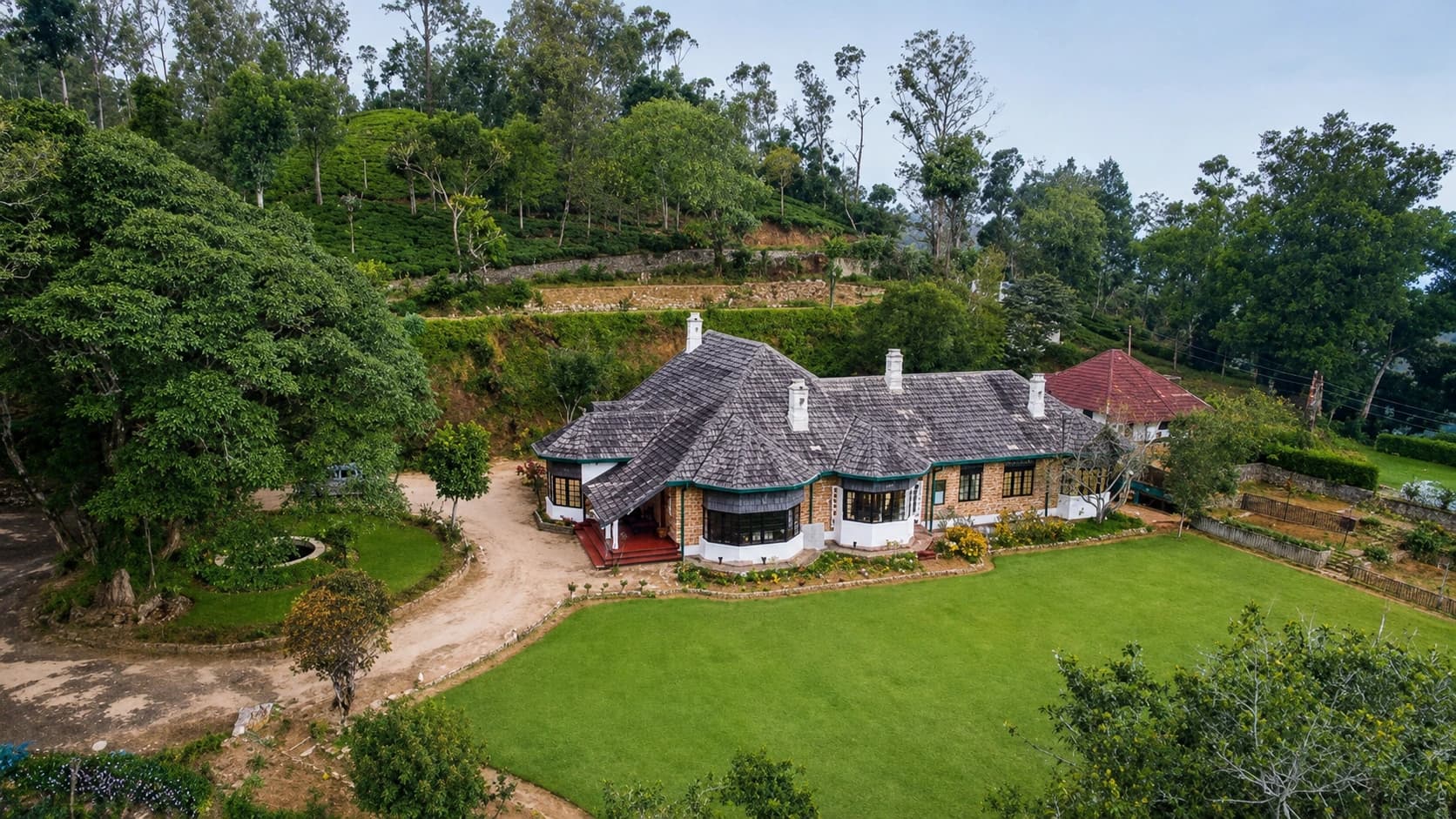
Alma Estate Kandapola
More from Old Ceylon

Colombo Public Library at 100: The Names That Still Remain
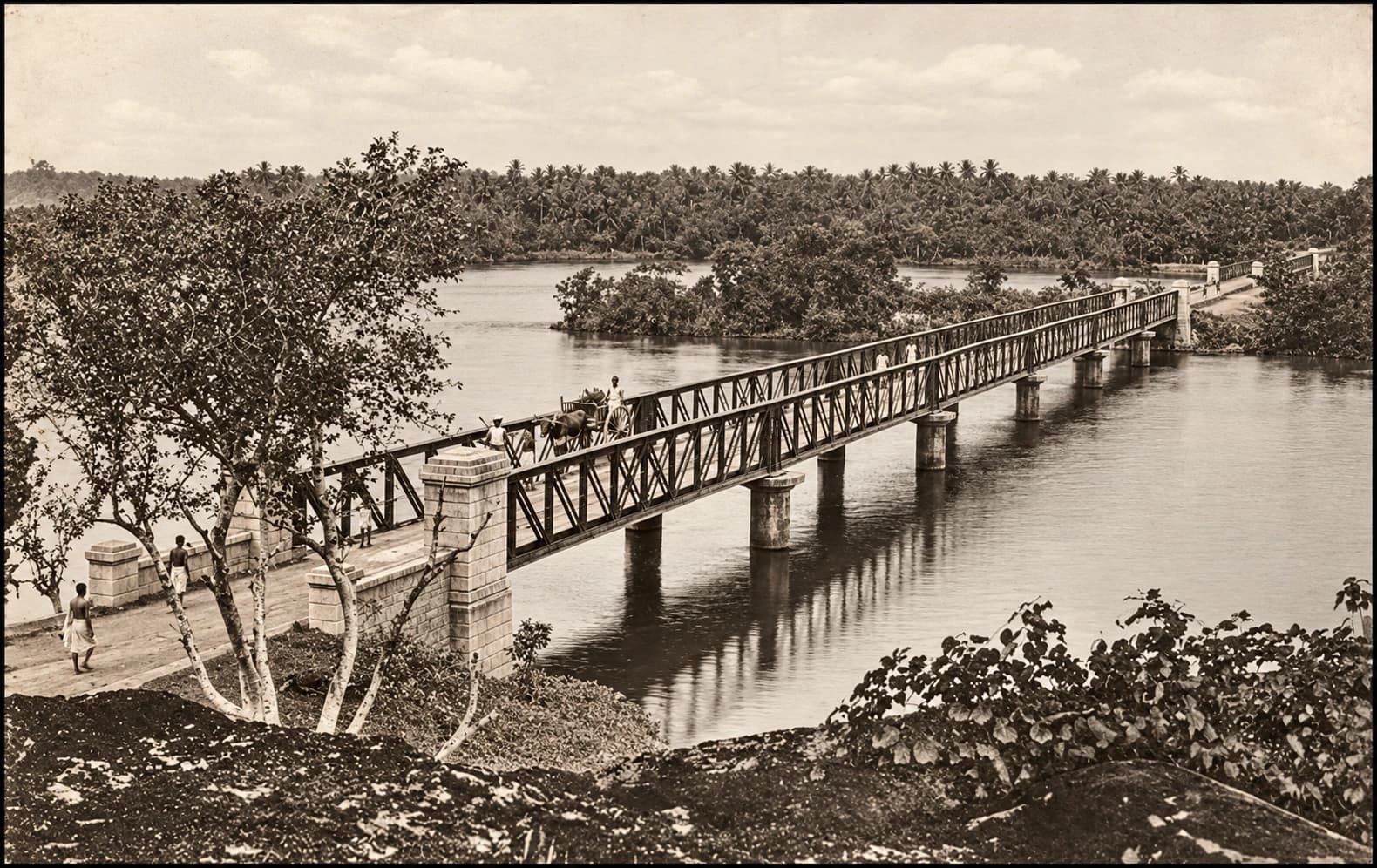
The Toll Gate at the Bridge: When Travelling Across Ceylon Cost a Few Cents at a Time