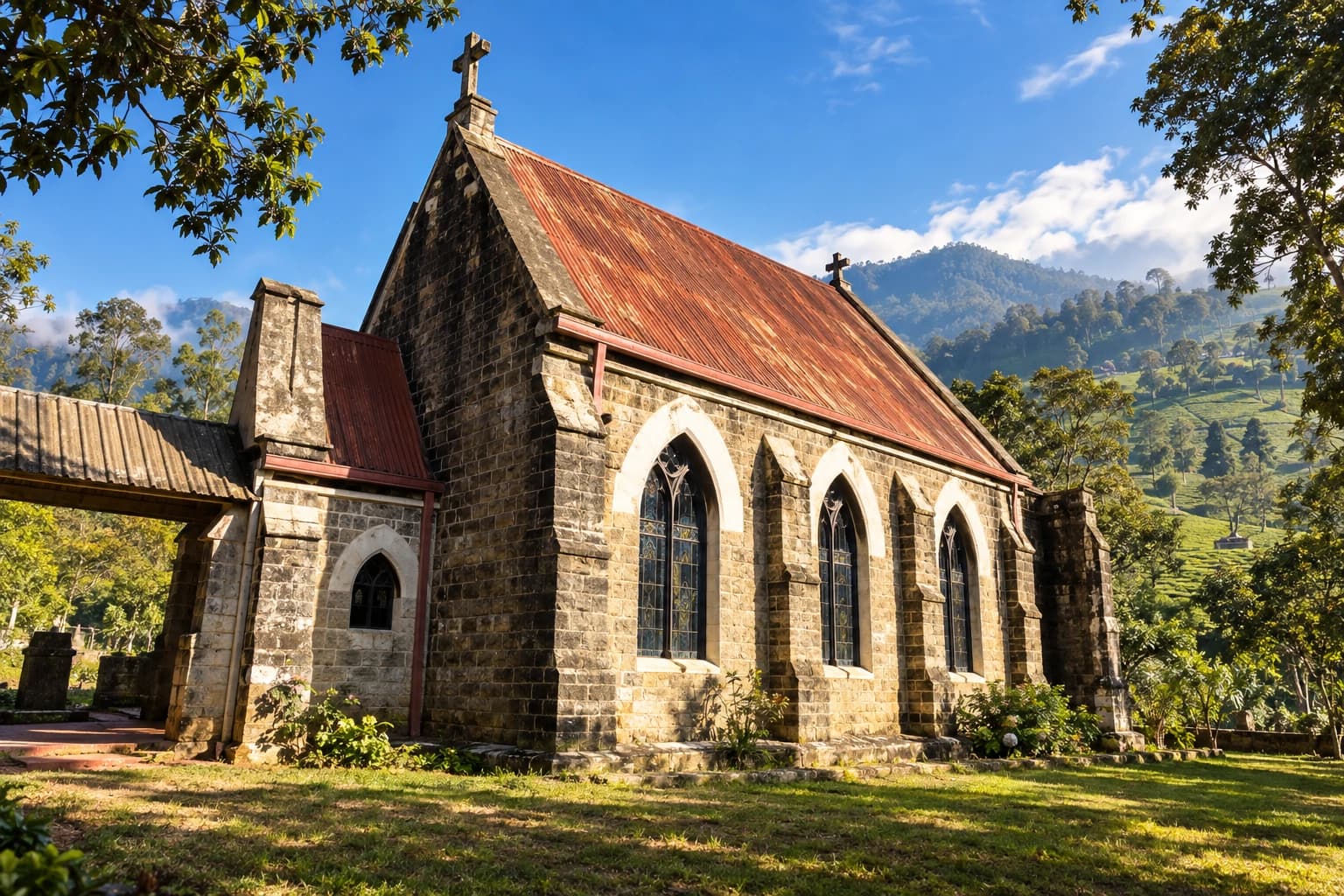
The Disease That Changed Old Ceylon Forever
Ceylon Coffee| Before Sri Lanka became famous for tea, the central highlands of Ceylon were covered with coffee.
In the nineteenth century, British planters cleared large areas of mountain forest and transformed the hill country into a booming coffee empire. Estates spread across Kandy, Matale, Gampola, Pussellawa, Nawalapitiya, Badulla and other highland districts. Coffee became one of the island’s most profitable exports, and Ceylon was seen as one of the great coffee-producing colonies of the British Empire.
Then came the disaster.
A fungal disease known as coffee leaf rust, commonly remembered as the coffee blight of Ceylon, began attacking coffee plantations. Leaves became marked with yellow-orange spots, weakened trees produced fewer berries, and estate after estate began to fail.
By the late nineteenth century, the coffee industry that had made fortunes for British planters was collapsing.
Out of that crisis came a new chapter: Ceylon tea.
Ceylon Before Tea: The Coffee Island
Today, Sri Lanka’s hill country is almost impossible to imagine without tea. But before tea became dominant, coffee was the great plantation crop of the island.
The British discovered that the cool, wet highlands were suitable for coffee cultivation. As demand for coffee grew in Europe, investors, merchants and young planters came to Ceylon hoping to make money from the crop.
The central highlands changed rapidly.
Forests were cleared. Estate roads were cut through the hills. Labour settlements appeared. Coffee stores, drying grounds, planter bungalows and transport routes became part of the mountain landscape.
Kandy, once the capital of the Kandyan kingdom, became increasingly connected to the plantation economy. Roads from Colombo to the interior became more important. Later, railways would also help move plantation produce to the port.
Coffee turned the highlands into an export machine.
Check our previous article – https://trippingsrilanka.com/stories/goatfell-bungalow
Who Were the British Planters?
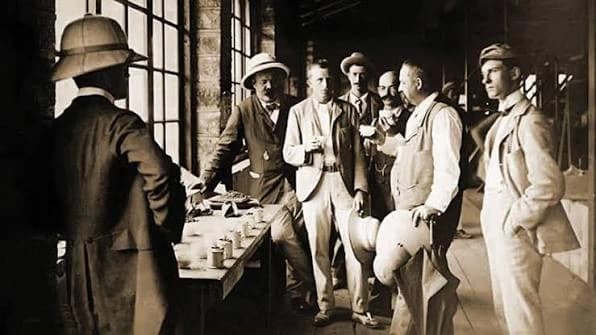
The British planters of Ceylon were not a single type of person.
Some were wealthy investors. Others were younger sons of British families looking for opportunity overseas. Many came from England, Scotland and Ireland. Some had military backgrounds. Some were connected to merchant houses in Colombo. Others arrived with little experience but hoped to build a fortune through plantation agriculture.
They were often called planters, but their roles varied.
Some owned estates. Some managed estates for absentee owners. Some worked as assistants before becoming superintendents or estate managers. Others were linked to agency houses that financed, marketed and managed plantation interests.
To many of them, Ceylon represented opportunity. Land could be leased or acquired. Forest could be cleared. Crops could be planted. Export markets could bring wealth.
But plantation life was not easy.
Planters faced disease, isolation, heavy rain, bad roads, uncertain crop prices, labour problems and the risks of working in remote highland districts. Many lived in estate bungalows far from Colombo, surrounded by mountains, jungle, coffee fields and later tea.
The Planter as a Figure of Old Ceylon
The planter became one of the defining figures of Old Ceylon’s hill country.
He was usually associated with the estate bungalow, horse or carriage, later the motorcar, plantation clubs, hill-country roads and the daily management of estate labour and production.
The planter’s world included:
- Estate bungalows
- Coffee and later tea fields
- Labour lines
- Stores and drying grounds
- Plantation clubs
- Agency houses in Colombo
- Roads and railway links
- Export shipping through Colombo and Galle
- Social networks across the hill country
But this world was also deeply unequal.
The wealth and lifestyle of the planter depended on the labour of thousands of workers. Many plantation workers were brought from South India under difficult conditions to work on estates. Their labour created the plantation economy, but their lives were often marked by hardship, low wages and poor living conditions.
To understand the British planters, we must therefore see both sides: their role in building the plantation system and the human cost carried by the workers who sustained it.
The Rise of Coffee Plantations
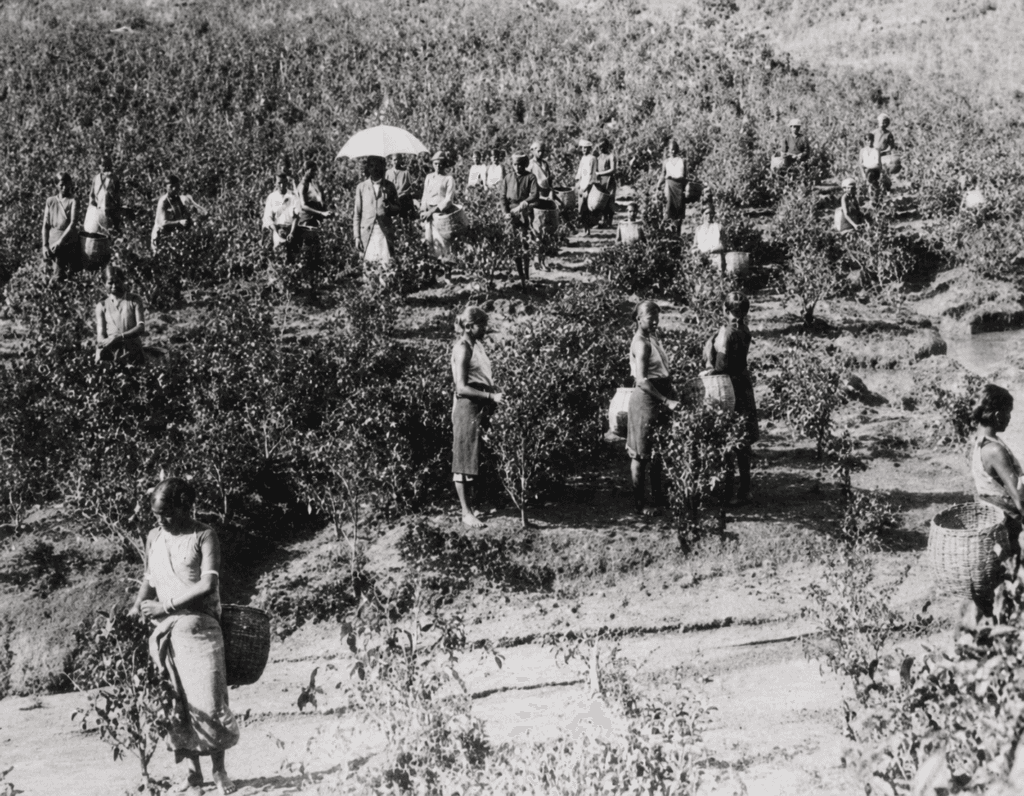
Coffee planting expanded rapidly in Ceylon during the nineteenth century.
The British administration encouraged plantation development, and investors saw coffee as a profitable crop. The fall of the Kandyan kingdom in 1815 opened the highlands more fully to colonial control. Land policies, road building and commercial investment helped plantation agriculture expand.
Coffee estates required cleared land, organised labour, processing facilities and transport.
Once coffee berries were harvested, they had to be processed, dried, packed and transported to the coast for export. Roads became essential. Later, railway expansion was closely tied to the needs of the plantation economy.
By the middle of the nineteenth century, coffee had become central to Ceylon’s economy.
For British planters, it seemed like a golden crop.
What Was the Coffee Blight?
The coffee blight was a devastating plant disease caused by a fungus that attacked coffee leaves.
The disease is commonly known as coffee leaf rust. It appears as rust-coloured or yellow-orange patches on the underside of coffee leaves. As the infection spreads, the leaves weaken and fall. Without healthy leaves, the plant cannot produce a good crop.
For an estate economy depending on coffee, this was disastrous.
At first, planters hoped the disease could be controlled. Some tried pruning. Others experimented with different methods of cultivation. But the blight spread widely and repeatedly.
Coffee trees that once promised profit began to fail. Yields dropped. Estates lost value. Planters who had borrowed money to establish or expand plantations faced ruin.
The disease did not merely damage a crop. It shook an entire colonial economy.
Why the Blight Was So Destructive
The coffee blight was especially destructive because the plantation system depended heavily on one crop.
Large areas of the highlands had been planted with coffee. When the disease spread, it did not affect only one small region. It threatened the whole plantation system.
The problem was made worse by the way plantations were organised. Coffee was grown commercially across large estates, often in conditions where disease could spread rapidly. The humid hill-country climate, which had once seemed ideal for coffee, also helped the fungus survive.
The financial structure of the plantation economy added further pressure.
Many planters depended on credit. Agency houses and investors expected returns. When crops failed, debts became dangerous. Estates could be abandoned, sold or converted to other crops.
The coffee blight therefore became both an agricultural crisis and a financial crisis.
The Collapse of Ceylon Coffee
The collapse of coffee did not happen in a single day. It was a slow disaster.
At first, planters tried to fight the disease and continue production. Some believed coffee would recover. Others hoped new land or better methods might save the industry. But year after year, the blight returned.
The confidence that had surrounded coffee began to disappear.
Estate values fell. Planters left the island. Investors lost money. Some properties were abandoned or neglected. Others were searched for new possibilities.
The hill country, once covered with coffee, entered a period of uncertainty.
But this collapse also created an opening.
Planters needed a replacement crop. The land was already cleared. Roads and estate systems already existed. Labour was already present. The plantation economy needed a new direction.
That direction became tea.
James Taylor and the Beginning of Ceylon Tea
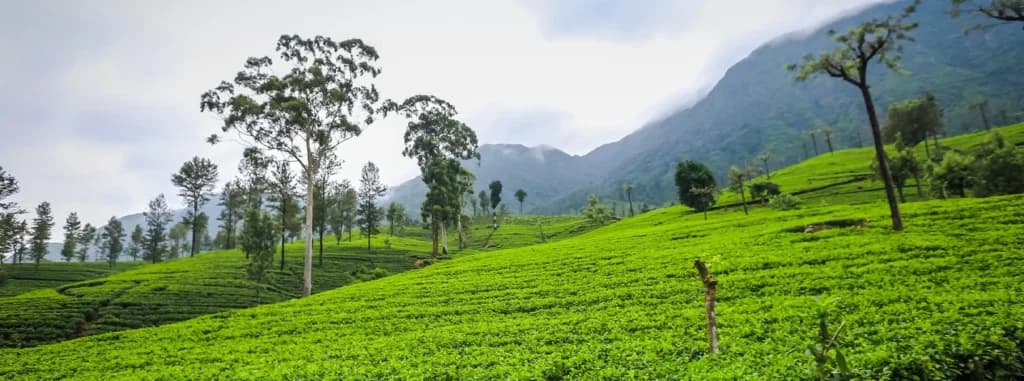
One of the most important figures in the transition from coffee to tea was James Taylor, a Scottish planter working at Loolecondera Estate near Kandy.
Taylor began experimenting with tea cultivation in the 1860s. In 1867, he planted tea on a small commercial scale at Loolecondera. His work proved that tea could grow successfully in Ceylon’s highlands.
At first, tea was not seen by everyone as the obvious replacement for coffee. Many planters were cautious. But as coffee continued to decline, tea became increasingly attractive.
Tea suited the climate. It could be processed on estates. It had strong demand in Britain and other markets. It could use much of the plantation infrastructure already created for coffee.
What began as an experiment became the foundation of a new industry.
Check our previous article – https://trippingsrilanka.com/stories/hapugastenne-estate-racecourse
How Coffee Estates Became Tea Estates
The coffee blight did not simply end one crop. It reshaped the entire landscape.
Former coffee lands were gradually replanted with tea. Estate factories were built or adapted. Processing methods changed. Labour patterns shifted. Transport systems were improved to carry tea to Colombo for export.
The familiar tea landscapes of Sri Lanka were born from this crisis.
Hills that had once held coffee bushes became covered in carefully clipped tea. Estate bungalows remained. Roads remained. Plantation clubs remained. But the crop changed.
Tea slowly replaced coffee as the symbol of Ceylon’s highlands.
This is why the coffee blight is one of the most important turning points in Old Ceylon history. Without the collapse of coffee, Ceylon tea may not have risen in the same way.
The British Planters After the Coffee Crisis
The coffee blight divided the planter community.
Some planters were ruined and left Ceylon. Others adapted quickly and shifted to tea. A few became pioneers of the new industry, investing in tea planting, factory machinery and improved estate management.
The successful planters were those who understood that the old coffee world could not be restored.
They had to experiment, take risks and learn new methods. Tea was not coffee. It required different cultivation, plucking, processing and marketing.
A coffee planter could not automatically become a successful tea planter without adapting.
Those who did adapt helped create the Ceylon tea industry that later became world famous.
The Role of Labour in the Plantation Transformation
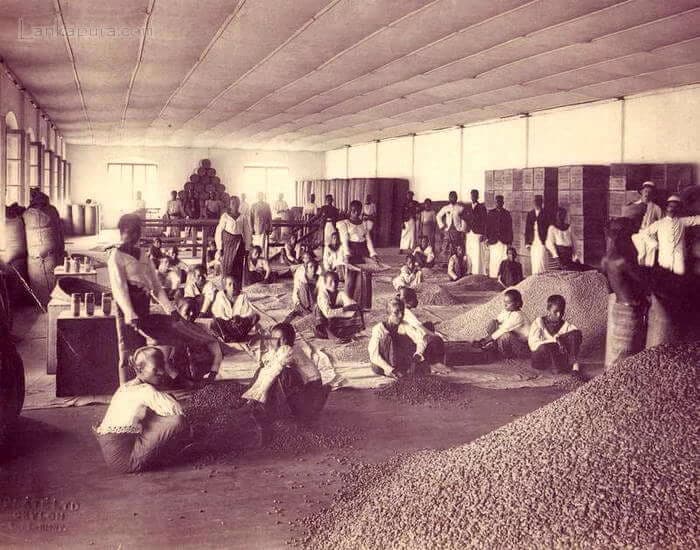
The story of coffee blight and tea must also include the workers.
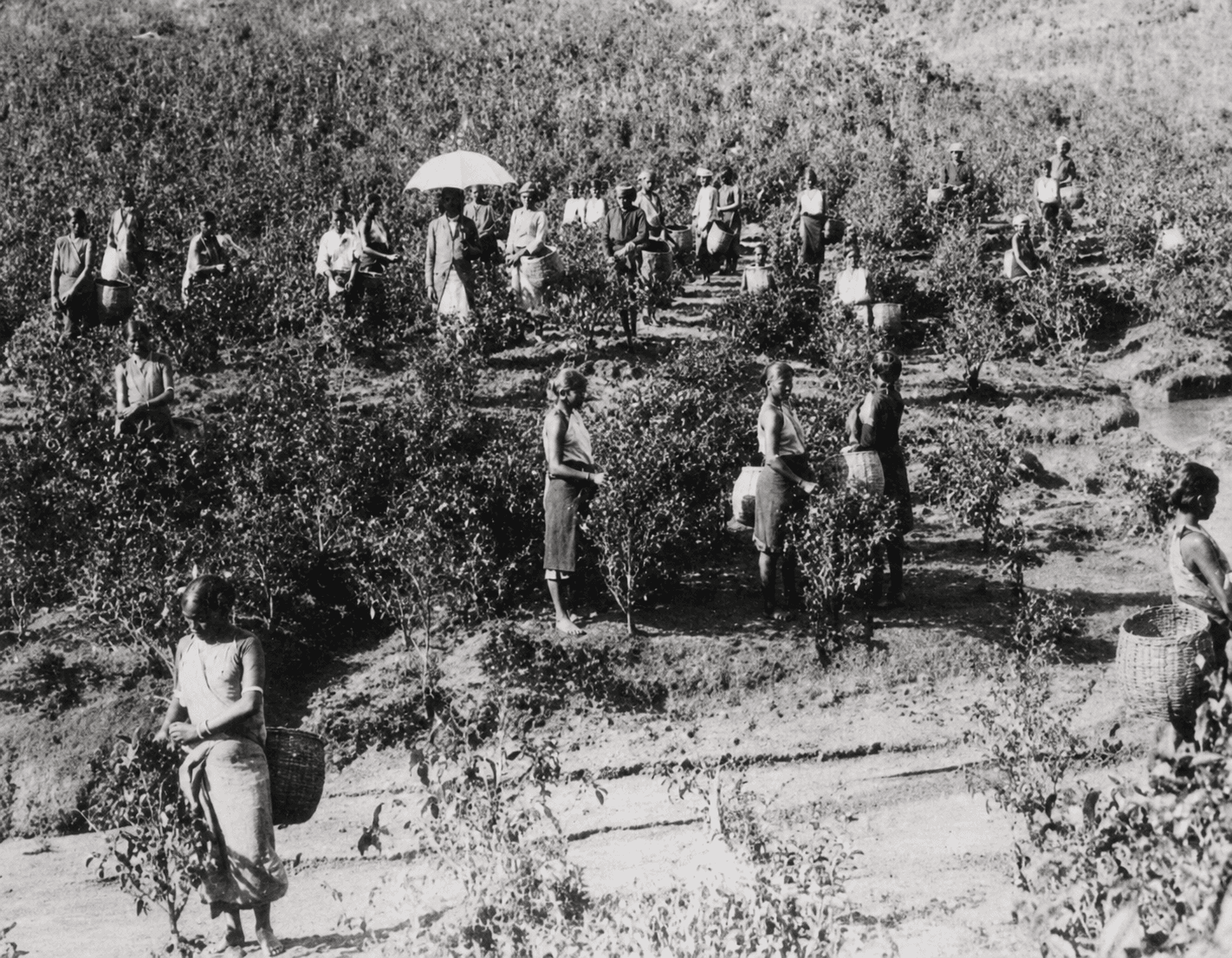
Plantation agriculture in Ceylon depended heavily on labour brought from South India. Workers cleared forests, planted crops, maintained fields, harvested coffee and later plucked tea.
When coffee failed, plantation workers also suffered. Estate instability affected wages, employment and living conditions. As tea expanded, labour demand continued, but the social structure remained harsh and unequal.
The rise of Ceylon tea was therefore not only a planter success story. It was also a labour story.
The beauty of the tea country today is built upon generations of plantation workers whose contribution deserves recognition.
Any honest account of Old Ceylon’s plantation history must include them.
The Impact on Colombo and Export Trade
The coffee blight also affected Colombo.
Colombo’s merchants, agency houses, banks and shipping businesses were tied to plantation exports. When coffee declined, commercial confidence was shaken. But the rise of tea gave Colombo a new export future.
Tea warehouses, auctions, shipping companies and commercial offices became part of the new economy.
The relationship between the hill country and Colombo became even stronger. Tea moved from estates to factories, then by road and rail to Colombo, and from there to global markets.
In this way, the coffee blight helped transform not only the highlands, but also the commercial identity of Colombo.
Why the Coffee Blight Matters to Old Ceylon
The coffee blight matters because it explains one of the greatest transformations in Sri Lanka’s modern history.
It tells us why the hill country became tea country. It explains why estate bungalows, tea factories, railway lines and plantation towns grew across the highlands. It also reveals how fragile colonial economies could be when built around a single crop.
The story connects several major themes:
- British plantation expansion
- The rise and fall of coffee
- The arrival of coffee leaf rust
- The role of British and Scottish planters
- The transition to tea
- The labour history of the plantations
- The development of roads and railways
- The growth of Colombo’s export economy
- The making of Ceylon tea
Without the coffee blight, the Old Ceylon we remember today would look very different.
What Travellers Can Still See Today
Although the coffee plantations have mostly disappeared, their legacy can still be traced.
Travellers interested in this story can visit places connected to the old plantation world:
- Loolecondera Estate, linked to James Taylor and the birth of Ceylon tea
- Kandy and Peradeniya, central to plantation administration and travel
- Pussellawa and Gampola, early plantation districts
- Nawalapitiya, connected to estate transport routes
- Nuwara Eliya, the great hill station of the planter world
- Hatton and Dickoya, classic tea-country regions
- Colombo Fort, where agency houses and export firms operated
- Tea factories and estate bungalows across the central highlands
These places help travellers understand that the tea country was not created overnight. It was born from experiment, crisis, adaptation and labour.
The Coffee Blight as a Warning
The coffee blight also carries a lesson.
It shows the danger of depending too heavily on one crop. It shows how disease, environment and economics can transform an entire country. It also reminds us that landscapes we now consider timeless were often created by sudden historical change.
Ceylon’s tea country feels ancient today. But in historical terms, it emerged from the collapse of coffee in the nineteenth century.
The green tea slopes were once a replacement.
They were the answer to disaster.
Final Thoughts: The Crisis That Gave Birth to Ceylon Tea
The coffee blight of Ceylon was one of the great turning points in the island’s colonial history.
It destroyed the coffee empire that British planters had built in the highlands. It ruined many estates, changed the fortunes of planters and forced the plantation economy to search for a new crop.
That crop was tea.
The British planters who survived the crisis became part of a new story. Some adapted, experimented and invested in tea. Others disappeared from the plantation world. Behind all of them stood the workers whose labour made both coffee and tea possible.
For Tripping Sri Lanka readers, this story is essential to understanding Old Ceylon.
The tea estates, hill-country bungalows, railway lines and factories that travellers admire today were shaped by a disease that once devastated the island’s coffee fields.
The coffee blight ended one world.
And from its ruins, Ceylon tea was born.
Visit Us: https://trippingsrilanka.com/stories
More from Old Ceylon

Colombo Public Library at 100: The Names That Still Remain
The Toll Gate at the Bridge: When Travelling Across Ceylon Cost a Few Cents at a Time