An Old Name in a Changing Colombo
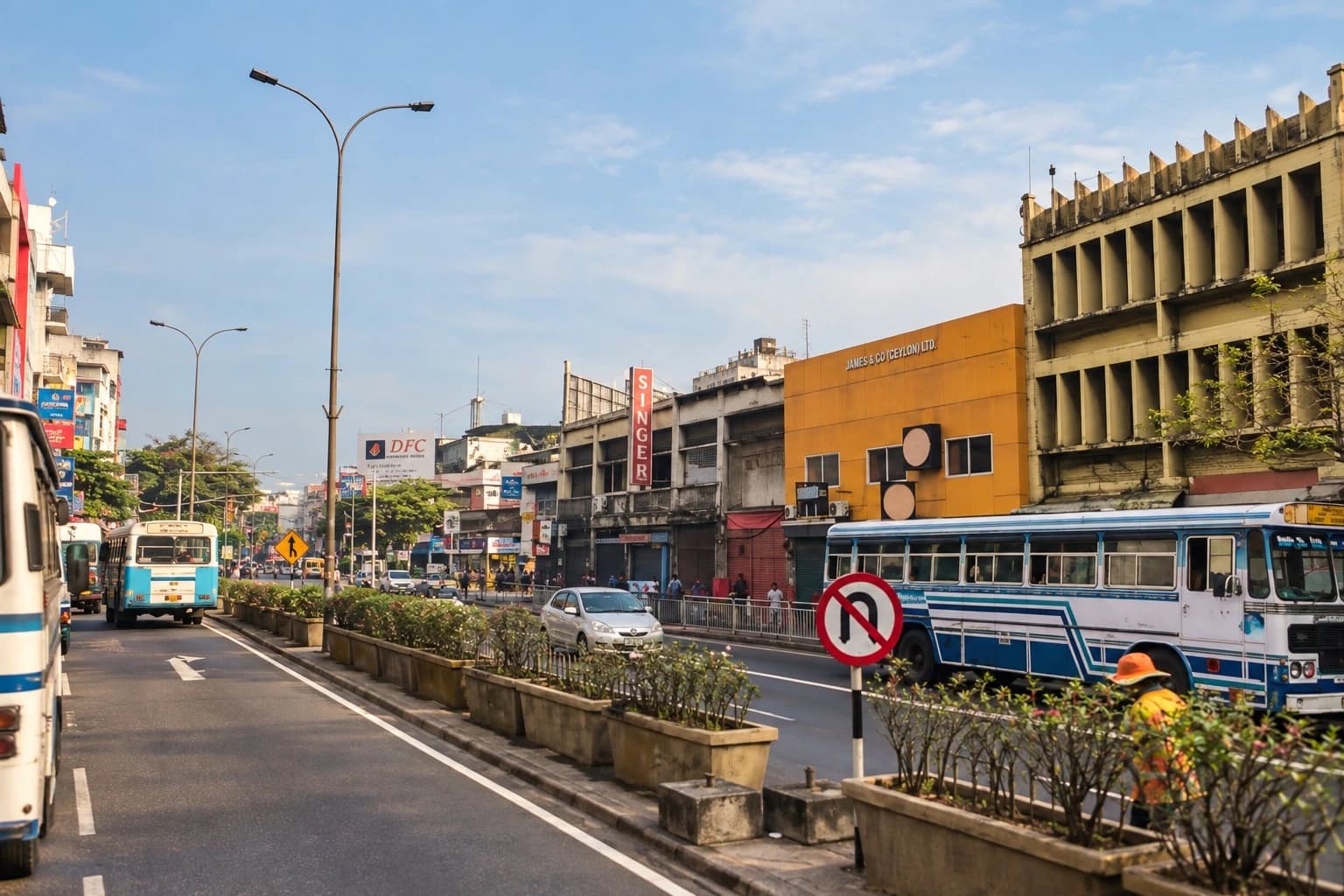
There are some Colombo street names we use without ever stopping to wonder where they came from. Armour Street is one of them. For generations, people have travelled along this busy stretch of Colombo to reach shops, markets, hospitals and the crowded commercial quarters around Pettah. Buses make their way through the traffic, lorries pull into narrow side streets, and shop signs compete for space above old buildings. The city seems to be permanently in motion.
Yet behind that familiar name lies a Colombo very different from the one we know today. There was once a city of horse-drawn carriages, military barracks, open ground and roads that were still finding their place on the map. Much of that Colombo has disappeared beneath modern buildings and busy traffic, but the names of certain streets continue to remind us of the city that came before.
Armour Street is one of those reminders. Thousands of people use the road every day, often without knowing anything about its earlier history. The name has become so familiar that it hardly attracts attention, although it belongs to a much older period in the development of Colombo.
Before Armour Street Became Busy Colombo
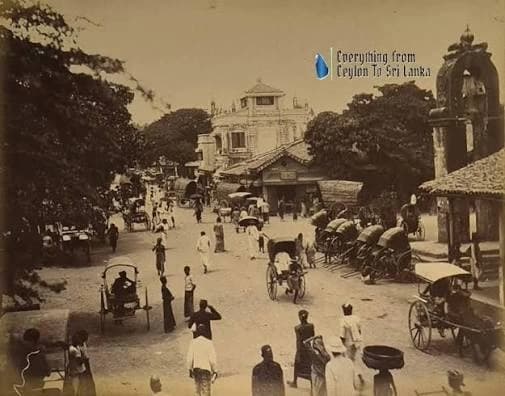
To imagine Armour Street as it once was, we have to remove much of modern Colombo from the picture. Take away the buses, three-wheelers, traffic lights, concrete shopfronts and long lines of vehicles waiting to move. Go back far enough and the northern edges of colonial Colombo were far less densely built than they are today. Pettah was already an important centre of trade, but beyond its busiest streets the landscape gradually opened out into areas that would be transformed as the town expanded.
The road we now call Armour Street belonged to this changing part of the city. The Sinhala account accompanying the old photographs connects its name with Andrew Armour, a British figure said to have arrived in Ceylon during the late eighteenth century and later become associated with the area. The account places his arrival around 1769 and describes him as having worked initially in British service before establishing himself locally.
It is an intriguing story, although the precise origin of Colombo’s old street names is not always as straightforward as later accounts suggest. Spellings changed, names were adapted through Sinhala, Tamil and English usage, and stories about particular individuals were repeated from one generation to another. The proposed connection with Andrew Armour therefore deserves further historical investigation rather than being treated as a conclusively established fact.
What can be said is that Armour Street carries a name associated with an older period of Colombo’s urban history. The road existed long before it became the intensely commercial thoroughfare familiar today, and its transformation reflects the growth of the city around Pettah.
A Road on the Edge of an Expanding City
Colombo changed dramatically during the nineteenth century. The old fortified settlement began expanding beyond its earlier boundaries as roads improved, residential quarters developed and commercial activity increased. Land that had once been comparatively open gradually acquired houses, warehouses, workshops and shops. Railway lines, hospitals and other institutions altered the geography of the city, creating new patterns of movement between its different neighbourhoods.
Pettah expanded with these changes, and roads such as Armour Street became increasingly important because they connected the older commercial centre with areas developing beyond it. Traders needed access to markets and warehouses, residents needed routes between neighbourhoods, and the growing city required roads capable of carrying people and goods throughout the day.
The character of a street does not change overnight. First come houses and small businesses, followed by workshops and traders attracted by the passing traffic. Buildings are altered, another floor is added, a garden disappears, and a verandah that once belonged to a private house becomes the frontage of a shop. Over several generations, the road acquires an entirely different appearance.
Eventually, nobody remembers when it was quiet. What had once been a comparatively open part of the city becomes a busy commercial street, and each new generation assumes that it has always looked much the same.
The Colombo of Horse-Drawn Carriages
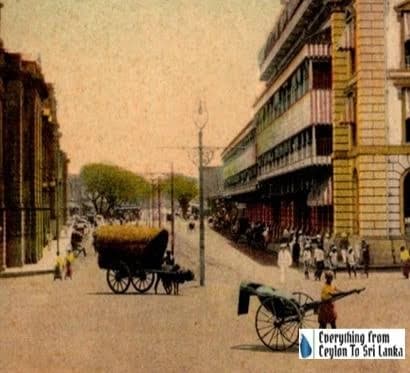
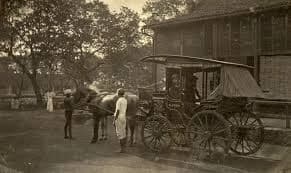
One detail in the old account is particularly evocative: the memory of horse-drawn transport. It is difficult to reconcile that image with Armour Street today, where traffic, buses and commercial vehicles dominate the road. But there was a Colombo in which the sound of hooves was an ordinary part of the day, and journeys through the city depended on animals rather than engines.
Horses pulled private carriages, carts and public conveyances through the streets, while bullock-drawn vehicles continued to carry goods and passengers. Travelling from one part of Colombo to another was slower, dustier and much more exposed to the weather than it is today. Roads could be uncomfortable, particularly after heavy rain, and journeys that now seem short might require considerably more time and patience.
Imagine Armour Street during such a period. A carriage approaches from Pettah while a bullock cart carrying goods makes its way in the opposite direction. Men walk beside loaded vehicles, and a few houses stand behind walls and trees. In the distance are the sounds of an increasingly busy port city, where merchants, labourers, clerks and traders go about their work.
It would still be recognisably Colombo, with its heat, movement and commercial activity. Yet the sounds would be different. There would be no continuous noise of engines or impatient drivers sounding their horns, only the movement of people, animals and wheeled vehicles along a road that had not yet entered the age of modern traffic.
When the Motorcar Changed Armour Street
The twentieth century changed the rhythm of Colombo. Motorcars began appearing beside carts and carriages, and buses gradually became an important part of public transport. Roads that had been adequate for an earlier city suddenly had to carry far more people and goods, while the arrival of mechanical transport altered the distance people could travel in an ordinary working day.
The old photograph associated with this story records a later stage of that transformation. By then, Armour Street had become unmistakably urban. The road appears broad and busy, buses dominate the scene, and commercial buildings line the street. Much of the older world has disappeared beneath the practical architecture of a modernising Colombo.
As businesses expanded and traffic increased, the street became more closely associated with the movement of goods and passengers. Shops occupied premises that might once have been residential buildings, while the road became an important route between the commercial quarters of Colombo and the neighbourhoods beyond them.
Yet through all these changes, the name remained. The carriages disappeared, the buildings altered and new generations took over the businesses along the road, but people continued to call it Armour Street.
The Street Name That Outlived the Buildings
That is what makes old Colombo street names so fascinating. Buildings can vanish almost completely, families move away, and gardens are divided into smaller plots. A bungalow is demolished and replaced by a row of shops, while a road may be widened until almost nothing recognisable survives on either side. Within a few decades, an old photograph can begin to look like an image of a completely different place.
But sometimes the name refuses to disappear. It remains on street signs, business addresses, maps and the lips of the people who use the road every day. Even when the story behind the name becomes uncertain, it continues to connect the modern city with an earlier period of its history.
Armour Street is one example of this continuity. Whatever the precise circumstances of its naming, the road has carried that identity through generations of change. It has been part of the movement of people between Pettah and the surrounding areas, witnessing the growth of shops, transport services and commercial establishments along its length.
The city around it has been rebuilt many times. Its name, however, has remained familiar enough to survive almost unnoticed.
A Name We Hardly Notice
Thousands of Colombo residents probably say “Armour Street” without thinking twice about the words. A bus conductor calls it out, a shop gives it as an address, someone tells a driver where to turn, and a parcel arrives with the name printed on its label. In this way, history survives in ordinary conversation rather than only in books and official records.
The same thing happens across Colombo. Many familiar street and place names are fragments of older landscapes, reminding us of individuals, estates, occupations, institutions and communities that once mattered enough for their names to become attached to a particular corner of the city. Sometimes the original explanation is well documented. In other cases, only a story or local tradition survives.
With time, the story can become less familiar than the name itself. A person may use a particular road throughout an entire lifetime without ever knowing why it received its name or what stood there a century earlier.
Armour Street has become something larger than whoever may first have given the road its name. It belongs now to the generations of Colombo people who have lived, traded, travelled and worked there. The name is part of their everyday geography, carrying an older history into a city that continues to change.
If We Could Walk Down Armour Street Once More
Perhaps the most interesting way to think about Old Colombo is not always through dates and official records, but through ordinary life. Imagine standing on Armour Street more than a century ago, watching people make their way towards Pettah. The afternoon heat would still be familiar, as would the sudden tropical rain that sends people towards the nearest shelter.
There would still be the voices of traders, the movement of people carrying goods and the familiar activity of a commercial neighbourhood. Somewhere nearby, tea would be brewing, and someone would be waiting impatiently for transport. A shopkeeper might be arranging his goods while a customer stopped to ask a question before continuing along the road.
Those small details of city life do not change very much. People still need to travel, work, buy provisions and find their way through crowded streets. The circumstances change, but many of the reasons for being on the road remain much the same.
The skyline, however, would be lower. The traffic would move more slowly, and the sounds would belong to a time before motor vehicles became dominant. Houses and gardens might occupy places where shops and commercial buildings stand today, while the road itself would seem less crowded and hurried.
If someone from that earlier Colombo could stand beside us on Armour Street today, surrounded by buses, concrete buildings, shop signs and impatient traffic, they might struggle to recognise almost everything around them. The road would belong to a city that had grown beyond anything familiar to their generation.
Visit us: https://trippingsrilanka.com/stories
More from Old Ceylon
Gaffoor’s Building: The Forgotten Jewel of Old Colombo That Once Stood at the Heart of Ceylon’s Trading Empire
When Prince Philip Visited Pedro Estate: The Royal Visit That Became Part of Ceylon Tea History in 1954