An Old Photograph with Many Unanswered Questions
Old photographs are often most interesting for what nobody thought to write down.
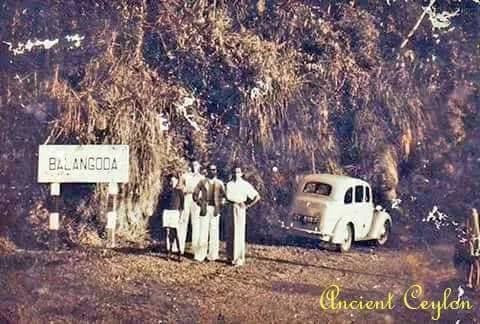
This one is believed to have been taken in Badulla around 1922. The surviving information associates it with V. Gnanapandithen and the Grand Studio in Badulla.
Beyond that, much remains uncertain.
The occasion is not identified. Most of the people are unnamed. The exact location is not confirmed. Yet the photograph still has much to tell us.
It captures a gathering in Badulla during the final decades of British Ceylon, at a time when the town was changing with the arrival of the railway, motorcars and a growing provincial social life.
Read our previous article- https://trippingsrilanka.com/stories/mudaliyars-in-ceylon
Badulla in the 1920s
By the 1920s, Badulla had long been established as the administrative centre of Uva.
It was not merely a remote hill-country town. It was a provincial capital with government offices, schools, churches, shops, residences and a growing connection to the wider island.
The railway had reached Badulla in the previous decade, making the journey into this part of the hill country considerably easier than before.
This changed the town’s relationship with the rest of Ceylon.
People, goods, letters, officials, traders and visitors could now move more easily between Badulla and other parts of the island.
The town was still surrounded by hills, estates and rural settlements, but it was no longer as isolated as it had once been.
A Town Between Old Roads and New Transport
The photograph appears to belong to a period of transition.
Behind the group, two motor cars can be seen. Their presence is an important detail.
Motor traffic was becoming more familiar on roads that had once been travelled mainly by horse-drawn vehicles, carts and pedestrians.
In earlier decades, reaching Badulla would have required far more time and effort. Roads through the hills were difficult, and travel depended heavily on weather, road conditions and animal transport.
By the 1920s, however, Ceylon was changing.
Railways and motorcars were altering the pace of movement. A journey that had once felt long and difficult was becoming more manageable.
The motorcars in the background quietly show that change.
They remind us that this photograph belongs to a Ceylon moving slowly into the modern age.
The People in the Photograph
The group is arranged carefully for the camera.
Some are seated on chairs brought onto the lawn. Others sit cross-legged in front. Several sun helmets have been placed on the ground.
The women wear the long dresses and hats of the period. The men appear in tropical suits, jackets and ties.
There is an informality to the setting despite the careful arrangement. The group has clearly gathered for an occasion, but the atmosphere does not feel stiff or overly ceremonial.
It feels social.
People have dressed well. Chairs have been arranged. The photographer has been called. The gathering was important enough to be remembered through a photograph.
What we do not know is why they had assembled.
Was It a Wedding or Social Celebration?
Flowers are visible in the image, which might suggest a wedding or another form of celebration.
But without further information, it would be easy to read too much into them.
Old photographs often tempt us to invent stories. A flower arrangement becomes a wedding. A large group becomes a formal committee. A tiled building becomes a private residence or institution.
Some of those guesses may be correct.
But careful history requires restraint.
For now, the most we can say is that this was clearly a social gathering of some importance, photographed in Badulla around 1922.
The precise occasion remains unknown.
The Building and Garden Setting
The group has gathered outside a large tiled building, shaded by mature trees.
This detail gives the photograph much of its atmosphere.
The tiled roof, garden setting and open lawn suggest a comfortable environment, perhaps a residence, institution or social venue. The trees soften the scene and give the photograph a distinctly hill-country mood.
In Old Ceylon, gardens were often central to social life.
People gathered outdoors when the weather allowed. Chairs could be brought outside. Shade mattered. Photographs were often taken in gardens because there was space, natural light and a pleasant background.
The building in the photograph is not fully identified, but it helps place the gathering within the domestic and social world of Badulla at the time.
Grand Studio and Provincial Photography
One of the most interesting details is the reference to Grand Studio in Badulla.
Photography in Ceylon was not confined to Colombo by this period.
Studios operated in towns around the island, recording weddings, families, school groups, officials, visitors and the many other occasions for which people wanted a permanent photograph.
For a provincial town such as Badulla, these photographers became accidental historians.
They recorded people who rarely appeared in newspapers or official histories.
They also captured the surroundings almost incidentally: a verandah, a garden, a motor car, the way people dressed for an afternoon gathering and the sort of house or institution in which they met.
A century later, those background details can be as valuable as the intended subject.
V. Gnanapandithen and the Badulla Connection
There is also an intriguing trace of the name connected with this photograph.
A Ceylon government publication from the period records a V. Gnanapandithen in Badulla in September 1923.
This is not enough to prove that he was the same person connected with Grand Studio. The link should remain an open question.
But it does place the name in Badulla at almost exactly the right time.
That makes the reference worth noting.
It suggests a possible connection between the photograph, the studio and the wider social life of Badulla in the early 1920s.
Perhaps more evidence will eventually turn up.
Photographers as Accidental Historians
Old studio photographers often preserved more than they intended.
Their work was usually practical. They were hired to record a person, family, wedding, school group, official gathering or social occasion.
Yet in doing so, they preserved whole worlds in the background.
A chair style.
A motorcar.
A doorway.
A garden.
A hat.
A child’s expression.
A building that may no longer exist.
These details now help us reconstruct everyday life in Old Ceylon.
In the case of this Badulla photograph, the studio image gives us a glimpse of clothing, transport, architecture, social arrangement and provincial life in one frame.
That is why such photographs matter.
What the Photograph Reveals About Old Badulla
This image gives us a rare window into Badulla during the 1920s.
It reveals a town connected to modern transport, but still shaped by older social rhythms.
It shows people dressing carefully for an occasion. It shows motorcars becoming part of provincial life. It shows a garden gathering outside a substantial tiled building. It suggests that photography had become an important way of preserving family and social memory beyond Colombo.
Most importantly, it shows people who belonged to Badulla’s lived history.
They may not appear in major historical narratives, but their gathering still tells us something about the town.
Why Old Photographs Should Be Shared
Old studio photographs have a habit of surviving in several branches of a family, sometimes with completely different information written on their backs.
An unidentified face in one photograph may be named in another.
A studio address may appear on a mount.
A wedding date in a family Bible may suddenly explain an entire gathering.
A family album may hold the missing connection.
That possibility makes photographs such as this worth sharing.
Someone may recognise a face, a house, a family name, a studio mark or a location.
What appears to be an anonymous group photograph may still have a living memory attached to it.
Badulla Then and Now
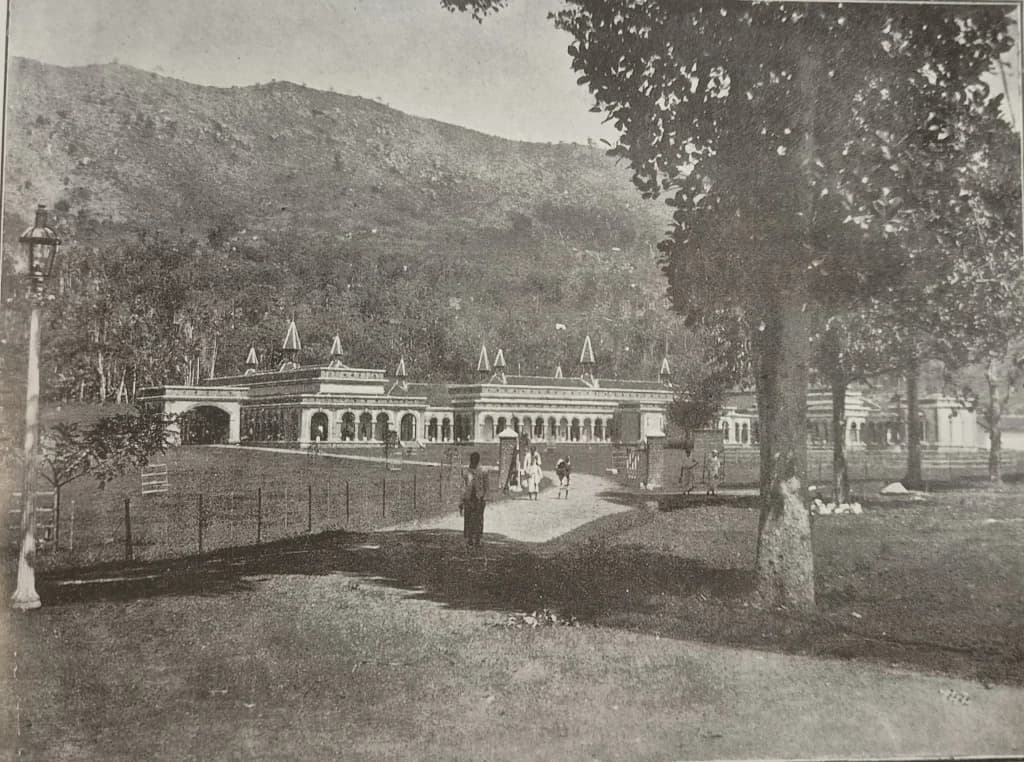
Badulla today is a busy provincial capital.
Much of the town familiar to the people in this picture has changed. Roads are busier. Buildings have been altered or replaced. Modern life has transformed the rhythm of the town.
Yet look closely at an image taken there a century ago and the place does not feel entirely remote.
People had travelled somewhere. They had dressed for an occasion. They gathered under the trees. Chairs were arranged on the lawn. A photographer was called.
They wanted the moment remembered.
We may no longer know why.
But the human feeling remains.
Why This Image Matters to Old Ceylon
This photograph matters because it shows Old Ceylon away from the grand narratives.
It is not a photograph of a governor, a famous building or a major public event.
It is a gathering.
That is precisely what makes it valuable.
It connects several important themes:
- Badulla as the administrative centre of Uva
- Provincial photography in early twentieth-century Ceylon
- The arrival of motorcars in hill-country towns
- Social gatherings and formal dress in the 1920s
- The role of local studios such as Grand Studio
- The uncertainty and value of unnamed family photographs
- The hidden histories preserved in ordinary images
Old Ceylon was made not only by major events.
It was also made by afternoons like this.
Final Thoughts: Someone May Still Know Who They Were
This photograph believed to have been taken in Badulla around 1922 leaves us with more questions than answers.
Who were these people?
What was the occasion?
Was the building a private home, an institution or a social venue?
Was V. Gnanapandithen the photographer, the studio owner or someone else connected to the image?
We do not yet know.
But the photograph still matters.
It brings us close to a moment in Badulla’s past: people gathered beneath trees, dressed carefully, with motorcars behind them and a tiled building watching over the scene.
A century later, they remain unnamed.
But someone, somewhere, may still know who they were.
Visit Us: https://trippingsrilanka.com/stories
More from Old Ceylon

Colombo Public Library at 100: The Names That Still Remain
The Toll Gate at the Bridge: When Travelling Across Ceylon Cost a Few Cents at a Time