Who Were the Mudaliyars? The Powerful Elite Who Shaped Colonial Ceylon
A Forgotten Class of Old Ceylon
Mudaliyars in Ceylon| In the story of colonial Ceylon, power did not belong only to governors, planters, merchants and military officers.
There was another group who stood between the colonial administration and the local population. They were wealthy, influential, socially visible and deeply connected to the political and cultural life of the island.
They were known as the Mudaliyars.
In nineteenth-century Ceylon, the Mudaliyars became one of the most powerful local elites. They served as intermediaries between the British administration and the people, while also playing important roles in land ownership, public service, law, education, business, religion and politics.
Their story is one of status, privilege, adaptation and influence.
To understand Old Ceylon properly, we must understand who the Mudaliyars were.
Check our previous article – https://trippingsrilanka.com/stories/local-council-members-in-ceylon
What Does “Mudaliyar” Mean?
The title Mudaliyar has older roots in South Asian society and was used in different ways over time.
In colonial Ceylon, it became an important honorary and administrative title. Mudaliyars were often appointed by the colonial government and recognised as senior native officials, local leaders or members of the island’s elite society.
They were not merely decorative figures.
Many Mudaliyars performed practical functions. They assisted colonial officials, helped manage local affairs, acted as links between government and village society, and represented the interests of influential local families.
The title carried prestige.
A Mudaliyar was expected to possess wealth, social standing, loyalty to the government and influence within the local community.
The Mudaliyars as Intermediaries
The British administration could not govern Ceylon by itself.
It needed local knowledge, language skills, family networks and social authority. The Mudaliyars helped provide this connection.
They understood local customs, caste structures, land ownership, village disputes and regional loyalties. They could communicate with both colonial officials and local communities.
This made them extremely useful to the British.
In many ways, Mudaliyars formed a bridge between two worlds: the colonial state and Ceylonese society.
They attended official ceremonies, received honours, advised administrators and helped maintain order in local areas.
Their position gave them influence, but it also placed them inside the colonial system.
The Rise of the Mudaliyar Elite
During the nineteenth century, several Ceylonese families rose to prominence through government service, land ownership, education and commercial activity.
Some families gained official titles. Others increased their influence through marriage alliances, professional careers, legal work, plantations, trade and public service.
The Mudaliyar title became part of this world of social advancement.
It marked a family as respectable, influential and connected.
The image shared refers to the Mudaliyars as the “foremost persons” or leading figures among Sinhala kings and later under colonial administrations. By the British period, the title had become closely associated with elite families who helped shape colonial society.
Mudaliyars in ceylon and Colonial Ceremony
Mudaliyars were highly visible during public ceremonies.
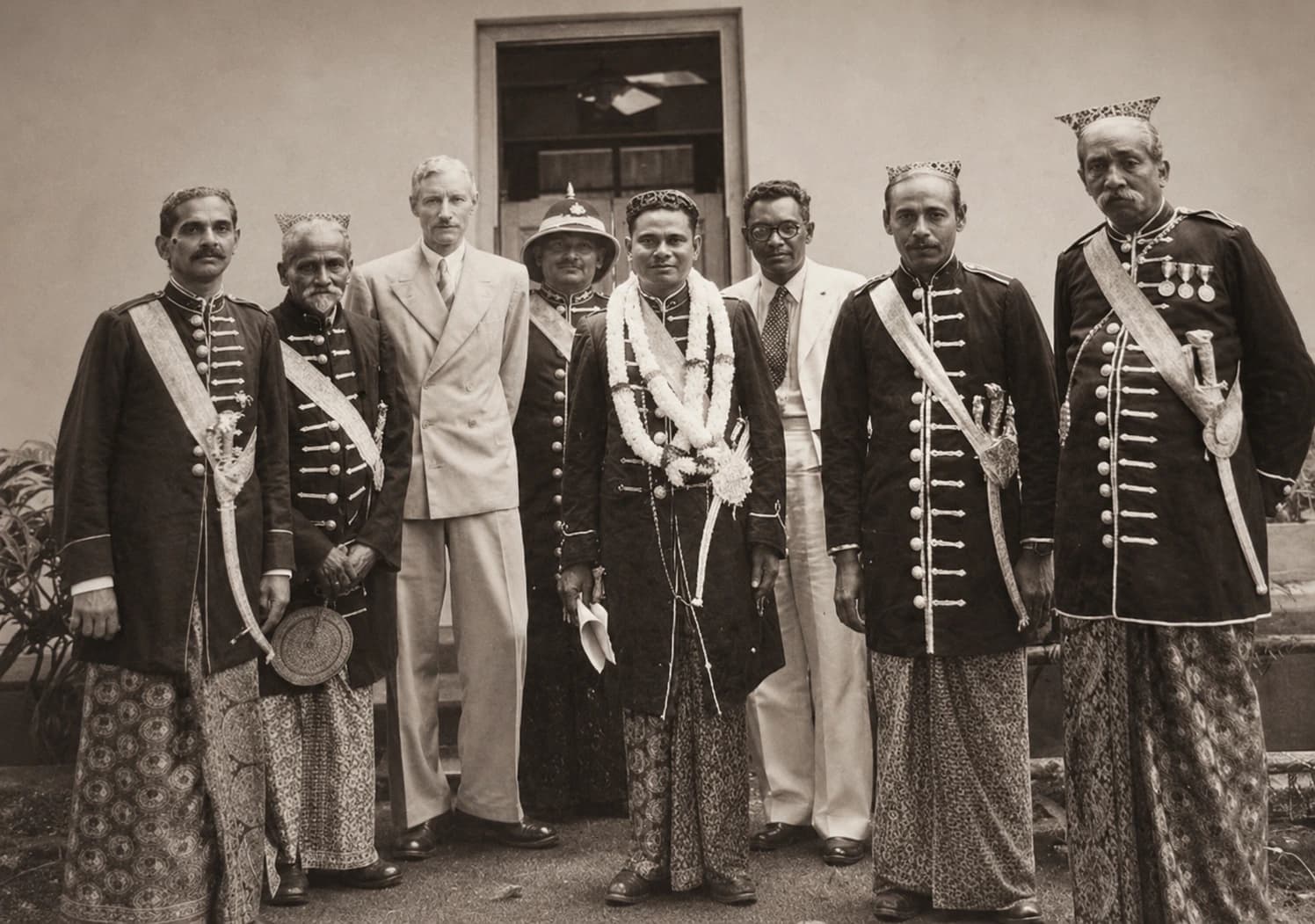
They appeared at official events, royal visits, government functions and public celebrations. Their clothing, medals, titles and formal positions displayed both local status and loyalty to the colonial order.
One of the images refers to Mudaliyars of the Association of Ceylon Chiefs gathering to celebrate the King’s birthday in June 1923.
This type of event shows how the Mudaliyars operated within colonial ceremony.
They were not ordinary spectators. They were recognised participants in the public theatre of empire.
Their presence helped present colonial rule as orderly, respectable and supported by local elites.
The Senanayake and Dias Bandaranaike Connection
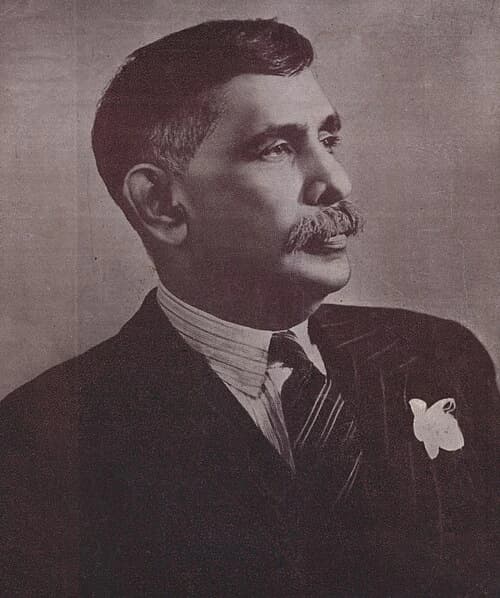
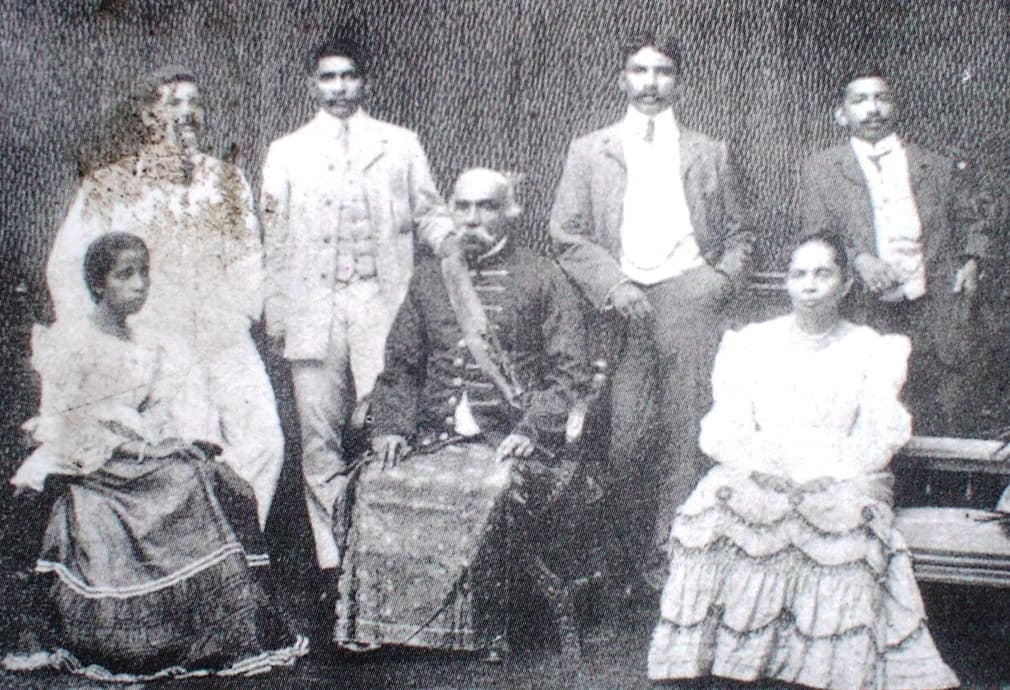
One of the prominent families connected to this world was the Senanayake family.
The image refers to Mudaliyar Don Spater Senanayake,(D.S Senanayake) son of Don Bartholomew, who assumed the name Senanayake. It also notes his links to the Dias Bandaranaike family through marriage.
These family connections mattered greatly in Old Ceylon.
Marriage alliances among elite families helped consolidate land, wealth, social status and political influence. Over time, such networks helped produce some of the island’s most important political figures.
The Senanayake and Dias Bandaranaike names would later become deeply associated with Sri Lankan political history.
This is one of the reasons the Mudaliyar world is important. It was not only a colonial social class. It formed part of the background from which modern Ceylonese leadership emerged.
The De Soysa and De Saram Families
The image also refers to the De Soysa and De Saram families as prominent families connected to colonial administration and society.
These families were among the best-known elite families of Ceylon. They were associated with wealth, land, public service, philanthropy, professional life and social leadership.
The De Soysa family became especially known for its wealth and charitable contributions. The De Saram family became known for its legal, administrative and professional connections.
Together with other elite families, they helped shape the social world of colonial Colombo and the wider island.
Their influence extended beyond titles. It reached into education, charity, law, business, religion and politics.
The Ponnambalam–Coomaraswamy Dynasty
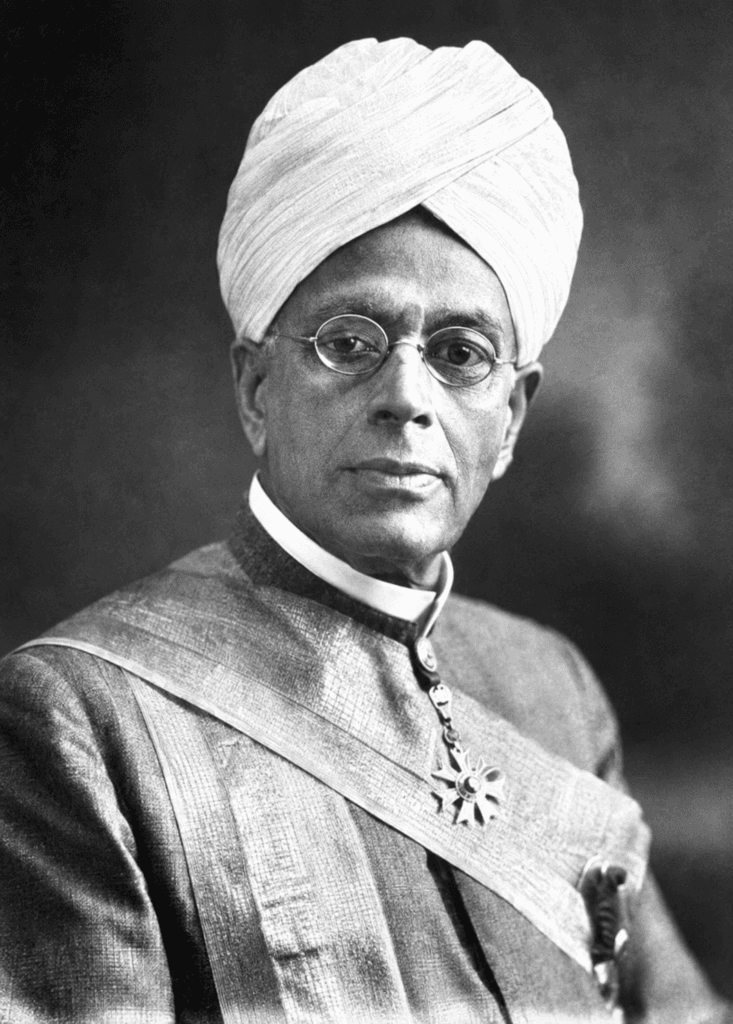
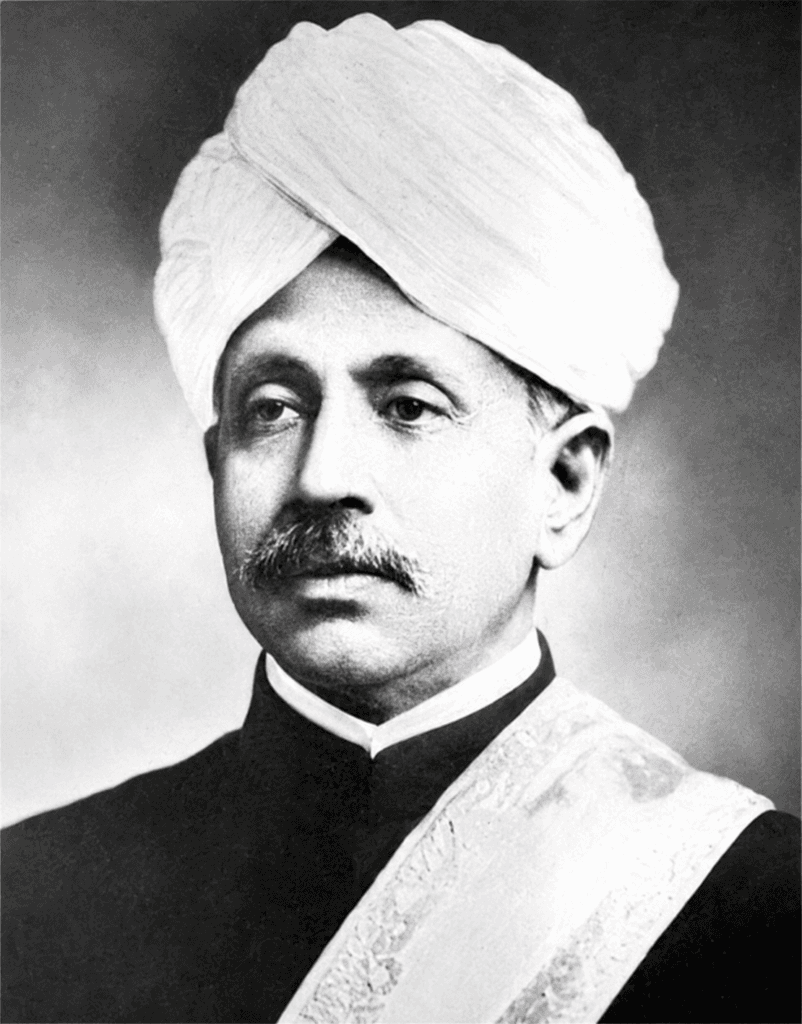
The image also highlights the Ponnambalam–Coomaraswamy family connection.
This family produced some of the most important Tamil public figures in Ceylon’s history. Names such as Ponnambalam Ramanathan, Ponnambalam Arunachalam and Ananda Coomaraswamy belong to the intellectual, political and cultural history of the island.
Ponnambalam Ramanathan is shown in the image in 1906, with his future wife Alice Harrison, also known later as Leelawathy Ramanathan.
The Ponnambalam–Coomaraswamy family played major roles in public service, education, law, politics, Hindu revival, art history and cultural thought.
Their inclusion reminds us that the Mudaliyar and colonial elite world was not limited to one ethnic or religious community. It included Sinhala, Tamil and Burgher networks, all interacting within the larger framework of colonial Ceylon.
James Edward Corea and Chilaw’s Elite
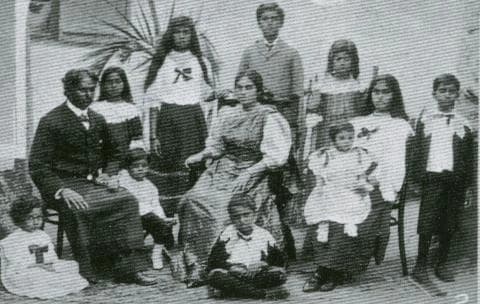
Another figure shown in the image is James Edward Corea, described as a wealthy landowner from Chilaw and an appointed Gate Mudaliyar.
He is remembered as part of the Corea family’s influence in the North Western Province, especially around Chilaw.
Families such as the Coreas show how regional elites became part of the wider colonial administrative and social structure. Their authority was not limited to Colombo. It extended into provincial towns, plantation regions, coastal districts and traditional landholding areas.
Through official titles and local influence, such families became important actors in colonial society.
Honorary Mudaliyars
Not every Mudaliyar held the same type of official administrative power.
Some titles were honorary.
Originally, Mudaliyar titles were tied to government service and official responsibility. Over time, honorary appointments were also made to recognise exceptional service, loyalty, public contribution or social importance.
These honorary titles became prestigious symbols.
They allowed prominent local men to be publicly recognised by the colonial administration. The title placed them within the ceremonial hierarchy of British Ceylon.
However, the system of honorary titles was eventually discontinued, and the image notes that the practice ended in 1956.
This was significant.
By the mid-twentieth century, Ceylon was moving away from colonial forms of status and towards a new national political culture.
Mudaliyars and the Making of Modern Politics
One of the most important legacies of the Mudaliyar class was its connection to modern politics.
Many families that held titles, land and social influence during the colonial period later became connected to legislative councils, nationalist politics, party leadership and parliamentary democracy.
This was not accidental.
The Mudaliyar families had education, wealth, English-language access, social networks and familiarity with government. These advantages allowed them to enter the modern political arena when colonial rule began to change.
Some became reformers. Some became conservatives. Some supported constitutional change. Others defended elite interests.
But whatever their position, they helped shape the transition from colonial Ceylon to modern Sri Lanka.
Mudaliyars and Education
Education was central to the power of many elite families.
Mudaliyar families often sent their children to leading schools in Colombo and abroad. English education opened doors to law, medicine, civil service, business and politics.
This gave the next generation the tools to operate within both colonial and modern worlds.
They could speak the language of British administration while also maintaining local family influence.
As a result, education helped transform old elite status into modern professional and political power.
Mudaliyars, Land and Wealth
Many Mudaliyars and elite families were connected to land.
Landownership brought wealth, authority and local influence. In colonial Ceylon, land was not only an economic asset. It was also a source of social rank and political power.
Families with extensive land could support public works, religious institutions, schools and charities. They could also form marriage alliances with other powerful families.
This combination of land, title and education made the Mudaliyar class extremely influential.
Their authority was not based on one thing alone. It came from the mixture of official recognition, wealth, family networks and social prestige.
Mudaliyars in Public Life
Mudaliyars were active in many areas of public life.
They attended official functions, supported schools, donated to religious institutions, joined associations, took part in civic events and contributed to social causes.
They also acted as community representatives.
In some cases, they helped mediate disputes or communicate local needs to government officials. In other cases, they served the colonial administration more directly.
Their public role gave them visibility and influence.
This is why their photographs, names and family histories appear so often in old Ceylon records.
The Cultural World of the Mudaliyars
The Mudaliyar families also helped shape the cultural world of colonial Ceylon.
Their homes, clothing, portraits, weddings, funerals and ceremonies reflected a mixture of local tradition and colonial influence. Many families adopted aspects of British social life while preserving older customs, religious practices and family identities.
This created a distinct elite culture.
It was visible in architecture, dress, education, language, hospitality and public behaviour.
The Mudaliyars lived at the crossroads of tradition and modernity.
They were not simply copying British ways. They were adapting, negotiating and creating a social identity that allowed them to hold power in a changing world.
Why the Mudaliyars Remain Controversial
The history of the Mudaliyars is not simple.
They contributed to public life, education, philanthropy and administration. Many families produced leaders, thinkers, lawyers and reformers. Their role in shaping modern Sri Lanka cannot be ignored.
At the same time, they were closely tied to colonial power.
Their status often depended on loyalty to the British administration. Their wealth and influence existed within a society marked by class divisions, caste hierarchies and unequal access to opportunity.
For this reason, the Mudaliyars can be admired, studied and questioned at the same time.
They were builders of institutions, but also beneficiaries of a colonial order.
A mature reading of Old Ceylon must hold both truths together.
The End of the Mudaliyar Era
By the time Ceylon moved towards independence, the old world of colonial titles was already changing.
Elected politics, mass education, labour movements, nationalism and social reform all weakened the older forms of elite authority.
After independence, hereditary and honorary colonial titles became less central to public life. The image notes that honorary Mudaliyar appointments ended in 1956, a year often associated with major political and cultural change in Ceylon.
The title remained important historically, but the social world that produced it gradually faded.
Yet the descendants of Mudaliyar families continued to influence politics, law, business, education and culture.
The name may have lost its official power, but the legacy remained.
Why the Mudaliyars Matter to Old Ceylon
The Mudaliyars matter because they reveal how power worked in colonial Ceylon.
They show that the island was not governed only by British officials. Local elites were essential to the system. They interpreted, negotiated, supported, benefited from and sometimes shaped colonial rule.
Their history connects many parts of Old Ceylon:
- Colonial administration
- Family alliances
- Landownership
- Education
- Law and public service
- Ceremonial life
- Politics and nationalism
- Sinhala, Tamil and Burgher elite networks
- The transition from colonial society to modern Sri Lanka
To understand the Mudaliyars is to understand one of the hidden engines of Ceylon’s political and social development.
A Legacy That Still Echoes Today
The world of the Mudaliyars has largely disappeared, but its influence can still be felt.
Many of the families associated with Mudaliyar titles shaped institutions, political movements, schools, charities, professions and public life.
Their names remain attached to roads, schools, churches, temples, estates, family homes and historical records.
They also remind us that modern Sri Lanka did not appear suddenly at independence. It was shaped over generations by families, institutions and power structures that developed during the colonial period.
The Mudaliyars were part of that long transition.
Final Thoughts: The Powerful Elite Who Shaped Colonial Ceylon
The Mudaliyars were more than honorary title holders.
They were intermediaries, administrators, landowners, public figures, patrons, family strategists and political actors. They stood between colonial authority and local society, helping to shape the island’s economic, political and cultural development.
Their world was elegant, influential and complex.
It produced leaders and institutions, but it also reflected the inequalities of colonial society.
For Tripping Sri Lanka readers, the Mudaliyars offer a fascinating glimpse into the social architecture of Old Ceylon.
They were architects of a society in transition — local elites who carried tradition, served power, built influence and helped shape the road from colonial Ceylon to modern Sri Lanka.
Visit Us: https://trippingsrilanka.com/stories
More from Old Ceylon
Colombo Public Library at 100: The Names That Still Remain
The Toll Gate at the Bridge: When Travelling Across Ceylon Cost a Few Cents at a Time