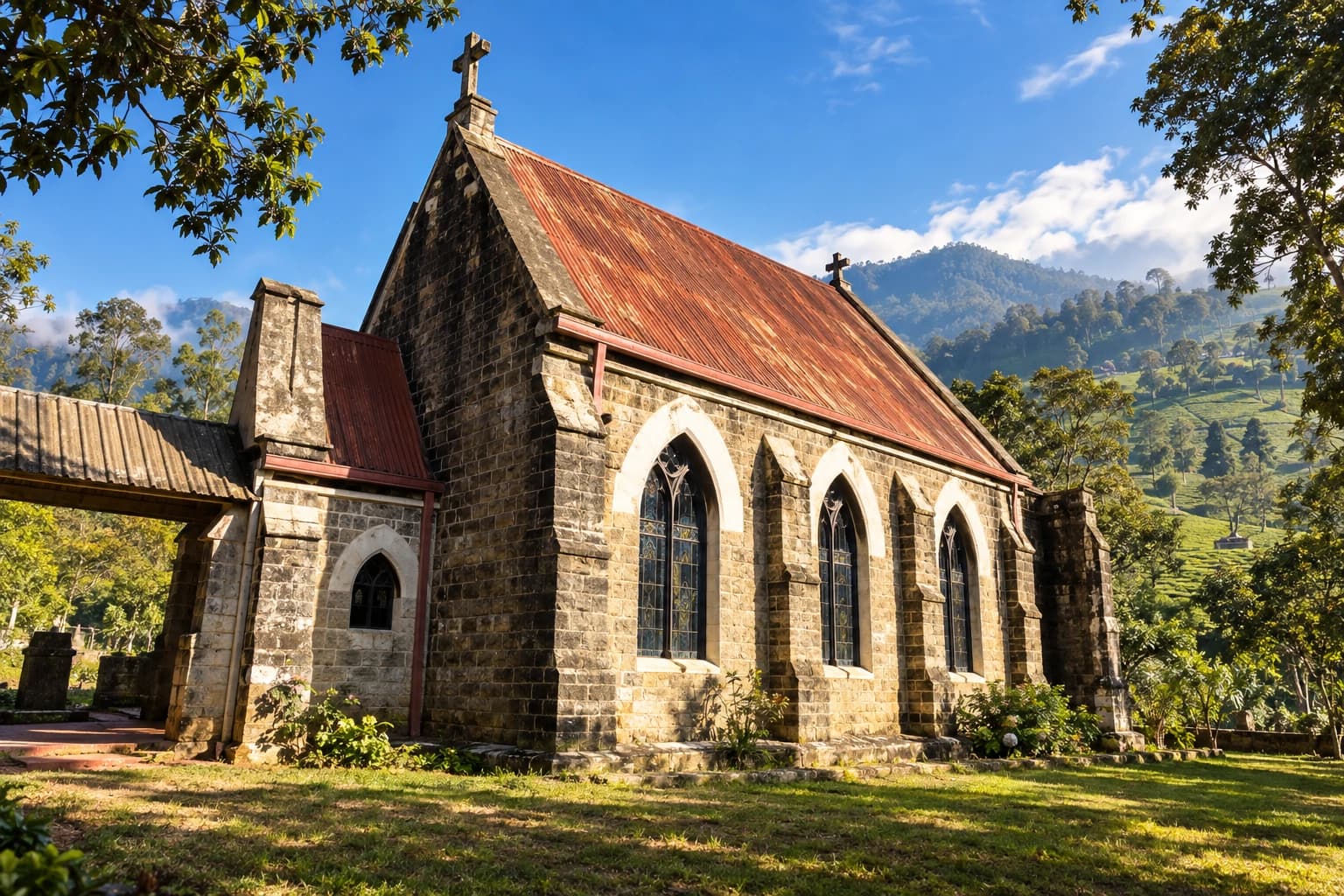
Ballaketuwa: Following an Old Road Through the Uva Hills
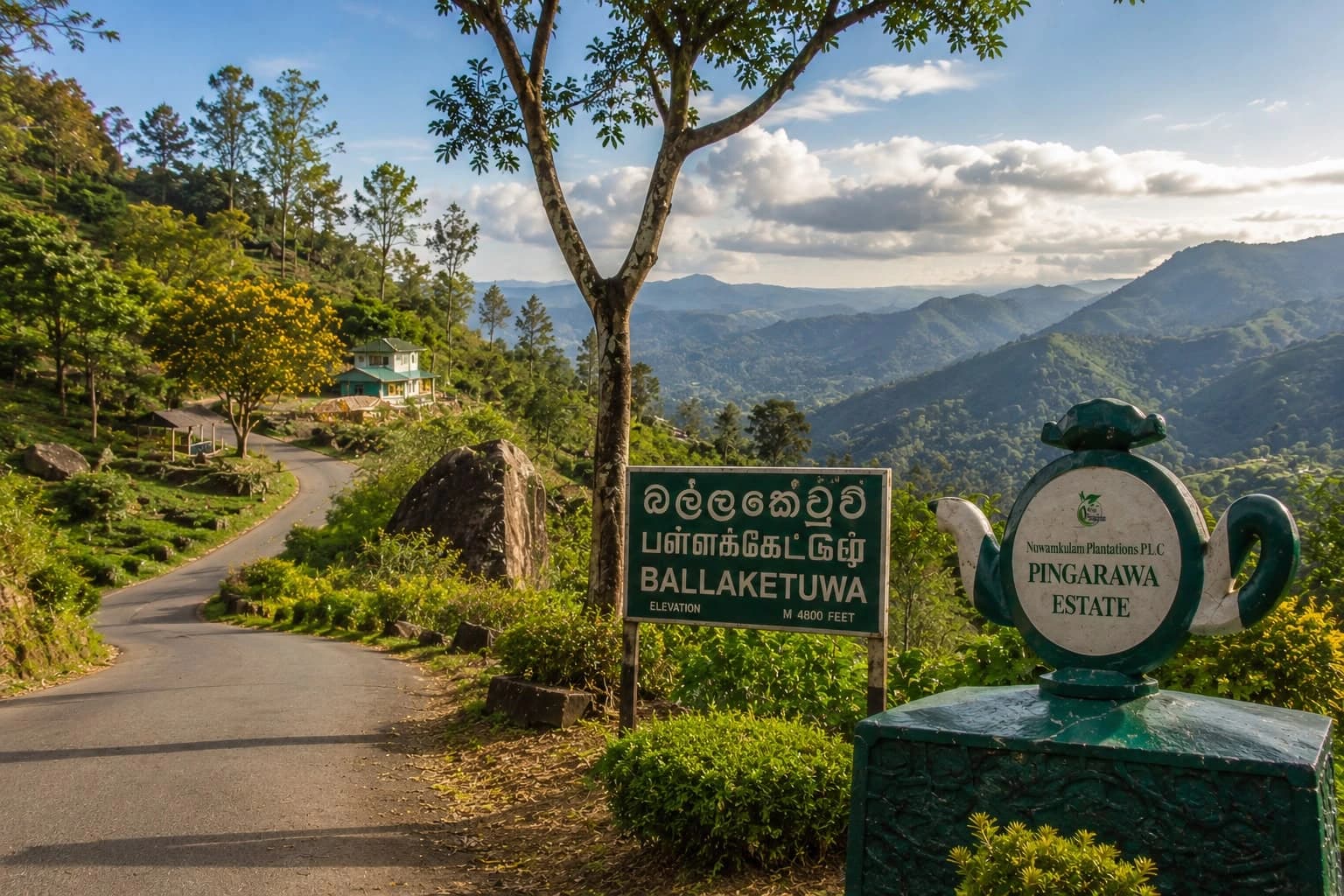
A Road That Feels Like Old Ceylon
Ballaketuwa Sri Lanka| There are still roads in Sri Lanka where it is quite easy to imagine travelling through Ceylon seventy or eighty years ago.
Ballaketuwa is one of them.
It is not a grand destination, and perhaps that is precisely why it stays with you. You come across the name on the road, somewhere among the folds of the Uva hills, and immediately want to know a little more.
The country here has that wonderful Uva quality: steep slopes, great rocks breaking through the greenery, old trees, narrow roads and mountains appearing unexpectedly between them.
The further you travel, the more the busy Sri Lanka of today seems to fall away.
It is easy to picture an earlier traveller coming this way with a paper map folded on the seat beside him, stopping occasionally to check a signboard or ask someone at a junction whether he was still on the right road.
There would have been no reason to hurry.
Read our previous article- https://trippingsrilanka.com/stories/ramboda-road
When Uva Was Reached by Road
Old Ceylon was full of journeys like this.
The hill country was connected by roads that wound around mountains because there was simply no other way through. Travelling even a modest distance could take hours.
A place name on a map might represent a village, a junction, an estate road or little more than a scattering of buildings on a hillside.
Yet these names mattered.
They told you where you were.
Ballaketuwa, sitting high in this landscape, feels very much part of that older geography.
Nearby is Pingarawa, another of those lovely hill-country names that seems to belong naturally to an Old Ceylon road map.
Continue exploring the surrounding country and there are still smaller roads disappearing into the hills, each suggesting that there is something beyond the next bend worth seeing.
That, more than anything, is what makes this part of Uva interesting.
You are not travelling from attraction to attraction.
You are simply travelling through the country.
Ballaketuwa, Pingarawa and the Hills Beyond
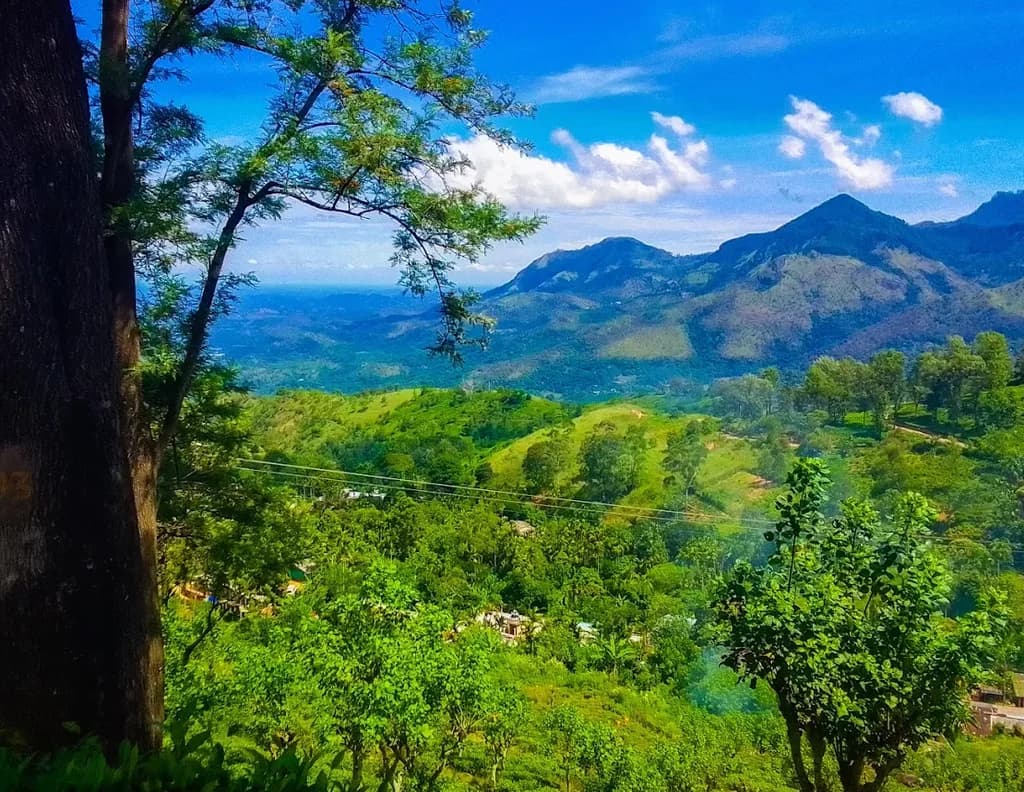
The beauty around Ballaketuwa is not difficult to find.
It is beside the road.
Large boulders sit among the vegetation. Yellow flowers brighten the slopes. Tall trees rise above the road and, every so often, the land opens sufficiently to remind you just how high you have climbed.
The air feels different here too.
Uva has its own mountain character, particularly when clouds begin moving across the ridges and the sunlight changes from one hillside to another.
Pingarawa lies nearby, and it is worth remembering the name because the country does not end there.
In fact, one of the most interesting pieces of information about the area came afterwards.
A local familiar with these hills pointed out that Kandhena, adjoining Pingarawa, has a lookout point from which, on a clear day, it is possible to see as far as Kirinda.
That is quite a view to have missed.
But perhaps missing something is not always a bad thing.
It gives you a reason to go back.
The Landscape of Uva
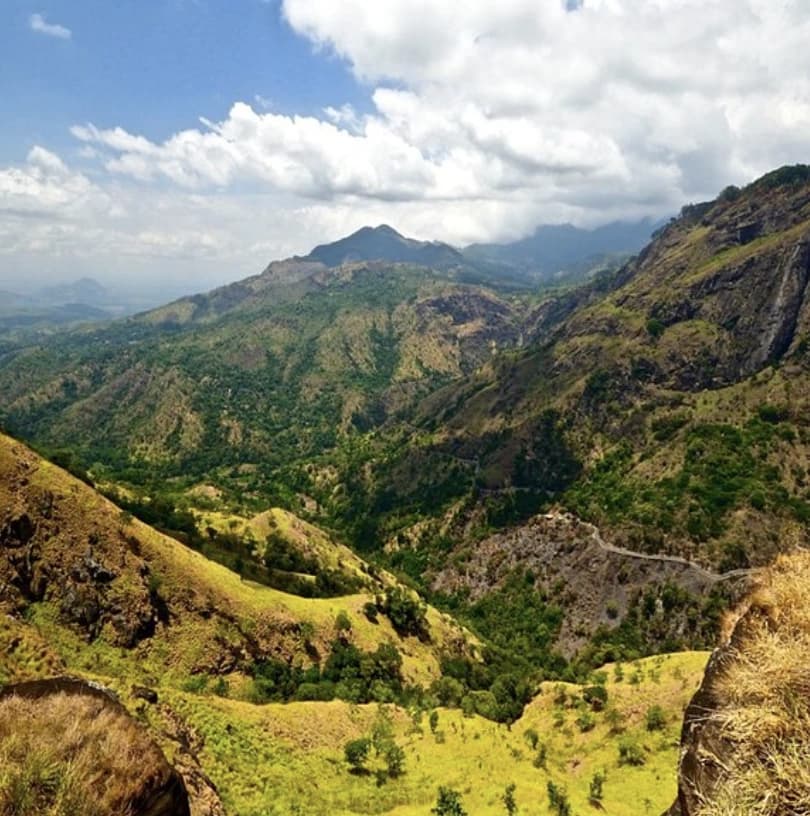
The Uva hills have a character of their own.
They are not always as soft and polished as the famous tea views of Nuwara Eliya. They can feel wider, rougher and more open. The roads bend around ridges, drop into valleys and climb again towards unexpected viewpoints.
This is part of their charm.
Around Ballaketuwa, the landscape is not arranged for the visitor. It simply exists. Rocks, trees, bends, slopes, village roads and small settlements all come together in a way that feels natural and unforced.
This is the kind of scenery that does not need a viewing platform to become memorable.
You remember it because you passed through it slowly.
A View from the Hills to Kirinda
Think for a moment about the geography involved.
You are standing among the high country of Uva, yet from the right position the landscape reportedly stretches away towards Kirinda, far down in Sri Lanka’s south-eastern country.
That is one of the pleasures of these mountains.
From the road, the hills can feel enclosed and intimate. Reach a sufficiently high ridge and suddenly half the island seems to open beneath you.
It must have been even more striking to travellers in Old Ceylon.
Before satellite maps and navigation apps reduced landscapes to routes and estimated arrival times, a distant view helped people understand the country itself.
Hills, plains and faraway landmarks gave a sense of where one place stood in relation to another.
Perhaps that is why old accounts of travelling through Ceylon so often linger over views.
A good viewpoint was not merely somewhere to take a photograph.
It was part of the journey.
Kandhena has now been added to our list for precisely that reason.
The Pleasure of Missing Something
Modern travel often teaches us to fear missing out.
We plan, save locations, follow routes and check whether every place has been covered. But older forms of travel were different.
You could miss a turning.
You could overlook a viewpoint.
You could pass a place without realising its importance until someone mentioned it later.
That did not ruin the journey.
It gave the landscape a second life in memory.
The knowledge that Kandhena has a lookout towards Kirinda changes the way one thinks about Ballaketuwa and Pingarawa. The road is no longer finished. It remains open.
There is still something to return for.
That is one of the quiet pleasures of travelling through Uva.
The hills do not reveal everything at once.
The Ceylon Hidden Between Famous Places
When we think of the old hill country, a handful of familiar names usually come first: Kandy, Nuwara Eliya, Badulla, Bandarawela and Haputale.
But Old Ceylon was never made up only of famous towns.
Between them were hundreds of smaller places: villages, junctions, rest stops and hill roads whose names appeared on maps and signboards and were familiar to generations of people who travelled through them.
Ballaketuwa belongs to that other Ceylon.
So do Pingarawa and Kandhena.
They are reminders that sometimes the most enjoyable way to rediscover the island is to forget the list of places one is supposed to see.
Take the smaller road.
Stop when something catches your eye.
Remember the unfamiliar name on the signboard.
Ask someone what lies further ahead.
And when somebody tells you that you missed a lookout from which you could have seen all the way to Kirinda, make a note of it.
There is always another journey.
Why Ballaketuwa Matters to Old Ceylon Travel
Ballaketuwa matters not because it is a famous attraction, but because it preserves the feeling of older hill-country travel.
It connects several quiet but important themes:
- The old road journeys of Uva
- The memory of travelling by place names and signboards
- The beauty of smaller hill-country settlements
- The link between Ballaketuwa, Pingarawa and Kandhena
- The pleasure of viewpoints and missed discoveries
- The slower rhythm of travelling through Old Ceylon
- The landscapes hidden between better-known destinations
For Tripping Sri Lanka readers, Ballaketuwa is a reminder that Old Ceylon is often found between places, not only at the destination.
Final Thoughts: Following the Road Back
Ballaketuwa is not the kind of place that announces itself loudly.
Its charm is quieter than that.
It belongs to the winding roads of Uva, to signboards glimpsed beside the road, to hills that open unexpectedly and to the feeling that the country still has stories hidden beyond the next bend.
A journey through Ballaketuwa and Pingarawa recalls an older way of seeing Sri Lanka.
You do not rush.
You follow the road.
You notice the rocks, trees, flowers, village names and distant hills.
And when someone tells you about a view you missed from Kandhena towards Kirinda, you understand that the journey is not over.
Old Ceylon still waits along these roads.
Sometimes all you have to do is slow down enough to notice it.
Visit Us: https://trippingsrilanka.com/stories
More from Old Ceylon
Colombo Public Library at 100: The Names That Still Remain
The Toll Gate at the Bridge: When Travelling Across Ceylon Cost a Few Cents at a Time