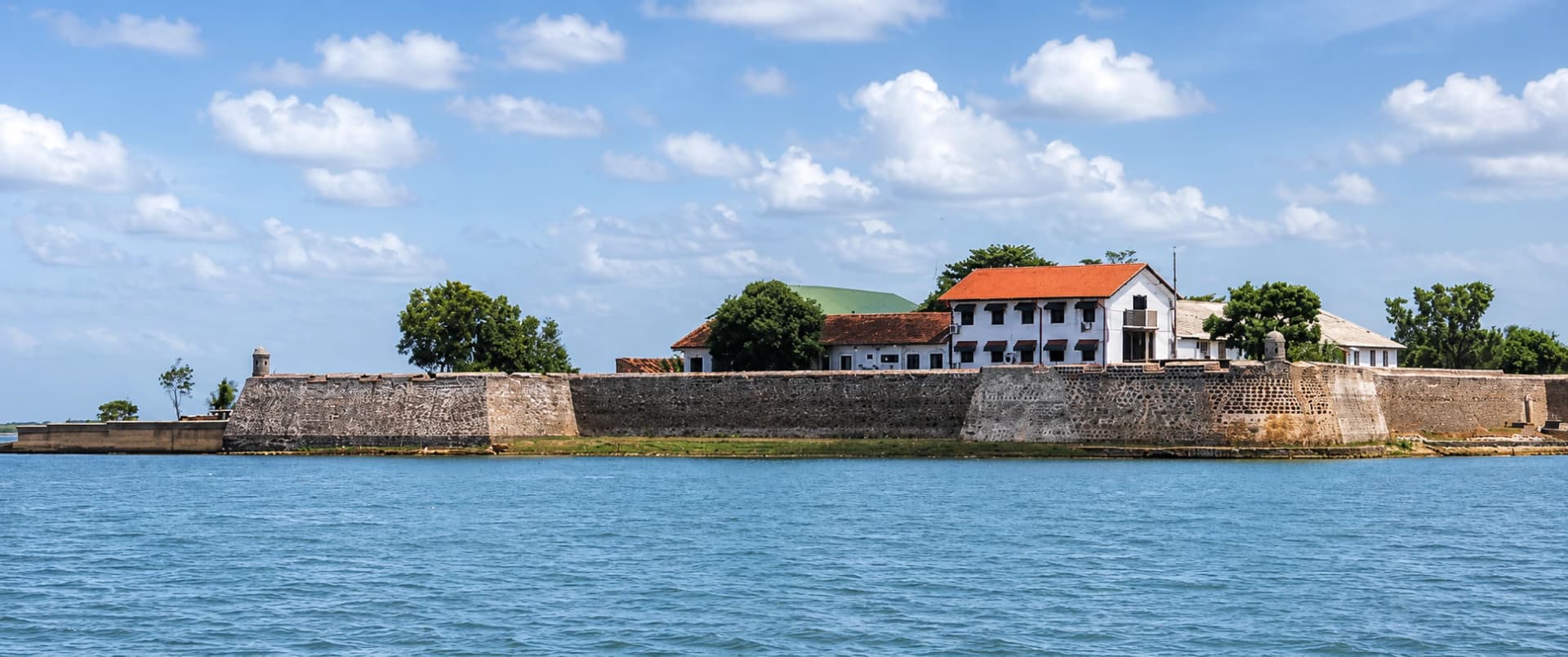
Batticaloa Dutch Fort is one of the most peaceful colonial landmarks on Sri Lanka’s east coast. Set beside the calm waters of Batticaloa Lagoon, it does not have the grand tourist atmosphere of Galle Fort or the dramatic scale of Jaffna Fort. Instead, it offers something quieter: weathered stone walls, lagoon reflections, old colonial traces and a sense of history folded into everyday town life.
For visitors interested in colonial Sri Lanka, Batticaloa Dutch Fort is a rewarding stop because it reveals a different side of Old Ceylon. This was not only a fort of war. It was a trading post, administrative centre and strategic point in the eastern coastal world. Its story connects Portuguese ambition, Dutch commercial power, British administration and the lagoon-based life of Batticaloa.
Unlike some colonial forts that dominate their cities, Batticaloa Fort sits almost modestly within the town. Government offices and local activity now occupy parts of the site. The lagoon surrounds it with stillness. This combination makes the fort feel less like a staged monument and more like a surviving fragment of colonial Ceylon still serving the present.
Why Batticaloa Mattered in Colonial Ceylon
Batticaloa’s importance came from its location and lagoon. The east coast of Sri Lanka was not as heavily visited by colonial travellers as Colombo or Galle, but it was still strategically and commercially valuable. Batticaloa connected inland produce, coastal communities, fishing, agriculture and lagoon trade.
The lagoon shaped everything. It protected the town, supported fishing communities, enabled movement and gave the fort a naturally defensive position. For European powers, such a location was useful. It allowed them to control local trade, watch movement along the coast and establish authority in the east.
This is why Batticaloa Dutch Fort should not be dismissed as a small provincial relic. It formed part of the wider colonial network that connected ports, forts and trading stations across Ceylon.
Portuguese Origins
The fort’s story began with the Portuguese in the 17th century. The Portuguese were the first Europeans to establish a fortified presence at Batticaloa, using the site as a trading and administrative centre. Their interest in the east coast was part of a wider strategy to control coastal Ceylon and influence maritime trade.
The Portuguese fort was not the same structure visitors see today in its later form. But it established the military and commercial importance of the site. Like many colonial forts in Sri Lanka, Batticaloa began as a Portuguese foothold and was later reshaped by the Dutch.
This layered origin is important. The name “Dutch Fort” is common, but the deeper history begins earlier. The fort reflects more than one colonial phase.
The Dutch and the Fort We See Today
The Dutch took control of Batticaloa from the Portuguese and later strengthened the fort. Dutch colonial power in Ceylon was closely connected to trade, especially through the Dutch East India Company. Forts like Batticaloa helped protect commercial interests, secure local authority and maintain control over coastal regions.
The Dutch were practical builders. Their forts were designed for function: thick walls, bastions, water protection and clear lines of defence. Batticaloa Fort reflects this approach. Its position beside the lagoon gave it natural protection, while its walls and bastions added military strength.
Although Batticaloa Dutch Fort is smaller and quieter than Galle or Jaffna, it still shows the Dutch preference for compact, strategic fortification. It was not built for show. It was built to work.
A Fort Surrounded by Water
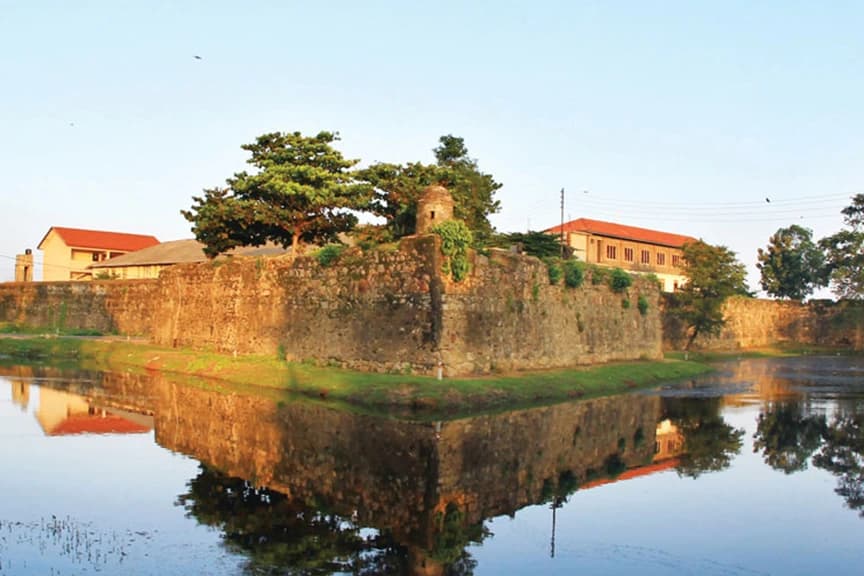
The most memorable feature of Batticaloa Dutch Fort is its relationship with the lagoon. Water surrounds and softens the fort, giving it a calm atmosphere. In the early morning or late afternoon, the stone walls can reflect beautifully on the lagoon’s surface.
This setting makes Batticaloa Fort different from many other colonial sites in Sri Lanka. The fort does not rise above a rough ocean or sit in a crowded capital. It rests beside quiet brackish water, close to bridges, causeways and town streets.
For travellers, this is the main reason to visit. The fort is not only historically interesting. It is visually atmospheric. The lagoon gives the site a sense of stillness that suits slow walking, photography and reflection.
What to See at Batticaloa Dutch Fort
Visitors can walk around the accessible areas of the fort and observe its walls, bastions, gateway and internal colonial buildings. Some sections are used for administrative purposes, so the site does not feel like a conventional museum. That is part of its character.
The old walls are the strongest visual feature. They show the fort’s defensive purpose and its long exposure to weather. The bastions help visitors understand how colonial forts were designed to cover different angles of attack.
Inside, the remaining colonial structures offer glimpses of later administrative use. The fort changed over time, and its buildings reflect that layered history. It was not frozen in the Dutch period. It continued into British rule and then into modern Sri Lankan public life.
British Rule and Administrative Use
After the Dutch period, Batticaloa passed into British hands along with other coastal possessions in Ceylon. Under British rule, many forts lost some of their original military importance and became administrative centres.
This pattern can still be seen at Batticaloa. The fort is not an empty ruin. It has been reused for government and local administrative purposes. This gives it a practical modern role, even while its walls preserve the memory of colonial occupation.
For heritage travellers, this reuse is significant. It shows how colonial buildings in Sri Lanka often survive not because they became tourist attractions, but because they continued to serve public functions.
Batticaloa Fort and the East Coast Atmosphere
Batticaloa has a very different atmosphere from Sri Lanka’s western and southern heritage cities. The east coast feels more open, quieter and less commercially crowded in many places. Lagoon, sea, bridges, temples, churches, mosques and local markets all shape the town’s identity.
The fort belongs to this environment. It is not a separate monument standing apart from Batticaloa. It is part of the town’s geography and daily rhythm. People pass it, work near it and move around it as part of ordinary life.
This makes Batticaloa Dutch Fort especially appealing for travellers who prefer less crowded heritage sites. It allows visitors to experience colonial Sri Lanka without the heavy tourist traffic found in more famous destinations.
A Heritage Walk by the Lagoon
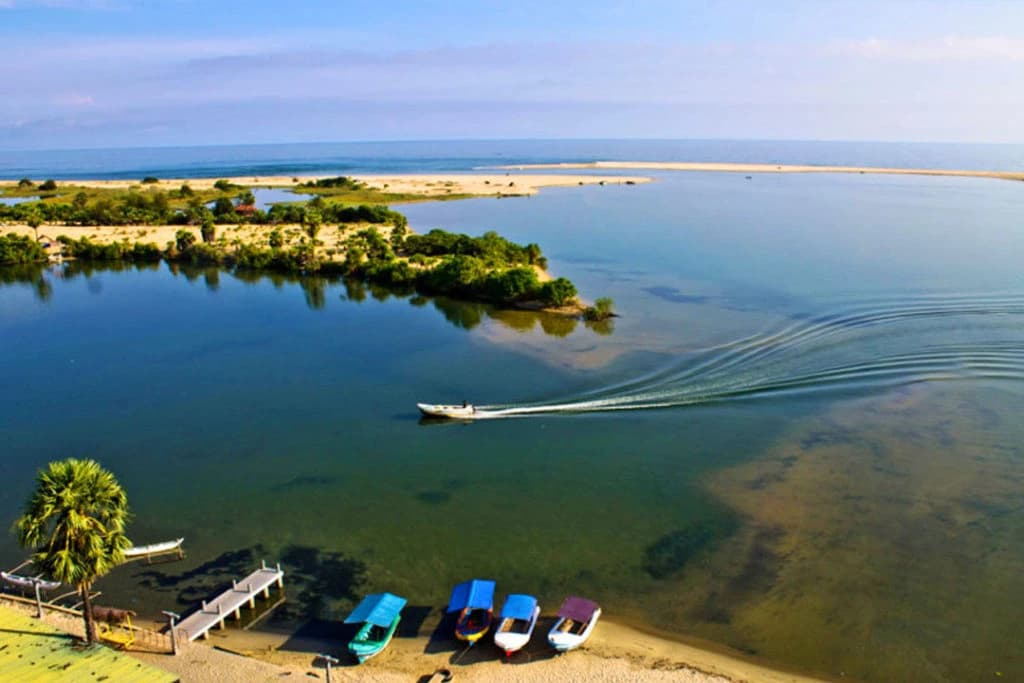
A good way to experience the fort is to approach it slowly from the town side and then walk around the accessible outer areas. Look at how the walls meet the water. Notice the way the lagoon changes the mood of the stone. Observe the balance between old colonial masonry and present-day administrative life.
After visiting the fort, continue exploring Batticaloa’s lagoon-side roads, bridges and religious landmarks. The town’s heritage is not only colonial. It includes Tamil cultural life, Christian missions, Hindu temples, Muslim communities and the wider history of eastern Sri Lanka.
This is important because colonial history should not be read in isolation. The fort is one layer within a much older and richer local landscape.
Best Time to Visit Batticaloa Dutch Fort
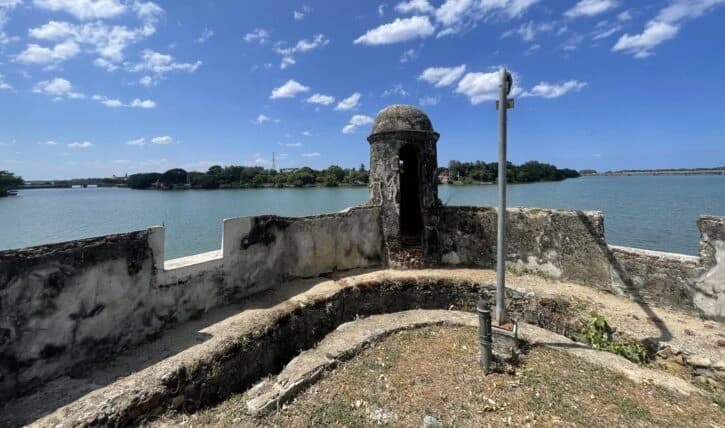
The best time to visit Batticaloa Dutch Fort is early morning or late afternoon. Midday can be hot, especially on the east coast. Morning gives cooler air and clearer views, while late afternoon brings softer light over the lagoon.
Visitors should wear comfortable shoes and carry water. Since parts of the fort are used for official purposes, it is best to be respectful when taking photographs and moving through the area.
The fort can be visited in less than an hour, but its setting rewards a slower pace. Take time to look across the lagoon. The view is part of the experience.
Why Batticaloa Dutch Fort Deserves More Attention
Batticaloa Dutch Fort is not the most famous colonial fort in Sri Lanka, but that is exactly why it is special. It has a quietness that larger heritage sites sometimes lack. Its value lies in its setting, its layered history and its connection to the east coast.
For history readers, it shows how colonial Ceylon was organised through a network of forts and trading posts. For travellers, it offers a peaceful lagoon-side stop. For researchers, it is a reminder that Sri Lanka’s colonial history was not only written in Colombo, Galle or Kandy.
The fort also helps tell the story of eastern Sri Lanka, a region often underrepresented in mainstream travel writing. Batticaloa’s colonial landmark deserves to be seen as part of the island’s wider heritage map.
Final Thoughts: A Quiet Fort with a Deep Story
Batticaloa Dutch Fort may not overwhelm visitors with scale, but it stays in the memory because of its atmosphere. Stone walls, lagoon water, old colonial structures and local administrative life come together in a way that feels understated and real.
To visit this fort is to understand a quieter chapter of colonial Sri Lanka. It is the story of an east coast trading point, a lagoon stronghold, a Dutch defensive work and a British administrative space that still forms part of modern Batticaloa.
For anyone exploring Old Ceylon beyond the usual routes, Batticaloa Dutch Fort is well worth visiting. It is calm, historic and deeply connected to the landscape around it — a colonial landmark by the lagoon that speaks softly, but clearly.
FAQs About Batticaloa Dutch Fort
Who built Batticaloa Dutch Fort?
The fort was first constructed by the Portuguese in the 17th century. It was later captured and strengthened by the Dutch, which is why it is commonly known as Batticaloa Dutch Fort.
Where is Batticaloa Dutch Fort located?
Batticaloa Dutch Fort is located in Batticaloa town on Sri Lanka’s east coast, beside the Batticaloa Lagoon.
Why is Batticaloa Dutch Fort important?
It is important because it was part of the colonial network of forts and trading posts in eastern Ceylon. It also shows how European powers used lagoon and coastal locations for defence, trade and administration.
Can visitors enter Batticaloa Dutch Fort?
Visitors can view and access parts of the fort, although some areas are used for government or administrative purposes. It is best to respect any restricted spaces.
What is the best time to visit Batticaloa Dutch Fort?
Early morning and late afternoon are the best times to visit because the weather is cooler and the lagoon views are more atmospheric.
Visit Us: https://trippingsrilanka.com/
More from Old Ceylon
When the King’s Birthday Was Celebrated on Galle Face Green: A Glimpse of Colombo in 1933
Holyrood Estate, Talawakelle: An Old Ceylon Bungalow and a Name That Echoes Scotland