Horseback Through Old Ceylon: A Glimpse of Travel Outside Gampola Rest House
A Hill-Country Scene from Another Time
Long before motorcars, buses and paved highways transformed travel across Sri Lanka, horses were an important part of everyday transport in colonial Ceylon.
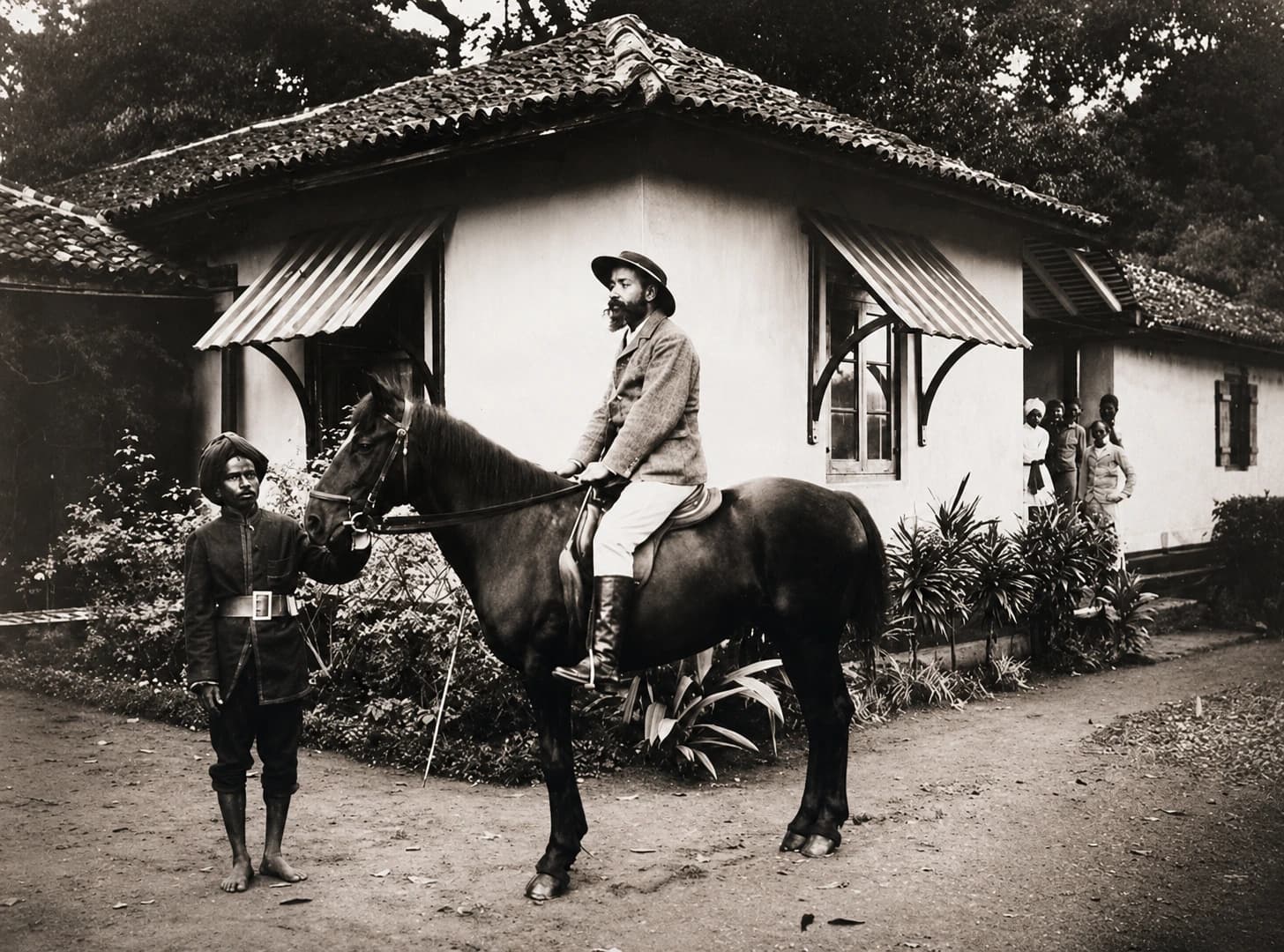
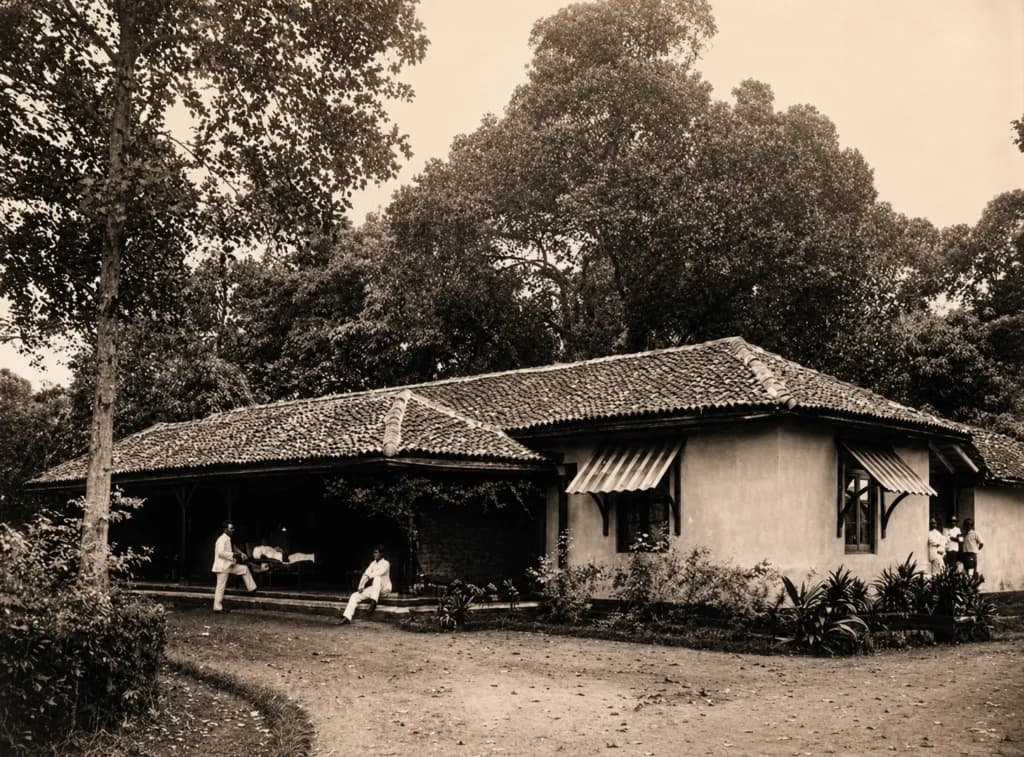
This historic photograph, believed to have been taken outside the Gampola Rest House, captures a European planter seated on horseback beside a local estate worker. Behind them stands a traditional rest-house building with tiled roofing, shaded windows and a quiet garden.
At first glance, it may seem like a simple portrait. But the image contains a much larger story.
It recalls a time when travel through the hill country moved at the pace of a horse, when roads were rough and uncertain, and when rest houses provided shelter to officials, planters and travellers moving through the interior of Old Ceylon.
More than just a photograph of two men and a horse, it is a glimpse into the rhythms of travel, labour and daily life in a changing colonial landscape.
Check our previous article – https://trippingsrilanka.com/stories/gampola-sri-lanka
When Horses Ruled the Roads
During the nineteenth and early twentieth centuries, travelling across Ceylon was far slower and more demanding than it is today.
Outside the larger towns, roads were often narrow, uneven and difficult to navigate. In the central highlands, steep slopes, sharp bends, heavy rain and mist made travel especially challenging. What modern travellers now experience as scenic routes were once difficult and tiring journeys.
In this world, horses provided a practical solution.
Government officials, European planters, military officers, doctors, postal workers and wealthier travellers frequently used horses to move between towns, estates and administrative stations. A horse could travel along routes that were unsuitable for larger carriages and could reach plantations located deep within the hills.
For many estate managers, owning a reliable horse was not simply a mark of status. It was an essential part of working life.
A horse allowed a planter or superintendent to inspect distant divisions, visit neighbouring estates, travel to town, call at a rest house or respond quickly to problems on the estate.
Why Gampola Mattered
Gampola occupied an important position in the hill country.
Located between Kandy and the plantation districts of the central highlands, it became a useful stopping point for people moving between the older Kandyan regions and the newer coffee and tea estates that spread across the hills during the British period.
As coffee and later tea cultivation expanded, European-owned estates appeared across the surrounding landscape. Planters regularly travelled between their estates, nearby towns, railway stations, administrative centres and rest houses.
This made Gampola an important transit point.
A journey that today might take less than an hour by vehicle could once have required several hours on horseback. The roads were slower, weather conditions were more challenging and reliable transport was limited.
That is why scenes like this one outside the Gampola Rest House are so valuable. They help us imagine how travel actually worked in the hill country before the age of modern roads.
Check our previous article –https://trippingsrilanka.com/stories/kandy-in-1952
Riding Between the Plantations
For a planter or estate manager, horseback travel was part of routine life.
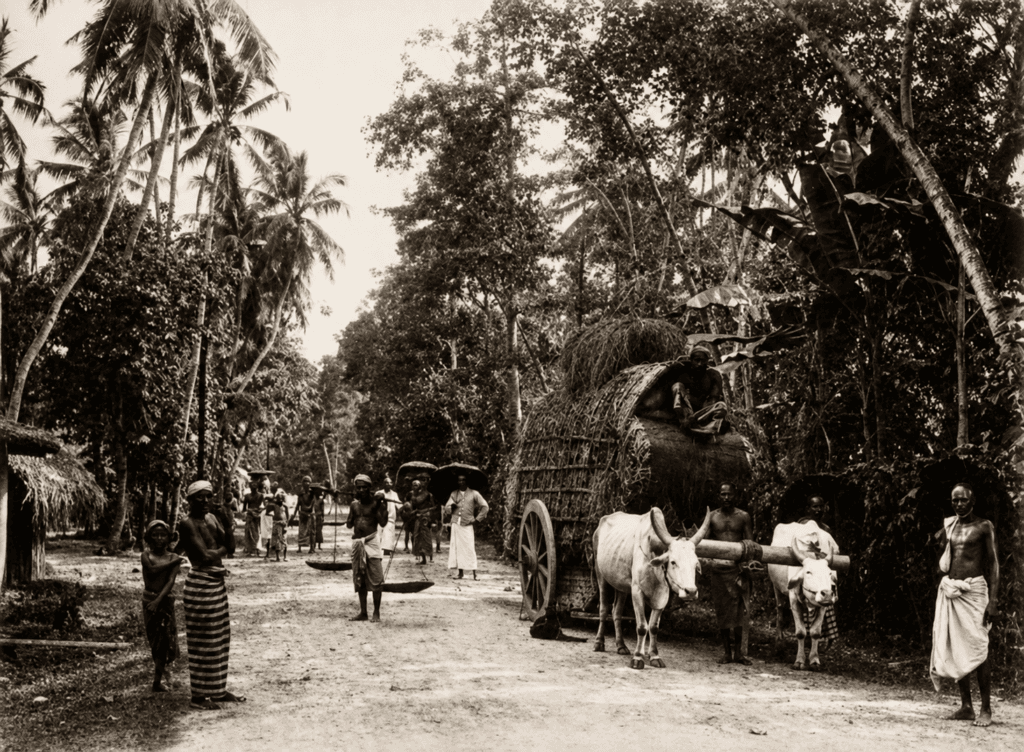
The rider might leave an estate bungalow early in the morning, moving along winding roads through thick vegetation, crossing small bridges and streams, and passing labour lines, paddy fields, village paths and coffee or tea slopes.
During the rainy season, the journey became even more difficult. The paths could turn muddy and slippery. Mist reduced visibility. Sudden tropical rain made familiar roads dangerous. A fallen branch, damaged bridge or washed-out track could delay the journey further.
In such conditions, a good horse was invaluable.
It was not simply transport. It was a working companion.
The horse in this photograph stands calmly in front of the rest house, perhaps resting after a long journey or preparing to begin another ride into the surrounding hills. One can easily imagine the rider arriving dusty, damp or tired, dismounting to stretch his legs, and pausing for refreshment before continuing onward.
The Rest House as a Traveller’s Refuge
Rest houses were a vital part of Ceylon’s early transport network.
Built along important roads and in strategically located towns, they provided accommodation, meals and rest for travellers. Before modern hotels became widespread in the interior, these establishments served government officials, merchants, planters, engineers, doctors and others moving across the island.
A traveller arriving on horseback could stop for a meal, obtain water, rest in the shade or remain overnight before continuing the journey.
In many cases, the rest house stood as a modest but important refuge in a demanding landscape. It offered shelter from rain, relief from heat, food after long travel and a bed for the night.
For hill-country travel, this mattered enormously.
Journeys were not made casually. They required planning, stamina and dependable stopping points. The rest house system helped bind the island together before the full spread of railways, motorcars and modern lodging.
Caring for the Horse
The traveller was not the only one who needed rest.
A horse that had carried a rider over rough hill-country roads also required care. It needed to be watered, fed, brushed and allowed time to recover before the next stage of the journey.
Rest houses and estate bungalows often maintained stables or sheltered areas where horses could be cared for by attendants. Saddles had to be removed and checked. Harnesses needed cleaning and adjusting. Hooves had to be watched carefully, especially on wet or stony roads.
This reminds us that travel in Old Ceylon was never only about the person moving through the landscape. It depended on animals, workers, buildings and practical systems of care.
The smooth continuation of a journey depended on many unseen forms of labour.
The Local Attendant in the Photograph
The local man standing beside the horse in the photograph is an important part of the image.
He may have been a groom, attendant, estate employee or rest-house worker. Men in these roles were responsible for feeding the animals, cleaning stables, preparing saddles, guiding horses and making sure everything was ready for the road.
Their work was essential to the transport system, although their names rarely appeared in formal records.
Colonial photographs often centre the European rider and leave the local worker unnamed. Yet without the labour of these attendants, much of estate and official travel would have been far more difficult.
The image therefore tells two stories at once.
It shows the mobility of the planter class, but it also hints at the local labour that supported that mobility.
This makes the photograph more than a romantic hill-country scene. It becomes a small record of the unequal but interconnected world of colonial travel.
Travel, Status and Social Difference
Horseback travel in colonial Ceylon also carried a social meaning.
To ride a horse was often associated with status, rank and privilege. Estate managers, government officials and military officers were more likely to travel in this way than ordinary villagers or labourers.
The photograph reflects that reality.
The mounted planter sits higher, literally and socially, while the local worker stands beside the animal on the ground. Their different positions reveal the structure of colonial society as much as the mode of transport itself.
Yet the image also shows a form of dependency.
The rider depended on the worker’s assistance. The journey depended on care, maintenance and service. The transport system of Old Ceylon was supported by many local hands, even when the visible credit or authority belonged to someone else.
The Atmosphere of the Journey
What must such a journey have felt like?
It would have been slower than modern travel, but also more intimate. A rider on horseback experienced the road directly. He would feel the incline of the path, hear the movement of hooves on gravel or mud, smell wet earth and forest air, and notice the shifting weather of the hills.
Travel was not enclosed behind glass.
One moved through sound, mist, dust and sunlight. Villages, streams, rest houses and estate roads were encountered at close range.
This gave travel a different relationship to place.
Even a routine journey between estate and town would have been physical, exposed and memorable in a way that modern vehicle travel often is not.
Before the Motorcar Came to the Hills
The world shown in this image belonged to a transitional era.
By the late nineteenth and early twentieth centuries, Ceylon was already beginning to modernise. Railways expanded through the hill country, especially to serve the plantation economy. Roads improved gradually. Motorcars began appearing in the island’s towns and on some major routes.
But these changes did not happen everywhere at once.
For many years, horseback travel remained practical and necessary, especially on estate roads and in districts where the terrain made wheeled transport difficult.
This is what makes the image so valuable. It sits at the edge of change.
Behind it lies an older world of horse travel and rest-house journeys. Ahead of it lies the era of motorcars, buses, rail connections and easier movement.
The photograph captures a moment before that transformation became complete.
The Rest House in Everyday Life
The Gampola Rest House itself also deserves attention.
Rest houses were not grand hotels, but they were central to travel in Old Ceylon. They linked towns, districts and routes. They offered simple but dependable hospitality. Meals, shade, lodging and stable space could all make the difference between a successful journey and a miserable one.
They were also places of encounter.
A rest house could bring together planters, officials, traders, travellers, coachmen, attendants and local staff. News was exchanged, journeys discussed, weather reported and onward routes planned.
In that sense, a rest house was both a refuge and a social crossroads.
The quiet building in the photograph therefore stands for much more than architecture. It represents a whole travel culture that once shaped movement through the island.
What This Image Reveals About Old Ceylon
This single photograph reveals several important aspects of life in colonial Ceylon:
- Horse travel was still essential in many parts of the island
- Gampola was an important stop between Kandy and the plantation districts
- Rest houses were crucial to the transport system
- Local workers played an essential but often overlooked role
- Travel through the hills was slower, harder and more physical than today
- Colonial society was structured by rank, privilege and dependence
- The landscape of Ceylon shaped the pace and methods of movement
Because of this, the photograph is more than a visual curiosity. It is a compact record of transport, class, labour and daily life.
Why This Story Matters Today
For modern travellers, it is easy to take movement for granted. A drive through Gampola is now part of ordinary travel. Roads, vehicles and digital maps make the journey seem simple.
But the image reminds us that travel once required effort, planning and human support.
It also encourages us to look at rest houses, estate roads and old hill-country towns with fresh eyes. These places were not merely scenic backgrounds. They were active parts of the island’s transport history.
For heritage travellers interested in Old Ceylon, this matters deeply.
It helps restore the human scale of history — the tired rider, the waiting horse, the unnamed attendant, the shaded rest house and the long road still ahead.
Final Thoughts: Travel at the Pace of a Horse
The photograph outside Gampola Rest House takes us back to a slower world.
It was a world where journeys through the hills were measured not in minutes, but in effort and distance. Horses were essential companions. Rest houses were vital refuges. Local workers made travel possible. And the roads of Old Ceylon demanded patience, endurance and skill.
Today, the horse, rider and attendant stand still in the image, but the life around them can still be imagined.
One can almost hear the quiet stamping of hooves, the rustle of leaves, the murmur of conversation and the pause before the next stage of the journey begins.
For Tripping Sri Lanka readers, this is exactly the kind of image that keeps Old Ceylon alive.
It reminds us that before engines and highways, the island was travelled one hill, one road and one horse at a time.
Visit Us: https://trippingsrilanka.com/stories
More from Old Ceylon
Colombo Public Library at 100: The Names That Still Remain
The Toll Gate at the Bridge: When Travelling Across Ceylon Cost a Few Cents at a Time